Author

admin

Browsing

Germany summoned the Chinese ambassador to the Foreign Ministry on Tuesday after saying China’s military had laser targeted a German aircraft taking part in an European Union operation in the Red Sea.

The flare up in tensions comes as concerns mount in the EU about Chinese influence on critical technologies and security infrastructure in Europe.

“Putting German personnel at risk and disrupting the operation is completely unacceptable,” said Germany’s Foreign Ministry on social media platform X.

There was no immediate response from China’s Foreign Ministry, and the Chinese Embassy in Berlin did not immediately respond to an emailed request for comment.

Germany’s Defense Ministry said the aircraft, taking part in the EU’s ASPIDES mission which protects international sea routes in the Red Sea, had been contributing a Multi-Sensor Platform, or “flying eye” for reconnaissance of the area since October.

A Chinese warship, which had been encountered several times in the area, had laser targeted the aircraft with no reason or prior communication during a routine mission flight, said a ministry spokesperson. The incident took place at the beginning of July.

“By using the laser, the warship put at risk the safety of personnel and material,” said the spokesperson, adding the mission flight was aborted as a precaution and the aircraft landed safely at a base in Djibouti.

The deployment of the MSP in ASPIDES has since been resumed, he said.

The MSP is operated by a civilian commercial service provider and German armed forces personnel are involved, said the ministry, adding the data collected significantly contributes to awareness for partners.

China has previously denied accusations of firing or pointing lasers at US planes. Incidents involving a European NATO member and China are more unusual.

In 2020, the US Pacific Fleet said a Chinese warship had fired a laser at a US naval patrol aircraft flying in airspace above international waters west of Guam. China said that did not accord with the facts.

This post appeared first on cnn.com


Brunswick Exploration Inc. (TSX-V: BRW, OTCQB: BRWXF; ‘ BRW ‘ or the ‘ Company ‘) is pleased to report the final set of results obtained as part of the 2025 Winter drill campaign conducted on its Mirage Project. The Mirage Project is located in the Eeyou Istchee–James Bay region of Quebec, approximately 40 kilometers south of the Trans-Taiga Road. This press release primarily focuses on the drilling work carried out in the eastern extension of the MR-6 dyke and the ‘Stacked Dyke’ zone.


  Highlights include:  


  • The discovery of a further three new major dykes located between 200 and 500 meters northeast of MR-6, which returned 33.2 meters at 1.1% Li    O in drill hole MR-25-110, 20 meters at 1.3% Li    O and 11 meters at 1.2% Li    O in drill hole MR-25-112.
  •  

  • The ‘Stacked Dyke’ zone was extended 150 meters to the north, with hole MR-25-106 intersecting 17.4 meters at 1.01% Li    O .
  •  

  • Over the course of the Winter 2025 program, BRW has discovered a total of 4 new major dykes measuring between 10 meters and 35 meters, all located near surface and in the core of the project all of which remain open in all directions.
  •  

  • Elevated tantalum concentrations continue to be strongly associated with lithium mineralization with values consistently ranging from 150 to 350ppm. Further metallurgical work will be completed to determine the viability of producing a tantalum byproduct.
  •  

Mr. Killian Charles, President and CEO of BRW, commented: ‘Brunswick Exploration remains one of the most compelling stories in the mining sector as we leverage the atypical combination of advanced exploration work at Mirage alongside an aggressive global lithium grassroot program which has no comparable peers. As the lithium market regains strength over the coming quarters and years, we are uniquely positioned to benefit from new discoveries and the continued development of Mirage.


‘Today’s results serve once more to highlight the exploration potential of Mirage. Even after more than 20,000 meters of drilling over the last 18 months, we have repeatedly and continue to intercept new dykes of appreciable width and grade. As we move toward a maiden resource estimate in late 2025, I am extremely proud of the work the BRW exploration team has achieved across its still growing pipeline of projects.’


  Mirage Project Drilling Overview  


The Mirage Project comprises 427 claims located roughly 40 kilometers south of the Trans-Taiga Highway in Quebec’s James Bay region and 34 kilometers northeast of Winsome Resources’ Adina Project.


The drilling campaign was primarily aimed at extending the mineralized ‘Stacked Dyke’ zone to the northeast. The highlights presented in this press release are shown in Table 1 and Figures 1 and 2. Collar locations are provided in Table 2.


  Figure 1 : Zone Location at Mirage Project


  Figure 2 : Central Zone of the Mirage Project


Drill hole MR-25-110 led to the discovery of a new spodumene-bearing pegmatite dyke, grading 1.1% Li₂O over 33.2 meters from 217 to 251 meters (vertical depth of 180 meters), while drill hole MR-25-112 returned 1.3% Li₂O over 20 meters from 367.9 to 387 meters (vertical depth of 290 meters). These two new dykes are interpreted to be sub-parallel, oriented approximately N130/30. Drill hole MR-25-112 also intersected another dyke grading 1.2% Li₂O over 11 meters from 328 to 339 meters (vertical depth of 250 meters), which is believed to be also parallel to the others. These new intersections highlight the stacking of sub-horizontal mineralized dykes in this area. The dykes remain open in all directions.


  Figure 3 : Section A-A’


Drill hole MR-25-117 also intersected a 27-meter-wide pegmatite from 329 to 356 meters. This pegmatite is interpreted to be the same one intersected in drill hole MR-25-112 (which returned 1.3% Li₂O over 20 meters from 367.9 to 387 meters). However, due to the proximity of the Lac Orion fault, in MR-25-117, the pegmatite shows significant alteration and the spodumene has been largely replaced by cookeite. As a result, lower values of lithium were reported and only a smaller subinterval returned significant lithium with 1.8% Li₂O over 3.2 meters. Nonetheless, the presence of the dyke over sizeable widths is extremely encouraging and remains an excellent follow-up target for further drilling campaign.


Drill hole MR-25-109 extended the ‘Stacked Dyke’ zone by more than 100 meters to the North, with several spodumene-bearing pegmatite intersections. The widest interval returned 1.3% Li₂O over 13.3 meters, from 21.4 to 34.7 meters. The dykes in this hole are sub-horizontal and demonstrate a change in orientation compared to the central zone, where dykes typically dip 60 to 70 degrees to the southeast.


Drill hole MR-25-116 intersected over forty moderately mineralized pegmatite dykes, generally of limited thickness. While the lithium grades were modest, this hole highlights the strong potential for the mineralized system to continue toward the Northeast. The intersected dykes remain open in all directions.


Drill hole MR-25-113, located approximately 4.5 km northeast of the central zone, was completed as a reconnaissance exploration hole. Unfortunately, no spodumene-bearing pegmatite was intersected in this hole.


  Table 1: 2025 Winter Drilling Program Discussed in this Release


  Hole ID     From (m)     To (m)     Length (m)     Li2O (%)     Ta2O5 (ppm)  
  MR-25-109     21.4     34.7     13.3     1.3     351  
MR-25-109 64.5 69.2 4.7 1.2 266
MR-25-109 106.6 111.8 5.2 1.3 222
MR-25-110 42.6 47.6 5.0 1.0 245
  MR-25-110     217.8     251.0     33.2     1.1     128  
MR-25-112 113.9 116.3 2.3 1.4 183
MR-25-112 251.5 253.7 2.2 0.8 172
MR-25-112 316.0 321.4 5.4 1.2 193
  MR-25-112     328.0     339.0     11.0     1.2     160  
  MR-25-112     367.9     387.8     20.0     1.3     231  
MR-25-116 52.6 55.8 3.2 0.9 172
MR-25-116 74.5 76.8 2.3 0.5 140
MR-25-116 152.0 164.9 13.0 0.3 123
MR-25-116 200.7 203.6 2.9 1.1 141
MR-25-117 210.9 212.9 2.0 1.2 281
MR-25-117 341.5 344.6 3.2 1.8 309


  True thickness is estimated to vary between 80% and 90% across all reported holes in the 2025 Winter campaign.  


  Table 2 : Drill Hole Collars


  Hole ID     Azimut     Dip     Length (m)     UTM NAD83 z18 – East     UTM NAD83 z18 – North  
MR-25-109 300 -55 279 683432 5941447
MR-25-110 300 -55 267 683227 5941533
MR-25-112 300 -55 399 683324 5941492
MR-25-113 300 -55 169.7 686828 5943668
MR-25-116 340 -45 300 683577 5941438
MR-25-117 300 -50 363 683463 5941701


  3D model update  


Following the completion of the 2025 Winter drill campaign, Brunswick Exploration, in collaboration with PLR Resources (https://www.plr-resources.com/), updated its 3D model in preparation for a first resource estimate planned for late 2025. Figure 3 shows the location of the sections presented in Figures 5 and 6.


  Figure 4: Location of Section B-B’ and C-C’


  Figure 5 : Section B-B”


  Figure 6 : Section C-C’


Observations from field work and drilling indicate that the geometry of the pegmatite dykes in the core of the project (covering North, Central and South Zone) is closely linked to a regional antiformal folding pattern. Although the dykes locally appear to be folded, evidence strongly supports that their emplacement was primarily controlled by the hinges of these antiformal folds, rather than the dykes being simply passively deformed post-emplacement.


The emplacement of the pegmatites is interpreted as syn- to post-tectonic, likely occurring towards the final stages of the second deformation event in the region. This timing corresponds with a decrease in regional stress conditions, allowing pegmatitic melts to be focused and emplaced in structurally favorable zones such as fold hinges and lithological contacts.


Hydrothermal alteration observed in specific segments of certain pegmatite dykes, notably at MR-3 and MR-6, indicates post-emplacement metasomatic fluid activity. These fluids are believed to be associated with reactivation along nearby structures, particularly the Orion Lake Fault, which likely acted as a fluid conduit during late-stage tectonism.


Of note, the role of gabbroic units in the area remains to be fully determined; however, their consistent spatial association with pegmatite dykes suggests they may also have influenced pegmatite emplacement. Some pegmatite dykes could be guided by contacts between metagabbro and metavolcanic rocks, potentially acting as rheological boundaries favorable to dyke propagation.


  QAQC  


All drill core samples were collected under the supervision of BRW employees and contractors. The drill core was transported by helicopter and by truck from the drill platform to the core logging facility in Val-d’Or. Each core was then logged, photographed, tagged, and split by diamond saw before being sampled. All pegmatite intervals were sampled at approximately 1-meter intervals to ensure representativity. Samples were bagged; duplicated on reject, blanks and certified reference materials for lithium were inserted every 20 samples. Samples were bagged and groups of samples were placed in larger bags, sealed with numbered tags, in order to maintain a chain of custody. The sample bags were transported from the BRW contractor facility to the AGAT laboratory in Val-d’Or. All sample preparation and analytical work was performed by AGAT by sodium peroxide fusion with ICP-OES and ICP-MS finish. All results passed the QA/QC screening at the lab and all inserted standard and blanks returned results that were within acceptable limits. All reported drill intersections are calculated based on a lower cutoff grade of 0.3% Li2O, with maximum internal dilution of 5 meters. Host basalts adjacent to the dykes may grade up to 0.3% Li2O but were excluded from the reported intersections.


  Qualified Person  


The scientific and technical information contained in this press release has been reviewed and approved by Mr. Simon T. Hébert, VP Development. He is a Professional Geologist registered in Quebec and is a Qualified Person as defined by National Instrument 43-101.


  About Brunswick Exploration  


 Brunswick Exploration is a Montreal-based mineral exploration company listed on the TSX-V under symbol BRW. The Company is focused on grassroots exploration for lithium in Canada, a critical metal necessary to global decarbonization and energy transition. The company is rapidly advancing the most extensive grassroots lithium property portfolio in Canada and Greenland.


  Investor Relations/information  


Mr. Killian Charles, President and CEO ( info@brwexplo.ca )


  Cautionary Statement on Forward-Looking Information  


  This news release contains ‘forward-looking information’ within the meaning of applicable Canadian securities legislation based on expectations, estimates and projections as at the date of this news release. Forward-looking information involves risks, uncertainties and other factors that could cause actual events, results, performance, prospects and opportunities to differ materially from those expressed or implied by such forward-looking information. Factors that could cause actual results to differ materially from such forward-looking information include, but are not limited to, delays in obtaining or failures to obtain required governmental, environmental or other project approvals; uncertainties relating to the availability and costs of financing needed in the future; changes in equity markets; inflation; fluctuations in commodity prices; delays in the development of projects; the other risks involved in the mineral exploration and development industry; and those risks set out in the Corporation’s public documents filed on SEDAR at www.sedar.com. Although the Corporation believes that the assumptions and factors used in preparing the forward-looking information in this news release are reasonable, undue reliance should not be placed on such information, which only applies as of the date of this news release, and no assurance can be given that such events will occur in the disclosed time frames or at all. The Corporation disclaims any intention or obligation to update or revise any forward-looking information, whether as a result of new information, future events or otherwise, other than as required by law. Neither the TSX Venture Exchange nor its Regulation Services Provider (as that term is defined in the policies of the TSX Venture Exchange) accepts responsibility for the adequacy or accuracy of this news release.  


Photos accompanying this announcement are available at


  https://www.globenewswire.com/NewsRoom/AttachmentNg/d95734af-c249-4da4-a9c2-bb5fbe0aab0f  


  https://www.globenewswire.com/NewsRoom/AttachmentNg/41eac253-f61c-43b4-9753-2cd3d0d6d55d  


  https://www.globenewswire.com/NewsRoom/AttachmentNg/550313e2-f6ad-4966-987c-6d023678ec1f  


  https://www.globenewswire.com/NewsRoom/AttachmentNg/e588a1b4-6128-41e3-944c-5b1097b8ab98  


  https://www.globenewswire.com/NewsRoom/AttachmentNg/58151d57-78ac-4465-adbf-aaf2e0b9ff43  


  https://www.globenewswire.com/NewsRoom/AttachmentNg/2f47949b-b03c-4a78-b3f1-a3c289f8b234  


News Provided by GlobeNewswire via QuoteMedia

This post appeared first on investingnews.com

Doctors in Gaza say they were forced to cram multiple babies into one incubator as hospitals warned that fuel shortages are forcing them to shut off vital services, putting patients’ lives at risk.

The UN has warned that the fuel crisis is at a critical point, with the little supplies that are available running short and “virtually no additional accessible stocks left.”

“Hospitals are rationing. Ambulances are stalling. Water systems are on the brink. And the deaths this is likely causing could soon rise sharply unless the Israeli authorities allow new fuel in – urgently, regularly and in sufficient quantities,” the Office for the Coordination of Humanitarian Affairs (OCHA) said.

An 11-week Israeli blockade on humanitarian aid earlier in the year pushed the enclave’s population of more than 2 million Palestinians towards famine and into a deepening humanitarian crisis. Limited aid deliveries resumed into the besieged enclave in May but aid groups have said it is not nearly enough to meet the scale of the needs.

The director of the Al-Ahli Hospital, south of Gaza City posted a photo on social media Wednesday of multiple newborn babies sharing a single incubator which was taken at another facility, Al-Helou.

“This tragic overcrowding is not just a matter of missing equipment — it’s a direct consequence of the relentless war on Gaza and the suffocating blockade that has crippled the entire healthcare system,” Dr. Fadel Naim wrote in a post on X.

“The siege has turned routine care for premature babies into a life-or-death struggle. No child should be born into a world where bombs and blockades decide whether they live or die.”

The director of Al-Shifa Hospital in northern Gaza said the shortages were forcing them to close kidney dialysis sections so they could focus on intensive care and operating theatres.

Footage from inside the hospital showed doctors using flashlights as they treated patients.

Another facility, the Nasser Medical Complex, said it had 24 hours of fuel left and was concentrating on vital departments such as maternity and intensive care.

Fuel vital for basic services

In addition to fuel shortages, difficulty finding replacement parts for the generators that power Gaza’s hospitals risks is forcing more to shut down.

The Al-Aqsa Martyrs Hospital in central Gaza issued an urgent statement that the facility’s main generator had broken down due to a lack of spare parts, forcing it to rely on a smaller backup unit.

“Fuel will run out within the coming hours, and the lives of hundreds of patients are at risk inside the hospital wards,” the statement said.

“The hospital’s shutdown threatens to disrupt healthcare services for half a million people in the Central Governorate.”

Beyond hospitals, fuel is essential to keep basic services running in Gaza. The territory relies heavily on imports for cooking, desalination and wastewater plants, and to power the vehicles used in rescue efforts.

Israel has restricted the entry of fuel throughout the conflict, and has previously claimed Hamas could use it to launch weapons.

The aid group Doctors Without Borders (MSF) warned of what it called “an unprecedented humanitarian crisis” unfolding in Gaza, in a statement Tuesday and called for a ceasefire and the entry of far greater levels of humanitarian aid.

“Our teams have worked to treat the wounded and supply overwhelmed hospitals as indiscriminate attacks and a state of siege threaten millions of men, women and children,” MSF said.

“We urge Israeli authorities and the complicit governments that enable these atrocities, including the UK Government, to end the siege now and take action to prevent the erasure of Palestinians from Gaza.”

This post appeared first on cnn.com

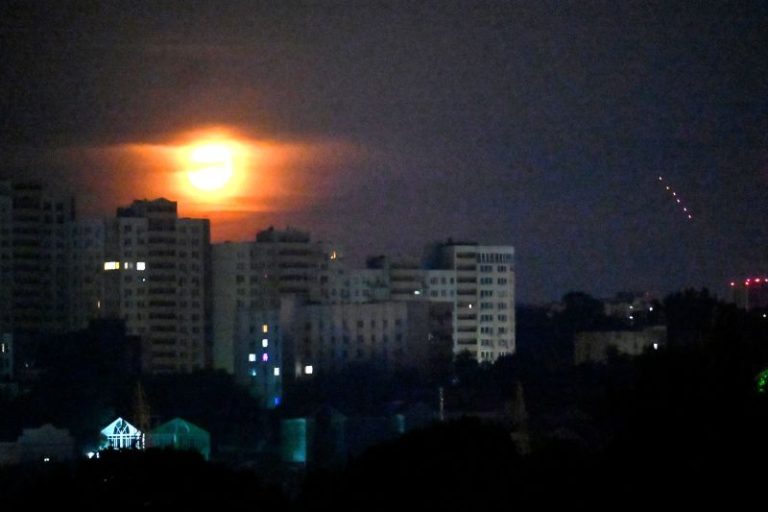
Russia launched its largest drone attack on Ukraine since the beginning of its invasion, Ukrainian officials said Wednesday, just hours after US President Donald Trump pledged more military support for Kyiv and accused his Russian counterpart Vladimir Putin of throwing “bullsh*t” over peace talks.

The massive aerial assault involved 741 drones, Ukraine’s Air Force said, eclipsing the previous record number of 539 drones, set on July 4, by hundreds – but it was largely repelled, with the damage limited and no immediate reports of deaths.

“This is a demonstrative attack, and it comes at a time when there have been so many attempts to achieve peace and cease fire, but Russia rejects everything,” Ukrainian President Volodymyr Zelensky wrote on Telegram.

“Our partners know how to apply pressure so that Russia will be forced to think about ending the war, not new strikes. Everyone who wants peace must act.”

The barrage, which mainly targeted the city of Lutsk, in northwestern Ukraine, was so intense it caused Poland’s military to scramble aircraft in its airspace. It comes after weeks of intensifying aerial strikes on Ukraine by Russia.

“Last night, our region was again subjected to a mass attack,” Ivan Rudnitskyi, the head of the military administration in Volyn region, home to Lutsk, said on Telegram. “Virtually everything was flying towards Lutsk.”

Ukraine’s Air Force said it destroyed 718 of the drones. There were no immediate reports of fatalities. One woman was hospitalized with chest injuries in the city of Brovary, near Kyiv, its mayor said.

Ukraine launched 86 drones towards Russia overnight, according to the Russian Ministry of Defense.

Moscow’s scaled up assault on Kyiv follows a remarkable 48 hours in the White House, where Trump vented his anger about Russian leader Vladimir Putin’s lack of commitment to a peace deal and pledged more support for Ukraine.

“We get a lot of bullsh*t thrown at us by Putin, if you want to know the truth,” Trump said in a Cabinet meeting. “He’s very nice all of the time, but it turns out to be meaningless.”

Kyiv urgently needs more US-made Patriot interceptor missiles to repel Russian attacks.

“We’re going to send some more weapons (to Ukraine),” Trump said on Monday evening. “We have to — they have to be able to defend themselves.”

“They’re getting hit very hard. We’re going to have to send more weapons,” Trump added. “Defensive weapons, primarily, but they’re getting hit very, very hard.”

A Pentagon spokesman later said that “at President Trump’s direction, the Department of Defense is sending additional defensive weapons to Ukraine to ensure the Ukrainians can defend themselves while we work to secure a lasting peace and ensure the killing stops.”

Secretary of Defense Pete Hegseth did not inform Trump before authorizing the weapons pause last week, according to five sources familiar with the matter.

This post appeared first on cnn.com

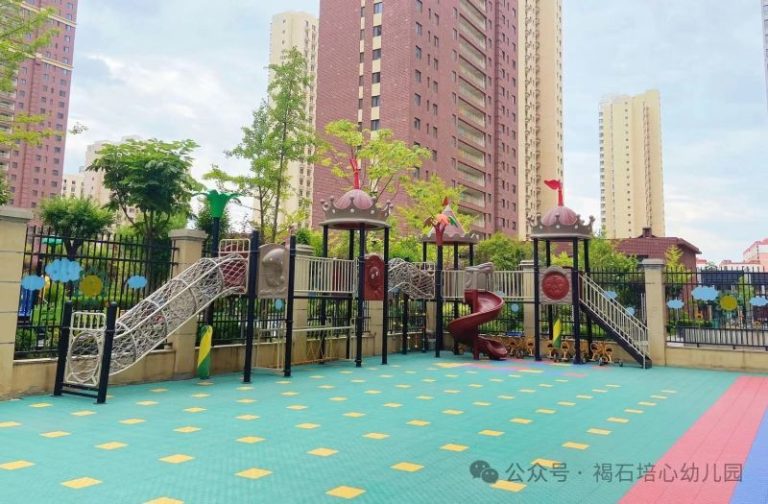
More than 200 kindergarten students in northwestern China were found to have abnormal blood lead levels after kitchen staff used paint as food coloring, authorities said, in a case that’s stoked outrage in a country long plagued by food safety scandals.

Eight people, including the principal of the private kindergarten that the children attended, have been detained “on suspicion of producing toxic and harmful food,” according to a report released Tuesday by Tianshui city government, as cited by Chinese state broadcaster CCTV.

The principal and a financial backer of the school had allowed kitchen staff at the Heshi Peixin Kindergarten to use paint pigments to color the children’s food, leading to contamination, according to the report, which followed a days-long but ongoing probe into the cases.

Of the 251 students enrolled at the kindergarten, 233 were found to have abnormal levels of lead in their blood, the report found. The children were undergoing medical treatment with 201 of them currently in hospital, authorities said. Medical evaluation on the effects of their exposure, which can cause long-term and developmental harm, were not yet made public.

Local media cited a pediatrics professor as saying aspects of the case suggest there could be chronic lead poisoning, meaning exposure over a period of more than three months.

During the investigation, two food samples from the kindergarten – a red date steamed breakfast cake and a sausage corn roll – were found to have lead levels more than 2,000 times the national food safety standard for contamination, according to figures cited in the investigation report.

Authorities said they launched the probe on July 1 after becoming aware of reports that children at the school had abnormal blood lead levels. Lead exposure in children can lead to severe consequences, including impacting children’s brain development, behavior and IQ.

The government report did not disclose how long the exposure had gone on, with some affected parents interviewed by state media saying they had noticed abnormal signs in their children’s health and behavior for months – and clamoring for more answers about how the exposure happened.

“My mind went blank,” a mother of one affected student told state media after learning from a hospital in a nearby city that her child had a blood lead level of 528 micrograms per liter – a revelation that came after she said a local department in Tianshui told her the blood levels were normal, according to a report published by outlet China National Radio (CNR). China’s National Health Agency classifies “severe lead poisoning” as anything above 450 micrograms per liter.

“Right now, I’m not thinking about compensation – I just want my child to be healthy,” she was quoted as saying.

‘How could they be poisoned so seriously?’

The case has raised all-too-familiar concerns in China about food safety as well as the levels of transparency with which such cases are handled – especially in a system where independent journalism is tightly controlled and officials are under pressure to resolve issues quickly.

Earlier this month, after the school conducted tests on the students but did not issue individual results, many parents took their children to Xi’an – a major city a roughly four-hour drive from Tianshui – for testing, according to a report published by a news outlet affiliated with the official People’s Daily.

Reports from state-affiliated media found that 70 children who were tested in Xi’an had blood lead levels surpassing the threshold of lead poisoning, with six of those cases exceeding 450 micrograms per liter. According to China’s official guidelines, this level is classified as “severe.” A full picture of the results from all the students with abnormal levels was not publicly available.

One mother told the People’s Daily-affiliated outlet that she had been confused by her daughter’s constant stomach aches, loss of appetite and behavioral changes over the past six months, which didn’t improve after treating her with traditional Chinese medicine.

Others expressed skepticism about the results of the official investigation.

“The children only eat three-color jujube steamed cake and corn sausage rolls once or twice a week, how could they be poisoned so seriously?” one mother, who gave her surname Wu, told CNR. “If something like this happened to the children in school, at least give us an explanation. Now there is nothing.”

Earlier this week, Tianshui’s mayor Liu Lijiang said the city would “do everything possible to ensure the children’s treatment, rehabilitation and follow-up protection,” while vowing to close “loopholes” in Tianshui’s public food safety supervision.

‘Serious accountability’

The case has led to widespread expressions of outrage across Chinese social media, the latest among dozens of high-profile scandals have been reported by local media since the early 2000s.

“Serious accountability must be maintained and food safety issues cannot be ignored or slacked off. When it involves the life safety of young children, severe punishment must be imposed,” wrote one commentator on the X-like platform Weibo.

“Children are the hope of a family. I hope they can recover soon and grow up healthily,” said another.

Past scandals have also impacted children. In one of the most egregious examples, six infants died and some 300,000 others were sickened by milk powder formula containing the toxic industrial chemical melamine. Several executives found to be responsible for the 2008 case were ultimately handed death sentences, and the tragedy drove deep mistrust of domestic products and food safety in China.

Lead poisoning used to be a more widespread issue in China. In 2010, the central government for the first time allocated special funds for heavy metal pollution prevention in response to at least 12 high-profile cases the previous year that left more than 4,000 people with elevated blood lead levels, according to state media.

Officials have also moved to tighten food safety regulations in recent years, but pervasive cases have shown more needs to be done in terms of enforcement and to build back public trust, experts say.

Improving the food regulatory system calls for “more transparency, more thorough investigation of food safety cases,” said Yanzhong Huang, a senior fellow for global health at the Council on Foreign Relations in New York and author of the book “Toxic Politics: China’s Environmental Health Crisis and its Challenge to the Chinese State.”

Huang also said a lack of public confidence in the safety systems could evolve into a “trust crisis.”

This post appeared first on cnn.com

Boeing delivered 60 airplanes last month, the most since December 2023, as the plane maker seeks to raise production of its bestselling 737 Max jets after a series of manufacturing and safety problems.

The tally was the highest since before a door plug from one of its new 737 Max 9 planes blew out midair in January 2024, sparking a new crisis for the company and slowing production and deliveries of aircraft. Of the monthly total, 42 were 737 Maxes, going to customers including Southwest Airlines, Alaska Airlines and United Airlines.

CEO Kelly Ortberg, who took the top job at Boeing last August, has said the company has made progress in improving production rates and quality on its factory lines.

For the three months ended June 30, Boeing handed over 150 airplanes, its best second quarter since 2018, before two crashes of Max planes five months apart grounded the jets and sparked a multiyear crisis at the top U.S. exporter. That was also the last year Boeing posted an annual profit. Its problems also gave rival Airbus a bigger lead over Boeing.

Boeing this spring had been producing about 38 Max aircraft a month and will need Federal Aviation Administration approval to go above that limit, which the agency set after the door plug accident. Ortberg said at a Bernstein investor conference in late May that he’s confident that the company could increase production to 42 of the jets a month.

The company booked 116 gross orders in June, or 70 net orders when including cancellations and accounting adjustments. Boeing often removes or adds orders to its backlog for a variety of reasons including customers’ financial health.

Boeing’s backlog stood at 5,953 as of June 30.

The manufacturer is set to report second-quarter financial results on July 29, when investors will be focused on Ortberg’s plan to increase production and aircraft deliveries.

This post appeared first on NBC NEWS

Waymo announced Tuesday that it is offering accounts for teens ages 14 to 17, starting in Phoenix.

The Alphabet-owned company said that, beginning Tuesday, parents in Phoenix can use their Waymo accounts “to invite their teen into the program, pairing them together.” Once their account is activated, teens can hail fully autonomous rides.

Previously, users were required to be at least 18 years old to sign up for a Waymo account, but the age range expansion comes as the company seeks to increase ridership amid a broader expansion of its ride-hailing service across U.S. cities. Alphabet has also been under pressure to monetize AI products amid increased competition and economic headwinds.

Waymo said it will offer “specially-trained Rider Support agents” during rides hailed by teens and loop in parents if needed. Teens can also share their trip status with their parents for real-time updates on their progress, and parents receive all ride receipts.

Teen accounts are initially only being offered to riders in the metro Phoenix area. Teen accounts will expand to more markets outside California where the Waymo app is available in the future, a spokesperson said.

Waymo’s expansion to teens follows a similar move by Uber, which launched teen accounts in 2023. Waymo, which has partnerships with Uber in multiple markets, said it “may consider enabling access for teens through our network partners in the future.”

Already, Waymo provides more than 250,000 paid trips each week across Phoenix, the San Francisco Bay Area, Los Angeles, Atlanta, and Austin, Texas, and the company is preparing to bring autonomous rides to Miami and Washington, D.C., in 2026.

In June, Waymo announced that it plans to manually drive vehicles in New York, marking the first step toward potentially cracking the largest U.S. city. Waymo said it applied for a permit with the New York City Department of Transportation to operate autonomously with a trained specialist behind the wheel in Manhattan.

This post appeared first on NBC NEWS

The gold price continued to surge to new record highs in the second quarter of the year, reaching an all-time high of C$4,663.85 per ounce, or US$3,433.47, on June 13.

The gains were primarily fueled by safe-haven investment as Israel and the United States launched attacks on Iranian nuclear sites and Iran retaliated against targets in Israel and a US base in Qatar. Although a ceasefire was announced, tensions in the region remain high.

Additional tailwinds come from the continuing uncertainty in global financial markets, stemming from shifting US trade policy and Donald Trump’s ongoing, on-again-off-again tariff plans.

There is also additional uncertainty going into the second half of the year as the US government passed its “Big Beautiful Bill” on July 3. The bill has been criticized from both sides, including the former head of the Department of Government Efficiency, Elon Musk, for increasing deficit spending and exacerbating an already ballooning debt, which some investors believe is driving the US toward a debt crisis.

What does this mean for junior gold companies? While there was delay in translating high gold prices into share price gains for gold explorers, many are now up significantly this year. Below, we profile the five TSXV gold companies that are the best performers of 2025 by year-to-date share price gains.

Data for this article was retrieved on July 3, 2025, using TradingView’s stock screener, and only companies with market capitalizations greater than C$10 million are included.

1. Onyx Gold (TSXV:ONYX)

Year-to-date gain: 846.34 percent
Market cap: C$122.48 million
Share price: C$1.94

Onyx Gold is an exploration company advancing its Munro-Croesus project, located near Timmins in Ontario, Canada. The company has increased the size of the land package by 200 percent between 2020 and 2025, and the project now covers an area of 109 square kilometers.

Munro-Croesus hosts the historic Croesus mine, which produced 14,859 ounces of gold between 1915 and 1936 with an average grade of 95.3 grams per metric ton (g/t). Onyx is the first company to explore the property since the mine closed.

Shares in Onyx have had significant gains in the second quarter of 2025. The momentum came as the company announced option agreements to enlarge its land package at Munro-Croesus.

The first announcement came on April 10, when it stated that it had agreed with private vendors to acquire a 21 hectare patented claim near the Argus North zone. Under the terms of the agreement, Onyx has the option to acquire a 100 percent interest in the property, which has never been drilled, in exchange for cash consideration of C$1.5 million and 3.3 million Onyx shares over a three-year period.

The second acquisition was announced on June 24, when Onyx reported that it signed a mineral property purchase and sale agreement to acquire a 100 percent interest in the Munro and Hewitt properties, both located near the existing Munro-Croesus project. The acquisition will expand the company’s land package from 95 to 109 square kilometers.

Alongside its land consolidations, Onyx has also spent the second quarter advancing exploration at the property.

Most recently, on June 26, the company reported the first drill results from its 10,000 meter spring drill program at the Argus North zone at Munro-Croesus. One highlighted assay contained 1.8 grams per metric ton (g/t) gold over 91 meters, including 4 g/t over 32 meters and 5.3 g/t over 17 meters.

The company said the results demonstrate the continuity of broad zones of high-grade gold mineralization.

Shares in Onyx reached a year-to-date high of C$2.09 on June 27.

2. Goldgroup Mining (TSXV:GGA)

Year-to-date gain: 500 percent
Market cap: C$217.34 million
Share price: C$0.99

Goldgroup Mining is a gold production, development and exploration company working to advance its Cerro Prieto heap-leach gold mine. The 4,335 hectare property, located in Sonora, Mexico, produces an annual average of 11,500 ounces of gold and has produced more than 120,000 ounces since its beginning in March 2013.

Goldgroup is currently working to double the capacity of the mine to more than 25,000 ounces per year. The last update on progress came in October 2024, when it announced that it had installed the primary crusher with a 2,200 metric ton per day throughput. It also said it had expanded pumping and irrigation capacity.

The most recent update on Cerro Prieto came on March 26, when Goldgroup announced high-impact exploration near the mine. The program will include 6,000 meters of diamond drilling focused on the Nuevo Esperanza and Reyna zones, which are next to the main Esperanza production zone.

The company also announced plans for an induced polarization geophysical survey and surface trenching 1 kilometer south of the mine to further investigate newly discovered mineralized zones.

In addition to activities at Cerro Prieto, the company announced on March 7 that it had entered an agreement to acquire Minera Apolo and its Pinos gold project from Candeleria Mining in exchange for settling a US$2.7 million loan facility. Goldgroup previously secured rights to the facility with Candeleria from a creditor group in a maneuver to acquire the project.

Pinos is a fully permitted gold project situated in the Zacatecas mining belt of Northern Mexico and comprises 29 concessions over 3,816 hectares. A 2018 PEA revealed an after-tax net present value of US$12 million, with a 25 percent internal rate of return at a gold price of US$1,250 per ounce.

Shares in Goldgroup reached a year-to-date high of C$1.08 on May 9.

3. Trident Resources (TSXV:ROCK)

Year-to-date gain: 400 percent
Market cap: C$19.62 million
Share price: C$0.75

Trident Resources, formerly Eros Resources, is a gold and copper exploration company focused on projects in Saskatchewan, Canada.

A three-way merger in early 2025 between Eros Resources, MAS Gold and Rockridge Resources, allowed the companies to consolidate a portfolio of assets in Saskatchewan, including the Contact Lake and Greywacke gold projects in the La Ronge gold belt as well as the Knife Lake copper project.

Before this year, Eros was focused on the Bell Mountain gold-silver project in Nevada, US, but on January 6, the company announced it had sold the property to Lincoln Gold Mining (TSXV:LMG) in exchange for up to 4.5 million common shares and a net profits interest of 7.5 percent of net returns from gold and silver produced at the project to a maximum of US$2 million.

The company announced its rebranding from Eros to Trident on April 23, with its new name chosen in part to represent the three companies joining together. In the release, the company stated that the rebrand marked the beginning of a new chapter for the company, underscoring its focus on the gold and copper markets.

On May 6, Trident announced it received drill permits for the Contact Lake project, marking the first project news following the rebrand.

Trident stated the drill program would be conducted over the summer and consist of approximately 5,000 meters, with 3,800 meters to be carried out at the Contact Lake deposit and 1,200 meters at the Preview SW deposit.

Shares in Trident reached a year-to-date high of C$0.75 on July 3.

4. Solstice Gold (TSXV:SGC)

Year-to-date gain: 333 percent
Market cap: C$15.28 million
Share price: C$0.065

Solstice Gold is an exploration company focused on advancing its flagship Strathy gold project in Ontario, which it acquired in June 2024.

The project consists of 45 claims covering an area of 45 square kilometers in the Temagami Greenstone belt. Historical documents report six gold showings in the central portion of the project areas, with documented mineralization at the Leckie prospect.

On January 15, Solstice announced results from an induced polarization survey of the property. It identified 50 new targets, with the highest priority targets being along strike on the Leckie Fault. The company stated that the results support the existence of an extensive, largely unexplored system, with potential for multiple discoveries.

Solstice said it had also been selected to receive a grant under the Ontario Junior Exploration Program from the provincial government. The grant will provide 50 percent of the exploration funding, up to a maximum of C$194,000.

Shares in Solstice gained early in the year following its January 20 announcement that Michael Gentile had increased his stake in Solstice to 16.76 percent, making him the single largest shareholder.

In its latest project update on July 2, Solstice announced it had wrapped up its spring drill program, which focused on four target areas. In total, the company completed 3,125 meters of drilling across 14 holes, and results are expected in July.

The company reported that it had entered into an agreement to acquire 17 additional claims, which would increase the project area by 50 percent. It added that targets identified from its IP program may extend along strike into these claims.

Shares in Solstice reached a year-to-date high of C$0.065 on June 27.

5. Lahontan Gold (TSXV:LG)

Year-to-date gain: 300 percent
Market cap: C$28.49 million
Share price: C$0.10

Lahontan Gold is a development and exploration company dedicated to advancing a portfolio of properties in Nevada, United States.

Its primary focus is on its flagship Santa Fe gold-silver project in Walker Lane. The property consists of 291 unpatented lode mining claims, 67 unpatented mill site claims, and 24 patented lode mining claims, covering a land package of 26.4 square kilometers.

On January 24, the company released a PEA for the project that demonstrated an after-tax net present value of US$56.5 million with an internal rate of return of 17.4 percent over a payback period of 4.24 years based on a gold price of US$2,025 per ounce.

The included MRE for the site reports an indicated resource of 1.44 million ounces of gold and 11.2 million ounces of silver from 48.39 million metric tons of ore at an average grade of 0.92 g/t gold and 7.18 g/t silver. It also hosts an inferred resource of 401,000 ounces of gold and 1.75 million ounces of silver from 16.76 million metric tons at a grade of 0.74 g/t gold and 3.25 g/t silver.

The most recent news from Lahontan was on March 18, when it provided an update on its Exploration Plan of Operation submitted to the Bureau of Land Management in November 2024. In the release, the company stated it expects the Bureau to approve the plan, allowing permitting to proceed to the National Environmental Policy Act phase. According to Lahontan, final approval is on track for late 2025.

In the meantime, Lahontan stated that it would be able to continue exploration drilling at its patented mining claims under a Notice of Intent (NOI). On May 6, the company filed a new NOI for additional drilling at the site that would target extensions in the Slab and York areas of the project, and the BLM approved it on June 9.

Additionally, the company announced on June 24 that it had started metallurgical test work at Santa Fe with the goal of substantially improving CN leach gold recoveries for transition materials compared to the 49 percent recovery in the PEA.

Shares in Lahontan reached a year-to-date high of C$0.105 on June 25.

Securities Disclosure: I, Dean Belder, hold no direct investment interest in any company mentioned in this article.

This post appeared first on investingnews.com

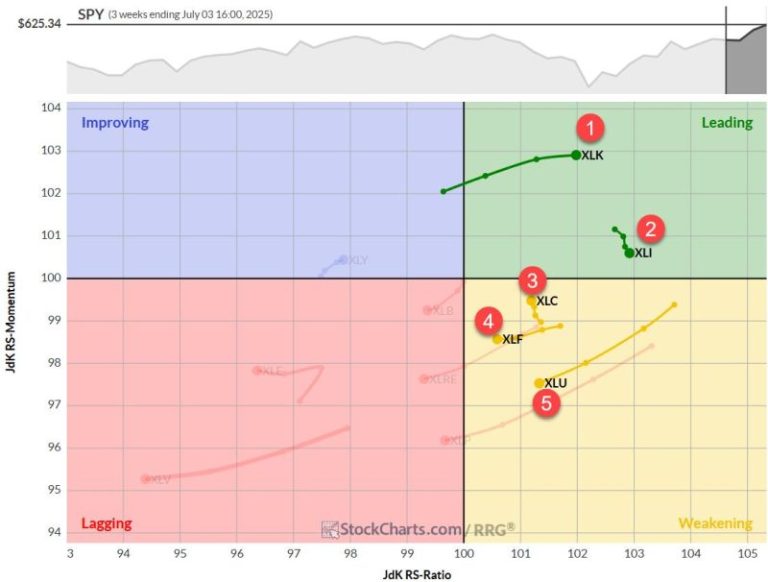
The past week has been relatively stable in terms of sector rankings, with no new entrants or exits from the top five. However, we’re seeing some interesting shifts within the rankings that warrant closer examination. Let’s dive into the details and see what the Relative Rotation Graphs (RRGs) are telling us about the current market dynamics.

Sector Rankings Shuffle

The top three sectors, technology, industrials, and communication services, remain firmly entrenched in their positions. But the real action is happening just below them. Financials climbed to the number four spot, consequently pushing utilities down to fifth place. This shift is significant, as it indicates a move towards more cyclical sectors in the top rankings.

These changes suggest a potential shift towards more economically sensitive and offensive sectors, which supports a bullish scenario or at least a move away from defensive positioning.

  1. (1) Technology – (XLK)
  2. (2) Industrials – (XLI)
  3. (3) Communication Services – (XLC)
  4. (5) Financials – (XLF)*
  5. (4) Utilities – (XLU)*
  6. (8) Materials – (XLB)*
  7. (7) Consumer Staples – (XLP)
  8. (6) Real-Estate – (XLRE)*
  9. (10) Consumer Discretionary – (XLY)*
  10. (9) Energy – (XLE)*
  11. (11) Healthcare – (XLV)

Weekly RRG

The weekly Relative Rotation Graph continues to show strength in the technology sector within the leading quadrant. Industrials is also maintaining its position in the leading quadrant, with a very short tail, indicating a consistent relative uptrend.

Communication services, financials, and utilities are currently in the weakening quadrant. However, communication services have rebounded and appear to be making their way back towards the leading quadrant again.

Financials and utilities, on the other hand, are showing negative headings, with utilities displaying the weakest momentum (longest tail).

Daily RRG

Switching to the daily RRG, we get a more granular view of recent sector movements:

  • Technology remains the strongest sector, with a high RS ratio and a short tail
  • Communication services are rotating at a slightly negative heading but still within the leading quadrant
  • Financials and industrials are showing promise in the improving quadrant
  • Utilities continues to rotate within the lagging quadrant, confirming its weakness

The positioning of these sectors, particularly the strength of technology and improvements in financials and industrials, suggests a shift towards more cyclical and less defensive sectors in the market.

Technology

Tech continues its rally after breaking above the $240 resistance area. The raw RS line is also climbing, having broken out of its falling channel. This sector remains the market leader and shows no signs of slowing down.

Industrials

The industrial sector has cleared its overhead resistance and is pushing higher. Its RS line is putting in new highs, reflecting strong relative performance. The RRG lines remain in the leading quadrant and may be turning up again, a bullish sign.

Communication Services

Comms have broken above their resistance around 105. While still at the lower boundary of its rising RS channel, it’s starting to pick up steam. Both RRG lines are climbing, with RS momentum approaching the 100 level. A cross above that level would put it back in the leading quadrant.

Financials

Financials broke through overhead resistance last week, which is a significant positive development. It’s now above both horizontal resistance and its former support line. The relative strength line needs some work, but with the current price breakout, improvement seems likely in the near future.

Utilities

The weak link in the top five, utilities, remains range-bound. It’s still above support, but not by much. With the broader market rising, utilities’ sideways movement is causing its RS line to drop. The RRG lines are rolling over, and we may soon see this sector rotate into the lagging quadrant on the weekly RRG.

Portfolio Performance Update

I must admit, our portfolio is still underperforming. The current drawdown is a little over 8%, which isn’t ideal. However, this is the nature of trend-following strategies. We’re sticking with our approach through this period of underperformance, confident that historical results support our patience.

If market trends continue as they are, we should see more offensive sectors rotate into the top five. This shift, in turn, should help us overcome the current drawdown and eventually bring us ahead of the S&P again.

Remember, investing is a marathon, not a sprint. Periods of underperformance are normal and to be expected. The key is to stay disciplined and trust in your strategy.

#StayAlert and have a great week. –Julius


 Kobo Resources Inc. (TSX.V: KRI):


This press release features multimedia. View the full release here: https://www.businesswire.com/news/home/20250708360290/en/  


  KOBO CUP SUPPORTER JERSEY  


Building on the success of the inaugural Kobo Cup in 2024, Kobo Resources has proudly expanded this initiative in 2025 into a full multi-village tournament. This year also featured a dynamic art workshop where young artists from Kossou, Bocabo, and Angossé designed the official jerseys their teams will wear.


We are excited to take this celebration of local talent and meaningful community partnerships even further with the launch of the exclusive ‘2025 Kobo Cup Supporter Jersey’ . This limited-edition jersey symbolizes more than just a game; it represents Kobo’s ongoing commitment to social responsibility and direct support for the villages where they operate.


A JERSEY WITH PURPOSE


Designed with deep cultural significance, the ‘Supporter Jersey’ proudly showcases six traditional Adinkra symbols, iconic motifs from West African heritage known for their powerful meanings and values. These symbols are thoughtfully repeated across the fabric, each representing qualities that inspire and reflect the spirit of the villages Kobo Resources supports.


Together, these symbols represent leadership, perseverance, adaptability, strength, wisdom, and community abundance. They embody the core values and spirit of the villages Kobo Resources supports, weaving a narrative of resilience, unity, and hope that investors can proudly wear as a symbol of their commitment to sustainable community development.


  DIRECT IMPACT FOR VILLAGE NEEDS  


All profits from the sale of the ‘2025 Kobo Cup Supporter Jersey’ will be channeled directly into addressing urgent needs within the villages, including providing school supplies, everyday goods, and essential resources that help improve daily life. This initiative marks a direct, transparent way for investors to contribute to sustainable community development beyond traditional infrastructure projects.


  KOBO’S COMMITMENT TO COMMUNITY  


The Kobo Cup has evolved from a single football match into an annual multi-village tournament celebrating local talent, culture, and youth empowerment. With in-country partners like African Boyz Club and Coast to Coast Entertainment, Kobo Resources continues to foster inclusion and cultural pride while ensuring fair play and equal opportunity on the field.


‘As we deepen our community engagement through the Kobo Cup and beyond, the Supporter Jersey is a unique opportunity for investors to wear their commitment to social responsibility and to help fuel meaningful change for the villages we serve,’ said Edward Gosselin, CEO of Kobo Resources.


  How to Get Your Jersey  


The limited-edition ‘2025 Kobo Cup Supporter Jersey’ is available exclusively on the Kobo Resources website.


About Kobo Resources Inc. 


 Kobo Resources is a growth-focused gold exploration company with a compelling new gold discovery in Côte d’Ivoire, one of West Africa’s most prolific and developing gold districts, hosting several multi-million-ounce gold mines. The Company’s 100%-owned Kossou Gold Project is located approximately 20 km northwest of the capital city of Yamoussoukro and is directly adjacent to one of the region’s largest gold mines with established processing facilities.


  View source version on businesswire.com:    https://www.businesswire.com/news/home/20250708360290/en/   


For further information, please contact:
Edward Gosselin
Chief Executive Officer and Director
1-418-609-3587
ir@kobores.com  
X: @KoboResources | LinkedIn: Kobo Resources Inc. 


News Provided by Business Wire via QuoteMedia

This post appeared first on investingnews.com