Author

admin

Browsing

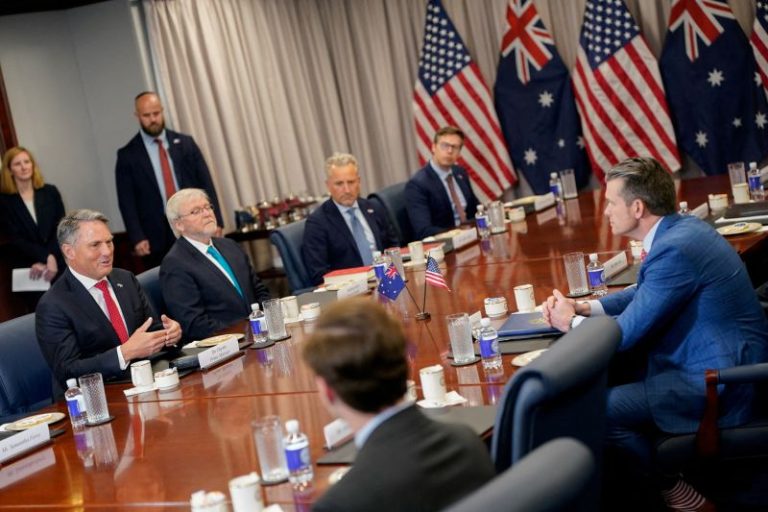
US President Donald Trump’s administration has launched a formal review of former President Joe Biden’s AUKUS defense pact with Australia and Britain to allow Australia to acquire nuclear-powered submarines, a US defense official said.

Australia, which sees the submarines as critical to its own defense as tensions grow over China’s expansive military buildup, said it remained committed to the project and looked forward to working closely with the US on the review.

As well as causing alarm in Australia, the review could also throw a wrench in Britain’s defense planning. AUKUS, worth hundreds of billions of dollars, is at the center of a planned expansion of Britain’s submarine fleet.

“We are reviewing AUKUS as part of ensuring that this initiative of the previous administration is aligned with the President’s America First agenda,” the US official said of the review, first reported by Financial Times.

“Any changes to the administration’s approach for AUKUS will be communicated through official channels, when appropriate.”

AUKUS was formed in 2021 to address worries about China’s growing power.

It envisages Australia acquiring up to five US Virginia-class submarines from 2032. Then, Britain and Australia would design and build a new class of submarine, with US assistance. The UK would take first delivery in the late 2030s, with delivery to Australia in the early 2040s.

Before that, the US and Britain would start forward rotations of their submarines in 2027 out of an Australian naval base in Western Australia.

Vocal skeptics among Trump’s senior policy officials include Elbridge Colby, the Pentagon’s top policy adviser, who cautioned last year that submarines were a scarce, critical commodity, and US industry could not produce enough to meet American demand.

Submarines would be central to US military strategy in any confrontation with China centered in the First Island Chain, running from Japan through Taiwan, the Philippines and on to Borneo, enclosing China’s coastal seas.

“My concern is why are we giving away this crown jewel asset when we most need it,” Colby said last year.

Only six countries operate nuclear-powered submarines: the US, the UK, Russia, China, France and India.

A spokesperson for Australia Defense Minister Richard Marles said the US had informed Australia and the UK of the review.

“AUKUS will grow both US and Australian defense industry as well as generating thousands of new manufacturing jobs,” the spokesperson said.

A British government spokesperson called AUKUS “one of the most strategically important partnerships in decades” that also produces “jobs and economic growth in communities across all three nations.”

“It is understandable that a new administration would want to review its approach to such a major partnership, just as the UK did last year,” the official said, adding that Britain will “continue to work closely with the US and Australia … to maximize the benefits and opportunities” of AUKUS.

The White House did not immediately respond to a request for comment, but one official told Reuters the Trump administration “is regularly reviewing foreign agreements to ensure they align with the American people’s interests – especially those initiated under the failed Biden foreign policy agenda.”

US Senator Tim Kaine, a Democrat on the Senate Armed Services Committee, said AUKUS was “critical to ensuring a free and open Indo-Pacific” and the administration should work to strengthen it and the US submarine industrial base.

“Anything less would play directly into China’s hand,” said Kaine, who represents Virginia, where US submarines are built.

Australia’s biggest defense investment

AUKUS is Australia’s biggest-ever defense project, with Canberra committing to spend A$368 billion ($240 billion) over three decades to the program, which includes billions of dollars of investment in the U.S. production base.

On Tuesday, Britain announced plans to invest billions of pounds to upgrade its submarine industry, including at BAE Systems in Barrow and Rolls-Royce Submarines in Derby, to boost submarine production as announced in Britain’s Strategic Defence Review. Under this, it will build up to 12 next-generation attack submarines of the model intended to be jointly developed by the UK, US and Australia under AUKUS.

In the US Congress on Tuesday, Defense Secretary Pete Hegseth said “we’re having honest conversations with our allies” and added in reference to Australia: “We want to make sure those capabilities are part of how they use them with their submarines, but also how they integrate with us as allies.”

Former Australian Prime Minister Malcolm Turnbull, who signed a previous agreement to acquire French submarines shelved in favor of AUKUS, told CNBC last week it was “more likely than not that Australia will not end up with any submarines at all, but instead, simply provide a large base in Western Australia for the American Navy and maintenance facilities there.”

AUKUS expert John Lee at Washington’s conservative Hudson Institute think tank said the Pentagon review was aimed at determining whether it could afford to sell up to five submarines when it was not meeting its own production targets.

Kathryn Paik, a Biden White House official now at Washington’s Center for Strategic and International Studies, said providing submarines to Australia would not sacrifice US readiness but instead boost collective deterrence.

“This review most definitely makes our allies in Canberra and London concerned, and could cause them to doubt US reliability as an ally and partner,” she said.


This post appeared first on cnn.com

Multiple aid workers were killed after a bus was attacked in Gaza on Wednesday night, according to a US-backed humanitarian aid organization which accused Hamas of carrying out the assault.

Hamas has yet to respond to the allegations.

The Gaza Humanitarian Foundation (GHF), a controversial US and Israeli-backed aid initiative, said that a bus carrying more than two dozen of its team members was attacked by Hamas at around 10 p.m. local time.

“We are still gathering facts, but what we know is devastating: there are at least five fatalities, multiple injuries, and fear that some of our team members may have been taken hostage,” GHF said in a statement.

The group was en route to a distribution center in the area west of Khan Younis, GHF said, adding further details would be provided once they became known.

“We condemn this heinous and deliberate attack in the strongest possible terms,” the GHF said in a statement.

The GHF also accused Hamas of repeatedly threatening the organization in recent days.

On Sunday, Hamas media said its forces have “full authority and mandate to strike decisively against any entity or individual collaborating with the enemy’s plans or with any rogue, criminal, or traitorous elements that violate the law and the traditions of our people.”

“All agents, thieves, and armed criminal gangs are considered legitimate targets for the resistance and its security apparatus,” the militant group said.

The GHF was established amid Israeli accusations that Hamas is stealing aid in Gaza and profiting off its sale but the organization has been controversial from the get-go and criticized by multiple international aid agencies.

The humanitarian situation in Gaza remains desperate.

Restrictions imposed by the Israeli military on aid routes, ongoing airstrikes, a lack of security and the continuous displacement of tens of thousands of people are aggravating an already alarming situation, according to the United Nations and other aid agencies. The supplies that do get in risk getting looted and only a fraction of what is needed is getting in.

Multiple Palestinians have been killed by gunfire near aid distribution sites since GHF began operations.

This is a developing story and will be updated.

This post appeared first on cnn.com

The bodies of two deceased hostages were recovered from southern Gaza in a military operation, the Israel Defense Forces (IDF) and Shin Bet security agency announced Wednesday evening.

Yair Yaakov was killed during by Islamic Jihad militants during the Hamas-led terror attack on October 7, 2023. Yaakov, who was 59 years old at the time, was killed in Kibbutz Nir Oz and his body taken into Gaza.

His partner, Meirav Tal, and two of his children were taken hostage and subsequently released during a previous hostage agreement.

The body of an additional hostage has also been recovered, according to the IDF and Shin Bet, but the second name has not yet been made public at the request of the family.

“Together with all the citizens of Israel, my wife and I extend our heartfelt condolences to the families who lost their dearest,” said Prime Minister Benjamin Netanyahu in a statement.

“Alongside the pain and mourning, we feel a measure of relief knowing that the two will be laid to rest with dignity — and that the unbearable suffering their loved ones have endured for 614 days may now be eased, if only slightly,” said the Hostages and Missing Families Forum in a statement.

“We repeat our demand to the decision-makers to reach a full and comprehensive agreement that will bring home all 53 remaining hostages — even if that requires ending the fighting.”

The recovery of these two bodies comes less than a week after the Israeli military recovered the bodies of Judy Weinstein-Haggai, 70, and Gadi Haggai, 72, who were also killed during the attack on Nir Oz. Last week, the Israeli military also recovered the body of Thai hostage Nattapong Pinta.

According to the Hostages and Missing Families Forum, 53 hostages remain in Gaza, one of whom has been held since 2014. Of these, at least 20 are believed to be alive and 31 dead, according to the Israeli government. There are grave concerns about the conditions of two hostages, the government has said.

This is a developing story and will be updated.

This post appeared first on cnn.com

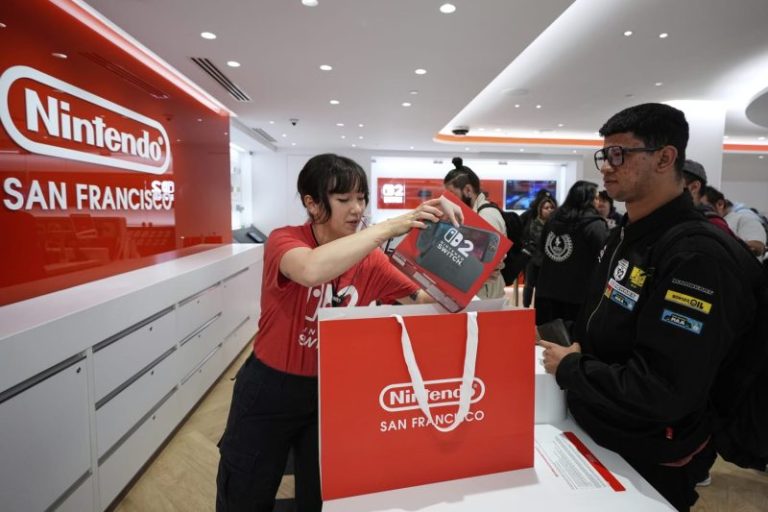
Nintendo sold more than 3.5 million units of its flagship Switch 2 gaming system in the four days following its launch, with online stores of major U.S. retailers putting up “out of stock” signs.

The record-breaking start for the company’s first new console in eight years, puts Nintendo on the path to realizing its aim of selling 15 million units of the Switch 2 console in the fiscal year ending March 2026.

However, analysts continue to believe that those expectations are modest, and forecast the strong initial demand to sustain.

“The market expected a record from Nintendo, and as it turns out, Nintendo delivered,” Serkan Toto, CEO and founder of gaming industry consultancy Kantan Games, told CNBC.

“All signals prior to launch pointed to significant demand, and I believe we will see further records broken over the next weeks or months,” he added.

Toto has maintains that the Switch 2 will sell over 20 million units in its first 12 months. David Gibson, senior research analyst at MST Financial told CNBC that he expects 20 million sales for the year ending March 2026.

The Switch 2, which was released on June 5, has been met with much fanfare, with people lining up for hours ahead of midnight releases at Nintendo stores.

“Fans around the world are showing their enthusiasm for Nintendo Switch 2 as an upgraded way to play at home and on the go,” Nintendo of America President and Chief Operating Officer Doug Bowser said in a statement, adding the company was thankful for the response.

Tokyo-listed shares of Nintendo, which have gained nearly 30% so far this year, were down 3.5% on Wednesday, LSEG data showed. The company has seen its shares rise nearly fivefold since the original Switch debuted in early March 2017.

It remains to be seen if the Switch 2 can recapture the magic of its predecessor, which had set the bar with 15 million unit sales in its first year. It went on to sell more than 152 million units to become the second-highest selling Nintendo device ever, behind the Nintendo DS.

The record initial sales of the Switch are in line with the strong demand analysts had predicted. However, the rush has put into question Nintendo’s ability to meet demand.

Retailers including Walmart, GameStop, Target and Best Buy were out of stock of the consoles, their online stores showed Wednesday.

In April, Nintendo’s Bowser told CNBC that the company had been working with “retail partners to ensure there’s ample supply for not only the launch weekend, but well beyond.”

However, Nintendo President Shuntaro Furukawa stated the same month that 2.2 million people in Japan had entered the lottery to purchase the Switch 2 on launch day, exceeding expectations and what the company had initially planned to deliver to stores.

Kantan Games’ Toto said shortages in Japan were expected to persist, but would be less impactful elsewhere.

“Except for Japan where demand for Switch 2 is extraordinarily high, it looks like fans who really want the console and invest time in trying to secure one actually can get one,” he said. “It might take a while, but as far as can be monitored, supply seems to be more robust than around the launch of the original Switch in 2017.”

President Donald Trump’s “reciprocal tariffs” on most countries around the world also present headwinds for the Switch 2.

In April, the company announced that it would delay preorders of the Switch 2 in the U.S. while it considers the impact of tariffs.

The Switch 2 retails for $449 in the U.S., which makes it Nintendo’s priciest console to date.

Nintendo’s Bowser said in April the company was going to “monitor where tariffs are going” before making any further decisions on price hikes.

MST Financial’s Gibson said that a resolution to Trump’s tariffs and lower duty rates could see the Switch 2 prices drop in the U.S.

The Switch 2 builds on the success of the original Switch, featuring a larger screen and improved performance. The system also introduces the new GameChat2 feature, which allows players to voice or video chat with friends online and share game screens.

This post appeared first on NBC NEWS

Thousands of activists from around the world are expected to descend on Egypt on Thursday for a “Global March to Gaza,” a movement aiming to break the Israeli blockade that has pushed the territory to the brink of famine.

The march puts Egypt in an awkward position as it tries to balance its ties with Israel and the United States against its public condemnation of the war’s brutal toll on Gaza’s civilians. A key mediator with direct channels to both Hamas and Israel, Cairo has been wary of the conflict spilling over into its territory. It has kept its side of the Rafah crossing closed to Palestinians, even as anger at Israel’s actions continues to rise at home.

In a statement Wednesday, Israeli Defense Minister Israel Katz said he expects the Egyptian government “to prevent the arrival of jihadist demonstrators to the border of Egypt-Israel and not to allow them to carry out provocations and to try to enter into Gaza.”

This will “endanger the security of IDF (Israel Defense Forces) soldiers and we will not allow it,” Katz added.

The international activists will be joined by another convoy of 2,000 protesters arriving from Tunisia. That group arrived in Libya, which neighbors Egypt, on Wednesday, organizers said.

Among those joining the march are Nkosi Zwelivelile Mandela, a former South African lawmaker and grandson of Nelson Mandela, and Hala Rharrit, a former US State Department diplomat who resigned from her US government position during the Biden administration over Washington’s handling of the Gaza war.

As Israel’s war in Gaza enters its 21st month, high-profile international campaigners are becoming increasingly active in their attempt to break the siege.

On Monday, Israel intercepted a Gaza-bound aid ship, the “Madleen,” detaining its passengers and taking them to Israel.

Among the activists on board was Swedish climate and human rights activist Greta Thunberg and French member of the European Parliament Rima Hassan. Thunberg departed Israel on Tuesday and Hassan remains in Israeli detention.

Israel imposed a full humanitarian blockade of Gaza on March 2, cutting off food, medical supplies and other aid to the more than 2 million Palestinians in the territory for 11 weeks.

Faced with growing international pressure, it began allowing a trickle of aid in late May. But humanitarian organizations say it is only a fraction of the aid that entered the enclave before the war.

Organizers of the Global March to Gaza have said that they have reached out to Egyptian authorities, informing them of their plans and asking for cooperation and protection but have received no response.

The Egyptian foreign ministry said in a statement that activists must obtain permits ahead of their arrival in Cairo.

“Egypt stresses the importance of adhering to these established regulatory measures to ensure the safety of visiting delegations due to the sensitive security conditions in this border area since the onset of the crisis in Gaza,” the ministry said, adding that “that no requests or invitations will be considered or responded to if submitted outside the framework specified by the regulatory provisions.”

Organizers said they followed “all the required protocols detailed in this statement.”

On Thursday, organizers said 170 people are currently facing delays and deportations at Cairo airport, but that thousands of participants are already in Egypt and are determined to continue their march.

Egyptian authorities “have no reason not to support this march,” Rharrit said, adding that delegations across the world had informed Egyptian embassies of their plan well ahead of time.

“There have been meetings with Egyptian ambassadors. Egyptian authorities have not said no,” she said, adding that the march is “in line with everything Egypt has been trying to do diplomatically.”

This post appeared first on cnn.com

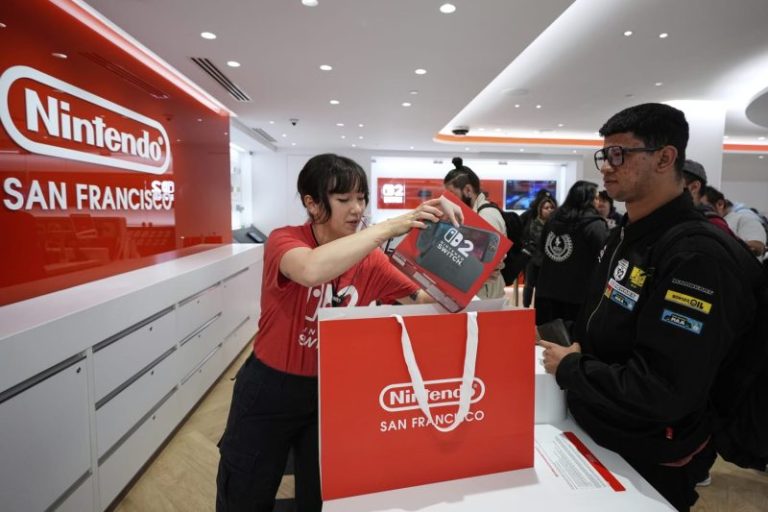
Nintendo sold more than 3.5 million units of its flagship Switch 2 gaming system in the four days following its launch, with online stores of major U.S. retailers putting up “out of stock” signs.

The record-breaking start for the company’s first new console in eight years, puts Nintendo on the path to realizing its aim of selling 15 million units of the Switch 2 console in the fiscal year ending March 2026.

However, analysts continue to believe that those expectations are modest, and forecast the strong initial demand to sustain.

“The market expected a record from Nintendo, and as it turns out, Nintendo delivered,” Serkan Toto, CEO and founder of gaming industry consultancy Kantan Games, told CNBC.

“All signals prior to launch pointed to significant demand, and I believe we will see further records broken over the next weeks or months,” he added.

Toto has maintains that the Switch 2 will sell over 20 million units in its first 12 months. David Gibson, senior research analyst at MST Financial told CNBC that he expects 20 million sales for the year ending March 2026.

The Switch 2, which was released on June 5, has been met with much fanfare, with people lining up for hours ahead of midnight releases at Nintendo stores.

“Fans around the world are showing their enthusiasm for Nintendo Switch 2 as an upgraded way to play at home and on the go,” Nintendo of America President and Chief Operating Officer Doug Bowser said in a statement, adding the company was thankful for the response.

Tokyo-listed shares of Nintendo, which have gained nearly 30% so far this year, were down 3.5% on Wednesday, LSEG data showed. The company has seen its shares rise nearly fivefold since the original Switch debuted in early March 2017.

It remains to be seen if the Switch 2 can recapture the magic of its predecessor, which had set the bar with 15 million unit sales in its first year. It went on to sell more than 152 million units to become the second-highest selling Nintendo device ever, behind the Nintendo DS.

The record initial sales of the Switch are in line with the strong demand analysts had predicted. However, the rush has put into question Nintendo’s ability to meet demand.

Retailers including Walmart, GameStop, Target and Best Buy were out of stock of the consoles, their online stores showed Wednesday.

In April, Nintendo’s Bowser told CNBC that the company had been working with “retail partners to ensure there’s ample supply for not only the launch weekend, but well beyond.”

However, Nintendo President Shuntaro Furukawa stated the same month that 2.2 million people in Japan had entered the lottery to purchase the Switch 2 on launch day, exceeding expectations and what the company had initially planned to deliver to stores.

Kantan Games’ Toto said shortages in Japan were expected to persist, but would be less impactful elsewhere.

“Except for Japan where demand for Switch 2 is extraordinarily high, it looks like fans who really want the console and invest time in trying to secure one actually can get one,” he said. “It might take a while, but as far as can be monitored, supply seems to be more robust than around the launch of the original Switch in 2017.”

President Donald Trump’s “reciprocal tariffs” on most countries around the world also present headwinds for the Switch 2.

In April, the company announced that it would delay preorders of the Switch 2 in the U.S. while it considers the impact of tariffs.

The Switch 2 retails for $449 in the U.S., which makes it Nintendo’s priciest console to date.

Nintendo’s Bowser said in April the company was going to “monitor where tariffs are going” before making any further decisions on price hikes.

MST Financial’s Gibson said that a resolution to Trump’s tariffs and lower duty rates could see the Switch 2 prices drop in the U.S.

The Switch 2 builds on the success of the original Switch, featuring a larger screen and improved performance. The system also introduces the new GameChat2 feature, which allows players to voice or video chat with friends online and share game screens.

This post appeared first on NBC NEWS

Micron Technology, Inc. (MU) appears poised for an explosive breakout, both technically and fundamentally. While it remains to be seen whether this materializes by its Q3 earnings report on June 25, the setup suggests a high-probability move is about to happen, and soon.

The fundamental case for a breakout is backed by MU’s deep involvement in the AI memory boom. Its high-bandwidth memory (HBM) is powering Nvidia’s next-gen Blackwell chips, demand is outstripping supply, and prices are rising. With sold-out capacity for 2025 and earnings projected to surge 437% this year, MU’s Q3 report could be the next major catalyst.

In light of these forecasts, let’s put things into context and see where MU has stood over the past year in its comparative performance with VanEck Vectors Semiconductor ETF (SMH), our semiconductor industry proxy, Technology Select Sector SPDR Fund (XLK), for a sector comparison, and Invesco QQQ Trust (QQQ), a stand-in for the Nasdaq 100 Index ($NDX).

MU vs. SMH, XLK, and QQQ: Tracking Relative Performance

Despite its recent rally, MU remains a relative laggard. Whether it breaks out will depend on how effectively it positions itself amid shifting industry dynamics.

FIGURE 1. PERFCHARTS OF MU RELATIVE TO ITS INDUSTRY, SECTOR, AND THE NASDAQ 100.  MU has been the big laggard over the past year. You need to take a closer and more detailed look to gain more insight into MU’s current upward momentum.

While analysts are optimistic about its role in the evolving AI-driven landscape, that thesis will be put to the test when the company reports earnings in the coming weeks.

A Shift in Momentum? What the MarketCarpets Are Revealing

While MU lags its industry peers, it might help you to get a more granular view of performance within the semiconductor industry. This is where the StockCharts MarketCarpets Semiconductors summary can be helpful.

FIGURE 2. MARKETCARPETS – SEMICONDUCTORS. In contrast to its peers, a 5-day view shows that MU is the strongest performer.

Though MU has trailed its industry peers over the past year, the 5-day MarketCarpets view reveals a shift in momentum. With a 13.32% gain over the past week, MU is rapidly narrowing the gap and beginning to outpace its peers.

Weekly Chart Levels: Resistance, Support, and Entry Zones

Typically, you’d drill down to a daily chart for more precision, but, with MU, the weekly chart alone highlights the key levels worth watching.

FIGURE 3. WEEKLY CHART OF MU. The weekly chart shows all key levels, from entry to profit targets and stop loss levels.

The weekly chart view clearly outlines support, resistance, and potential entry and exit points. Listed below are the key levels and scenarios to watch.

MU Price Scenarios: Breakout or Breakdown?

  • Watch the rectangle formation: MU is approaching a breakout above key resistance at $115, just ahead of its June 25 earnings report. A decisive move above the rectangle could trigger long entries from bullish traders.
  • Upside scenario: A beat on earnings and strong forward guidance could fuel continued upside—unless derailed by broader geopolitical risks.
  • Downside scenario: If the breakout fails, look for support near the bottom of the formation. The Volume-by-Price indicator shows a heavy concentration of trading at that level, reinforcing its significance as a support zone. However, a breakdown there may cast doubt on the current uptrend thesis.
  • Profit-taking zone: If MU continues its bullish trajectory, expect resistance and likely profit-taking between $127 and $137, an area marked by multiple highs and consolidation levels throughout 2024.

Why $127 to $137, when the weekly chart shows $130 to $135? Here’s where zooming in helps.

FIGURE 4. ZOOMING N TO A DAILY CHART OF MU. This shows, in much greater detail, the potential resistance levels above.

The top and bottom of this consolidation provide a clearer view of potential resistance, which may also serve as profit-taking levels for short-term traders, so keep an eye on this.

  • Last thing – watch the peak: A second round of resistance and potential profit-taking may occur near $155, a key level that previously marked the stock’s all-time high.

Momentum-wise—and note we’re looking at a longer-term time frame—the Relative Strength Index (RSI) suggests there’s still plenty of room to run before MU enters overbought territory. Volume-wise, however, you will want to see the Chaikin Money Flow (CMF) levels increase once the breakout occurs, confirming that buying pressure is supporting the move.

Quick Take: The Setup at a Glance

In a nutshell: Watch for a breakout above $115 ahead of MU’s June 25 earnings by setting an alert using the Technical Alert Workbench. Note that entering a position ahead of earnings is always a risky prospect. If you are planning to take any action at all, make sure it’s in alignment with your own personal trading strategy and criteria.

A beat on earnings and strong guidance could fuel further upside, but watch out! If Wall Street decides to “sell the news,” due to any detail that dampens investor or analyst sentiment, a sharp decline could follow. If MU moves strongly to the upside, look for confirmation via rising CMF levels, which would signal real buying pressure.

If the breakout fails, key support lies near the bottom of the current trading range. On the upside, expect potential resistance and profit-taking between $127–$137, with a secondary ceiling near $155. The RSI still shows room for further gains before MU becomes overbought.

Final Thoughts: Will MU Deliver on the AI Hype?

MU may be lagging now, but, as the MarketCarpets data shows, momentum is quietly shifting, and the shift may accelerate as MU approaches both a potential breakout level and its earnings date. With a critical breakout level in sight and earnings just days away, consider preparing for a potential surge in volatility, which could move the stock in either direction. If MU does break to the upside, whether it can maintain its momentum post-breakout will depend on volume, CMF strength, and how convincingly MU rides the AI memory wave.


Disclaimer: This blog is for educational purposes only and should not be construed as financial advice. The ideas and strategies should never be used without first assessing your own personal and financial situation, or without consulting a financial professional.

The U.S. stock market has been painting a subtle picture recently. While the broader indexes, such as the S&P 500 ($SPX), Nasdaq Composite ($COMPQ), and Dow Jones Industrial Average ($INDU), are indeed grinding higher, the daily movements have been relatively subdued. This is a noticeable shift from the more dynamic action we observed in April.

Investors may be waiting for Wednesday’s May Consumer Price Index (CPI), the results of the U.S.-China trade talks, or the next market-moving news headline. What’s encouraging is the underlying strength in market breadth. We’re seeing a healthy number of one-month new highs across most broader indexes (with the exception of Dow Utilities), Bullish Percent Indexes signaling bullish tendencies, and investors gravitating toward offensive sectors vs. defensive ones.

On the surface, everything points to a continuation of the bullish trend. However, as astute investors, our primary objective is to protect our capital. This means we mus always consider the possibility of a downside correction and be prepared to adapt.

This is where the StockCharts Market Summary page becomes an indispensable tool for your market analysis.

Let’s dive into how the Market Summary page can help you gain a unique perspective on market dynamics.

Beyond the Headlines: Uncovering Global Trends

One of the powerful features of the Market Summary page is its ability to provide a global snapshot. If you navigate to the Global Snapshot tab in the Equities panel and sort the “+/- SMA(200)” column in descending order, you’ll notice something fascinating: the Eurozone occupies the top spot while the Total US sits at the bottom (see image below).

FIGURE 1. A GLOBAL SNAPSHOT. The Eurozone is trading well above its 200-day simple moving average (SMA) while the Total US is only 4.37% above its 200-day SMA.Image source: StockCharts.com. For educational purposes.

This insightful view suggests that global markets have been trending well above their 200-day simple moving average than the US market. This insight is worth a deeper dive.

Consider the daily charts of the iShares MSCI Eurozone ETF (EZU) and Vanguard Total Stock Market ETF (VTI) which serve as proxies for these regions.

Since April 8, EZU has been on a steep ascent, demonstrating upward momentum. This price action is similar to the S&P 500, but if you consider the relative performance of the SPDR S&P 500 (SPY) vs. EZU, SPY is underperforming EZU (see bottom panel in the chart below).

FIGURE 2. DAILY CHART OF EZU. The ETF is exhibiting a steep ascent and is outperforming SPY. Will the trend become less steep or continue its steep uptrend? Be sure to monitor the RSI.Chart source: StockCharts.com. For educational purposes.

The Relative Strength Index (RSI) is showing lackluster momentum. Generally, a steep trend loses its mojo after a while and reverts to a more normal trend.

Meanwhile, though VTI has also moved higher, its percentage rise was slightly less than EZU. Also, as EZU hit an all-time high, VTI is still trying to reach that milestone (see chart below).

FIGURE 3. DAILY CHART OF VTI. The ETF is also exhibiting a steep ascent but is trying hard to reach its all-time high.Chart source: StockCharts.com. For educational purposes.

The RSI is showing lackluster momentum, similar to that of EZU, which could mean the steep ascent may be losing its steam.

Identifying Global Opportunities

It will be interesting to see how the global financial market evolves from here. Who will be the first to revert to a more normal sloping trend? Will EZU continue its outperformance, or will VTI take the lead?

And let’s not forget the global ETFs positioned in the middle of the pack. Regions like Asia (ex Japan), Latin America, or Emerging Markets could take the lead. For example, the Vanguard FTSE Emerging Markets ETF (VWO) has exhibited a more classic uptrend. Over the past year, it has outperformed SPY by around 127% (see chart below). The RSI is also showing greater momentum than the other charts we analyzed.

FIGURE 4. DAILY CHART OF VWO. This ETF is exhibiting a more normal uptrend and, over the last year, has outperformed SPY by a whopping 127%. RSI is also rising, suggesting there could be momentum here.Chart source: StockCharts.com. For educational purposes.

Empowering Your Stock Market Analysis

To stay ahead of market trends and uncover hidden gems, investors and traders should regularly monitor the charts in the Market Summary ChartLists. If you haven’t already, download the StockCharts Market Summary ChartPack (it’s free for subscribers).

Scrolling through the pre-built ChartLists will help you to:

  • Stay on top of the market’s price action across sectors, industries, and global regions.
  • Identify market internals, such as breadth and sentiment.
  • Uncover some hidden gems that could translate into favorable investment opportunities.

Disclaimer: This blog is for educational purposes only and should not be construed as financial advice. The ideas and strategies should never be used without first assessing your own personal and financial situation, or without consulting a financial professional.

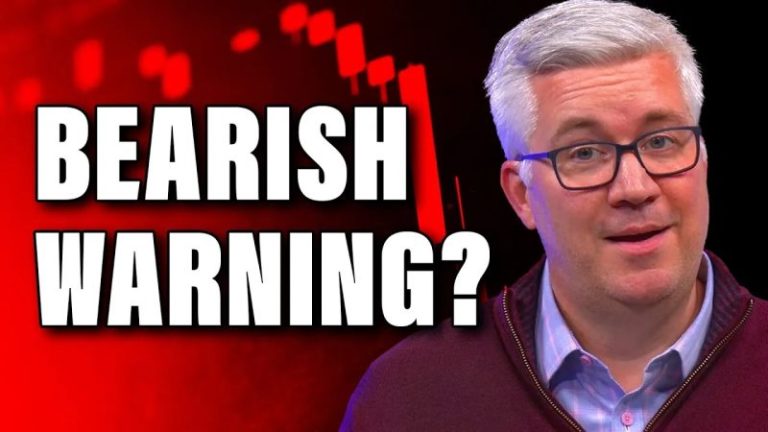
Unlock the power of divergence analysis! Join Dave as he breaks down what a bearish momentum divergence is and why it matters. Throughout this video, Dave illustrates how to confirm (or invalidate) the signal on the S&P500, Nasdaq100, equal‑weighted indexes, semiconductors, and even defensive names like AT&T (T).

This video originally premiered on June 10, 2025. Watch on StockCharts’ dedicated David Keller page!

Previously recorded videos from Dave are available at this link.

Resolution Minerals Ltd (“RML” or the “Company”) (ASX: RML) is pleased to announce that it has entered into a binding agreement for the acquisition of a brownfields Antimony and Gold project located in Idaho of the United States of America.

HIGHLIGHTS

  • Resolution Minerals Ltd (ASX:RML) has entered into a binding agreement to acquire the Horse Heaven Antimony-Gold-Silver-Tungsten Project (“Horse Heaven” or “Project”), located in the historical Stibnite Mining District of Valley County, central Idaho.
  • Horse Heaven shares its eastern boundary with NASDAQ-listed Perpetua Resources’ Stibnite Gold- Antimony Project (PPTA.NAS ~A$2bn market cap).
  • Horse Heaven hosts two highly prospective Gold- Antimony-Tungsten prospects known as the Antimony Ridge Fault Zone (“ARFZ”) and the Golden Gate Fault Zone (“GGFZ”).
  • Drill-ready targets; drilling planned to start in 2025
  • The Antimony Ridge Fault Zone has an approximate strike length of 1.2 km and hosts known gold–antimony– silver-tungsten mineralisation associated with hydrothermally altered and sheared granodiorite.
  • The Golden Gate Fault Zone has an approximate strike length of 3.5km and hosts the Golden Gate Hill target. It hosts known disseminated gold mineralisation, like Antimony Ridge Fault Zone, associated with hydrothermally altered and sheared granodiorite.
  • Tungsten was produced from Golden Gate Hill between the 1950’s and 1980’s.
  • Results from past systematic sampling and preliminary drilling at both prospects are highly encouraging, indicating large tonnage mining potential.
  • Highlight past rock chip results at Horse Heaven (Antimony Ridge) (Appendix C) include:
    • Rock chip sample 329003 with 3.68g/t gold, 303g/t silver and 2.72% antimony over 4m.
    • Rock chip sample 329014 with 1.33g/t gold, 367g/t silver and 13.75% antimony over 1m.
    • Rock chip sample 329015 with 4.65g/t gold, 70.5g/t silver and 19.15% antimony over 1m.
    • Rock chip sample 329085 with 3.21g/t gold, 178g/t silver and 0.37% antimony over 3m.
    • Rock chip sample 329089 with 5.99g/t gold, 246g/t silver and 0.71% antimony over 1m.
  • Highlight past drilling results at Horse Heaven (Appendix B) include drill intersections of:
    • Drill hole 87-GGR-31: 85.34m @ 0.937g/t Au (true width unknown), including 38.10m @ 1.459g/t Au.
    • Drill hole 86-GGR-10: 105.16m @ 0.787g/t Au (true width unknown); including 51.82m @ 0.990g/t Au.
    • Drill hole 86-GGR-01: 30.48m @ 1.354g/t Au (true width unknown).
  • Historical, non-JORC gold resource of 216,000 ounces of gold in 7,256,800 tons of material at a grade of 0.93g/t at Golden Gate Hill, and gold resource of 70,000 ounces of gold in 3,174,850 tons of material at a grade of 0.69g/t at Antimony Hill are noted in previous reports of Horse Heaven.

Cautionary note:

The estimate is a ‘historical estimate’ under ASX Listing Rule 5.12 and is not reported in accordance with the JORC Code. A Competent Person has not yet undertaken sufficient work to classify the historical estimate as mineral resources or ore reserves in accordance with the JORC Code. It is uncertain that, following evaluation and/or further exploration work, it will be possible to report this historical estimate as mineral resources or ore reserves in accordance with the JORC Code.

  • Horse Heaven also hosts 10km to 15km of additional strike length of potentially mineralised faults and shears traversing favourable host rocks.
  • The Exploration Model applicable for the Horse Heaven Project is Intrusion Related Gold System (“IRGS”) and a deposit analogue for the Horse Heaven Project is the adjacent NASDAQ-listed Perpetua Resources Corp (PPTA.NAS, ~A$2 billion market cap) owned Stibnite Gold Mine.*
  • The Stibnite Gold Mine is located 5km to the east of the Horse Heaven Project and, once reopened, will be the only domestically mined source of antimony in the U.S.1
  • Past exploration at Horse Heaven includes historical (1890 to 1950), late 1900s (1970 to 1990s) and modern (2000 to 2023) exploration phases, with the latter mainly conducted by TSX-V-listed Stallion Uranium Corp.
  • Antimony, Tungsten and Gold at record high prices as China tightens grip on critical minerals exports.
  • The Horse Heaven Project complements the Company’s recently acquired Australian Au-Sb-Cu projects to create a dynamic portfolio highly leveraged for gold and antimony.

RML’s Executive Director, Aharon Zaetz commented:

“The Board considers that the acquisition of the Horse Heaven Project has the potential to be a transformative event for RML. As many governments around the world look to onshore their supply of critical minerals, such as antimony and tungsten, we have secured a commanding ground position with known antimony occurrences and next to what is likely to become the largest antimony producer in the USA.

RML’s entry into US critical minerals comes at a terrific time, with the market attributing huge premiums to ASX-listed companies operating in the space over the last 8 weeks, such as Dateline Resources (DTR), Trigg Minerals (TMG) and Locksley Resources (LKY) which have all seen significant re-ratings in recent weeks, thanks to the supportive pro-mining policies of new President Donald Trump.”

Click here for the full ASX Release

This post appeared first on investingnews.com