
Author

admin

Browsing

  • MAVERIC Phase III pivotal trial of orphan drug candidate CardiolRx in recurrent pericarditis is fully funded through to a planned New Drug Application submission with the FDA.

  • New data from the ARCHER trial, highlighting the magnitude of reduction in left ventricular (LV) mass and the read through to heart failure, to be presented at a cardiology conference in November 2025.

  • Next-generation therapy CRD-38 for heart failure funded through to clinical development, with partnership discussions advancing with leading pharmaceutical companies.

Cardiol Therapeutics Inc. (NASDAQ: CRDL) (TSX: CRDL) (‘Cardiol’ or the ‘Company’), a clinical-stage life sciences company advancing late-stage, anti-inflammatory and anti-fibrotic therapies for heart disease, today announced the successful completion of a private placement offering (the ‘Offering’) of units (‘Units’) for net proceeds of US$11 million. The initial closing of US$10 million has been completed, with the remaining US$1 million to close on Monday, October 20, 2025.

‘As recruitment in our pivotal Phase III MAVERIC trial gains momentum, with several prominent centers across the U.S. now enrolling patients, we are pleased to have secured a direct investment of US$11 million to strengthen our balance sheet and accelerate the development of our novel heart failure drug, CRD-38, based on the recently reported findings from our ARCHER trial,’ said David Elsley, President and CEO of Cardiol Therapeutics. ‘Topline results from our ARCHER trial demonstrated a significant reduction in LV mass-marking the first evidence of structural and remodeling improvement in patients with myocarditis. This landmark finding represents our second clinical validation in inflammatory heart disease and establishes a key translational link to data published earlier this year in the Journal of the American College of Cardiology, which demonstrated the beneficial effects of the active pharmaceutical ingredient or API in CardiolRx on cardiac structure, inflammation, and fibrosis in a model of heart failure. The ARCHER findings support pursuing an additional Orphan Drug Designation for CardiolRx in myocarditis and advancing the development of our next-generation CRD-38 formulation, which delivers the same API via subcutaneous administration, to target the broader heart failure market. Notably, blockbuster drugs that reduce LV mass have been shown to lower heart failure-related death and hospitalization, underscoring the clinical potential of Cardiol’s differentiated anti-inflammatory mechanism to address a large unmet need in heart failure, where five-year mortality rates still exceed 50%.’

Under the Offering, the Company sold a total of 11 million Units at a price of US$1.00 per Unit. Each Unit consists of one Class A common share of the Company (a ‘Common Share‘) and one-half of one Common Share purchase warrant. Each whole warrant entitles the holder to acquire one additional Common Share at an exercise price of US$1.35 for a period of 24 months from the date of issuance. The warrants include an acceleration provision, allowing the Company to advance their expiry to the 30th day following the issuance of a news release if the daily volume-weighted average trading price of the Common Shares exceeds US$2.00 for five consecutive trading days. Proceeds from the Offering provide cash resources that are anticipated to support operations into the third quarter of 2027.

The securities have not been registered under the United States Securities Act of 1933, as amended (the ‘U.S. Securities Act‘), or any U.S. state securities laws, and may not be offered or sold to, or for the account or benefit of, persons in the ‘United States’ or ‘U.S. persons’ (as such terms are used in Regulation S under the U.S. Securities Act), absent registration under the U.S. Securities Act and all applicable U.S. state securities laws or in compliance with an exemption therefrom. This news release does not constitute an offer to sell or a solicitation of an offer to buy nor shall there be any sale of any of the securities in any jurisdiction in which such offer, solicitation or sale would be unlawful.

Certain insiders of the Company participated in the Offering. Such participation is considered to be a ‘related-party transaction’ within the meaning of Multilateral Instrument 61-101 – Protection of Minority Security Holders in Special Transactions (‘MI 61-101‘). The Company is relying on the exemptions from the formal valuation and minority shareholder approval requirements of MI 61-101 contained in sections 5.5(a) and 5.7(1)(a) of MI 61-101 in respect of related-party participation in the Offering as the fair market value (as determined under MI 61-101) of the subject matter of, and the fair market value of the consideration for, the transaction, insofar as it involved interested parties, did not exceed 25% of the Company’s market capitalization (as determined under MI 61-101).

About Cardiol Therapeutics

Cardiol Therapeutics Inc. (NASDAQ: CRDL) (TSX: CRDL) is a clinical-stage life sciences company advancing late-stage, anti-inflammatory and anti-fibrotic therapies for heart disease. The Company’s lead small molecule drug candidate, CardiolRx, modulates inflammasome pathway activation, an intracellular process known to play an important role in the development and progression of inflammation and fibrosis associated with pericarditis, myocarditis, and heart failure.

The MAVERIC Program in recurrent pericarditis, an inflammatory disease of the pericardium which is associated with symptoms including debilitating chest pain, shortness of breath, and fatigue, and results in physical limitations, reduced quality of life, emergency department visits, and hospitalizations, comprises the completed Phase II MAvERIC-Pilot study (NCT05494788) and the ongoing pivotal Phase III MAVERIC trial (NCT06708299). The U.S. FDA has granted Orphan Drug Designation to CardiolRx for the treatment of pericarditis, which includes recurrent pericarditis.

The ARCHER Program (NCT05180240) comprises the completed Phase II study in acute myocarditis, an important cause of acute and fulminant heart failure in young adults and a leading cause of sudden cardiac death in people less than 35 years of age.

Cardiol is also developing CRD-38, a novel subcutaneously administered drug formulation intended for use in heart failure-a leading cause of death and hospitalization in the developed world, with associated healthcare costs in the United States exceeding US$30 billion annually.

For more information about Cardiol Therapeutics, please visit cardiolrx.com.

Cautionary statement regarding forward-looking information:

This news release contains ‘forward-looking information’ within the meaning of applicable securities laws. All statements, other than statements of historical fact, that address activities, events, or developments that Cardiol believes, expects, or anticipates will, may, could, or might occur in the future are ‘forward-looking information’. Forward-looking information contained herein may include, but is not limited to statements regarding the Company’s focus on developing anti-inflammatory and anti-fibrotic therapies for the treatment of heart disease, the Company’s intended clinical studies and trial activities and timelines associated with such activities, including the Company’s plan to complete the Phase III study in recurrent pericarditis with CardiolRx, the Company’s plan to advance the development of CRD-38, a novel subcutaneous formulation intended for use in heart failure, the Company’s presentation and publication of the comprehensive ARCHER trial data, the Company’s belief that results from the ARCHER trial provide compelling clinical proof of concept for CardiolRx and strongly support advancing the clinical development of CardiolRx and CRD-38 for the treatment of inflammatory cardiac disorders including cardiomyopathies, heart failure, and myocarditis, and statements regarding the expected length and scope of funding for the Company’s development plans as a result of the Offering. Forward-looking information contained herein reflects the current expectations or beliefs of Cardiol based on information currently available to it and is based on certain assumptions and is also subject to a variety of known and unknown risks and uncertainties and other factors that could cause the actual events or results to differ materially from any future results, performance or achievements expressed or implied by the forward looking information, and are not (and should not be considered to be) guarantees of future performance. These risks and uncertainties and other factors include the risks and uncertainties referred to in the Company’s Annual Information Form filed with the Canadian securities administrators and U.S. Securities and Exchange Commission on March 31, 2025, available on SEDAR+ at sedarplus.ca and EDGAR at sec.gov, as well as the risks and uncertainties associated with product commercialization and clinical studies. These assumptions, risks, uncertainties, and other factors should be considered carefully, and investors should not place undue reliance on the forward-looking information, and such information may not be appropriate for other purposes. Any forward-looking information speaks only as of the date of this press release and, except as may be required by applicable securities laws, Cardiol disclaims any intent or obligation to update or revise such forward-looking information, whether as a result of new information, future events, or results, or otherwise. Investors are cautioned not to rely on these forward-looking statements.

For further information, please contact:
Trevor Burns, Investor Relations +1-289-910-0855
trevor.burns@cardiolrx.com

To view the source version of this press release, please visit https://www.newsfilecorp.com/release/270946

News Provided by Newsfile via QuoteMedia
This post appeared first on investingnews.com

Vince Lanci of Echobay Partners explains what’s driving silver’s record-setting price run.

According to Lanci, who is also a professor at the University of Connecticut and publisher of the GoldFix newsletter on Substack, the London market is facing a liquidity crisis as nations that would typically sell or lend their silver choose to keep the metal at home.

Securities Disclosure: I, Charlotte McLeod, hold no direct investment interest in any company mentioned in this article.

This post appeared first on investingnews.com

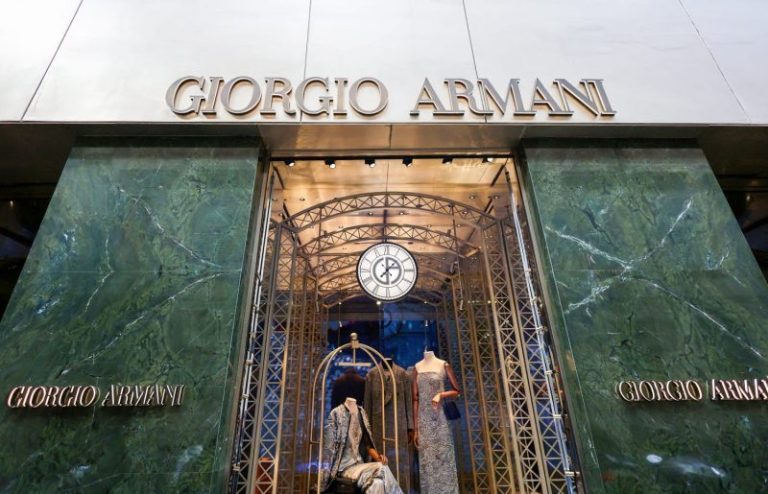
MILAN — Giorgio Armani has appointed deputy managing director Giuseppe Marsocci as chief executive with immediate effect, the Italian fashion house said on Thursday, confirming media reports.

Marsocci, who has been with the company for 23 years, serving as global chief commercial officer for the past six years, steps into the role previously held by founder Giorgio Armani, who died in September.

Armani kept a tight grip on the fashion empire he set up 50 years ago, but a new structure is emerging for its next phase.

Marsocci will oversee the planned sale of a 15% stake, with priority to be given to the luxury conglomerate LVMH.PA, beauty heavyweight L’Oreal OREP.PA, eyewear leader EssilorLuxottica ESLX.PA or another group of “equal standing,” as outlined in Armani’s will.

“His international professional experience, deep knowledge of the sector and the company, discretion, loyalty, and team spirit, together with his closeness to Mr. Armani in recent years, make Giuseppe the most natural choice to ensure continuity with the path outlined by the founder,” said Armani‘s partner and head of men’s design, Pantaleo Dell’Orco, who has taken on the role of chairman.

Dell’Orco has also recently been appointed to chair the Giorgio Armani Foundation, which controls 30% of the voting rights of his business empire. Dell’Orco already controls 40% of the luxury group’s voting rights.

The appointment of Marsocci, 61, was unanimously proposed by the Giorgio Armani Foundation, the luxury group said.

Giorgio Armani’s niece Silvana, head of women’s style, will be appointed vice president, according to the statement.

This post appeared first on NBC NEWS

It’s been yet another historic week for gold and silver, with both setting new price records.

The yellow metal broke through US$4,200 per ounce and then continued on past US$4,300. It rose as high as US$4,374.43 on Thursday (October 16), putting its year-to-date gain at about 67 percent.

Meanwhile, silver passed US$54 per ounce and is now up around 84 percent since 2025’s start.

Gold’s underlying price drivers are no secret — factors like central bank buying and waning trust in fiat currencies have been major themes in recent years, and they continue to provide support.

But it’s worth looking at a number of other elements currently in play.

Among them are a resurgence in the US-China trade war, which has ramped up geopolitical tensions, and the ongoing American government shutdown. The closure has stalled the release of key economic data ahead of the Federal Reserve’s next meeting later this month.

There have also been troubles at two regional banks in the US — they say they were the victims of fraud on loans to funds that invest in distressed commercial mortgages. Aside from that, Rich Checkan of Asset Strategies International sees western investors entering the market.

‘We don’t have a tidal wave or a tsunami by any stretch of the imagination, but the western investor is getting back into this,’ he said, noting that for the past few years his company has mostly been selling to high-net-worth individuals and people looking for deals. ‘Now we’re having flat-out sales.’

Checkan also weighed in on where gold is at in the current cycle, saying the indicators he tracks — including the gold-silver ratio, interest rates and the US dollar — don’t point to a top.

‘They can take a breather, there’s no question about that — you almost kind of want them to. But the reality is, there’s no top in sight,’ he said. ‘I’ve got about, I don’t know, seven, eight, nine different indicators I look at for the top in a bull market for gold. None of them are firing.’

When it comes to silver, the situation is a little more complicated.

Vince Lanci of Echobay Partners explained that the London silver market is facing a liquidity crisis — while there’s not a shortage of the metal, it isn’t in the right place, and that’s creating a squeeze.

Here’s what he said:

‘London, when it needs metal, is having a hard time getting it from Asia, because China is not cooperating with the west — for good reason in their mind. And for some reason, the US is not making its metal available as robustly as it used to, to help fill refill London’s coffers. And so that creates a short squeeze.

‘There’s enough metal in the world for current needs — let’s say for today’s needs. But it’s not where it should be. So it’s a dislocation.’

Lanci, who is also a professor at the University of Connecticut and publisher of the GoldFix newsletter on Substack, also made the point that although these circumstances are front and center now, they’re just one part of the larger ongoing bull market for silver. In his view, its growing status as a critical mineral will have major implications, and a triple-digit price is realistic.

Arcadia Economics interview

As a final point, I was recently interviewed by Chris Marcus of Arcadia Economics.

It was fun being on the other side of the camera for a change, and I have a new appreciation for everyone who sits down to answer my questions. Check out the interview below.

Securities Disclosure: I, Charlotte McLeod, hold no direct investment interest in any company mentioned in this article.

This post appeared first on investingnews.com

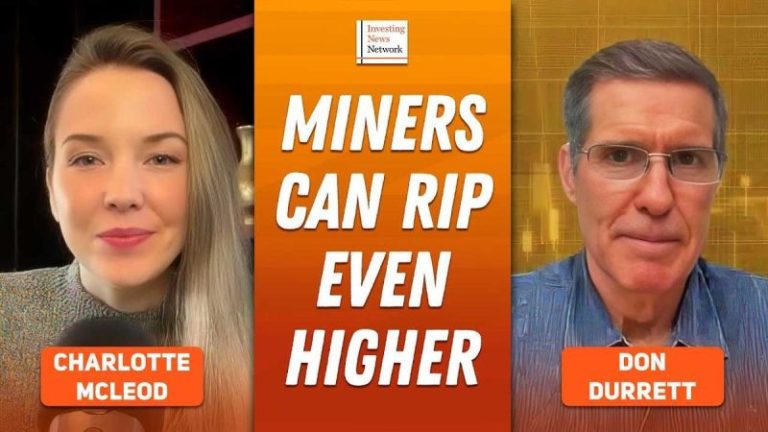
Don Durrett of GoldStockData.com outlines current gold and silver market dynamics, explaining why the metals continue to rise and how high they could go in the future.

He also shares his current gold and silver stock strategy.

Securities Disclosure: I, Charlotte McLeod, hold no direct investment interest in any company mentioned in this article.

This post appeared first on investingnews.com

Questcorp Mining Inc. (CSE: QQQ,OTC:QQCMF) (OTCQB: QQCMF) (FSE: D910) (the ‘Company’ or ‘Questcorp’) is pleased to further update investors on its maiden drilling program at the La Union gold and silver project in Sonora, Mexico, which continues on track and on budget. The program is now two-thirds complete with initial and second holes now completed at four of the five main targets. This update follows the company’s Aug. 6, 2025, announcement marking the start of the program and Aug. 19, Sept. 10 and Sept. 24 news releases chronicling the progress of the program.

Saf Dhillon, President and Chief Executive Officer, states: ‘The drilling had started of a little slower and then was paused for unusually heavy rains. The initial plan was to drill 4 to 6 holes but, the Riverside team and their subcontracted drillers have been making substantial progress and we’re now at 7 completed holes with plans for another 2 to 5. In total, four of the five target zones have been drill tested with at least one hole.’

Two holes have now probed the Union mine target beneath historic workings, cutting through the Clemente and Caborca formations – both key host units for past mining at Union, encountering the distinctive microconglomeratic carbonate unit that historically hosted mineralization at the bottom of the Union mine.

Two holes have been completed at Famosa, testing the dip and strike extension of the mineralization in the historic workings as well as the foot wall and hanging wall of a steeply west-dipping major structural feature. Riverside select grab sampling from the Famosa dump retuned gold grade highlights of 59.4 g/t gold along with 833 g/t silver.

Two holes tested the North Union target and one tested the El Cobre target again probing beneath the historic workings for chimney and manto mineralization.

Additional holes are planned for all four of these targets, with one hole also planned for the El Creston Target.

Figure 1. Drill progress to 2025-Oct-09. Geologic map with the tenure of the Union internal concession shown in pink. Manto and chimney type CRD targets are shown as red polygons. Riverside now controls all mineral tenures on this map. 

To view an enhanced version of this graphic, please visit:
https://images.newsfilecorp.com/files/10197/270509_719d25609410fb43_001full.jpg

Questcorp cautions investors grab sample by their very nature are select samples and may not be indicative of mineralization on the property.

Initial drilling is also planned for newly generated targets to the west of the known mineralization trend. The target is feeder zones along pre-mineral fault structures.

Once this initial campaign is completed, follow-up work will integrate assay results, ongoing surface programs, additional induced polarization (IP) surveys, and refined geological interpretations based on stratigraphy and structure observed in drilling.

Figure 2. Cross section looking west with conceptual drill targets and schematic drillhole traces. Assays from Riverside’s sampling of rock dump materials from the two mine areas are labeled in black. Red areas are interpreted as manto and chimney target bodies that are now well defined and drill ready. Assays shown on figures 1 and 2 have been previously released and disclosed as summarized below the geochemical QA/QC and in published NI 43-101 Report that Questcorp published 2025 on Sedar+. 

To view an enhanced version of this graphic, please visit:
https://images.newsfilecorp.com/files/10197/270509_719d25609410fb43_002full.jpg

Qualified Person & QA/QC:

The technical content of this news release has been reviewed and approved by R. Tim Henneberry’, P.Geo (BC) a Director of the Company and a Qualified Person under National Instrument 43-101.

Rock samples from previous exploration programs discussed above at the Project were taken to the Bureau Veritas Laboratories in Hermosillo, Mexico for fire assaying for gold. The rejects remained with Bureau Veritas in Mexico while the pulps were transported to Bureau Veritas laboratory in Vancouver, BC, Canada for 45 element ICP/ES-MS analysis using 4-acid digestion methods. A QA/QC program was implemented as part of the sampling procedures for the exploration program. Standards were randomly inserted into the sample stream prior to being sent to the laboratory.

About Questcorp Mining Inc.

Questcorp Mining is engaged in the business of the acquisition and exploration of mineral properties in North America, with the objective of locating and developing economic precious and base metals properties of merit. The company holds an option to acquire an undivided 100-per-cent interest in and to mineral claims totalling 1,168.09 hectares comprising the North Island copper property, on Vancouver Island, B.C., subject to a royalty obligation. The company also holds an option to acquire an undivided 100-per-cent interest in and to mineral claims totalling 2,520.2 hectares comprising the La Union project located in Sonora, Mexico, subject to a royalty obligation.

ON BEHALF OF THE BOARD OF DIRECTORS,

Saf Dhillon
President & CEO

Questcorp Mining Inc.
saf@questcorpmining.ca
Tel. (604-484-3031)

Suite 550, 800 West Pender Street
Vancouver, British Columbia
V6C 2V6.

Certain statements in this news release are forward-looking statements, which reflect the expectations of management regarding completion of survey work at the North Island Copper project. Forward-looking statements consist of statements that are not purely historical, including any statements regarding beliefs, plans, expectations or intentions regarding the future. Such statements are subject to risks and uncertainties that may cause actual results, performance or developments to differ materially from those contained in the statements. No assurance can be given that any of the events anticipated by the forward-looking statements will occur or, if they do occur, what benefits the Company will obtain from them. Except as required by the securities disclosure laws and regulations applicable to the Company, the Company undertakes no obligation to update these forward-looking statements if management’s beliefs, estimates or opinions, or other factors, should change.

To view the source version of this press release, please visit https://www.newsfilecorp.com/release/270509

News Provided by Newsfile via QuoteMedia
This post appeared first on investingnews.com

The gold price continued to rise in Q3, breaking through key milestones to set new all-time highs.

Much like the first half of the year, the yellow metal was supported by ongoing factors like central bank buying, geopolitical tensions and uncertainty caused by US trade and tariff policies.

And it wasn’t just the price of gold that soared — higher margins and a more positive outlook for the sector helped drive increases in gold stocks. Read on for a look at gold’s Q3 activity and the outlook for Q4.

What happened to the gold price in Q3?

Gold has gained nearly US$1,400 since starting the year at US$2,658 per ounce on January 2.

By the beginning of Q3, gold had climbed to US$3,338.86, and it remained rangebound at that level for most of July and August. However, it climbed above the US$3,400 mark on July 22 and then again on August 6.

Gold price, July 9 to October 10, 2025.

The price started to gain traction at the end of August, after US Federal Reserve Chair Jerome Powell signaled a change in policy during his remarks at the Jackson Hole Economic Policy Symposium. By September 2, the gold price had broken through US$3,500 for the first time, and by September 8 it had climbed above US$3,600.

As the month wore on, gold continued its unprecedented climb. It broke through US$3,700 on September 22, US$3,800 on September 29 and reached its quarterly high of US$3,858.41 on September 30.

The price continued on its upward trajectory as the fourth quarter began, rising above US$3,900 on October 6, and finally setting a new record high of US$4,040.42 on October 8.

What’s driving gold demand?

Although there was a dip in central bank gold purchases in July, with just 10 metric tons added to reserves, the World Gold Council (WGC) reported that the buying trend that has developed over the past few years remains firm.

In August, central banks once again increased their gold acquisitions, purchasing a total of 19 metric tons. Overall, central banks bought 415 metric tons of gold in H1, bringing the 2025 total to 444 metric tons as of the end of August.

Although it appeared to pause its gold buying in August, the National Bank of Poland has been the top purchaser of gold in 2025, adding 67 metric tons. It has vowed to have 20 to 30 percent of its international reserves in gold.

The WGC notes that seven central banks boosted their reserves in August. Kazakhstan was the leading buyer, adding 8 metric tons to its holdings and bringing its year-to-date increase to 32 metric tons. Turkey, Bulgaria, China, Uzbekistan, Ghana, Indonesia and the Czech Republic each added 2 metric tons. Russia was the only seller in August, divesting itself of 3 metric tons of gold; the WGC suggests its reduction was owed to its coin-minting program.

It wasn’t just central banks buying gold. Western investors helped drive record exchange-traded fund (ETF) inflows of US$26 billion for the third quarter, with North American markets accounting for US$16.1 billion.

Total assets under management surged to US$472 billion, a 23 percent increase over the second quarter, with holdings rising to 3,838 metric tons, just shy of the 3,929 metric tons recorded in November 2020.

Why are investors interested in gold?

Mind Money CEO Julia Khandoshko suggested that geopolitics is a driving force behind gold’s record-breaking run, noting that tensions are high as the world becomes increasingly divided into “risk” and “stability” zones.

While geopolitics may be a primary factor, it’s far from the only one.

The third quarter saw declining yield curves, a weakening US dollar and a 25 basis point interest rate cut from the Fed in September, all of which added tailwinds to the gold price. Looking forward, the expectation is that the Fed will make further rate cuts before the end of the year, which could further fuel a rising gold price.

‘The history of the last hundred years shows that gold grows confidently at low rates. Combine this with stubborn inflation, and we can say with confidence that it will create more space for gold’s price rise,” Khandoshko stated.

Additionally, there is an expectation that a weaker US dollar will help to keep the price of gold elevated. So far this year, the US Dollar Index has declined 8 percent.

“The US dollar is a critical component to what happens to gold, because gold is denominated in US dollars, so the weaker the US dollar, the stronger the commodity price. What we’re expecting to see over the next 12 to 24 months is continued devaluation of the US dollar, which means gold should continue to be stronger going forward,” he said.

Among the recent drags on the dollar is fear of a prolonged shutdown of the US federal government after lawmakers failed to reach an agreement to continue funding government agencies and employees.

In the aftermath of the shutdown, the US Dollar Index posted its worst week since July. In an October 3 Reuters article, Thierry Wizman, monetary strategist with Macquarie, suggests that a prolonged shutdown could have a significant impact on trust in the federal government and further impact the strength of the greenback.

Gold price forecast for 2025

Hodaly sees the factors behind gold’s price rise remaining in place for the foreseeable future.

“We are expecting this could go much higher, at least 10 to 20 percent higher in the near term,’ he said.

‘Nothing has changed with the demand outlook for gold and the projected weakness of the US dollar, and that’s what’s going to drive the commodity price higher,’ added the executive.

Gold equities are also expected to benefit as the rising price boosts their margins and share prices.

Leading producers such as Agnico Eagle Mines (TSX:AEM,NYSE:AEM), Newmont (NYSE:NEM,ASX:NEM) and Barrick Mining (TSX:ABX,NYSE:B) have seen their share prices rise by over 100 percent in 2025.

The junior space has also been impacted, with PPX Mining (TSXV:PPX,OTC Pink:SNNGF) posting a year-to-date gain of 642 percent as of October 1, and San Lorenzo Gold (TSXV:SLG,OTC Pink:SNLGF) increasing 629 percent.

With gold now trading above US$4,000, the sector could attract renewed interest and offer new opportunities for investors. Those seeking to include gold or gold stocks in their portfolios might consider options ranging from the relative safety of ETFs and established producers to riskier assets at the development or exploration stages.

Securities Disclosure: I, Dean Belder, hold no direct investment interest in any company mentioned in this article.

This post appeared first on investingnews.com