Author

admin

Browsing


Via IBN IBN a multifaceted communications organization engaged in connecting public companies to the investment community, is pleased to announce the release of the latest episode of The MiningNewsWire Podcast as part of its sustained effort to provide specialized content distribution via widespread syndication channels.


The MiningNewsWire Podcast features revealing sit-downs with executives who are shaping the future of the global mining industry. The latest episode features Chairman Kal Malhi and CEO Paul Ténière of LaFleur Minerals Inc. (CSE: LFLR,OTC:LFLRF) (OTCQB: LFLRF) , a Canadian exploration and development company focused on gold assets in Québec’s Abitibi region.


To begin the interview, Ténière outlined LaFleur Minerals’ strategy as a near-term gold producer.


‘We’re an interesting company in the fact that we have an advanced gold project in Québec’s Abitibi Gold Belt and a nearby permitted mill,’ he said. ‘That puts us in a strong position as a near-term gold producer.’


Malhi, who is also the founder of Bullrun Capital , then detailed how LaFleur acquired its flagship assets and how the company is positioned for rapid development.


‘Two years ago, I started looking at the opportunities in the gold mining sector. I didn’t want to go and acquire a grassroots project… but I did come across a bankruptcy,’ he explained. ‘We were able to win a bid on the Beacon Gold Mill, which Monarch had invested $20 million into upgrading. It’s fully permitted and ready to rock. We also acquired a nearby gold deposit called the Swanson Gold Deposit… We’ve turned that project into LaFleur Minerals. Now, with gold prices surging, the economics have changed phenomenally — and we may look at producing not just from our own property, but also from others in the region.’


Ténière closed by emphasizing LaFleur’s accelerated timeline and production-ready infrastructure.


‘We have a mining lease at Swanson, which allows us to get into production much faster than we could otherwise,’ he said. ‘With gold hitting over $3,000 an ounce, it makes a lot of these deposits very economically viable… It’s an exciting time to be in gold, and we’re in a great position to move quickly.’


Join IBN’s Stuart Smith for a conversation with LaFleur Minerals Chairman Kal Malhi and CEO Paul Ténière on restarting gold production in Québec, scaling a district-scale asset, and accelerating into the gold producer category.


To hear the whole podcast and subscribe for future episodes, visit https://podcast.miningnewswire.com  


The latest installment of The MiningNewsWire Podcast continues to reinforce IBN’s commitment to the expansion of its robust network of brands, client partners, followers and the growing IBN Podcast Series . For more than 19 years, IBN has leveraged this commitment to provide unparalleled distribution and corporate messaging solutions to 500+ public and private companies .


To learn more about IBN’s achievements and milestones via a visual timeline, visit:   https://IBN.fm/TimeLine   


  About LaFleur Minerals Inc.  


 LaFleur Minerals Inc. is focused on the development of district-scale gold projects in the Abitibi Gold Belt near Val-d’Or, Québec. The company’s mission is to advance mining projects with a laser focus on its resource-stage Swanson Gold Project and the Beacon Gold Mill, which have significant potential to deliver long-term value.


The Swanson Gold Project is approximately 16,600 hectares (166 km 2 ) in size and includes several prospects rich in gold and critical metals previously held by Monarch Mining, Abcourt Mines, and Globex Mining. LaFleur has recently consolidated a large land package along a major structural break that hosts the Swanson, Bartec, and Jolin gold deposits and several other showings which make up the Swanson Gold Project. The Swanson Gold Project is easily accessible by road with a rail line running through the property allowing direct access to several nearby gold mills, further enhancing its development potential.


 LaFleur Minerals’ fully-refurbished and permitted Beacon Gold Mill is capable of processing over 750 tonnes per day and is being considered for processing mineralized material at Swanson and for custom milling operations for other nearby gold projects.


For more information, visit the company’s website at www.LaFleurMinerals.com  


  About IBN  


  IBN consists of financial brands introduced to the investment public over the course of 19+ years. With IBN, we have amassed a collective audience of millions of social media followers. These distinctive investor brands aim to fulfill the unique needs of a growing base of client-partners. IBN will continue to expand our branded network of highly influential properties, leveraging the knowledge and energy of specialized teams of experts to serve our increasingly diversified list of clients.


Through our Dynamic Brand Portfolio (DBP) , IBN provides: (1) access to a network of wire solutions via InvestorWire to reach all target markets, industries and demographics in the most effective manner possible; (2) article and editorial syndication to 5,000+ news outlets ; (3) Press Release Enhancement to ensure maximum impact; (4) full-scale distribution to a growing social media audience; (5) a full array of corporate communications solutions ; and (6) total news coverage solutions.


For more information, please visit https://www.InvestorBrandNetwork.com  


Please see full terms of use and disclaimers on the InvestorBrandNetwork website applicable to all content provided by IBN, wherever published or re-published: http://IBN.fm/Disclaimer  


  Forward-Looking Statements  


This release contains forward-looking statements within the meaning of Section 27A of the Securities Act of 1933, as amended and Section 21E of the Securities Exchange Act of 1934, as amended. All forward-looking statements are inherently uncertain as they are based on current expectations and assumptions concerning future events or future performance of the company. Readers are cautioned not to place undue reliance on these forward-looking statements, which are only predictions and speak only as of the date hereof. In evaluating such statements, prospective investors should review carefully various risks and uncertainties identified in this release and matters set in the company’s SEC filings. These risks and uncertainties could cause the company’s actual results to differ materially from those indicated in the forward-looking statements.


  Corporate Communications  


IBN
Austin, Texas
www.InvestorBrandNetwork.com  
512.354.7000 Office
Editor@InvestorBrandNetwork.com  


News Provided by GlobeNewswire via QuoteMedia

This post appeared first on investingnews.com


 FPX Nickel Corp. (TSXV: FPX) (OTCQB: FPOCF) (‘ FPX ‘ or the ‘ Company ‘) is pleased to provide an update on its Normal Course Issuer Bid (‘ NCIB ‘) that was announced on December 2, 2024 . Since December 5, 2024 the Company has repurchased a total of 720,000 common shares (‘ Common Shares ‘) of the Company at an average price of $0.24 per share under the NCIB.


The repurchased shares represent progress toward the Company’s ability to acquire up to an aggregate of 5,000,000 Common Shares, representing approximately 2% of the Company’s issued and outstanding shares, over the 12-month period ending December 5, 2025 . All shares repurchased under the NCIB have been cancelled.


Purchases under the NCIB continue to be executed through open market transactions on the TSX Venture Exchange, with the acquisition price determined by the prevailing market conditions at the time of each transaction. Cormark Securities Inc. is managing the NCIB on behalf of FPX.


  About FPX Nickel Corp.  


 FPX Nickel Corp.  is focused on the exploration and development of the Decar Nickel District, located in central British Columbia , and other occurrences of the same unique style of naturally occurring nickel-iron alloy mineralization known as awaruite.  For more information, please view the Company’s website at   https://fpxnickel.com/.   


On behalf of FPX Nickel Corp.


‘Martin Turenne’
Martin Turenne , President, CEO and Director


   Forward-Looking Statements   


  Certain of the statements made and information contained herein is considered ‘forward-looking information’ within the meaning of applicable Canadian securities laws. These statements address future events and conditions and so involve inherent risks and uncertainties, as disclosed in the Company’s periodic filings with Canadian securities regulators. Actual results could differ from those currently projected. The Company does not assume the obligation to update any forward-looking statement.  


  Neither the TSX Venture Exchange nor its Regulation Services Provider accepts responsibility for the adequacy or accuracy of this release.  


SOURCE FPX Nickel Corp.


  View original content to download multimedia: http://www.newswire.ca/en/releases/archive/July2025/24/c8569.html  


News Provided by Canada Newswire via QuoteMedia

This post appeared first on investingnews.com

Corporations are continuing to spend on business travel, but are being strategic about how they allocate those dollars amid ongoing trade uncertainties, according to new reports from the travel and expense platform Navan and the Global Business Travel Association.

Corporate travel spending activity increased 15% year over year in the second quarter of 2025, according to a business travel index published Tuesday from Navan.

Navan’s index, backed by Nasdaq, is derived from millions of corporate business transactions on its platform. It examines the amount spent and number of transactions relating to airline travel, hotel reservations and expense transactions from corporate cards.

Amy Butte, Navan’s CFO, said during an interview that from talking with other chief financial officers over the past few months, she never got the sense that corporate leaders would stop spending on business travel altogether. Instead, they are in “wait and see” mode.

“If you’re making choices about where you’re being cautious, we’re not seeing people be cautious in the area of relationship building, either with their customers or with their teammates. We’re still seeing the spend allocated towards travel as a key component of any business strategy,” Butte said.

But while global business travel is expected to reach a new high of $1.57 trillion in 2025, according to a Monday report by the Global Business Travel Association, that total represents 6.6% year-over-year growth, which is less than the 10.4% increase that was previously predicted. GBTA cited trade tensions, policy uncertainty and economic pressures as the reasons for the more moderate growth.

A string of sentiment polls by GBTA also shows that corporate travel optimism for the rest of 2025 appears muted. The percentage of respondents who said they were optimistic about the overall outlook for the business travel industry in 2025 dropped sharply from 67% in November 2024 to 31% in April and declined slightly again this month to 28%.

The findings from both reports, grouped together with commentary from airline CEOs last week, show C-suite leaders are still largely left in wait-and-see mode amid President Donald Trump’s fluid tariff policies, but companies appear now to have a better read on how they will manage the uncertainty.

“Historically, corporate travel has been the first thing, one of the easiest things, to minimize if you’re a company,” Delta Air Lines CEO Ed Bastian said during the company’s earnings call this month, adding that corporate travel on the airline has been flat on a year-over-year basis.

But Butte said that Navan has not seen a drop-off in business travel. Instead, businesses are shifting how they are spending.

For example, Butte said businesses are continuing to commit to individual, face-to-face meetings, rather than spending on large group outings. The Navan index shows that spending on personal meals, meaning one-on-one meetings held over a meal, was up 9.8% from last year, while spending on team events and meals was the only category in the report that declined.

Navan did see some compression earlier in the year in the share of higher-priced airline tickets purchased that were first class or business class, Butte said, but she added that the platform has since seen an acceleration as uncertainty has lessened.

Airfare prices have also declined so far this year, which means business and consumers alike are spending less on plane tickets. Airfare fell 3.5% in June from a year earlier while inflation overall rose, according to the Bureau of Labor Statistics.

GBTA CEO Suzanne Neufang said during an interview that CFOs have not cut travel spending off entirely, but are looking for efficient ways to get employees on the road. This may look like booking multicity trips, scheduling multiple meetings per trip or booking fewer trips per month, she said.

Neufang said the business travel industry has been focused over the past five years on making sure every trip has a purpose and delivers a return on investment.

“Gone are the days when there’s really frivolous business traveling,” Neufang said.

The new findings on business travel spending also come as airlines are reporting their quarterly earnings.

When Delta reported earnings on July 10, Bastian said he expects both consumer and corporate confidence to improve in the second half of the year, creating an environment for travel demand to accelerate.

Delta and other airlines saw travel demand come in weaker than expected at the beginning of the year, especially from price-sensitive customers traveling domestically. Bastian said back in April that Trump’s trade policies were hurting bookings.

Bastian took a more positive tone this month, telling CNBC that corporate travel has stabilized as businesses have more clarity and confidence than they did earlier this year. But he said corporate travel is in line with last year, not the 5% to 10% growth Delta expected at the start of the year.

Meanwhile, Delta President Glen Hauenstein said on an earnings call this month that corporate travel trends are “choppy” and overall corporate volumes are expected to be “flattish” over last year.

United Airlines reported earnings last week. CEO Scott Kirby said during the company’s call with analysts that so far this month, the airline has seen a double-digit acceleration in business demand as uncertainty has declined.

Andrew Nocella, United’s executive vice president and chief commercial officer, added that the business traffic growth is “across the board” and not restricted to any singular hub or vertical, which he said reflects lessening macroeconomic uncertainty.

Southwest Airlines, Alaska Airlines and American Airlines are scheduled to report their quarterly results this week.

This post appeared first on NBC NEWS

There’s a new player making waves in an industry dominated by big banks.

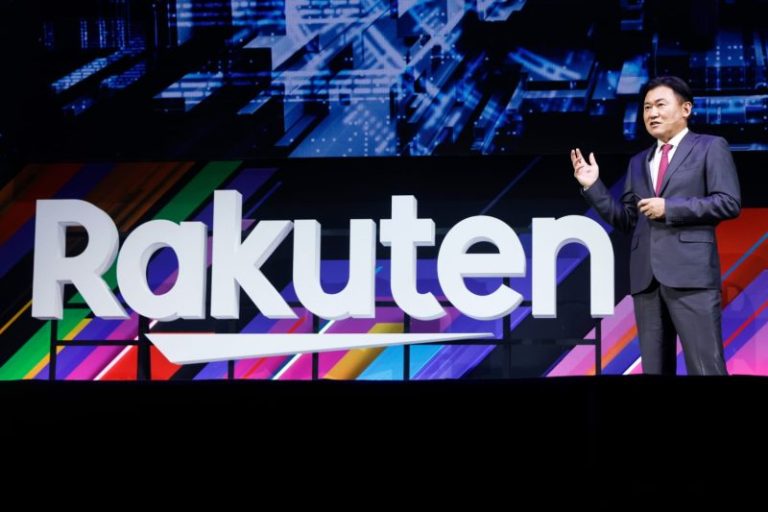
Imprint, the 5-year-old credit card startup, beat out banks in a competitive bidding process for a new co-branded card from online shopping platform Rakuten, CNBC has learned.

The deal is the most recent sign that Imprint is gaining traction in the co-branded credit card industry.

The New York-based startup also just raised $70 million in additional capital, boosting its valuation by 50% to $900 million less than a year from its previous round, according to Imprint CEO Daragh Murphy.

Credit card partnerships with retailers, airlines and hotels are some of the most hotly contested deals in finance. Brands often go through extensive bidding processes to select a card company, while the companies compete for the right to issue cards to millions of loyal customers. The industry’s largest players include JPMorgan Chase, Capital One, Citigroup and Synchrony.

“We’re talking to Fortune 500 companies about being their partner and them choosing us over Synchrony, over Barclays, over U.S. Bank,” Murphy said in an interview. “We have to kind of walk and talk like we’re a big, important company, even though we still have a startup ethos.”

That’s why the company recently raised capital, bringing its total to $330 million, most of which is held on the firm’s balance sheet, according to Murphy. Those funds help show potential partners that Imprint has staying power, he said.

Imprint also has about $1.5 billion in credit lines from banks including Citigroup, Truist and Mizuho, which it uses to extend loans to card customers, Murphy said. The startup is behind the cards from brands including Eddie Bauer, Brooks Brothers and Turkish Airlines.

To offer its credit cards, Imprint usually partners with one of two small banks, First Electronic Bank or First Bank and Trust. Imprint handles the customer experience, including the technology and credit decisions, while using the credit card rails of regulated banks.

In the case of the Rakuten card, Imprint is relying on the American Express network, which allows users to get Amex purchase protections and other perks. It is using First Electronic Bank to help issue the cards.

“Though we’re not a regulated bank, we’re effectively building a bank,” Murphy said. “We have to do all the same things as a bank. We’re a capital markets company; we’re a compliance company; we’re a risk and credit and fraud company; we’re a technology company.”

To gain a toehold in the market for co-branded cards, which can be used anywhere credit cards are accepted, Imprint decided it would focus on a seamless digital experience for customers, Murphy said. That requires technology integration that is difficult for established players who rely on third-party companies including Fiserv to complete transactions, he said.

“The banks are in trouble because they don’t own the technology that the credit card runs on,” Murphy said. “Every credit card in your wallet, whether it’s Chase … or from Citi or Synchrony, they rely on two or three different third parties to power the technology.”

Imprint also decided to set itself apart by making it easy for customers to pay off their loans, Murphy said. Card companies including Bread Financial and Synchrony make a far larger percentage of revenue from late fees than Imprint does, he said.

“You shouldn’t have all these regressive late fees, and you shouldn’t make it hard to pay,” Murphy said. “The easier we make it to pay, the more likely you are to use the card, and the more likely you are to use the card, the better it is for everybody.”

Finally, Murphy said the company’s low customer acquisition costs allow it to fund more rewards for card users.

The new Rakuten card, for instance, offers users an extra 4% in cash back in addition to what customers earn through shopping on the online portal, capped at $7,000 in spending per year.

Users also earn 10% in cash back while dining at Rakuten’s partner restaurants, and 2% cash back on groceries and non-partner restaurants.

The previous Rakuten credit card was issued by Synchrony and discontinued in 2022.

This post appeared first on NBC NEWS

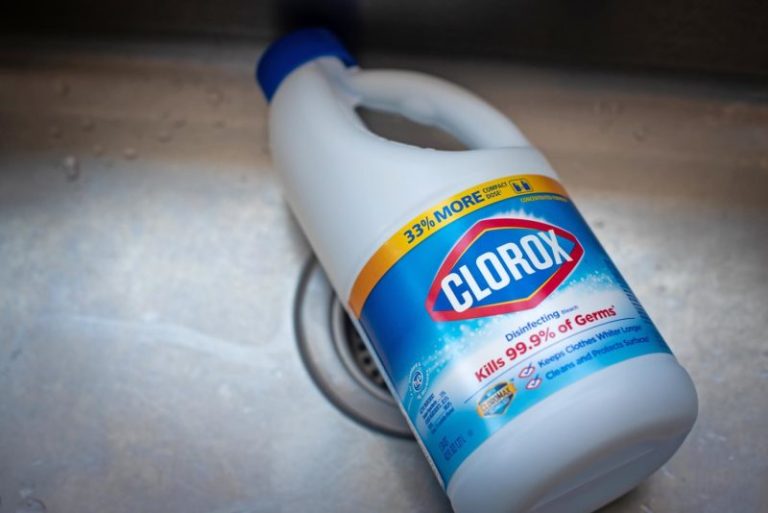
WASHINGTON — Bleach maker Clorox said Tuesday that it has sued information technology provider Cognizant over a devastating 2023 cyberattack, alleging that the hackers pulled off the intrusion simply by asking the tech company’s staff for employees’ passwords.

Clorox was one of several major companies hit in August 2023 by the hacking group dubbed Scattered Spider, which specializes in tricking IT help desks into handing over credentials and then using that access to lock them up for ransom. The group is often described as unusually sophisticated and persistent, but in a case filed in California state court on Tuesday, Clorox said one of Scattered Spider’s hackers was able to repeatedly steal employees’ passwords simply by asking for them.

“Cognizant was not duped by any elaborate ploy or sophisticated hacking techniques,” according to a copy of the lawsuit reviewed by Reuters. “The cybercriminal just called the Cognizant Service Desk, asked for credentials to access Clorox’s network, and Cognizant handed the credentials right over.”

Cognizant did not immediately return a message seeking comment on the suit, which was not immediately visible on the public docket of the Superior Court of Alameda County. Clorox provided Reuters with a receipt for the lawsuit from the court.

Three partial transcripts included in the lawsuit allegedly show conversations between the hacker and Cognizant support staff in which the intruder asks to have passwords reset and the support staff complies without verifying who they are talking to, for example by quizzing them on their employee identification number or their manager’s name.

“I don’t have a password, so I can’t connect,” the hacker says in one call. The agent replies, “Oh, ok. Ok. So let me provide the password to you ok?”

The 2023 hack caused $380 million in damages, Clorox said in the suit, about $50 million of which were tied to remedial costs and the rest of which were attributable to Clorox’s inability to ship products to retailers in the wake of the hack.

Clorox said the clean-up was hampered by other failures by Cognizant’s staff, including failure to de-activate certain accounts or properly restore data.

This post appeared first on NBC NEWS

The stock market feels like it’s holding its breath ahead of Big Tech earnings. The first two days of the trading week were mostly quiet, but Tuesday gave us a few nuggets worth chewing on.

The S&P 500 ($SPX) squeaked out another record close, up by a modest +0.06%. It’s barely a blip, but it keeps the uptrend intact.

Tech momentum slowed down a tad, but we didn’t see a wave of selling. It was more like a little profit-taking after a strong run. No reason to hit the panic button just yet.


StockCharts Tip: Head to the Market Summary page and take a glance at the Market Factors panel. On Tuesday, Large-Cap Growth and Large-Cap Momentum were the only factors in the red (see image below).


FIGURE 1. MARKET FACTORS PANEL IN THE MARKET SUMMARY PAGE. Here you see the one-day performance metrics of the factors. You can change the timeframe using the dropdown menu at the top of the page. Image source: StockCharts.com. For educational purposes.

In the US Sectors panel in the Market Summary page, Technology was the lone S&P 500 sector that finished lower. Tuesday’s action can be seen in the StockCharts MarketCarpet of the S&P 500, based on a one-day performance.

FIGURE 2. MARKETCARPET FOR THE S&P 500. The Technology sector took a bit of a hit on Tuesday, but other sectors saw gains. Image source: StockCharts.com. For educational purposes.

The big names — NVIDIA (NVDA), Microsoft Corp. (MSFT), Amazon.com (AMZN), Meta Platforms (META), and Broadcom (AVGO) — were all in the laggard camp. This pause in tech stocks comes right before a wave of Big Tech earnings.

Some of the big tech companies reporting earnings this week are Alphabet, Inc. (GOOGL), Tesla, Inc. (TSLA), and International Business Machines (IBM). All three report on Wednesday after the close. If GOOGL and TSLA come in hot with solid numbers and upbeat guidance, the S&P 500 and Nasdaq Composite ($COMPQ) could catch a tailwind. (Fun fact: both stocks closed higher on Tuesday.)

Despite Tuesday’s tech wobble, major support levels are holding. The Nasdaq Composite remains comfortably above its 20-day exponential moving average (EMA), and breadth is improving (see chart below).

FIGURE 3. DAILY CHART OF THE NASDAQ COMPOSITE. The index is above its 20-day exponential moving average, and market breadth is improving. Chart source: StockCharts.com. For educational purposes.

Small Caps Still in the Game

We’re also seeing small-cap stocks rising. When small-caps participate in the market’s upside move, it’s an indication of a healthy stock market. Healthcare stocks represent a significant portion of the small-cap indexes, which explains why Health Care was the top-performing sector on Tuesday. 

Another area that stole the spotlight was homebuilders. The SPDR S&P Homebuilders ETF (XHB) broke above its 200-day simple moving average (SMA), a positive sign for the struggling industry group (see chart below). Its Relative Strength Index (RSI) indicates that momentum is relatively strong.

FIGURE 4. SPDR S&P HOMEBUILDERS ETF (XHB). The ETF broke above its 200-day simple moving average, and momentum is relatively strong. XHB has underperformed SPY over the last year. Chart source: StockCharts.com. For educational purposes.

Over the last year, XHB has lagged the SPDR S&P 500 ETF (SPY) by roughly 18%. Strong earnings from DR Horton, Inc. (DHI) and PulteGroup, Inc. (PHM), however, have given the group a welcome boost, even with a soft housing backdrop. We’ll get the June Existing Home Sales data on Wednesday. A stronger-than-expected report could add fuel to XHB’s rally.


StockCharts Tip: The XHB chart above is part of the  Market Summary ChartPack, which is free for StockCharts subscribers. Install it, and you’ll have a ready-to-use list of charts for days like this.


Also worth a peek is the U.S. Dow Jones Home Construction Index ($DJUSHB), which topped the Dow Industries list (check the US Industries panel in Market Summary and hit the Dow Industries tab).

Gold and Silver Nudge Higher

While tech cooled and home builders heated up, precious metals prices climbed higher. Gold ($GOLD) rose 0.92% and silver ($SILVER) gained 0.94%. Gold sits just under its all-time high, and silver is back to levels we haven’t seen since 2011.

The Big Picture: Still a Healthy Market Environment

None of Tuesday’s actions suggests a crack in the market’s growth story. We are in the thick of earnings season, and that always brings uncertainty and volatility. Expectations are high for Big Tech, especially in light of a weaker dollar. Stay patient, watch the price action, and let the charts guide your next move.


Disclaimer: This blog is for educational purposes only and should not be construed as financial advice. The ideas and strategies should never be used without first assessing your own personal and financial situation, or without consulting a financial professional.

The cannabis market has faced unexpected challenges in 2025, despite initial optimism for rescheduling in the US. 

While US federal regulatory uncertainty and banking remain persistent, companies are shifting focus to match changes in consumer behavior. The growing popularity of edibles and rising interest in cannabis-infused beverages reflect evolving demand in a persevering industry.

Cannabis companies in the sector continue to move forward and develop their offerings, and with potential catalysts ahead, some investors are interested in getting involved. Looking at the key players is often a good place to get started, so this list of US and Canadian cannabis stocks covers the companies with the largest presence in two major cannabis ETFs.

This list of the biggest publicly traded cannabis companies was put together based on the top-weighted cannabis stocks included in the AdvisorShares Pure US Cannabis ETF (ARCA:MSOS) and the Horizons Marijuana Life Sciences Index ETF (TSX:HMMJ) as of July 16, 2025. Share price information for the companies was accurate as of that time.

US cannabis market

Cannabis is federally illegal in the US, but state market openings have allowed some operators to thrive. Typically these firms set up vertically integrated businesses with a focus on branded products, retail networks and licenses.

While these companies have adapted to regulatory challenges, they have much to gain from country-level reform in the US, and are eager to see more welcoming federal laws that will allow their businesses to develop further.

Top cannabis stocks in the AdvisorShares Pure US Cannabis ETF

The AdvisorShares Pure US Cannabis ETF provides exposure to public companies exclusively operating within the US cannabis industry. By investing in companies that are working in states with clear guidelines, MSOS gives investors a way to be more selective about the types of cannabis companies they’re investing in.

1. Green Thumb Industries (CSE:GTII,OTCQX:GTBIF)

ETF weight: 32.06 percent
Market cap: US$1.36 billion
Share price: US$5.72

Green Thumb Industries is a multi-state operator (MSO) with headquarters in Chicago, Illinois.

The company is involved in the entire process of the industry, from cultivating and producing cannabis products to selling them in its own retail stores, of which there are many across the United States. Green Thumb Industries owns a portfolio of well-known cannabis brands like Rythm, Beboe, Dogwalkers, Incredibles and Doctor Solomon’s.

2. Trulieve Cannabis (CSE:TRUL,OTCQX:TCNNF)

ETF weight: 22.59 percent
Market cap: US$781.51 million
Share price: US$4.09

Trulieve is another major player in the cannabis industry, with a strong focus on medical cannabis. The company offers a diverse selection of cannabis products, including flower, pre-rolls, concentrates, edibles, topicals and more.

Vertically integrated, Trulieve Cannabis has a dominant market share in its home state of Florida, as well as in Arizona and Pennsylvania. In June 2024, the company opened its 200th dispensary in the United States.

3. Curaleaf Holdings (TSX:CURA,OTCQX:CURLF)

ETF weight: 15.37 percent
Market cap: US$764.16 million
Share price: US$1.00

Curaleaf Holdings has a significant presence in the US cannabis market, with around 150 dispensaries and several cultivation centers across 17 states. The company is also continuing its expansion into the European cannabis sector, where it already has a strong presence. Curaleaf has a wide range of brands covering a variety of cannabis product types, including flower, vapes, edibles and hemp-derived THC beverages.

4. Glass House Brands (CBOE:GLAS.A.U,OTC Pink:GHBWF)

ETF weight: 7.32 percent
Market cap: US$269.57 million
Share price: US$5.40

Glass House Brands is a vertically integrated cannabis company with a focus on the California market. The company is has placed an emphasis on sustainable practices at its large-scale cultivation facility in Camarillo, California. Glass House Brands is also a major producer and wholesaler of cannabis biomass and cannabis oil to other manufacturers and extractors in the industry.

Glass House offers a diverse range of cannabis products through its various brands and retail operations, including edibles and wellness products under its Mama Sue Wellness brand.

5. Cresco Labs (CSE:CL,OTCQX:CRLBF)

ETF weight: 5.53 percent
Market cap: US$235.9 million
Share price: US$0.53

Cresco Labs is a vertically integrated multi-state cannabis operator in the United States. A leading US cannabis company, it is known for its strong brands like Cresco, High Supply and Good News.

Cresco Labs controls its supply chain from cultivation to retail, offering a wide range of products. While it has its own stores, it focuses heavily on wholesale, getting its products into dispensaries across the country.

Canadian cannabis market

In 2018, Canada became the first G7 nation to legalize adult-use cannabis and create its own streamlined program regulated by both federal and provincial powers. Since then, companies working in the country have faced ups and downs in dealing with tight marketing rules, high tax rates and ongoing competition with the unregulated market.

Top cannabis stocks in the Global X Marijuana Life Sciences Index ETF

The Global X Marijuana Life Sciences Index ETF was the first cannabis ETF available in Canada, and it holds a variety of publicly traded companies involved in cannabis, along with several non-flower companies.

While HMMJ does not invest in US-based multi-state operators, it does have exposure to the US market through Canadian companies that have interests in the US cannabis industry. Overall, HMMJ is designed to give investors broad exposure to the cannabis industry, with a particular focus on North American companies.

1. Jazz Pharmaceuticals (NASDAQ:JAZZ)

ETF weight: 16.47 percent
Market cap: US$7.02 billion
Share price: US$116.08

Jazz Pharmaceuticals is a global biopharmaceutical company focused on developing and commercializing medicines for people with serious diseases, often with limited or no other options. They have a diverse portfolio of products in areas like sleep disorders, cancer and epilepsy.

Jazz Pharmaceuticals’ cannabis business stems from their 2021 acquisition of GW Pharmaceuticals and its epilepsy medicine Epidiolex for a whopping US$7.2 billion. This made big waves as it was one of the largest moves by a traditional pharmaceutical company into the cannabis space.

2. Cronos Group (NASDAQ:CRON,TSX:CRON)

ETF weight: 13.14 percent
Market cap: US$774.69 million
Share price: US$2.01

Cronos Group is the Canada-based company behind the Spinach, Peace Naturals and Lord Jones cannabis brands. In Canada, Cronos’ Spinach brand is in the top three for retail sales in the flower and edible categories.

The company also has a presence in Israel and Germany with its brand Peace Naturals. In late 2023, the company re-entered the German medical cannabis market through its partnership with a German medical cannabis company called Cansativa Group. Cronos serves the Israeli market through its subsidiary Cronos Israel.

3. Innovative Industrial Properties (NYSE:IIPR)

ETF weight: 11.28 percent
Market cap: US$1.51 billion
Share price: US$53.99

Innovative Industrial Properties is a real estate investment trust that provides specialized real estate opportunities for cannabis companies in 19 states. Its properties mostly consist of processing plants, greenhouses and warehouses, with retail spaces making up a small percentage of its portfolio.

The firm has provided long-term absolute net lease agreements to some of the cannabis industry’s biggest names, including Green Thumb, TILT Holdings (NEO:TILT,OTCQB:TLLTF), Ascend Wellness (CSE:AAWH.U,OTCQX:AAWH) and Curaleaf. The company’s sale-leaseback program has helped cannabis companies access a source of capital, a much-needed workaround in the US where there are fewer traditional financing options.

4. Scotts Miracle-Gro Co (NYSE:SMG)

ETF weight: 10.74 percent
Market cap: US$3.92 billion
Share price: US$67.92

Scotts Miracle-Gro is a leader in lawn and garden products, but its involvement in the cannabis industry comes through its Hawthorne Gardening Company subsidiary. Hawthorne is an ancillary provider, supplying essential hydroponic and indoor growing equipment, nutrients, lighting and environmental control systems for large-scale cannabis production.

5. SNDL (NASDAQ:SNDL)

ETF weight: 7.8 percent
Market cap: US$383.4 million
Share price: US$1.49

SNDL, formerly known as Sundial Growers, is the largest private-sector liquor and cannabis retailer on the Canadian market. They cultivate and sell cannabis products under various brands, including Top Leaf, Sundial Cannabis, Palmetto and more. They focus on premium indoor cultivation and have a strong presence in the Canadian market.

SNDL has faced financial challenges in the past, but in Q1 2025 the company’s cannabis business revenue grew year-over-year for the 13th consecutive quarter. The company has continued to make strategic investments in 2025.

FAQs for investing in cannabis

Are cannabis stocks worth investing in?

Each investor will have to think and act for themselves to manage their own risk exposure, but it’s no secret that cannabis stocks have taken a beating for some time now. While financial experts point to the long-term upside of US operators as more state markets expand, the stock market has not been kind to these names lately.

Are cannabis stocks considered a high- or low-risk investment?

Cannabis investments are extremely young in the grand scheme of the investment universe. There is an exciting and refreshing element to these stocks, but the market has always been characterized by volatility and unpredictability.

While wild, spontaneous swings in the open market have become less common, cannabis stocks are often moved — both positively and negatively — by big pieces of market news or legalization updates.

Why do people buy cannabis stocks?

Investors may choose to get exposure to the cannabis market as a way to participate in the development of a new drug market with consumer packaged goods capabilities. Some participants are bullish on the industry’s long-term outlook and expect more welcoming laws in the US and across the world to provide upward momentum.

Securities Disclosure: I, Meagen Seatter, hold no direct investment interest in any company mentioned in this article.

This post appeared first on investingnews.com

Sarama Resources Ltd. (“Sarama” or the “Company”) (ASX:SRR, TSX- V:SWA) is pleased to advise that it has completed the previously announced acquisition (the “Transaction”) of a majority interest(1) in the under-explored, belt-scale 420km² Mt Venn Project (the “Project”)(2), located in the Eastern Goldfields of Western Australia.

This follows Sarama’s acquisition of a majority interest(3) in the nearby Cosmo Gold Project in December 2024. Together, these acquisitions create a 1,000km² landholding covering two well-positioned and underexplored greenstone belts in the Laverton Gold District, an area which is known for prolific gold endowment and significant recent discoveries (refer Figure 1).

Highlights

  • Completion of Transaction for Sarama to acquire a majority interest(1) in, and control of, the Mt Venn Gold Project in Western Australia
  • Located in the prolific Laverton Gold District, 35km from the producing Gruyere Gold Mine and less than 20km
  • from Gold Road’s Golden Highway Deposit
  • Project covers 420km² and features a favourable litho-structural setting, primarily in greenstone rocks
  • Includes regional shear zone of ~50km strike length and 1-3km width extending full length of greenstone belt
  • Advanced gold targets generated through historical exploration, including broad drill-defined gold mineralisation
  • Creates 1,000km² exploration position in the Laverton Gold District, capturing 100km of strike length
  • Mt Venn is 40km from Sarama’s Cosmo Project(3) that is target-rich and hosts approximately 45km strike of gold trends up to 1.8km in width(6).
  • Initial exploration to be advanced by the recent equity raise of A$2.7M

Sarama’s Executive Chairman, Andrew Dinning commented:

“We are very pleased to have completed the acquisition of a majority interest in the Mt Venn Project, significantly expanding our footprint in the Laverton Gold District and consolidating a 1,000km² landholding with strong discovery potential, in a region that has delivered multiple high-quality gold deposits, including the nearby Gruyere Deposit.

Mt Venn lies just 40km from our Cosmo Gold Project(3), with both showing strong gold anomalism. Cosmo hosts approximately 45km of mineralised gold trends up to 1.8km wide(6), while Mt Venn’s soil sampling, historic workings, early drilling, and polymetallic nature highlight potential for a large-scale mineralized system. We see considerable exploration upside across both projects and with compelling targets already identified, we look forward to unlocking their value through focused and systematic exploration.”

Click here for the full ASX Release

This post appeared first on investingnews.com


Nevgold Corp. (‘ NevGold ‘ or the ‘ Company ‘) ( TSXV:NAU,OTC:NAUFF) (OTCQX:NAUFF) (Frankfurt:5E50 ) is pleased to announce extremely positive antimony (‘Antimony’, ‘Sb’) metallurgical testwork results at its oxide gold-antimony Limousine Butte Project (the ‘Project’, ‘Limo Butte’) in Nevada, one of the world’s prolific mining jurisdictions.


The positive antimony metallurgical recovery results, that have minimal to no impact on gold recoveries, are a key development in unlocking the substantial gold-antimony potential of the Project, highlighting its promising prospects for further exploration and development.


   Key Highlights   


  • Extremely positive antimony metallurgical testwork results from drill core and surface oxide gold-antimony samples including (Table 2):
  •  

  •  
    • Acid Leaching indicating antimony extraction recovery between 75% and 92%
    •  

    • Sulfidized Flotation indicating antimony recovery between 61% and 78%
    •  

    • Core samples were from both Resurrection Ridge and Cadillac Valley, the two most advanced gold-antimony target areas at the Project
    •  

  •  

  • Acid Leaching and Sulfidized Flotation will be advanced into the next stage of metallurgical testing and trade-off engineering studies  
  •  

  •   Two plus 20-kilogram composite samples of both drill core and surface samples were used for testwork outlining a representative sample of the oxide gold-antimony mineralization at the Project
  •  

  • Antimony recovery has minimal to no impact on the gold recovery in a potential combined gold-antimony mine scenario
  •  

  •   Drill rig will be mobilized in the coming weeks for the next phase of drilling focused on advancing Limo Butte to a gold-antimony Mineral Resource Estimate (‘MRE’) by Q4-2025   
  •  

  NevGold CEO, Brandon Bonifacio, comments:   ‘The results from the first phase of antimony metallurgical test work at Limo Butte have     exceeded our expectations with up to 92% antimony recovery     . Tests from large bulk samples of both core drilling and surface samples demonstrate that    positive antimony recoveries can be attained through different metallurgical process flowsheets, and that the oxide gold is also recoverable.    The information generated from this program has helped us better understand the metallurgical aspects of the antimony mineralization at the Project, and it will guide the design of future metallurgical testwork programs. It has been an extremely positive, critical development to define    numerous options to positively recover both the gold and antimony from the near-surface oxide mineralization    . We continue to execute in de-risking and advancing the oxide gold-antimony potential, and this is another key milestone achieved in unlocking the substantial value of the Limo Butte Project.’  


   Limo Butte Planned 2025 Activities / Status Update   
NevGold will continue its active exploration program at Limo Butte including:


  • Evaluate the historical geological database with focus on gold and antimony (completed) ;
  •  

  • Evaluate and re-analyze historical drilling with focus on gold and antimony (in progress, continues) ;
  •  

  • Metallurgical testwork (    1     st     Phase Completed    ) ;
  •  

  • 2025 drilling of gold-antimony targets (drill rig will mobilize over the coming weeks) .
  •  


  Figure 1 – Limousine Butte Gold-Antimony Project with location of core and surface samples used in the antimony metallurgical testwork program.     To view image please click here    


  Figure 2 – Surface metallurgical grab sample from Resurrection Ridge: silicified and oxidized carbonate breccia with visible stibiconite (antimony) as elongated white crystals up to 6 cm long.     To view image please click here    


   Summary of Antimony Metallurgical Testwork Program   
The gold-antimony zones at Limousine Butte are typically associated with silicification and the formation of jasperoid breccias within the Pilot Shale unit, which is the primary host rock for Carlin-type gold-antimony mineralization in the area.


Two plus 20-kilogram composite samples were sent to the Kappes, Cassiday & Associates laboratory (KCA) in Reno, Nevada, for initial antimony recovery metallurgical test work. The core sample was composed of material from the Resurrection Ridge and Cadilac Valley target areas (Figure 1) ranging from 64 meters to 377 meters deep. The surface outcrop sample was taken from several outcrops in the historically mined Golden Butte pit, and the nearby Nevada Antimony Mine prospect (Figure 1). Both the surface and core samples contained antimony oxide with minor antimony sulfide minerals. Head assays for the composites are summarized in Table 1.


  KCA Sample #     Description     Au g/t     Ag g/t     Sb %  
101178 B Limo Core 0.892 2.64 > 1%
101179 B Limo Surface 0.27 1.13 > 4%


  Table 1 – Summary of test material characteristics from Limo Butte.  


Initial metallurgical testwork on the antimony consisted of various proposed metallurgical processes including gravity, flotation, and leaching methods. The Leach testing consisted of both basic and acid leaches, with the best results produced from acid leaching indicating an overall antimony extraction recovery of between 75% and 92%. The Flotation testing consisted of oxide flotation, sulfide flotation and sulfidized flotation, with the best results produced from the sulfidized flotation indicating an overall antimony recovery of between 61% and 78%. The Gravity testing results indicate an overall antimony recovery of between 25% and 32%. See below in Table 2.  


   Metallurgical Testwork Results – Summary   


  KCA Sample #     Description     Test Type      

Addition  

  Calc. Head,  
% Sb  
  Sb Extracted  
%  
   Leach   
101178 B Limo Core Alkali NaOH 3.56 38
101178 B Limo Core   Acid     H2SO4/HCL     4.67     92  
101179 B Limo Surface Alkali NaOH 7.17 8
101179 B Limo Surface   Acid     H2SO4/HCL     8.41     75  
   Flotation   
101178 B Limo Core Oxide RO CuSO4*5H2O 3.76 33
101178 B Limo Core Sulfide RO Pb(NO3)2 3.77 35
  101178 B     Limo Core     Sulfur Roast + Sulfide RO     Pb(NO3)2     4.06     61  
101179 B Limo Surface Oxide RO CuSO4*5H2O 7.71 12
101179 B Limo Surface Sulfide RO Pb(NO3)2 7.87 3
  101179 B     Limo Surface     Sulfur Roast + Sulfide RO     Pb(NO3)2     8.57     78  
   Gravity   
101178 B Limo Core Gravity   3.01 25
101179 B Limo Surface Gravity   8.15 32


  Table 2 – Summary of antimony metallurgical testwork results from Limo Butte.  


  Figure 3 – Limousine Butte Project with historical antimony in rock chips and soils. The total strike length between Resurrection Ridge and Cadillac Valley is +5km.     To view image please click here    


   US Executive Order – Announced March 20, 2025   
The Company is pleased to report the recent, sweeping    Executive Order     to strengthen American mineral production and reduce U.S. reliance on foreign nations for its mineral supply . Antimony (Sb) has been identified as an important ‘Critical Mineral’ in the United States essential for national security, clean energy, and technology applications, yet no domestically mined supply currently exists.  


The Executive Order invokes the use of the Defense Production Act as part of a broad United States (‘US’) Government effort to expand domestic minerals production on national security grounds. As it relates to project permitting, the Order states that it will ‘identify priority projects that can be immediately approved or for which permits can be immediately issued, and take all necessary or appropriate actions…to expedite and issue the relevant permits or approvals.’ Furthermore, the Order includes provisions to accelerate access to private and public capital for domestic projects, including the creation of a ‘dedicated mineral and mineral production fund for domestic investments’ under the Development Finance Corporation (‘DFC’).


This decisive action by the US Government highlights the urgent need to expand domestic minerals output to support supply chain security in the United States. This important Order will help revitalize domestic mineral production by improving the permitting process and providing financial support to qualifying domestic projects.


   Importance of Antimony   
Antimony is considered a ‘Critical Mineral’ by the United States based on the U.S. Geological Survey’s 2022 list (U.S.G.S. (2022)). ‘Critical Minerals’ are metals and non-metals essential to the economy and national security. Antimony is utilized in all manners of military applications, including the manufacturing of armor piercing bullets, night vision goggles, infrared sensors, precision optics, laser sighting, explosive formulations, hardened lead for bullets and shrapnel, ammunition primers, tracer ammunition, nuclear weapons and production, tritium production, flares, military clothing, and communication equipment. Other uses include technology (semi-conductors, circuit boards, electric switches, fluorescent lighting, high quality clear glass and lithium-ion batteries) and clean-energy storage.


Globally, approximately 90% of the world’s current antimony supply is produced by China, Russia, and Tajikistan. Beginning on September 15, 2024, China, which is responsible for nearly half of all global mined antimony output and dominates global refinement and processing, announced that it will restrict antimony exports. In December-2024, China explicitly restricted antimony exports to the United States citing its dual military and civilian uses, which further exacerbated global supply chain concerns. (Lv, A. and Munroe, T. (2024)) The U.S. Department of Defense (‘DOD’) has designated antimony as a ‘Critical Mineral’ due to its importance in national security, and governments are now prioritizing domestic production to mitigate supply chain disruptions. Projects exploring antimony sources in North America play a key role in addressing these challenges.


Perpetua Resources Corp. (‘Perpetua’, NASDAQ:PPTA, TSX:PPTA) has the most advanced domestic gold-antimony project in the United States. Perpetua’s project, known as Stibnite, is located in Idaho approximately 130 km northeast of NevGold’s Nutmeg Mountain and Zeus projects. Positive advancements at Stibnite including the technical development and permitting has led to US$75 million in Department of Defense (‘DOD’) awards, and over $1.8 billion in indicative financing from the Export Import Bank of the United States (‘US EXIM’) (   see Perpetua Resources News Release from April 8, 2024   ) (Perpetua Resources. (2025))


  Figure   4 – Limousine Butte Land Holdings and District Exploration Activity     To view image please click here    


  ON BEHALF OF THE BOARD  


   ‘Signed’   


  Brandon Bonifacio, President & CEO  


For further information, please contact Brandon Bonifacio at bbonifacio@nev-gold.com, call 604-337-4997, or visit our website at   www.nev-gold.com   .


   Sampling Methodology, Chain of Custody, Quality Control and Quality Assurance:   
NevGold QA/QC protocols are followed on the Project and include insertion of duplicate, blank and standard samples in all drill holes. A 30g gold fire assay and multi-elemental analysis ICP-OES method was completed by ISO 17025 certified American Assay Labs, Reno.


The metallurgical work was carried out by Kappes, Cassiday and Associates based in Reno, Nevada. Head assays were ground to 80% passing 0.075mm and analyzed by standard 30g gold fire assay and multi-elemental analysis ICP-OES methods. Gravity test samples were milled to 80% passing 0.212mm and concentrated by Knelson concentrator and hand-panned to final concentrate and tailings. Flotation test samples were milled to 80% passing 0.045mm and used for the flotation tests using various activators. Leach test samples were milled to 80% passing 0.045mm. The alkaline and acid leach tests were leached at 80 o C for 8 hours.


The Company’s Qualified Person (‘QP’), Greg French, Vice President, Exploration has completed a review of the historical data in this press release. The historic data collection chain of custody procedures and analytical results by previous operators appear adequate and were completed to industry standard practices. For the Newmont and US Gold data a 30g gold fire assay and multi-elemental analysis ICP-OES method MS-41 was completed by ISO 17025 certified ALS Chemex, Reno or Elko Nevada.


Technical information contained in this news release has been reviewed and approved by Greg French, CPG, the Company’s Vice President, Exploration, who is NevGold’s Qualified Person under National Instrument 43-101 and responsible for technical matters of this release.


   About the Company   
NevGold is an exploration and development company targeting large-scale mineral systems in the proven districts of Nevada and Idaho. NevGold owns a 100% interest in the Limousine Butte and Cedar Wash gold projects in Nevada, and the Nutmeg Mountain gold project and Zeus copper project in Idaho.


  Neither the TSX Venture Exchange nor its Regulation Services Provider (as that term is defined in the policies of the TSX Venture Exchange) accepts responsibility for the adequacy or accuracy of this release.  


   Cautionary Note Regarding Forward Looking Statements   


  This news release contains forward-looking statements that are based on the Company’s current expectations and estimates. Forward-looking statements are frequently characterized by words such as ‘plan’, ‘expect’, ‘project’, ‘intend’, ‘believe’, ‘anticipate’, ‘estimate’, ‘suggest’, ‘indicate’ and other similar words or statements that certain events or conditions ‘may’ or ‘will’ occur. Forward-looking statements include, but are not limited to, the proposed work programs at Limousine Butte, and the exploration potential at Limousine Butte. Such forward-looking statements involve known and unknown risks, uncertainties and other factors that could cause actual events or results to differ materially from estimated or anticipated events or results implied or expressed in such forward-looking statements. Such risks include, but are not limited to, general economic, market and business conditions, and the ability to obtain all necessary regulatory approvals. There is some risk that the forward-looking statements will not prove to be accurate, that the management’s assumptions may not be correct or that actual results may differ materially from such forward-looking statements. Accordingly, readers should not place undue reliance on the forward-looking statements. Any forward-looking statement speaks only as of the date on which it is made and, except as may be required by applicable securities laws, the Company disclaims any intent or obligation to update any forward-looking statement, whether as a result of new information, future   events or results or otherwise. Forward-looking statements are not guarantees of future performance and accordingly undue reliance should not be put on such statements due to the inherent uncertainty therein.  


   References   


Blackmon, D. (2021) Antimony: The Most Important Mineral You Never Heard Of.   Article Prepared by Forbes.  


Kurtenbach, E. (2024) China Bans Exports to US of Gallium, Germanium, Antimony in response to Chip Sanctions . Article Prepared by AP News.  


Lv, A. and Munroe, T. (2024) China Bans Export of Critical Minerals to US as Trade Tensions Escalate . Article Prepared by Reuters.  


Lv, A. and Jackson, L. (2025) China’s Curbs on Exports of Strategic Minerals . Article Prepared by Reuters.  


Perpetua Resources. (2025) Antimony Summary . Articles and Videos Prepared by Perpetua Resources.  


Sangine, E. (2022) U.S. Geological Survey, Mineral Commodity Summaries, January 2023 . Antimony Summary Report prepared by U.S.G.S


U.S.G.S. (2022) U.S. Geological Survey Releases 2022 List of Critical Minerals . Reported Prepared by U.S.G.S  



News Provided by GlobeNewswire via QuoteMedia

This post appeared first on investingnews.com


(TheNewswire)


Vancouver, British Columbia July 23, 2025 TheNewswire – Juggernaut Exploration Ltd (JUGR.V) (OTCQB: JUGRF) (FSE: 4JE) ( the ‘Company’ or ‘Juggernaut’) is pleased to announce that it has mobilized for the 2025 surface exploration program aimed at identifying additional high-grade drill targets on the Big One property (the ‘ Property ‘), Golden Triangle, British Columbia. This new discovery yielded assays up to 79.01 gt Au (2.54 ozt Au) and 3157.89 gt Ag (101.5 ozt Ag) from >200 gold-silver-copper rich polymetallic veins up to 8 m wide and striking for up to 500 m that remain open. These veins were identified along the newly discovered 11 km Highway of Gold surrounding the Eldorado gold system on the Big One property. The discovery is located in an area of glacial and snowpack abatement adjacent to the extensive gold-rich porphyry systems at Galore Creek. The 100 % controlled property covers 36,989 hectares in a Tier 1 geologic terrane with tremendous additional discovery potential.


    BigOne Eldorado Map    


    BigOne Video    


  The focus of the 2025 exploration program is to sample and trace in detail the full geometry of the multiple drill-ready high-grade gold veins as well as identify additional drill targets for the planned maiden drill program. The 2025 exploration program will consist of:  


  •  

      Detailed mapping and systematic sampling and channel cutting of the 5 drill-ready targets that remain open, namely:  


    •  

        the Whopper vein (8 m wide with grades up to 13.12 g/t Au and 169.88 g/t Ag)  


    •  

    •  

        the Big Mac vein (4 m wide with grades up to 37.98 g/t Au and 70.37 g/t Ag)  


    •  

    •  

        the Giant vein (1.5 m wide with grades up to 5.06 g/t Au and 91.41 g/t Ag)  


    •  

    •  

        the Deluxe vein (45 cm wide with grades up to 12.12 g/t Au and 2084.61 g/t Ag)  


    •  

    •  

        the Double Decker vein (50 cm wide with grades up to 19.82 g/t Au and 216.65 g/t Ag)  


    •  

  •  

  •  

      Compiling a regional map of the Big One property with particular focus on the porphyry system that remains open confirmed at Eldorado.  


  •  

  •  

      An extensive property-wide surface prospecting program aimed at identifying additional drill targets in preparation for the 2026 inaugural drill program.  


  •  

  •  

      A property-wide LiDAR survey  


  •  

  Dan Stuart, President and CEO of Juggernaut Exploration states    The Big One is arguably one of the most significant new grassroots gold-silver discoveries in the Golden Triangle in recent years. This year’s program is designed with a clear objective: to systematically advance and expand upon our five inaugural, drill-ready targets and to generate additional new targets for our fully funded 2026 maiden drill program. The sheer scale of the system, with over 200 mineralized veins exposed at surface by glacial abatement, all point towards a powerful, district-scale mineralizing engine at depth. A Notice of Work application (drill permit application) has been submitted to the British Columbia Ministry of Mining and Critical Minerals in preparation for the 2026 inaugural drill program. We have only just started to scratch the surface on the property and likely only seen the tip of the iceberg.’  


    ELDORADO PORPHRYRY SYSTEM – 11 KM HIGHWAY OF GOLD – HIGHLIGHTS  


  •  

      Eldorado consists of a   high-grade polymetallic gold-silver zone named Highway of Gold that stretches 11 km and remains open on newly exposed bedrock   along the fringes of the Geology Ridge icefield and Decker Creek glacier  


  •  

  •  

      Eldorado demarks an   area of 7.5 Km   of recently exposed bedrock containing substantial propylitic alteration, hydrothermal veining, and epithermal veining with 200 quartz-sulphide veins up to 8 m wide containing semi-massive to massive chalcopyrite, sphalerite and galena with grades up to 79.01 g/t Au (2.54 oz/t Au) and 3157 g/t Ag (101.5 oz/t Ag),   that remains open  


  •  

  •  

      The polymetallic veins, alteration signature, geochemical path finder element signature, and geophysical anomalies strongly indicate the presence of a   common buried gold-silver-copper rich porphyry feeder source at depth   responsible for the extensive high-grade veining confirmed on surface  


  •  

  •  

      The newly exposed Eldorado system   contains 200 veins over an area of 1.2 km by 800 m that remains open. Within this zone, veins up to 8 m wide and striking up to 500 m were observed (Whopper vein), containing semi-massive to massive chalcopyrite, sphalerite and galena,   indicated to be the source of historic high-grade gold-silver angular float samples reported in the 1960s in the valley below. Both the zone and the system remain open and are drill ready.  


  •   

  The Big One property is situated in a region that is well known for hosting world class precious metal and porphyry deposits, several of which occur near the property including the multiple Tier 1 porphyry systems at Galore Creek (12,159 million pounds of copper, 9.438 million ounces of gold, 174.086 million ounces of silver), the world’s largest known gold reserve at KSM (47.3 million ounces of gold, 160 million ounces of silver, 7.32 billion pounds of copper) and the polymetallic copper project at Shaft Creek (5 billion pounds of copper, 3.7 million ounces of gold, 16.4 million ounces of silver), as well as the Brucejack high-grade epithermal   gold deposit (14 million ounces of gold, 91.8 million ounces of silver), and the structurally controlled high-grade hydrothermal gold-silver zones at Trophy and Sphal Creek. The property geology is favorable to host these types of deposits as confirmed by the presence of extensive areas of propylitic alteration, untested geophysical anomalies, strong silt, soil and rock geochemistry including path finder elements directly related to porphyry systems, key structures and textures, porphyry-style mineralization, and high-grade polymetallic veins, that have been discovered within the Big One claims.     BigOne Property Map    


  The Big One property can be accessed year-round via helicopter from the Glenora/Telegraph Creek Road at the Barrington Mine (33 km to the north-northeast) as well as the Galore Creek Road (15 km to the southeast). The Canadian government committed $20 M to extend/improve the Galore Creek Road to within 15 km of the Big One property. The property is 2 km west of the Scud River airstrip used in the early days of Galore Creek.  


  A Notice of Work application (drill permit application) has been submitted to the British Columbia Ministry of Mining and Critical Minerals in preparation for the 2026 inaugural drill program. The Big One property exploration qualifies for the Critical Mineral Exploration Tax Credit (CMETC).  


  About Juggernaut Exploration Ltd.  


  Juggernaut Exploration Ltd. is an explorer and generator of precious metals projects in the prolific Golden Triangle of northwestern British Columbia. Its projects are in world-class geological settings and geopolitical safe jurisdictions amenable to Tier 1 mining in Canada. Juggernaut is a member and active supporter of CASERM, an organization representing a collaborative venture between the Colorado School of Mines and Virginia Tech. Juggernaut’s key strategic cornerstone shareholder is Crescat Capital.  


  Qualified Person  


  Rein Turna, P. Geo is the qualified person as defined by National Instrument 43-101, for Juggernaut Exploration projects, and supervised the preparation of, and has reviewed and approved, the technical information in this release.  


  Other  


  Grab, channels, chip and talus samples were collected by foot with helicopter assistance. Prospective areas included, but were not limited to, proximity to MINFile locations, placer creek occurrences, regional soil anomalies, and potential gossans based on high-resolution satellite imagery. The rock grab and chip samples were extracted using a rock hammer, or hammer and chisel to expose fresh surfaces and to liberate a sample of anywhere between 0.5 to 5.0 kilograms. All sample sites were flagged with biodegradable flagging tape and marked with the sample number. All sample sites were recorded using hand-held GPS units (accuracy 3-10 meters) and sample ID, easting, northing, elevation, type of sample (outcrop, subcrop, float, talus, chip, grab, etc.) and a description of the rock were recorded on all-weather paper. Samples were then inserted in a clean plastic bag with a sample tag for transport and shipping   to the geochemistry lab. QA/QC samples including blanks, standards, and duplicate samples were inserted regularly into the sample sequence at a rate of 10%.  


  All samples are transported in rice bags sealed with numbered security tags. A transport company takes them from the core shack to the Paragon Geochemical labs facilities in Surrey, BC or ALS labs facilities in North Vancouver, BC. Paragon Geochemical is certified with both AC89-IAS and ISO/IEC Standard 17025:2017. ALS is either certified to ISO 9001:2008 or accredited to ISO 17025:2005 in all of its locations. Samples submitted to Paragon received gold and silver analysis by photon assay whereby the entire sample is crushed to approximately 70% passing 2 mm mesh. The entire crushed sample is riffle split and weighed into multiple (300-500g) jars that are submitted for photon assay. Photon assay uses high-energy X-rays (photons) to excite atomic nuclei within the jarred samples, causing them to emit secondary gamma rays, which are measured to identify and quantify the metals present. The assays from all jars are combined on a weight-averaged basis. At ALS samples were processed, dried, crushed, and pulverized before analysis using the ME-MS61 and Au-SCR21 methods. For the ME-MS61 method, a prepared sample is digested with perchloric, nitric, hydrofluoric, and hydrochloric acids. The residue is topped up with dilute hydrochloric acid and analyzed by inductively coupled plasma atomic emission spectrometry. Overlimits were re-analyzed using the ME-OG62 and Ag-GRA21 methods (gravimetric finish). For Au-SCR21 a large volume of sample is needed (typically 1-3kg). The sample is crushed and screened (usually to -106 micron) to separate coarse gold particles from fine material. After screening, two aliquots of the fine fraction are analysed using the traditional fire assay method. The fine fraction is expected to be reasonably homogenous and well represented by the duplicate analyses. The entire coarse fraction is assayed to determine the contribution of the coarse gold.  


  For more information, please contact:  


  Juggernaut Exploration Ltd.  


  Dan Stuart  


  President, Director and Chief Executive Officer  


  Tel: (604)-559-8028  


    www.juggernautexploration.com    


  NEITHER THE TSX VENTURE EXCHANGE NOR ITS REGULATION SERVICES PROVIDER (AS THAT TERM IS DEFINED IN THE POLICIES OF THE TSX VENTURE EXCHANGE) ACCEPTS RESPONSIBILITY FOR THE ADEQUACY OR ACCURACY OF THIS RELEASE.  


  FORWARD LOOKING STATEMENT  


  Certain disclosure in this release may constitute forward-looking statements that are subject to numerous risks and uncertainties relating to Juggernaut’s operations that may cause future results to differ materially from those expressed or implied by those forward-looking statements, including its ability to complete the contemplated private placement. Readers are cautioned not to place undue reliance on these statements.  


  NOT FOR DISSEMINATION IN THE UNITED STATES OR TO U.S. PERSONS OR FOR DISTRIBUTION TO U.S. NEWSWIRE SERVICES. THIS PRESS RELEASE DOES NOT CONSTITUTE AN OFFER TO SELL OR AN INVITATION TO PURCHASE ANY SECURITIES DESCRIBED IN IT.  


Copyright (c) 2025 TheNewswire – All rights reserved.


News Provided by TheNewsWire via QuoteMedia

This post appeared first on investingnews.com