Author

admin

Browsing

Here’s a quick recap of some of the most impactful resource sector news items for the week.

The period saw three miners rescued after 60 hours underground at the Red Chris mine in BC, the US announce a mine waste recovery strategy and the Ontario government add C$7 million to boost critical minerals innovation.

Red Chris rescue: Three miners freed after 60 hours underground

Three miners trapped underground at Newmont’s (TSX:NGT,NYSE:NEM) Red Chris copper-gold mine in British Columbia have been safely rescued after more than 60 hours.

The workers were sheltered in a MineARC chamber with access to food, water, and communication, following a series of rockfalls.

The rescue effort, which included drilling a 100-meter access tunnel, concluded successfully, with all miners reported in good health.

We are relieved to share that all three individuals are safe, and in good health and spirits. They had consistent access to food, water, and ventilation whilst they remained in place in a refuge chamber underground over the last two days,” a Newmont statement read. They are now being supported by medical and wellness teams. Their families have been notified.”

Investigations into the cause of the rockfalls are ongoing.

US prioritizes critical mineral recovery from mine waste

The US government is ramping up efforts to recover critical minerals from mine waste, with the Department of the Interior announcing plans to map legacy tailings across federal lands.

The initiative is part of a broader push to secure domestic supplies of essential minerals like lithium, cobalt, and rare earths.

By tapping into existing waste sites, the US hopes to reduce reliance on foreign imports while minimizing new environmental disruptions.

“By streamlining regulations for extracting critical minerals from mine waste, we are unleashing the full potential of America’s mineral resources to bolster national security and economic growth,” said Acting Assistant Secretary of Lands and Minerals Adam Suess. “This proactive approach will attract private investment, support environmental reclamation, and pave the way for mineral independence.”

The move aligns with ongoing federal investment into clean energy and supply chain resilience.

Zijin leads bid for Barrick’s Tongon mine in West Africa

Chinese mining giant Zijin Mining Group (OTC Pink:ZIJMF,HKEX:2899,SHA:601899) is reportedly leading the race to acquire Barrick Mining’s (TSX:ABX,NYSE:B) Tongon gold mine in Côte d’Ivoire.

Barrick has tapped TD Securities and Australia-based Treadstone Resource Partners to advise on the sale of Tongon. The operation produced 148,000 ounces of gold in 2024.

With resources depleting, the mine is expected to enter care and maintenance by 2027.

Sources say the bid could be valued near US$500 million as Barrick shifts its focus toward copper and lithium assets.

The potential deal signals ongoing Chinese interest in African gold assets and underscores Barrick’s strategic pivot toward energy transition materials.

No final agreement has been announced.

Panther Minerals exits Boulder Creek uranium project in Alaska

Panther Minerals (CSE:PURR,OTC:GLIOF,FWB:2BC) has officially ended its option to acquire the Boulder Creek uranium project in Alaska’s Cape Nome District.

The company chose not to proceed with its next annual payment, leading to the automatic termination of the agreement signed in April 2024.

All 140 associated mining claims have been returned to Tubutulik Mining Company LLC via a quitclaim deed.

While Panther completed preliminary assessments and a site review, it opted not to advance the project further, citing seasonal, logistical, and capital constraints.

The project had drawn criticism from local Indigenous groups concerned about environmental impacts.

Ontario adds C$7 million to Critical Minerals Innovation Fund

The Ontario government is committing over C$7 million to expand its Critical Minerals Innovation Fund (CMIF), aiming to boost research, development and commercialization across the province’s mining sector.

The new funding round—open for applications from July 23 to October 1—targets innovation in deep exploration, mineral recovery, battery supply chains and mining technologies.

This latest investment brings total CMIF funding to C$27 million since its 2022 launch, supporting more than two dozen projects to date.

The CIMF also aligns with Ontario’s broader Critical Minerals Strategy, which seeks to strengthen domestic supply chains and reduce reliance on foreign sources, especially amid growing global demand and looming US tariffs.

“With global demand for critical minerals soaring – and new US tariffs targeting Canada’s mining and manufacturing sectors – Ontario is taking action to accelerate growth and innovation in Ontario’s mining sector,’ said Stephen Lecce, Minister of Energy and Mines.

He added: “Through the Critical Minerals Innovation Fund, we are putting Ontario first, building a made-in-Canada supply chain that attracts investment and creates good-paying jobs here at home.”

Looking down the supply chain, the Ontario government is also investing C$500 million in the creation of a new Critical Minerals Processing Fund to “provide financial support for projects that accelerate the province’s critical mineral processing capacity and made-in-Ontario critical minerals supply chain.”

Securities Disclosure: I, Georgia Williams, hold no direct investment interest in any company mentioned in this article.

This post appeared first on investingnews.com

 

(TheNewswire)


  The net proceeds raised from the Offering will be used to advance the high-grade El Potrero gold-silver project in Durango, Mexico, and for general working capital.  


  All securities to be issued will be subject to a four-month hold period from the date of issuance and subject to TSX Venture Exchange approval.  The securities offered have not been registered under the   United States Securities Act of 1933   , as amended, and may not be offered or sold in the United States absent registration or an applicable exemption from the registration requirements.  


      About Pinnacle Silver and Gold Corp.  


  Pinnacle   is   focused   on   district-scale   exploration   for   precious   metals   in the Americas.  The high-grade Potrero gold-silver project in Mexico’s Sierra Madre Belt hosts an underexplored low-sulphidation epithermal vein system and provides the potential for near-term production   .   In the prolific   Red   Lake   District   of   northwestern   Ontario, the Company owns a 100%   interest in the   past-producing,   high-grade   Argosy   Gold   Mine and the adjacent North Birch   Project   with an eight-kilometre-long target horizon   .   With   a   seasoned,   highly   successful   management   team   and   quality   projects,   Pinnacle   Silver   and   Gold   is committed   to   building   long   -term   ,   sustainable   value   for   shareholders.  


  Signed: ‘Robert A. Archer’  


  President & CEO  


    For further information contact   :  


  Email:     info@pinnaclesilverandgold.com    


  Tel.:  +1 (877) 271-5886 ext. 110  


    Website:     www.pinnaclesilverandgold.com    


  Neither the TSX Venture Exchange nor the Investment Industry Regulatory Organization of Canada accepts responsibility for the adequacy or accuracy of this release   .  


Copyright (c) 2025 TheNewswire – All rights reserved.


News Provided by TheNewsWire via QuoteMedia

This post appeared first on investingnews.com

Trump administration regulators have approved Skydance Media’s $8 billion bid to acquire CBS News parent company Paramount, paving the way for a tectonic shift in ownership of one of America’s three major networks.

The Federal Communications Commission said Thursday that it had approved the acquisition, with FCC Chairman Brendan Carr adding in a news release that the move would bring change to the company’s news coverage. Paramount owns CBS, which includes CBS News.

‘Americans no longer trust the legacy national news media to report fully, accurately, and fairly. It is time for a change,’ Carr said. ‘That is why I welcome Skydance’s commitment to make significant changes at the once storied CBS broadcast network. In particular, Skydance has made written commitments to ensure that the new company’s programming embodies a diversity of viewpoints from across the political and ideological spectrum.’

‘Today’s decision also marks another step forward in the FCC’s efforts to eliminate invidious forms of DEI discrimination,’ Carr added.

David Ellison; Shari Redstone.AP; Getty Images

In recent days, Paramount’s new owner made a number of concessions to the FCC, including agreeing to not implement any diversity, equity or inclusion programs. Skydance also said it would ‘undertake a comprehensive review’ of CBS and ‘will commit, for a period of at least two years, to have in place an ombudsman.’ That role would report to the president of the new company.

A number of companies that have billion-dollar transactions pending before Carr’s FCC have also backed off of DEI programs, including Verizon and T-Mobile.

The concessions also came after Paramount Global settled a lawsuit with President Donald Trump for $16 million. Trump brought that suit, saying the way CBS edited a ’60 Minutes’ interview with former Vice President Kamala Harris was ‘election and voter interference.’

The lone Democrat in FCC leadership, Commissioner Anna Gomez, did not mince words about the push to secure promises from the companies.

“After months of cowardly capitulation to this Administration, Paramount finally got what it wanted,’ she said in an emailed statement.

‘In an unprecedented move, this once-independent FCC used its vast power to pressure Paramount to broker a private legal settlement and further erode press freedom,’ she added. ‘Once again, this agency is undermining legitimate efforts to combat discrimination and expand opportunity by overstepping its authority and intervening in employment matters reserved for other government entities with proper jurisdiction on these issues.’

‘Even more alarming, it is now imposing never-before-seen controls over newsroom decisions and editorial judgment, in direct violation of the First Amendment and the law.’

Skydance is run by David Ellison, son of Oracle founder and Trump ally Larry Ellison. While the younger Ellison made a donation to President Joe Biden’s re-election fund in February 2024 shortly before the former president bowed out of the race, Trump recently signaled his comfort with his takeover of Paramount and its assets, which in addition to CBS News include Nickelodeon, Comedy Central, The CW, MTV, BET and film franchises like “Smurfs” and “Sonic the Hedgehog.”

“Ellison is great. He’ll do a great job with it,” Trump said in June.

There is likely to be a sea change in the editorial direction of CBS News under its new ownership. In a recent filing, Ellison and Skydance said they’d told Carr that they were committed to pursuing a focus on “American storytelling” while touting a new, “unbiased” editorial direction for CBS News. Their meeting came shortly after Paramount agreed to settle Trump’s lawsuit.

It also came just days after CBS announced it was canceling “The Late Show,” currently hosted by Stephen Colbert — an announcement Trump praised on social media. Colbert had recently criticized the parent company’s multimillion-dollar settlement with Trump, while CBS said the cancellation was “purely a financial decision against a challenging backdrop in late night.”

There had been signs of an editorial shift ahead of the merger. Most notably, longtime “60 Minutes” editor Bill Owens announced he was stepping down this spring, citing CBS News’ fading editorial independence. Shortly after, CBS News President and CEO Wendy McMahon was pushed out. Last week, The New York Times reported Skydance was in early talks to acquire the conservative-leaning The Free Press media outlet. Meanwhile, “Daily Show” host Jon Stewart has said he did not know whether his program would survive the merger.

Skydance has spent years pursuing Paramount and eventually realized it could successfully execute the transaction by purchasing Paramount’s parent, National Amusements, the company once helmed by Sumner Redstone, the father of the company’s current chairwoman, president and CEO, Shari Redstone. Yet the proposed deal continued to face hurdles, first under the Biden administration then at the outset of Trump’s term. Its approval came in what was its third deadline extension period.

This post appeared first on NBC NEWS

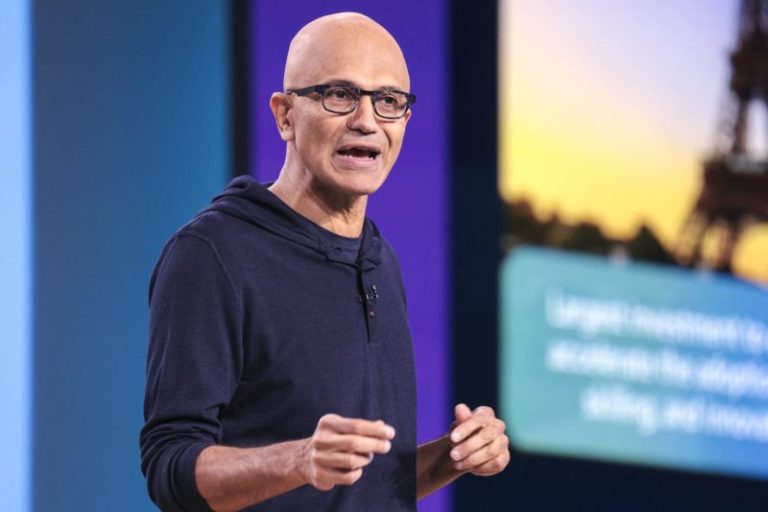
Microsoft has laid off over 15,000 people so far in 2025. The stress of the belt-tightening has gotten to CEO Satya Nadella.

“Before anything else, I want to speak to what’s been weighing heavily on me, and what I know many of you are thinking about: the recent job eliminations,” Nadella wrote in a memo to employees Thursday.

After Microsoft’s latest labor reductions, investors pushed the stock’s closing price above $500 for the first time on July 9. The company announced the layoffs of about 9,000 people a week earlier. Microsoft employed 228,000 people as of June 2024. It hasn’t provided a new figure that takes into account its layoffs this year, but Nadella wrote that headcount is basically flat.

“This is the enigma of success in an industry that has no franchise value,” he wrote. “Progress isn’t linear. It’s dynamic, sometimes dissonant, and always demanding. But it’s also a new opportunity for us to shape, lead through, and have greater impact than ever before.”

The cuts at Microsoft are reflective of an overall trend across the tech industry, with over 80,000 positions eliminated to date in 2025, according to one count. Recruit Holdings announced earlier this month that it would lay off 1,300 people from its human resources technology segment that includes the Indeed and Glassdoor websites. The company’s CEO pointed to artificial intelligence in a memo, Bloomberg reported.

On social media in recent months, some Microsoft employees have become disheartened about the company’s cutbacks, given its stature.

“I have loved working for this company, still do, but this has done so much damage to that loyalty because it has shown that Microsoft’s espoused values do not apply to business decisions at the macro level,” a person who lists themselves as a Microsoft directed on LinkedIn posted last week.

Microsoft is the world’s most valuable public company after Nvidia, whose chips have become a critical piece of the AI arms race. Microsoft’s Windows and Office franchises remain dominant, and its Azure cloud services have seen faster growth in recent years as OpenAI and other companies rent out Nvidia graphics cards to run AI models.

In the memo, Nadella touched on Microsoft’s mission for the past 10 years, which has been to empower every person and every organization on the planet to achieve more, and how the rise of AI is changing it.

“We must reimagine our mission for a new era,” he wrote. “What does empowerment look like in the era of AI? It’s not just about building tools for specific roles or tasks. It’s about building tools that empower everyone to create their own tools. That’s the shift we are driving — from a software factory to an intelligence engine empowering every person and organization to build whatever they need to achieve.”

This post appeared first on NBC NEWS

The S&P 500 ($SPX) just logged its fifth straight trading box breakout, which means that, of the five trading ranges the index has experienced since the April lows, all have been resolved to the upside.

How much longer can this last? That’s been the biggest question since the massive April 9 rally. Instead of assuming the market is due to roll over, it’s been more productive to track price action and watch for potential changes along the way. So far, drawdowns have been minimal, and breakouts keep occurring. Nothing in the price action hints at a lasting change — yet.

While some are calling this rally “historic,” we have a recent precedent. Recall that from late 2023 through early 2024, the index had a strong start and gave way to a consistent, steady trend.

From late October 2023 through March 2024, the S&P 500 logged seven consecutive trading box breakouts. That streak finally paused with a pullback from late March to early April, which, as we now know, was only a temporary hiccup. Once the bid returned, the S&P 500 went right back to carving new boxes and climbing higher.

New 52-Week Highs Finally Picking Up

If there’s been one gripe about this rally, it’s that the number of new highs within the index has lagged. As we’ve discussed before, among all the internal breadth indicators available, new highs almost always lag — that’s normal. What we really want to see is whether the number of new highs begins to exceed prior peaks as the market continues to rise, which it has, as shown by the blue line in the chart below.

As of Wednesday’s close, 100 S&P 500 stocks were either at new 52-week highs or within 3% of them. That’s a strong base. We expect this number to continue rising as the market climbs, especially if positive earnings reactions persist across sectors.

Even when we get that first day with 100+ S&P 500 stocks making new 52-week highs, though, it might not be the best time to initiate new longs.

The above chart shows that much needs to align for that many stocks to peak in unison, which has historically led to at least a short-term consolidation, if not deeper pullbacks — as highlighted in yellow. Every time is different, of course, but this is something to keep an eye on in the coming weeks.

Trend Check: GoNoGo Still “Go”

The GoNoGo Trend remains in bullish mode, with the recent countertrend signals having yet to trigger a greater pullback.

Active Bullish Patterns

We still have two live bullish upside targets of 6,555 and 6,745, which could be with us for a while going forward. For the S&P 500 to get there, it will need to form new, smaller versions of the trading boxes.

Failed Bearish Patterns

In the chart below, you can view a rising wedge pattern on the recent price action, the third since April. The prior two wedges broke down briefly and did not lead to a major downturn. The largest pullbacks in each case occurred after the S&P 500 dipped below the lower trendline of the pattern.

The deepest drawdown so far is 3.5%, which is not exactly a game-changer. Without downside follow-through, a classic bearish pattern simply can’t be formed, let alone be broken down from.

We’ll continue to monitor these formations as they develop because, at some point, that will change.

Is the market’s next surge already underway? Find out with Tom Bowley’s breakdown of where the money is flowing now and how you can get in front of it.

In this video, Tom covers key moves in the major indexes, revealing strength in transports, small caps, and home construction. He identifies industry rotation signals, which are pointing to aluminum, recreational products, and furnishings. Tom then demonstrates how to use StockCharts’ tools to scan for momentum stocks in emerging leadership groups — see why SGI tops Tom’s list. He ends with a discussion of post-earnings reactions from major names like GOOGL, TSLA, IBM, and LVS. 

And, of course, Tom wraps every idea with clear chart setups you can act on today. 

This video premiered on July 24, 2025. Click this link to watch on Tom’s dedicated page.

Missed a session? Archived videos from Tom are available at this link.

The copper price was volatile during the second quarter of 2025, but remained elevated compared to the price point near the start of the year.

Several factors were at play for copper during the second quarter, most notably the ongoing threat of tariffs on several sectors with close ties to the red metal. This also caused significant fallout in global financial sectors, with economists early in the quarter raising the spectre of a widespread recession.

Uncertainty, fear, and speculation were primary price drivers as metal traders, market movers, and investors tried to determine the best investment strategy against the backdrop of a chaotic economic landscape.

What moved the copper price?

Copper started the quarter in freefall.

After reaching an all-time high of US$5.22 per pound on the COMEX on March 26, the price plummeted to US$4.06 on April 8. Although it wouldn’t stay there long, by April 11, it had climbed back above US$4.50 and continued to US$4.88 on April 22.

Copper price chart, April 01 to July 23, 2025

via TradingEconomics

From the end of April, all of May and much of June, the copper price was volatile but range-bound, trading between US$4.50 and US$4.80.

However, the end of June saw a surge in momentum in the market, as the price began to climb, and on June 30, it reached US$4.97 per pound.

Since then, the price has soared. Setting a new all-time high of US$5.65 per pound on July 10.

Supply and demand by the numbers

Over the past few years, a growing imbalance has developed in the copper market, as demand growth has outpaced the expansion of primary and secondary supply lines.

According to a June 24 press release, data from the International Copper Study Group (ICSG) showed a 3.2 percent growth in refined production, with a combined gain of 4.8 percent from China and the Democratic Republic of the Congo (DRC), the two largest producers globally. Further increases came from Asia, where output was 3.5 percent higher.

The increased levels were offset by Chile, where smelter output fell 9.5 percent, due to smelter maintenance shutdowns.

However, the refined production outpaced mining production, which rose just 2 percent during the period. Peru accounted for a 5 percent year-over-year growth due to increased output at MMG’s (OTC Pink:MMLTF) Las Bambas, Anglo American (LSE:AAL,OTC Pink:AAUKF,OTC:NGLOY) and Mitsubishi’s (OTC Pink:MIMTF) Quellaveco and Chinalco Mining’s (OTC Pink:ALMMF) Toromocho mines.

Likewise, production in DRC surged by 8 percent, attributable to the expansion of the Ivanhoe Mines (TSX:IVN,OTC:IVPAF) and Zijin Mining’s (OTC Pink:ZIJMF,HKEX:2899,SHA:601899) joint venture Kamoa-Kakula mine.

Demand continued to grow at a higher rate than refined output during the first quarter of 2025, with the ICSG suggesting a 3.3 percent increase in copper usage.

The largest segment came from Chinese markets, which required 6 percent more copper than in 2024, but this demand occurred during an 11 percent decline in net refined imports into the country. China is the world’s largest consumer of copper, accounting for approximately 58 percent of global demand.

Outside of China, demand was essentially flat, with high demand from Asian, Middle Eastern and North African countries being offset by weak demand in Europe and North America.

Overall, the data provided by the ICSG indicated a 233,000 metric ton surplus of refined copper through the first four months of 2025, a slight decrease from the 236,000 metric tons during the same period in 2024.

Outside the numbers

“Yes, we believe we have moved into a supply deficit in 2025 and that the market is currently in deficit. Uncertainties in the financial markets (trade, growth and inflation) have had a negative impact on copper demand, but this has been offset as copper is becoming less tied to global economic growth and more tied to industries that provide structural growth to the market,” he said.

White went on to explain that AI data centers, emerging economies and the energy transition are all putting increased stress on copper supply.

Furthermore, the supply outlook was not expected to keep pace with demand this year. Q1 2025 mined copper production has indicated low production, and the copper supply outlook for this year has already worsened with the first major disruption of the year,” he added.

The shutdown referred to by White was at the Ivanhoe-Zijin Kakula-Kamoa mine in the DRC.

Ivanhoe reported a temporary interruption of underground mining at the Kakula mine on May 2. The company cited seismic activity and initiated a partial shutdown of operations at phase 1 and 2 concentrators, utilizing surface stockpiles.

Operations at the mine were suspended until June 11, when the company announced it had initiated a restart. It also stated that it was slashing production guidance by 28 percent due to the impact, with the revised number falling between 370,000 and 420,000 metric tons, down from the previous range of 520,000 to 580,000 set in January.

The difference in guidance accounts for more than half of the projected surplus in the ICSG report, demonstrating just how tight the copper market has become.

The Trump effect

Volatility has been present since the start of the year, with much of it attributed to uncertainty stemming from an ever-shifting US trade policy under President Donald Trump.

Commodity prices plummeted at the start of the second quarter, with copper losing 22 percent between its quarterly high of US$5.22 on March 26 and April 8, when it fell to US$4.06.

The drop came alongside the fallout from the “Liberation Day” tariffs Trump announced on April 2, which applied a 10 percent baseline tariff to imports into the United States from all but a handful of countries. It also threatened the imposition of more significant retaliatory tariffs to take effect on April 9.

Additionally, the United States initiated a tit-for-tat tariff war with China in early April, starting with a 34 percent tariff on Chinese imports, which quickly rose to 145 percent on Chinese imports and 125 percent on US exports to China.

The effect of the tariffs caused significant declines in major US indices, with the Dow losing 9.5 percent, the S&P 500 shedding 10 percent, and the Nasdaq losing 11 percent in two days. More than $6 trillion was wiped from the markets over two days, the most significant such loss in history.

More importantly, the uncertainty seeped into the US bond markets, causing yields on the 10-year Treasury to rise sharply to 4.49 percent as investors began to dump US bonds. The rising rates came as China and Japan both sold holdings back into the market in an attempt to counter Trump’s trade plans.

The combined effect led analysts to suggest that a recession was imminent, prompting broad sell-offs in the commodity markets as traders worked to dispose of stockpiles of high-value inventories.

Copper is susceptible to recessions due to its wide range of applications, which are heavily dependent on consumer spending.

Ultimately, a sliding stock market and spiking bond yields prompted Trump to announce a 90-day pause on the retaliatory tariffs, stating that it would allow countries to come to the table and negotiate a deal with the United States.

Although the rout of the copper market was short-lived, it demonstrated the push-pull that tariffs and trade policy can have on copper prices.

In February, Trump signed an executive order which invoked section 232 of the Trade Expansion Act to initiate an investigation into the impact of copper imports on all forms of national security.

In the order, Trump noted that while the US has ample copper reserves, its smelting and refining capacity has declined. China has become the world’s leading supplier of refined copper, commanding a 50 percent market share.

“The supply and demand imbalance has recently been catalyzed with the US trade actions, where copper stocks have moved into the US on speculation that the Section 232 investigation into copper may result in a copper tariff,” White said.

He explained that the global inventory system has become fragmented. With the supply deficit, it has become increasingly difficult to source physical copper, resulting in drastically lower inventories on the London Metal Exchange (LME) and Shanghai Futures Exchange (SHFE).

The administration reached a decision early in the third quarter, and on July 8, Donald Trump announced a 50 percent tariff on all copper entering the United States.

The move caused prices on the COMEX to spike to record highs, triggering more panic buying among traders as they raced to transfer above-ground copper stocks into US-based facilities to avoid the additional tariff costs.

While ICSG hasn’t published numbers since May, it was already demonstrating then that significant stockpiles were being moved between international warehouses and the US. It reported that stocks at the LME had declined 122,900 metric tons from the start of the year, while stocks at the COMEX and SHFE had both posted gains of 80,970 metric tons and 31,619 metric tons, respectively.

“Copper is globally fungible. It’s like oil. The sanctions don’t work on Russian oil or Iranian oil, because it just flows around. Copper can do that, too. So it’s incorrect to think that a copper tariff, therefore, copper is up, and all copper stocks have to go up. If you’re a copper miner in Chile selling to China, then the US tariff has no direct bearing on your business whatsoever,” he said.

Tigre also explained that the US imports 50 percent of its copper needs, and there is no way that tariffs are going to fix that overnight.

“The mines just aren’t there. The help he’s (Trump) provided with permitting is highly relevant, and it has already helped; that’s okay. You get the permits, and then you have to build the mine, right? So it’ll be years before the incentives create more US production. Meanwhile, it’s Dr. Copper. It goes in everything, so consumers, manufacturers, everybody’s got this added cost,” he said.

Where does copper go next?

Beyond the tariffs, the fundamentals remain, as Tigre pointed out, the world is dependent on copper and demand for the red metal has been increasing faster than supply.

“There aren’t enough copper projects on the pipeline, not ones big enough to matter. So I’m extremely bullish on copper. All those reasons to be bullish on copper are still on the table in front of us, and when I first made the call, copper was around four bucks or something, and now, if we’re going there at five, almost six, and all that tailwind is stil to come and push it higher,” Tigre said.

While he remained positive on copper’s long-term outlook, he declined to say where the price would end up at the end of the year.

Even though copper may be one of the safer commodity bets owing to its staggering demand and low supply, investors should keep in mind the broad economic landscape when entering into a position with a metal that can change quickly with consumer spending.

Securities Disclosure: I, Dean Belder, hold no direct investment interest in any company mentioned in this article.

This post appeared first on investingnews.com

The second quarter of 2025 was a period of dynamic evolution within the biotechnology and pharmaceutical sectors.

Critical factors like escalating policy pressures, pipeline pivots by leading companies and the increasingly transformative impact of artificial intelligence (AI) shaped the landscape and presented both challenges and opportunities for growth.

Escalating policy and tariff pressures

The biopharmaceutical industry is currently grappling with significant headwinds, primarily driven by an evolving and unpredictable tariff landscape. This uncertainty has already impacted market activity, with only two initial public offerings in Q2 compared to five in Q1.

Regulatory shifts and concerns of an imminent trade war caused a nearly nine percent drop in the SPDR S&P Biotech ETF nearly nine percent in the first week of April, following US President Donald Trump’s announcement of a 10 percent global tariff on nearly all goods entering the US.

Subsequent discussions have led to a dynamic and often unpredictable landscape. Throughout May and June, negotiations saw a temporary de-escalation, with some of the more severe tariffs being paused or substantially reduced for many goods until mid-August; however, a cumulative tariff of up to 245 percent on certain Chinese active pharmaceutical ingredients (APIs) has been in effect since April, significantly impacting the pharmaceutical supply chain.

Lingering uncertainties have also persisted; as of mid-July, while direct negotiations are ongoing, the US has signaled an intent to potentially increase the baseline reciprocal tariff rate to 15-20 percent and has threatened a hike of 35 percent on goods currently subject to the 25 percent fentanyl tariff, effective August 1.

Further intensifying the pressure, Trump has recently proposed a dramatic 200 percent tariff on imported finished pharmaceutical products, as well as 30 percent tariffs on the EU and Mexico, slated to begin on August 1.

For pharmaceuticals, the higher import costs for APIs and finished drugs are forcing companies to continuously re-evaluate their supply chains and brace for potential price increases.

Tariffs on steel and aluminium could also increase costs for stainless-steel bioprocessing equipment, lab equipment and medical devices.

Picton Mahoney’s 2025 Mid-Year Report discusses the risks associated with tariffs, including increased recession odds, stagflation risks and the possibility of renewed protectionist policies creating ripple effects across global equity markets. The authors add that building pricing pressures in the US from new tariffs and a weaker US dollar could exacerbate negative economic trends.

The report also highlights that policy uncertainty is bad for corporate planning and could lead to a pause in spending.

Evaluate Pharma’s World Preview 2025 report, released in June, states that mergers and acquisitions (M&A) activity in the biopharmaceutical industry is “off the pace so far in 2025”, with the slowdown attributed to uncertainties surrounding US tariffs and drug pricing policy. An unnamed former Big Pharma CEO is quoted as saying, “I’d be holding off dealmaking for 3-6 months until this [tariff framework] plays out”.

The report also indicates that the deals that are happening are “heavily risk-mitigated” and often involve late-stage or marketed assets or, if programs have not yet been finalized, include contingent payments.

M&A trends and pipeline expansion

Despite a slowdown in the market, pharma and biotech companies continued to pursue M&As in the second quarter, seeking to strengthen their product pipelines with a focus on bolt-on acquisitions.

Notably, there was a trend of European pharmaceutical giants acquiring US-based biotechnology firms, such as GSK’s (NYSE:GSK) acquisition of Boston Pharmaceuticals’ subsidiary, BP Asset IX, to gain access to its live disease drug, efinofermin, in a deal valued at up to US$2 billion.

Significant investments were also directed toward immunology, rare diseases and neurodegenerative disorders, underscoring a broader trend in the industry toward targeted pipeline expansion and addressing unmet medical needs across a range of complex conditions.

Sanofi’s (NASDAQ:SNY) US$9.5 billion acquisition of Blueprint Medicines garnered considerable attention due to the startup’s very specific and strong focus within the rare disease space. Many industry observers expect the deal will help grow Sanofi’s portfolio of rare disease treatments.

The acquisitions were diverse in their therapeutic focus, but Merck’s (NYSE:MRK) acquisition of SpringWorks Therapeutics, which specializes in rare and genetically defined cancers, highlighted the ongoing dominance of oncology.

Healthcare policy changes under Trump

AI-driven solutions are continuing to have an impact on life science industries. Several panels at Web Summit Vancouver highlighted how investors are increasingly focused on AI’s potential for significant productivity gains in life sciences, particularly in drug development and synthetic biology, despite challenges in regulation and data integration.

Wesley Chan of FPV Ventures highlighted life sciences as a sector where AI offers significant productivity gains, citing Strand Therapeutics’ AI-developed mRNA cancer therapy as an example of a generational investment opportunity available through the convergence of biology and AI.

Tom Beigala, founding partner at Bison Ventures, said he believes AI and next-generation computational technologies are driving innovation across the entire healthcare system, from making drug discovery easier and more cost-effective to optimizing data utilization and significantly increasing labor and clinical productivity.

Eric Hoskins, partner at Maverix Private Equity, identified AI-guided personalized medicine as one of the “fast movers” poised to bring an abrupt and immediate change to healthcare.

Reflecting this accelerating integration of AI into clinical practice and patient care, Sanofi and Regeneron (NASDAQ:REGN) partnered with Viz.ai, an AI healthcare firm, in May to integrate AI into COPD management.

Looking ahead

As the biotech and pharma sectors head into the third quarter, the outlook remains clouded by policy uncertainty, rising input costs and shifting global trade dynamics. Yet opportunities remain for firms that can navigate the complexity. Large-cap leaders like Novartis (NYSE:NVS), Johnson & Johnson (NYSE:JNJ) and Sanofi have demonstrated that strong fundamentals and strategic pipeline development can drive outperformance, even in turbulent markets.

As far as policy goes, the Trump administration’s inclusion of enhanced orphan drug incentives under the “Big Beautiful Bill” could act as a catalyst for rare disease innovation.

AI remains a transformative force across the industry. As generative models begin to inform pipeline design and clinical trial optimization, companies with robust data strategies and smart manufacturing capabilities are expected to gain a competitive advantage.

“For us, we really like applications of AI where you’ve got proprietary data, in many cases, probably off the shelf for lightly modified AI models, and then going after super high value applications,” said Beigala, a founding partner of Bison Ventures, which has a portfolio spanning AI-enhanced drug discovery, advanced life science tools for pre-clinical testing and synthetic biology applications.

Similarly, investment in domestic CDMO infrastructure and real-time manufacturing analytics will be crucial for supply chain resilience in an increasingly protectionist trade environment.

Looking ahead, commercial-stage differentiation will become more critical than ever. Investors will be watching closely for companies that can combine clinical results, cost control and regulatory readiness to stand out in a cautious market.

“That’s what we look for, these application models where the team is so thoughtful and smart and so uniquely positioned to understand and have access to data that nobody else has,” Chan explained.

Biopharma’s next phase will be defined by measurable progress. In Q3, adaptability, resilience and clear-eyed execution will matter more than ever.

Securities Disclosure: I, Meagen Seatter, hold no direct investment interest in any company mentioned in this article.

This post appeared first on investingnews.com

Biotech is a dynamic industry that is driving scientific advances and innovation in healthcare. In Canada, the biotech sector is home to companies pursuing cutting-edge therapies and medical technologies.

According to Grandview Research, the global biotech market is expected to grow at a compound annual growth rate of 13.96 percent between 2024 and 2030 to reach a value of US$3.08 trillion.

Read on to learn what’s been driving these Canadian biotech firms.

1. Bright Minds Biosciences (CSE:DRUG)

Year-on-year gain: 2,290 percent
Market cap: C$243.73 million
Share price: C$34.41

Bright Minds Biosciences is focused on developing novel treatments for neuropsychiatric disorders and pain.

Its portfolio consists of serotonin agonists designed to target neurocircuit abnormalities that make disorders like epilepsy, post-traumatic stress disorder and depression difficult to treat. The company’s drugs have been designed to potentially retain the powerful therapeutic aspects of psychedelic and other serotonergic compounds, while minimizing their side effects, thereby creating superior drugs to first-generation compounds such as psilocybin.

Bright Minds’ BMB-101, an agonist targeting the 5-HT2C receptor, will target classic absence epilepsy and developmental epileptic encephalopathy. An evaluation of Phase II trials done in collaboration with Firefly Neuroscience (NASDAQ:AIFF) determined that BMB-101 stopped seizures in a mouse model of epilepsy, suggesting it could be a vital new treatment.

In October 2024, Bright Mind’s share price surged nearly 1,500 percent in a single session after global pharmaceutical company H. Lundbeck announced its intention to acquire Longboard Pharmaceuticals, another firm with a 5-HT2C agonist in its pipeline.

In March of this year, Bright Minds added five world-renowned leaders in epilepsy research to its scientific advisory board.

2. Hemostemix (TSXV:HEM)

Year-on-year gain: 170 percent
Market cap: C$20.44 million
Share price: C$0.14

Hemostemix is a clinical-stage biotech company focused on developing autologous stem cell therapies, an approach that uses a patient’s own cells to theoretically enhance safety and efficacy. Its main product, ACP-01, is a cell therapy derived from a patient’s blood to promote tissue repair and regeneration in areas affected by disease.

The company announced its first advanced sales orders for ACP-01 on January 29 and has been working to expand internationally and attract new investment.

In July 2025, Hemostemix reported that the unanimous passing of Senate Bill 1768 in Florida, US, means it can begin commercial ACP-01 treatments for ischemic pain in the state in Q4. The bill creates a framework in which healthcare providers can administer stem cell therapies that had not been approved by the US Food and Drug Administration (FDA) but meet the bill’s guidelines.

The company projected 2026 sales of C$22.5 million following the news.

Additionally, Hemostemix is currently collaborating with Firefly Neuroscience on a Phase 1 clinical trial of ACP-01 for vascular dementia.

3. Eupraxia Pharmaceuticals (TSX:EPRX)

Year-on-year gain: 109.3 percent
Market cap: C$266.36 million
Share price: C$7.20

Eupraxia Pharmaceuticals focuses on developing locally delivered therapeutics for patients with unmet medical needs. Its primary focus has been orthopedics and oncology. Eupraxia acquired EpiPharma Therapeutics in late 2023, absorbing the company’s lead candidate EP-104GI.

In February, the company released positive data from the sixth cohort of its Phase 1b/2a trial for EP-104GI in eosinophilic esophagitis. In July, the company advanced its investigation into the Phase 2b portion after selecting an initial dose based on encouraging safety and efficacy data from the earlier Phase 2a cohorts, with top-line results from the Phase 2b study anticipated in Q3 2026.

4. ME Therapeutics Holdings (CSE:METX)

Year-on-year gain: 33.33 percent
Market cap: C$147.95 million
Share price: C$5.00

ME Therapeutics is a biotechnology company focused on developing cancer-fighting drug candidates that can increase the efficacy of current immuno-oncology drugs by targeting suppressive myeloid cells, which have been found to hinder the effectiveness of existing immuno-oncology treatments. Immuno-oncology is a relatively new area of cancer drug research and has shown promising results when used to treat cancer with low survival rates.

ME Therapeutics’ antibody h1B11-12 is designed to inhibit the cytokine G-SCF. Research performed by ME in collaboration with Dr. Kenneth Harder at the University of British Columbia demonstrated that G-CSF appeared to increase tumor growth in breast and colon cancer, as well as a correlation between survival in patients with colorectal cancer and low expression of G-CSF.

The work suggests that inhibition of tumor-secreted G-CSF using h1B11-12 could support the existing treatments. Trial planning efforts are ongoing, and the company expects development of a cell line for future production of the drug to be finished in the latter half of 2025.

The company is also part of an ongoing collaborative effort to develop therapeutic mRNA delivery methods to myeloid cells with NanoVation Therapeutics, a privately owned biotech company that develops customized nucleic acid and lipid nanoparticle technologies to empower genetic medicine. The collaboration has already resulted in two new mRNA formulations, for which testing began on October 4, and has demonstrated encouraging anti-cancer activity in a preclinical model of colorectal cancer.

In May 2025, the company said it would receive up to C$140,000 in funding from the National Research Council of Canada Industrial Research Assistance Program to advance its mRNA therapeutic program.

ME Therapeutics is also exploring a listing on the Nasdaq or the New York Stock Exchange.

5. NervGen (TSXV:NGEN)

Year-on-year gain: 28.42 percent
Market cap: C$276.78 million
Share price: C$3.75

NervGen is a clinical-stage Canadian biotechnology company that focuses on developing innovative treatments to enable the nervous system to repair itself following damage from injury or disease.

The company’s core technology targets a mechanism that hinders nervous system repair. When the nervous system is damaged, chondroitin sulfate proteoglycans form a “scar.” Initially, CSPGs help contain damage, but their long-term interaction with the PTPσ receptor inhibits repair.

NervGen’s lead drug candidate, NVG-291, is designed to relieve these inhibitory effects, promoting nervous system repair. NervGen is advancing NVG-291 in a Phase 1b/2a clinical trial for spinal cord injury (SCI), reporting positive data from the chronic cohort in June. It received fast track designation from the US FDA.

NVG-300, a newer preclinical candidate, is being evaluated for ischemic stroke and SCI.

Securities Disclosure: I, Meagen Seatter, hold no direct investment interest in any company mentioned in this article.

This post appeared first on investingnews.com

As the global economy shifts toward electrification and clean energy, lithium has emerged as a cornerstone of the energy transition, and the US is racing to secure its place in the supply chain.

Lithium-ion batteries are no longer just critical to electric vehicles (EVs); they’re becoming vital across sectors to stabilize power systems, particularly amid growing reliance on intermittent renewables.

According to Fastmarkets, demand for battery energy storage systems (BESS) is accelerating, driven by data centers, which have seen electricity consumption grow 12 percent annually since 2017.

In the US, where data infrastructure is heavily clustered, BESS demand from data centers alone could make up a third of the market by 2030, with a projected compound annual growth rate of 35 percent.

As the US works to expand domestic production and reduce import dependence, policy uncertainty, including potential rollbacks of EV tax credits and clean energy incentives, clouds the investment outlook.

1. Sociedad Química y Minera (NYSE:SQM)

Year-to-date gain: 10.43 percent
Market cap: US$10.82 billion
Share price: US$40.64

SQM is a major global lithium producer, with operations centered in Chile’s Salar de Atacama. The company extracts lithium from brine and produces lithium carbonate and hydroxide for use in batteries.

SQM is expanding production and holds interests in projects in Australia and China.

Shares of SQM reached a year-to-date high of US$45.61 on March 17, 2025. The spike occurred a few weeks after the company released its 2024 earnings report, which highlighted record sales volumes in the lithium and iodine segments. However, low lithium prices weighed on revenue from the segment, and the company’s reported net profit was pulled down significantly due to a large accounting adjustment related to income tax.

In late April, Chile’s competition watchdog approved the partnership agreement between SQM and state-owned copper giant Codelco aimed at boosting output at the Atacama salt flat. The deal, first announced in 2024, reached another milestone when it secured approval for an additional lithium quota from Chile’s nuclear energy regulator CChEN.

Weak lithium prices continued to weigh on profits, with the company reporting a 4 percent year-over-year decrease in total revenues for Q1 2025.

2. Lithium Americas (NYSE:LAC)

Year-to-date gain: 9.67 percent
Market cap: US$719.1 million
Share price: US$3.29

Lithium Americas is developing its flagship Thacker Pass project in Northern Nevada, US. The project is a joint venture between Lithium Americas at 62 percent and General Motors (NYSE:GM) at 38 percent.

According to the firm, Thacker Pass is the “largest known measured lithium resource and reserve in the world.”

Early in the year, Lithium Americas saw its share rally to a year-to-date high of US$3.49 on January 16, coinciding with a brief rally in lithium carbonate prices.

In March, Lithium Americas secured US$250 million from Orion Resource Partners to advance Phase 1 construction of Thacker Pass. The funding is expected to fully cover development costs through the construction phase. On April 1, the joint venture partners made a final investment decision for the project, with completion targeted for late 2027.

Other notable announcements this year included a new at-the-market equity program, allowing the company to sell up to US$100 million in common shares.

3. Lithium Argentina (NYSE:LAR)

Year-to-date gain: 8.46 percent
Market cap: US$467.28 million
Share price: US$2.90

Lithium Argentina produces lithium carbonate from its Caucharí-Olaroz brine project in Argentina, developed with Ganfeng Lithium (OTC Pink:GNENF,HKEX:1772).

The company is also advancing additional regional lithium assets to support EV and battery demand.

Previously named Lithium Americas (Argentina), the company was spun out from Lithium Americas in October 2023.

While shares of Lithium Argentina spiked in early January to a year-to-date high of US$3.10, the share price has been trending higher since June 19 to its current US$2.90 value.

Notable news from the company this year includes its name and ticker change and corporate migration to Switzerland in late January and the release of the full-year 2024 results in March.

In mid-April, Lithium Argentina executed a letter of intent with Ganfeng Lithium to jointly advance development across the Pozuelos-Pastos Grandes basins in Argentina. The plan includes a project fully owned by Ganfeng as well as two jointly held assets majority-owned by Lithium Argentina.

The company released its Q1 results on May 15, reporting a 15 percent quarter-over-quarter production reduction, which it attributed to planned shutdowns aimed at increasing recoveries and reducing costs.

Overall, the production guidance for 2025 is forecasted at 30,000 to 35,000 metric tons of lithium carbonate, reflecting higher expected production volumes in the second half of the year.

Securities Disclosure: I, Georgia Williams, currently hold no direct investment interest in any company mentioned in this article.

This post appeared first on investingnews.com