
Author

admin

Browsing

Investor Insights

Rapidly emerging as Southeast Asia’s premier base and battery metals developer, Blackstone Minerals now holds two globally significant projects: the Ta Khoa nickel-cobalt project in Vietnam and the Mankayan copper-gold porphyry project in the Philippines. Both projects are critical to the company’s strategy to become a vertically integrated, low-cost, low-carbon producer of critical battery and base metals.

Overview

As the global economy accelerates toward net-zero emissions, the demand for critical minerals continues to rise, with nickel and copper positioned at the forefront of the energy transition. Historically used in stainless steel, nickel is now a core component in lithium-ion batteries; while copper, vital for electrification infrastructure, is similarly facing a looming supply crunch.

Blackstone Minerals (ASX:BSX,OTC:BLSTF,FRA:B9S) recognizes this strategic imperative and has positioned itself as a diversified, vertically integrated producer of low-cost, low-carbon battery and base metals.

Following its transformational merger with IDM International, Blackstone now controls two globally significant assets: the Ta Khoa nickel project in Vietnam and the Mankayan copper-gold project in the Philippines. Together, they represent a rare combination of scale, grade and strategic location in Southeast Asia, an increasingly vital region in the global clean energy supply chain.

The Mankayan copper-gold project is located in Northern Luzon, Philippines

The recently acquired Mankayan project adds substantial scale and diversification to Blackstone’s portfolio. One of the largest undeveloped copper-gold porphyry systems in Asia, Mankayan features over 56,000 meters of historical drilling and a resource of 793 million tonnes (Mt) at 0.756 percent copper equivalent (CuEq), including a high-grade core of 170 Mt at 1.049 percent CuEq. The project benefits from proximity to existing infrastructure and its location just 2.5 km from the operating Lepanto gold mine, owned and operated by Lepanto Consolidated Mining Company, and Far Southeast Gold Resources’ Far Southeast project.

The Ta Khoa project, meanwhile, includes both a past-producing underground nickel sulphide mine (Ban Phuc) and an advanced-stage refinery designed to produce battery-grade precursor cathode active material (pCAM). Vietnam’s low labor and energy costs, coupled with regulated power pricing and surging foreign direct investment, make it an ideal base for Blackstone’s vertically integrated strategy.

Blackstone is uniquely positioned to benefit from geopolitical tailwinds. Vietnam’s Free Trade Agreement with the European Union and the US Inflation Reduction Act are drawing significant interest from global partners and battery manufacturers. Meanwhile, the Philippines is undergoing a mining renaissance, with the government promoting foreign investment in responsible resource development. Mankayan has already been identified as a priority project by the Philippines’ Mines and Geosciences Bureau.

The company’s development strategy is underpinned by a commitment to ESG leadership. Blackstone is advancing renewable energy solutions for Ta Khoa via a direct power purchase agreement with Limes Renewables and is collaborating with Arca Climate Technologies to explore carbon capture through mineralization. At Mankayan, the company is focused on sustainable development in partnership with local communities.

Financially, Blackstone is well-capitalized to deliver on its dual-track growth plan. Following the merger with IDM, the company raised AU$22.6 million and holds AU$24.36 million in cash as of June 2025. The company’s experienced leadership team and strong partnerships provide a clear path to near-term value creation, as both projects progress toward definitive feasibility studies and long-term production.

Blackstone Minerals is now one of Southeast Asia’s leading battery and base metals developers, with a clear vision to supply responsibly sourced nickel and copper for the global energy transition.

Company Highlights

  • Diversified Portfolio: With Ta Khoa in Vietnam and Mankayan in the Philippines, Blackstone offers exposure to two critical and high-demand metal classes: nickel and copper-gold.
  • Strategic Southeast Asia Presence: Vietnam and the Philippines are emerging hubs for EV and mineral resource development, with robust government support and increasing foreign direct investment.
  • Infrastructure Advantage: Both projects benefit from existing infrastructure, including hydroelectric power, trained workforces, and government collaboration.
  • Sustainability Leadership: Blackstone is pursuing low-emission mining solutions through partnerships in renewable energy and carbon capture technologies.
  • Financially Strong: Blackstone raised AU$22.6 million post-merger, supporting an aggressive exploration and development strategy across both assets.

Key Project

Mankayan Copper-Gold Project – Philippines

Following its merger with IDM International, Blackstone now owns a 64 percent effective interest in the world-class Mankayan copper-gold project through Crescent Mining Development. Located in the prolific mineral belt of Northern Luzon, Philippines, Mankayan is one of Asia’s largest undeveloped copper-gold porphyry systems. It lies approximately 340 km from Manila by road, and just 2.5 kilometers from the operating Lepanto gold mine, which includes a 900 ktpa underutilized milling facility.

The Mankayan deposit spans roughly 1,100 meters of strike and 600 meters in width, with mineralization open to the north, south and at depth. Over 56,000 meters of diamond drilling has been completed to date, and the deposit hosts a JORC 2012-compliant mineral resource estimate of 793 Mt at 0.37 percent copper and 0.40 grams per ton (g/t) gold, equating to 0.756 percent CuEq. This includes a high-grade core of 170 Mt at 0.48 percent copper and 0.59 g/t gold (1.049 percent CuEq), offering valuable optionality.

Drilling results support Mankayan’s classification as a globally significant resource. Notable historic intercepts include:

  • 911 meters at 1 percent CuEq, including 253 meters at 1.43 percent CuEq
  • 543 meters at 1.08 percent CuEq, including 277 meters at 1.43 percent CuEq
  • 1,119 meters at 0.86 percent CuEq, including 352 meters at 1.15 percent CuEq
  • 754 meters at 1.03 percent CuEq, including 430 meters at 1.21 percent CuEq

In July 2025, Blackstone confirmed significant new surface mineralization through historical rock chip samples returning grades up to 6 g/t gold and 1.9 percent copper, and a standout recent drill hole – 432 meters at 1.25 percent CuEq (including 210 meters at 1.60 percent) – further underscoring the project’s scale and growth potential.

A key strategic advantage of Mankayan is its dual development pathway. The high-grade core supports a low-capex startup via selective mining methods, while the bulk of the deposit can be exploited through larger-scale mining scenarios that benefit from lower operating costs and economies of scale. This tiered approach allows Blackstone to balance capital efficiency with long-term growth.

Regulatory and community engagement milestones have also been achieved. The project’s 25-year mineral production sharing agreement was renewed in 2022, and a memorandum of agreement with local Indigenous Peoples was signed in 2024, making Blackstone the first mining company to obtain IP consent in the area. The Mines and Geosciences Bureau of the Philippines has since designated Mankayan as a priority development project.

Mankayan stands out globally when benchmarked against peer porphyry systems. A comparative analysis of undeveloped copper-gold projects ranks it near the top in terms of grade and copper equivalent tonnage, reaffirming its strategic and economic potential on the world stage.

In 2025 and beyond, Blackstone will continue metallurgical testwork, geophysics (including magnetics, IP and electromagnetics), environmental baseline studies, and further drilling to refine and expand the resource. These efforts will support upcoming mining studies and a targeted prefeasibility study.

Ta Khoa

Ta Khoa nickel project in Vietnam

Blackstone Minerals holds a 90 percent interest in the Ta Khoa nickel project, located in the Son La Province of northern Vietnam, about 160 km west of Hanoi. The project comprises the Ban Phuc underground nickel sulphide mine – a modern operation built to Australian standards that operated between 2013 and 2016 – and the adjacent Ta Khoa refinery, currently being developed to produce battery-grade precursor cathode active material (pCAM).

The Ban Phuc mine is currently under care and maintenance but is poised for recommissioning alongside the construction of a concentrator and refinery. The broader Ta Khoa asset base contains probable reserves of 48.7 million tonnes (Mt) at 0.43 percent nickel, equivalent to 210 kilotonnes (kt) of contained nickel. The mining inventory totals 64.5 Mt at 0.41 percent nickel, containing 265 kt of nickel. This figure excludes additional developing prospects such as Ban Khoa.

Over the planned 10-year mine life, Ta Khoa is expected to produce an average of 18 kt of nickel concentrate annually, with the potential to extend well beyond this horizon through integrated refining. The existing infrastructure onsite, including a 450 ktpa mill and a mining camp, provides significant capital efficiency and accelerates time to production.

A recent 12-month pilot program, conducted in partnership with ALS and Wood, successfully demonstrated that Ta Khoa’s hydrometallurgical flowsheet can convert concentrate into nickel sulphate at 99.95 percent purity and 97 percent recovery. This success positions the refinery as a credible supplier to the Asia-Pacific battery supply chain.

The project is further distinguished by its low emissions profile. Independent assessments by Digbee, Minviro, Circulor and an audit by the Nickel Institute have confirmed Ta Khoa as the lowest-emitting pCAM flowsheet in the industry, with carbon intensity of just 9.8 kg CO₂ per kg of pCAM, with opportunities for further reduction.

Blackstone’s development strategy includes flexible feedstock acceptance – from nickel concentrate to black mass – and is strengthened by partnerships with Cavico Laos for third-party supply, Arca Climate Technologies for carbon capture via mineralization, and Limes Renewables to supply clean wind energy. Additionally, the company has secured byproduct offtake arrangements for manganese sulphate and sodium sulphate with VinaChem, PVChem and Nam Phong Green, reinforcing its commitment to full-cycle resource utilization and ESG leadership.

Management Team

Hamish Halliday – Non-executive Chairman

Hamish Halliday is a geologist with over 20 years of corporate and technical experience. He is also the founder of Adamus Resources Limited, an AU$3 million float that became a multimillion-ounce emerging gold producer.

Scott Williamson – Managing Director

Scott Williamson is a mining engineer with a commerce degree from the West Australian School of Mines and Curtin University. He has over 10 years of experience in technical and corporate roles in the mining and finance sectors.

Geoff Gilmour – Non-executive Director

Appointed following Blackstone’s merger with IDM, Geoff Gilmour brings deep experience in Southeast Asian mining ventures. He has held senior roles in exploration and development across copper and gold projects in the Philippines and broader Asia-Pacific.

Tessa Kutscher – Executive

Tessa Kutscher is an executive with more than 20 years of experience in working with C-Level executive teams in the fields of business strategy, business planning/optimisation and change management. After starting her career in Germany, she has worked internationally across different industries, such as mining, finance, tourism and tertiary education.

Lon Taranaki – Executive

Lon Taranaki is an international mining professional with over 25 years of extensive experience in all aspects of resources and mining, feasibility, development and operations. Taranaki is a qualified process engineer from the University of Queensland Australia. He holds a Master of Business Administration, and is a fellow of the Australian Institute of Company Directors. Taranaki has established his career in Asia where he has successfully worked (and lived) across multiple jurisdictions and commodities ranging from technical, mine management and executive management roles.


This post appeared first on investingnews.com

Uber announced a new feature Wednesday that pairs women drivers and riders, in its latest move to address safety on the ride-hailing platform.

The new tool, which the platform will begin piloting next month in the U.S., allows women passengers to match with women drivers when booking or pre-booking rides, and create a preference in their app settings. Women drivers can also choose to drive women.

“It’s about giving women more choice, more control, and more comfort when they ride and drive,” Camiel Irving, Uber’s vice president of U.S. and Canada operations, said in a release.

The company said the rider’s preference isn’t guaranteed but the feature increases the chances women will be paired in the app.

Uber will pilot the program in Los Angeles, San Francisco and Detroit. The company also said it tested the feature in countries such as France, Germany and Argentina.

This isn’t Uber’s first foray into gender preferences on its platform.

In 2019, Uber rolled out a women rider preference feature for female drivers in Saudi Arabia after women won the right to drive in 2018. That offering later expanded to about 40 countries. A survey from the company in 2015 found that about a fifth of its U.S. drivers were women.

Over the years, ride-hailing companies such as Uber and Lyft have faced safety concerns and questions over the roles these platforms have played in various sexual assault and harassment incidents.

Uber has rolled out several features in recent years to improve safety on the platform, including teen accounts and rider and pin verification.

Competitor Lyft launched an option in late 2023 that pairs women and nonbinary drivers and riders.

This post appeared first on NBC NEWS

Alphabet reported second-quarter results on Wednesday that beat on revenue and earnings, but the company said it would raise its capital investments by $10 billion in 2025.

Here’s how the company did, compared with estimates from analysts polled by LSEG:

Wall Street is also watching several other numbers in the report:

The company’s overall revenue grew 14% year over year, higher than the 10.9% Wall Street expected, but Alphabet is going to spend more on artificial intelligence in 2025 than it anticipated.

In February, the company said it expected to invest $75 billion in capital expenditures in 2025 as it continues to expand on its AI strategy. That was already above the $58.84 billion Wall Street expected at the time.

The company increased that figure on Wednesday to $85 billion, saying it was raising it due to “strong and growing demand for our Cloud products and services.” The company expects to further increase capital expenditures in 2026, Alphabet finance chief Anat Ashkenazi said on an earnings call.

The company reported revenue of $13.62 billion for its cloud computing business, which is a 32% increase from a year ago. Last week, OpenAI announced that it expected to use Google’s cloud infrastructure for its popular ChatGPT service. Alphabet CEO Sundar Pichai said “we are very excited to be partnering with them.”

Alphabet’s net income increased to $28.20 billion, up nearly 20% from the previous year.

The company’s search and advertising units still showed growth in the second quarter despite AI competition heating up. The company’s search unit brought in $54.19 billion during the quarter, and its advertising revenue grew to $71.34 billion — up about 10.4% from $64.61 billion the year prior.

YouTube advertising revenue came in at $9.8 billion, higher than Wall Street expected.

The company said its “Other Bets” segment, which includes its self-driving car unit Waymo and life sciences unit Verily, brought in $373 million — up from $365 million a year ago. Other Bets reported a loss of $1.25 billion, up from the $1.13 billion a year ago.

AI Overviews, Google’s AI search product that summarizes search results, now has upward of two billion monthly users across more than 200 countries and territories, Pichai said during Wednesday’s earnings call. That’s up from 1.5 billion monthly users last quarter.

The Gemini app, which has the company’s AI chatbot, now has more than 450 million monthly active users, Pichai said.

When asked about large spending on AI talent, Ashkenazi said Alphabet makes “sure that we invest appropriately to have the best and brightest minds in the industry.”

Google made a splash in the AI talent wars, announcing earlier in July that it would bring in Windsurf CEO Varun Mohan and other top researchers at the AI coding startup as part of a $2.4 billion deal that also includes licensing the company’s technology.

Total operating expenses increased 20% to $26.1 billion, Ashkenazi said on Wednesday. The biggest driver of growth was expenses for legal and other matters due in part to a $1.4 billion charge related to a settlement, she said on Wednesday’s earnings call. Texas Attorney General Ken Paxton in May announced a $1.37 billion settlement with Google related to a data privacy rights lawsuit it made against the company in 2022.

Ashkenazi said Alphabet’s third-quarter revenue “could see a tailwind” due to several reasons. That includes a negative impact for advertising, which benefited from “strong spend on U.S. elections” in late 2024, particularly on YouTube, she said.

This post appeared first on NBC NEWS

UnitedHealth Group revealed Thursday it is facing a Justice Department investigation over its Medicare billing practices.

It comes after the Wall Street Journal reported in May that the Department of Justice is conducting a criminal investigation into the health-care giant over possible Medicare fraud. In response at the time, the company said it stands “by the integrity of our Medicare Advantage program.”

In July, the Journal also reported that the DOJ interviewed several doctors about UnitedHealth’s practices and whether they felt pressured to submit claims for certain conditions that bolstered payments from the Medicare Advantage program to the company.

That marked the second time this year that the insurer’s Medicare Advantage business has come under federal scrutiny. The Journal also reported in February that the DOJ is conducting a civil investigation into whether the company inflated diagnoses to trigger extra payments to its Medicare Advantage plans.

But in March, UnitedHealth moved a step closer to ending a yearslong legal battle with the DOJ that began with a whistleblower who alleged the company illegally withheld at least $2 billion through the Medicare Advantage program. A special master assigned to the case by the judge issued a recommendation in favor of UnitedHealth, saying the DOJ lacked evidence.

UnitedHealthcare’s Medicare and retirement segment, which includes the Medicare Advantage business, is UnitedHealth Group’s largest revenue driver, raking in $139 billion in sales last year.

The update in the probe comes after a tumultuous last year for UnitedHealthcare, the nation’s largest and most powerful private health insurer. Shares of UnitedHealthcare’s parent company, UnitedHealth Group, are down more than 42% for the year after it suspended its 2025 forecast amid skyrocketing medical costs, announced the surprise exit of former CEO Andrew Witty and grappled with the reported probe into its Medicare Advantage business.

The company’s 2024 wasn’t any easier, marked by a historic cyberattack and the torrent of public blowback after the murder of UnitedHealthcare’s CEO Brian Thompson.

This post appeared first on NBC NEWS

UnitedHealth Group revealed Thursday it is facing a Justice Department investigation over its Medicare billing practices.

It comes after the Wall Street Journal reported in May that the Department of Justice is conducting a criminal investigation into the health-care giant over possible Medicare fraud. In response at the time, the company said it stands “by the integrity of our Medicare Advantage program.”

In July, the Journal also reported that the DOJ interviewed several doctors about UnitedHealth’s practices and whether they felt pressured to submit claims for certain conditions that bolstered payments from the Medicare Advantage program to the company.

That marked the second time this year that the insurer’s Medicare Advantage business has come under federal scrutiny. The Journal also reported in February that the DOJ is conducting a civil investigation into whether the company inflated diagnoses to trigger extra payments to its Medicare Advantage plans.

But in March, UnitedHealth moved a step closer to ending a yearslong legal battle with the DOJ that began with a whistleblower who alleged the company illegally withheld at least $2 billion through the Medicare Advantage program. A special master assigned to the case by the judge issued a recommendation in favor of UnitedHealth, saying the DOJ lacked evidence.

UnitedHealthcare’s Medicare and retirement segment, which includes the Medicare Advantage business, is UnitedHealth Group’s largest revenue driver, raking in $139 billion in sales last year.

The update in the probe comes after a tumultuous last year for UnitedHealthcare, the nation’s largest and most powerful private health insurer. Shares of UnitedHealthcare’s parent company, UnitedHealth Group, are down more than 42% for the year after it suspended its 2025 forecast amid skyrocketing medical costs, announced the surprise exit of former CEO Andrew Witty and grappled with the reported probe into its Medicare Advantage business.

The company’s 2024 wasn’t any easier, marked by a historic cyberattack and the torrent of public blowback after the murder of UnitedHealthcare’s CEO, Brian Thompson.

This post appeared first on NBC NEWS


  •   2024’s drill program was highly successful at converting Inferred resources, upgrading and expanding Indicated resources – meeting the key objectives and providing a foundation for Pre-Feasibility activities.  
  •  

  •   Indicated Primary Mineral Resource: 17.2 Moz at 1.24 g/t Au, a 42% increase in ounces and 15% grade increase from our Sept/24 resource estimate.
  •  

  •   Inferred Primary Mineral Resource: 11.9 Moz at 1.04 g/t Au, a 11 % increase in ounces, at the same grade
  •  

  • Cut-off grades are unchanged at 0.50 g/t Au.
  •  

  •   The 2025 Program will consist of infill and expansion drilling. Infilling is expected to continue the trend of enhancing grade and ounces, while converting Inferred Resources to Indicated Resources.
  •  

  •   Ongoing Metallurgical Work has demonstrated >90% recoveries with sulphide-oxidizing methods such as BIOX®, POX, and the Albion Process. Additional test work is ongoing for these and conventional processing methods.
  •  


   2025 PROGRAM   


  •   Drilling in progress with four rigs, 30,000m planned.

       Conversion of inferred resources into indicated & further exploration drilling.


  •  

  •   Ongoing metallurgical work, focusing on flowsheet optionality with sulphide oxidation is a key part of our strategy to maximize the potential of the resource
    .
     
  •   


 Freegold Ventures Limited (TSX: FVL,OTC:FGOVF) (OTCQX: FGOVF) (‘Freegold’ or the ‘Company’) is pleased to announce an updated mineral resource estimate (‘MRE’) for its Golden Summit Project, located near Fairbanks, Alaska . In line with the results from our 2023 drill program, the 2024 program has significantly increased the number of ounces and improved Indicated grades, all while maintaining finding costs below US$4 per ounce. This new estimate incorporates data from drilling conducted in 2024 and includes metallurgical recoveries from our extensive metallurgical program. This represents another critical milestone in our ongoing exploration and development efforts.


  Comparison of July 2025 , September 2024 and March 2023 Resource Estimates  


   July 2025 Resource Update   


   September 2024 Resource Update   


   March 2023 Resource Update   


   Primary Open Pit Resource   


   Primary Open Pit Resource   


   Primary Open Pit Resource   


   Moz   


   gpT   


   Cut
off
Grade


   Moz   


   gpT   


   Cut
off
Grade


   Moz   


   gpT   


   Cut
off
Grade


  Indicated  


   17.2   


   1.24   


  0.5  


  Indicated  


  12.1  


  1.08  


  0.5  


  Indicated  


  12.0  


  0.92  


  0.45  


   Change from
2024


  42 %  


  15 %  


   Change from
2023


  0 %  


  18 %  


  Inferred  


   11.9   


   1.04   


  0.5  


  Inferred  


  10.3  


  1.04  


  0.5  


  Inferred  


  7.7  


  0.85  


  0.45  


   Change from
2024


  16 %  


  0 %  


   Change from
2023


  33 %  


  22 %  


   Cut off gpt 0.50 (GP$2,490)   


   Cut off gpt 0.50 (GP$1,973)   


   Cut off gpt 0.45 (GP$1792)   


    July 2025 Updated Mineral Resource Estimate   


   Cut-off Grade   


   gpT   


   Classification   


   Au   


   gpt   


   Tonnes   


   Ounces   


   OXIDE   


  0.15  


  Indicated  


  0.45  


  63,706,000  


  920,000  


  0.15  


  Inferred  


  0.47  


  18,837,000  


  287,000  


   PRIMARY   


  0.50  


   Indicated   


   1.24   


   431,949,000   


   17,236,000   


  0.50  


   Inferred   


   1.04   


   357,614,000   


   11,964,000   


   UNDER PIT   


  0.75  


  Indicated  


  1.12  


  2,205,000  


  79,000  


  0.75  


  Inferred  


  1.35  


  18,014,000  


  782,000  


    Mineral Resources for the primary resources are reported at a cut-off grade of 0.50 g/t gold and constrained within an open pit shell using a gold price of US$2,490 /ounce, US$2.50/t mining cost, US$25 processing cost, US$2.00/t G+A, 92% gold recovery, and a 45° pit slope. Tonnes and ounces rounded to the nearest thousand.    


The July 2025 resource estimate utilises a recovery rate of 92%, which is the average of the three sulfide oxidation methods assessed to date, along with a 3-year trailing gold price of $2,490 . Processing costs have increased from   US$14 per tonne ( 72% recovery)   to US$25 per tonne   (92% recovery) to account for the additional processing needed to achieve these higher recoveries. Ongoing metallurgical work aims to identify the most effective oxidation method for the deposit and to further optimize the use of gravity, flotation, and CIL techniques, determining if a simpler flowsheet is preferable.


Since 2020, Golden Summit has become one of North America’s largest undeveloped gold resources. The significant increase in resource ounces and grade is due to several targeted drilling campaigns conducted between 2020 and 2024, continuous upgrades to geological models, and a deeper understanding of the site. Additionally, strong metallurgical results have contributed to these advancements. The project presents an exceptional development opportunity, further enhanced by its strategic proximity to essential infrastructure, including roads, supply centres, and a readily available labour force.


The drilling programs have discovered significantly higher-grade material and have converted previously classified waste areas into mineralized zones deemed potentially economically viable. The expansion of mineralisation to the west has also provided new data on the higher-grade portions of Golden Summit. Consequently, there has been an increase in both the total indicated gold ounces and their grades within an open-pit context.


While the increase in resource size has been our most notable success, the improvement in grade has been particularly rewarding for Freegold. The expanded database of drill holes has enabled us to refine the geological model and deepen our understanding of how higher-grade mineralisation is distributed within a broader lower-grade halo. Over the last year, the focus has been on strengthening fault control boundaries to identify a higher-grade corridor, which has contributed to our success in increasing the overall grade of the indicated resource.


We anticipate that further infill drilling will help convert inferred resources into the indicated category and may continue the trend of increasing grade as we reduce drill spacing. This will contribute to greater confidence in the higher-grade zones identified in our model. The most recent resource estimate indicates growth in both overall resources and grades, while also maintaining Freegold’s remarkably low discovery cost of less than $4.00 per ounce.


In 2025, Freegold will focus on upgrading inferred resources to indicated resources to support further the planned pre-feasibility study (PFS), scheduled to commence later this year. Since inferred resources cannot be included in a PFS, drilling activities will focus on improving grade and increasing drill density to move inferred resources into the indicated category. Additionally, further drilling will aim to enhance the resource and define a smaller, higher-grade starter pit as the project progresses through the pre-feasibility phase. The goal is to reduce both operating and initial capital costs. This strategic approach is designed to optimize value by minimizing expenditures while maximizing resource grade and growth, thereby increasing overall effectiveness.


Supplementary metallurgical test holes will be drilled to obtain additional material for comprehensive testing. This will help optimize recovery rates and identify the most suitable processing methods. In addition, geotechnical drilling is being conducted to assess groundwater conditions. Ongoing archaeological, paleontological, and cultural resources studies are also part of the process.


Trade-off studies will be conducted to enhance the project’s economics, weighing improved recovery rates against capital and operating expenses as development proceeds. These studies will also assess various cut-off grades and strip ratios. The table below presents specific cut-off grades applicable within and beneath the current pit.


  OXIDE  


   Cut-Off Grade   


   gpt   


   Classification   


   Au   


   gpt   


   Tonnes   


   Ounces   


  1.00  


   Indicated   


  1.98  


  4,154,000  


  264,000  


  0.75  


   Indicated   


  1.45  


  7,954,000  


  370,000  


  0.50  


   Indicated   


  1.08  


  14,153,000  


  490,000  


  0.40  


   Indicated   


  0.89  


  20,007,000  


  574,000  


  0.30  


   Indicated   


  0.70  


  30,918,000  


  695,000  


  0.15  


   Indicated   


  0.45  


  63,706,000  


  920,000  


  1.00  


   Inferred   


  1.47  


  1,598,000  


  76,000  


  0.75  


   Inferred   


  1.08  


  4,628,000  


  160,000  


  0.50  


   Inferred   


  1.02  


  5,225,000  


  172,000  


  0.40  


   Inferred   


  0.90  


  6,613,000  


  191,000  


  0.30  


   Inferred   


  0.74  


  9,242,000  


  221,000  


  0.15  


   Inferred   


  0.47  


  18,837,000  


  287,000  


  PRIMARY  


   Cut-Off
Grade


   gpt   


   Classification   


   Au   


   gpT   


   Tonnes   


   Ounces   


  1.00  


   Indicated   


  2.51  


  131,992,000  


  10,666,000  


  0.75  


   Indicated   


  1.85  


  220,694,000  


  13,115,000  


  0.50  


   Indicated   


  1.24  


  431,949,000  


  17,236,000  


  0.40  


   Indicated   


  1.04  


  579,279,000  


  19,358,000  


  0.30  


   Indicated   


  0.87  


  774,281,000  


  21,541,000  


  0.15  


   Indicated   


  0.68  


  1,094,031,000  


  23,862,000  


  1.00  


   Inferred   


  2.08  


  96,158,000  


  6,427,000  


  0.75  


   Inferred   


  1.60  


  157,927,000  


  8,125,000  


  0.50  


   Inferred   


  1.04  


  357,614,000  


  11,964,000  


  0.40  


   Inferred   


  0.87  


  499,019,000  


  14,006,000  


  0.30  


   Inferred   


  0.74  


  676,275,000  


  15,987,000  


  0.15  


   Inferred   


  0.56  


  1,018,956,000  


  18,473,000  


  UNDER PIT  


   Cut-Off
Grade


   gpt   


   Classification   


   Au   


   gpT   


   Tonnes   


   Ounces   


  1.00  


   Indicated   


  1.38  


  1,106,000  


  49,000  


  0.75  


   Indicated   


  1.12  


  2,205,000  


  79,000  


  0.50  


   Indicated   


  0.76  


  6,741,000  


  165,000  


  0.40  


   Indicated   


  0.63  


  11,872,000  


  239,000  


  0.30  


   Indicated   


  0.50  


  21,854,000  


  351,000  


  0.15  


   Indicated   


  0.35  


  46,969,000  


  525,000  


  1.00  


   Inferred   


  1.92  


  8,537,000  


  526,000  


  0.75  


   Inferred   


  1.35  


  18,014,000  


  782,000  


  0.50  


   Inferred   


  0.81  


  62,654,000  


  1,635,000  


  0.40  


   Inferred   


  0.66  


  107,236,000  


  2,277,000  


  0.30  


   Inferred   


  0.53  


  182,142,000  


  3,117,000  


  0.15  


   Inferred   


  0.34  


  444,266,000  


  4,898,000  


    Mineral Resources for the primary resources are reported at a cut-off grade of 0.50 g/t gold and constrained within an open pit shell using a gold price of $ US$2,490/ounce, US$2.50/t mining cost, US$25 processing cost, US$2.00/t G+A, 92% gold recovery, and a 45° pit slope. Tonnes and ounces rounded to the nearest thousand.    


The Golden Summit assay dataset for the current MRE includes collar locations for 444 drill holes and 89,485 assays within the grade shell boundaries used to constrain the MRE. The MRE is constrained within three lithological domains that have been used for resource estimation: High-Grade Schist, Low-Grade Schist and Intrusive. These three domains are further constrained by a 0.14 g/t Au gradeshell.


Compositing of samples is performed to mitigate the impact of sample length on the contribution of sample grade (sample support). Assays were composited to a length of three (3) meters, as over 90% of the samples within the three domains have a length equal to or less than three meters. Composites honour domain boundaries, and if the last sample within a domain was less than 1.0 meters in length, it was discarded.


Capping analysis was conducted for composites in three domains using cumulative frequency curves. A break in the cumulative frequency curve for the High-Grade Schist domain at 110 g/t suggested that this would be an appropriate capping level. However, it was determined that applying this cap resulted in a lower average gold grade for the block model compared to the corresponding composite population. Consequently, the capping level was increased to 170 g/t. At this new level, only two composites were affected, resulting in a 1.5% reduction in the cumulative value of the composite population.


In the Low-Grade Schist domain, the capping level was set at 70 g/t Au, where the cumulative frequency curve shows a sharp break. This affected ten composites, resulting in an approximate 1.5% decrease in the cumulative value of the composite population.


For the Intrusive domain, the cumulative frequency curve exhibits a break between 7 and 8 g/t, and the capping level was set at 8 g/t. Six composites were impacted by this cap, resulting in a reduction of about 1.5% in the aggregate value of the population.


In 2024, Freegold provided Tetra Tech with 75 specific gravity measurements, of which 33 were identified as intrusive and 42 as schist. The average specific gravity for intrusive samples was 2.68 g/cm³, while for schist samples, it was 2.67 g/cm³. These average values are very similar to previous measurements and were applied to the estimation domain wireframes.


Variographic ranges were analyzed using Sage 2001 software, which generates least-squares best-fit curves for the variogram values. The Schist parameters were utilized for the High-Grade domain, as it is primarily located within the Schist domain.


Grades were interpolated into the block model in a single pass using SGS Genesis software and the ordinary kriging method. For a grade to be interpolated into a block, a minimum of four (4) and a maximum of six (6) composites had to be present within the volume of the search ellipse. Additionally, a maximum of two composites was permitted from a single drill hole, ensuring that the grade interpolated into each block was informed by composites from at least two different drill holes. The dimensions of the search ellipses were determined by combining variographic ranges with the minimum requirements needed to include at least two drill holes.


Mineral Resources were classified as Indicated or Inferred as defined by CIM (2005, 2014).


Because the Golden Summit mineralization occurs in part at or near surface, the global estimated resource was constrained with a conceptual pit shell. The gold price was obtained from three-year trailing averages. Mining and processing costs were obtained from internal Freegold studies, and the process recovery is based on 2024 metallurgical tests.


The block model has been validated through visual comparison of blocks and associated assay grades, as well as numeric comparison of assay, composite, and block model grades using swath plots.


The past five years have been transformational for the Company, and 2025 is set to be an exciting year for Freegold. Our plans include further metallurgical test work, as well as additional infill and expansion drilling. The 2024 program demonstrated our ability to both expand the resource and improve the overall resource grade. A Pre-Feasibility Study (PFS), which will incorporate the 2025 drilling results, is expected to commence later this year. We want to acknowledge the continued support of our shareholders and look forward to making further progress with the 2025 program.


  Qualified Person and Technical Information  


A sample quality control/quality assurance program has been in place throughout the program. Drill cores were cut in half using a diamond saw, with one-half placed in sealed bags for preparation and subsequent geochemical analysis by ALS Laboratories. Core samples were prepared in ALS’s facility using the PREP-31BY package. Each core sample is crushed to better than 70 %, passing a 2 mm (Tyler 9 mesh, US Std. No.10) screen. A split of 1kg is taken and pulverized to better than 85 % passing a 75-micron (Tyler 200 mesh, US Std. No. 200) screen; a portion of this pulverized split is digested by Four Acid and analyzed via ICP-AES (method code ME-ICP61). Fire Assay analyzes all samples with an AAS finish, method code Au-AA23 (30g sample size) and over 10 g/t are automatically assayed using a FA Grav method, Au-GRAV21. Additional Au screening is performed using ALS’s Au- SCR24 method; select samples are dry-screened to 100 microns. A duplicate 50g fire assay is conducted on the fine fraction, and an assay is conducted on the entire oversize fraction. Total Au content, individual assays, and weight fractions are reported. Analytical and assay procedures are conducted in ALS’s North Vancouver and Reno facilities. Several holes were analyzed by MSALABS. At MSALABS, the entire sample was dried and crushed to 70% passing -2mm (CRU-CPA). A ~500g riffle split was analyzed for gold using CHRYSOS PhotonAssay (CPA-Au1). From this, 250g was further riffle split from the original PhotonAssay sample, pulverized, and a 0.25g sub-sample was analyzed for multi-element geochemistry using MSA’s IMS230 package, which includes 4-acid digestion and ICP-MS finish. MSALABS operates under ISO/IEC 17025 and ISO 9001 certified quality systems. A QA/QC program included laboratory and field standards inserted every ten samples. Blanks are inserted at the start of the submittal, and at least one blank every 25 standards.


The MRE, with an effective date of July 23, 2025 , was prepared by Tetra Tech Canada. Greg Mosher , P. Geo and Maurie Marks , P.Eng of Tetra Tech Canada are ‘Qualified Persons’ for the Updated Mineral Resource Estimate as defined in NI 43-101 and are ‘independent’ of Freegold for the purposes of NI 43-101. Greg Mosher and Maurie Marks have reviewed and approved the scientific and technical information herein regarding the Golden Summit project. Greg Mosher visited Golden Summit on November 11–12, 2022, and October 16, 2024 . Greg Mosher and Maurie Marks visited the project on September 12, 2023 .


The full technical report, which is being prepared in accordance with NI 43-101 by Tetra Tech Canada, will be available on SEDAR ( www.sedarplus.com) under the Company’s issuer profile within 45 days from this news release.


  Alvin Jackson , P.Geo, Vice President of Exploration and Development of the Company and a ‘Qualified Person’ as defined in NI 43-101, has supervised the preparation of this news release and has reviewed and approved the scientific and technical information contained herein.


  Some statements in this news release contain forward-looking information, including, without limitation, statements as to planned expenditures and exploration programs, potential mineralization and resources, exploration results, the completion of an updated NI 43-101 technical report, and any other future plans. These statements address future events and conditions and, as such, involve known and unknown risks, uncertainties, and other factors which may cause the actual results, performance, or achievements to be materially different from any future results, performance, or achievements expressed or implied by the statements. Such factors include, without limitation, the completion of planned expenditures, the ability to complete exploration programs on schedule, and the success of exploration programs. See Freegold’s Annual Information Form for the year ended December 31st, 2024 , filed under Freegold’s profile at www.sedar.com , for a detailed discussion of the risk factors associated with Freegold’s operations. On January 30, 2020 , the World Health Organization declared the COVID-19 outbreak a global health emergency. Reactions to the spread of COVID-19 continue to lead to, among other things, significant restrictions on travel, business closures, quarantines, and a general reduction in economic activity. While these effects have been reduced in recent months, the continuation and re-introduction of significant restrictions, business disruptions, and related financial impact, and the duration of any such disruptions cannot be reasonably estimated. The risks to Freegold of such public health crises also include employee health and safety risks and a slowdown or temporary suspension of operations in geographic locations impacted by an outbreak. Such public health crises, as well as global geopolitical crises, can result in volatility and disruptions in the supply and demand for various products and services, global supply chains, and financial markets, as well as declining trade and market sentiment and reduced mobility of people, all of which could affect interest rates, credit ratings, credit risk, and inflation. As a result of the COVID-19 outbreak, Freegold has implemented a COVID management program and established a full-service Camp at Golden Summit to attempt to mitigate risks to its employees, contractors, and community. While the extent to which COVID-19 may impact Freegold is uncertain, it is possible that COVID-19 may have a material adverse effect   on Freegold’s business, results of operations, and financial condition.  


SOURCE Freegold Ventures Limited


  View original content to download multimedia: http://www.newswire.ca/en/releases/archive/July2025/24/c0851.html  


News Provided by Canada Newswire via QuoteMedia

This post appeared first on investingnews.com

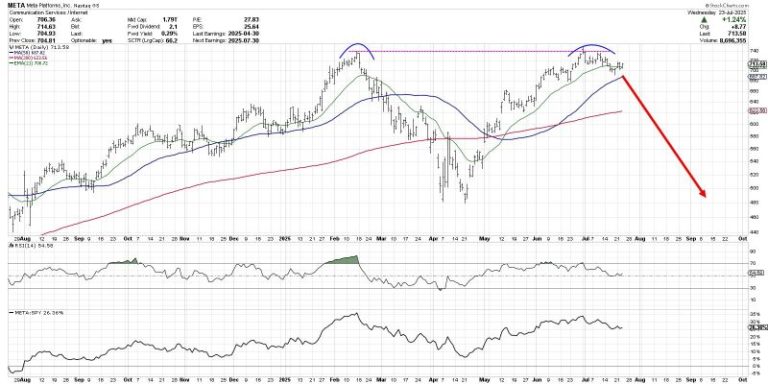
The chart of Meta Platforms, Inc. (META) has completed a roundtrip from the February high around $740 to the April low at $480 and all the way back again.  Over the last couple weeks, META has now pulled back from its retest of all-time highs, leaving investors to wonder what may come next.

Is this the beginning of a new downtrend phase for META?  Or just a brief pullback before a new uptrend phase propels META to new all-time highs?

Today we’ll look at two potential scenarios, including the double top pattern and the cup and handle pattern, and share which technical indicators and approaches could help us determine which path plays out into August.

The double top scenario basically means that the late July retest of the previous all-time high was the end of the recent uptrend phase.  The double top pattern is literally when a major resistance level is set and then retested.  The implication is that a lack of willing buyers means the uptrend is exhausted, and there is nowhere to go but down.

While the 21-day exponential moving average is currently in play for META, I would say that a break below the 50-day moving average could confirm this as the correct scenario.  If that smoothing mechanism does not hold, then the price action would imply less of a pullback and more like the beginning of a real distribution phase.

What is META pulls back but then resumes an uptrend phase, leading META to another new all-time high?  That would result in a confirmed cup and handle pattern, created by a large rounded bottoming pattern followed by a brief pullback.  The key to this pattern is the “rim” of the cup, which sits right at $740 for META.

Given the pullback META has demonstrated so far in July, I would say that a break above the $740 level would basically confirm a bullish cup and handle pattern.  That would suggest much more upside potential for META, as the stock would literally go into previously uncharted territory.

So how can we determine which scenario is more likely to play out?  This is where we need to incorporate more technical indicators into the discussion, as a way to further validate and confirm our investment thesis.

Just to review, I think a break above $740 would confirm a bullish cup and handle pattern.  I would also say that a break below the $680 level, which would represent a move below the 50-day moving average as well as the June swing lows, would basically confirm a bearish double top pattern.

We can also use the Relative Strength Index (RSI) to help determine whether META remains in a bullish trend phase.  During bull phases, the RSI rarely gets below 40, because buyers usually step in to “buy the dips” and keep the momentum fairly constructive.  So if the price would break down, and the RSI would not hold that crucial 40 level, that could mean a bearish outlook is warranted.

Finally, we can use volume-based indicators to assess whether moves in the price are supported by stronger volume readings.  Here I’ve included the Accumulation/Distribution Line, which tracks the trend in daily volume readings over time.  We can see that the high in July resulted in a divergence, as the A/D line was trending lower.  If the A/D line would break below its June and July lows, marked by a dashed red line, that would represent a bearish volume reading for META.

Technical analysis is less about predicting the future, and more about determining the most probable scenarios based on our analysis of trend, momentum, and volume.  I hope this discussion shows how the outlook for META can be easily determined and tracked using the best practices of technical analysis!

RR#6,

Dave

PS- Ready to upgrade your investment process?  Check out my free behavioral investing course!

David Keller, CMT

President and Chief Strategist

Sierra Alpha Research LLC

marketmisbehavior.com

https://www.youtube.com/c/MarketMisbehavior

Disclaimer: This blog is for educational purposes only and should not be construed as financial advice.  The ideas and strategies should never be used without first assessing your own personal and financial situation, or without consulting a financial professional.  

The author does not have a position in mentioned securities at the time of publication.    Any opinions expressed herein are solely those of the author and do not in any way represent the views or opinions of any other person or entity.

Markets don’t usually hit record highs, risk falling into bearish territory, and spring back to new highs within six months. But that’s what happened in 2025.

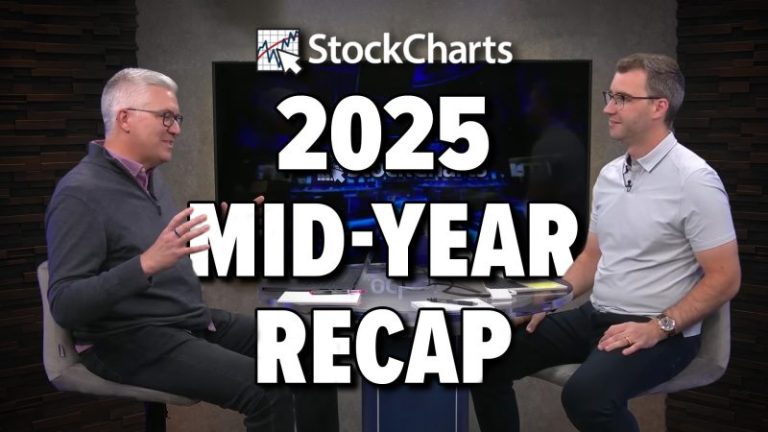
In this special mid-year recap, Grayson Roze sits down with David Keller, CMT, to show how disciplined routines, price-based signals, and a calm process helped them ride the whipsaw instead of getting tossed by it. You’ll see what really happened under the surface, how investor psychology drove the swings, and the exact StockCharts tools they leaned on to stay objective. 

If you’re focused on protecting capital, generating income, and sleeping well at night while still capturing the upside, this is a must-watch. Discover which charts deserve your attention now, what to ignore, and how to prep for the back half of 2025. 

This video premiered on July 23, 2025. Click on the above image to watch on our dedicated Grayson Roze page on StockCharts TV.

You can view previously recorded videos from Grayson at this link.

Maritime Resources Corp. (TSXV: MAE,OTC:MRTMD) (‘Maritime’ or the ‘Company’) is pleased to provide an update for the Hammerdown Gold Project, located in the Baie Verte mining district of Newfoundland and Labrador (‘Hammerdown’), near the towns of King’s Point and Springdale, including its Pine Cove milling facility located near the towns of Baie Verte and Ming’s Bight.

Highlights:

  • Start of civil construction and earthworks at the Hammerdown Gold Project

  • Excavation and transportation of the historic ore pad to the Pine Cove mill

  • Strengthening of the technical and project management team

  • Funding received from provincial government for reagent technology pilot project

‘Activity at Hammerdown is ramping up with work crews focused on the civil earthworks to prepare the site for mine development, including overburden removal, site road and stockpile pad construction along with the water management systems. Through this work our site team was able to locate and excavate the original Richmont Mines ore pad which has been transported to our Pine Cove mill for processing,’ comments Garett Macdonald, President and Chief Executive Officer. ‘We have also made several key project management appointments and have established the procurement and hiring systems needed to execute the project and maximize benefits for the local communities. We would also like to recognize the funding received from the province to study an innovative technology that could help optimize reagent consumption in our process plant.’

Construction Early Works
Maritime has received the Certificate of Approval from the Pollution Prevention Division of the provincial Department of Environment and Climate Change for full mine construction and operation. Over the next few months civil construction will establish key infrastructure for mine development including access roads, water management features, the power line right of way and rock filled pads for the crushing plant, maintenance and administration facilities. As a brownfields mine site, Hammerdown benefits from existing road access and a large volume of blasted waste rock left over from the original mine development in 2000. The site contains no major watercourses or fish habitat, and is generally dry, with minimal overburden over the deposit, averaging 2-3 metres of glacial till.

Figure 1. Hammerdown Project Site – Looking Southwest

To view an enhanced version of this graphic, please visit:
https://images.newsfilecorp.com/files/4548/259859_7ed1efe654102995_001full.jpg

Technical Team Appointments
The appointment of several key technical and project management personnel marks a positive step forward for the Company and Hammerdown. Recent additions to the Maritime team include:

  • Collin Ellison, Project Director. Collin has over 50 years experience in the mining industry, focusing on project development and operations. Former CEO, President and Director with Goldbelt Resources, Asian Mineral Resources and PMI Gold.

  • Billy Grace, Chief Mine Engineer. Former Manager of Technical Services with Newmont at the Musslewhite Mine in Ontario and General Manager with Aureus Gold in Nova Scotia.

  • Gregg Vickell, Senior Metallurgical Advisor. Gregg has more than 40 years experience in gold and base metals management and metallurgy including Mill Manager, Mill Superintendent, Chief Metallurgist and Operations Technical Services roles with a host of companies both in Canada and abroad. He has in depth experience with plant design, operations readiness, commissioning and process optimization.

  • Paolo Toscano, Technical Advisor – construction and engineering. Paolo recently served at Sr. Vice President Engineering and Construction for Calibre Mining at the Valentine Gold Project in Newfoundland and Labrador and has over 30 years of experience. Former Director of Projects for Alamos Gold.

Richmont Mines Historic Ore Pad
The Company’s mine geology team identified a volume of material left over from Richmont Mines when the mine closed in 2004. This material consists of broken rock from the former underground mining operation that was stockpiled on surface and transferred to highway trucks for delivery to the Nugget Pond mill. Crews have transported a portion of the existing stockpile material to the Company’s Pine Cove mill for mineral processing, providing an opportunity to test the material ahead of mine development. The remaining material is being used for construction of access roads and laydown on the Hammerdown site.

Figure 1. Excavating the historic Richmont Mines ore pad

To view an enhanced version of this graphic, please visit:
https://images.newsfilecorp.com/files/4548/259859_7ed1efe654102995_002full.jpg

Government Funding for Reagent Technology
Maritime is pleased to announce the receipt of funding in the amount of $154,000 from the provincial Department of Industry, Energy and Technology under its Green Transition Fund to study a new reagent technology for its Pine Cove gold mill. GlyCat is a glycine based technology developed by Draslovk that fosters a green approach to responsible resource development by greatly reducing the amount of sodium cyanide required in gold production. GlyCat also offers the potential for greatly reduced cyanide detoxification costs, effluent treatment and increased gold recoveries. Test work is scheduled during the third quarter of 2025.

Qualified Person
Exploration activities at the Hammerdown Gold Project are administered on site by the Company’s Exploration Manager, Larry Pilgrim, P.Geo. In accordance with National Instrument 43-101 – Standards of Disclosure for Mineral Projects, Larry Pilgrim, P.Geo. Exploration Manager, is the Qualified Person for the Company and has prepared, validated and approved the technical and scientific content of this press release. The Company strictly adheres to CIM Best Practices Guidelines in conducting, documenting, and reporting its exploration activities on its exploration projects.

Analytical Procedures
All samples assayed and pertaining to this press release were completed by Eastern Analytical Limited (EAL) located at Springdale, Newfoundland and Labrador. EAL is an ISO 17025:2005 accredited laboratory for a defined scope of procedures. EAL has no relationship to Maritime. Drill core samples are collected from NQ sized diamond drill core and sawn in half. The half core samples are delivered in sealed plastic bags to EAL by Maritime field crews where they are dried, crushed, and pulped. Samples are crushed to approximately 80% passing a minus 10 mesh and split using a riffle splitter to approximately 250 grams. A ring mill is used to pulverize the sample split to 95% passing a minus 150 mesh. Sample rejects are securely stored at the EAL site for future reference. A 30-gram representative sample is selected for analysis from the 250 grams after which EAL applies a fire assay fusion followed by acid digestion and analysis by atomic absorption for gold analysis. Other metals were analyzed by applying an acid digestion and 34 element ICP analysis finish. EAL runs a comprehensive QA/QC program of standards, duplicates and blanks within each sample stream.

About Maritime Resources Corp.
Maritime (TSXV: MAE,OTC:MRTMD) (OTC Pink: MRTMF) is a gold exploration and development company focused on advancing the Hammerdown Gold Project in the Baie Verte District of Newfoundland and Labrador, a top tier global mining jurisdiction. Maritime holds a 100% interest directly and subject to option agreements entitling it to earn 100% ownership in the Green Bay Property which includes the former Hammerdown gold mine and the Orion gold project. Maritime controls over 439 km2 of exploration land including the Green Bay, Whisker Valley, Gull Ridge and Point Rousse projects. Mineral processing assets owned by Maritime in the Baie Verte mining district include the Pine Cove mill and the Nugget Pond gold circuit.

On Behalf of the Board:

Maritime Resources Corp.

Garett Macdonald, MBA, P.Eng.
President and Chief Executive Officer
info@maritimegold.com
www.maritimeresourcescorp.com

Twitter
Facebook
LinkedIn
YouTube

Caution Regarding Forward-Looking Statements: 

Certain of the statements made and information contained herein is ‘forward-looking information’ within the meaning of National Instrument 51-102 – Continuous Disclosure Obligations. Forward-looking statements are often identified by terms such as ‘will’, ‘may’, ‘should’, ‘anticipate’, ‘expects’, ‘intends’, ‘indicates’ ‘plans’ and similar expressions. Forward-looking statements include, but are not limited to, statements concerning the Hammerdown mineralization, its’ metallurgical response, precious metal extraction based on the ongoing metallurgical testwork, sampling programs, the grade control drilling program, location and grade of underground workings and backfill material, construction elements planned for Hammerdown, production ramp up at Hammerdown, preparation of an updated technical report for Hammerdown, investments to be made to and plans for the Pine Cove mill, growth of the Company and the creation of long-term value for shareholders, exploration plans at the Company’s properties, amongst other things, which involve known and unknown risks, uncertainties and other factors which may cause the actual results, performance or achievements of the Company, or industry results, to be materially different from any future results, performance or achievements expressed or implied by such forward-looking information. All forward-looking statements and forward-looking information are based on reasonable assumptions that have been made by the Company in good faith as at the date of such information. Such assumptions include, without limitation, the price of and anticipated costs of recovery of, base metal concentrates, gold and silver, the presence of and continuity of such minerals at modeled grades and values, the capacities of various machinery and equipment, the use of ore sorting technology will produce positive results, the availability of personnel, machinery and equipment at estimated prices, mineral recovery rates, and others. Forward-looking information is subject to a variety of risks and uncertainties which could cause actual events or results to differ from those reflected in the forward-looking information, including, without limitation, the ability of the Company to continue to be able to access the capital markets for the funding necessary to acquire, maintain and advance exploration properties or business opportunities; global financial conditions, including competition within the industry to acquire properties of merit or new business opportunities, and competition from other companies possessing greater technical and financial resources; difficulties in advancing towards a development decision and executing exploration programs on the Company’s proposed schedules and within its cost estimates, whether due to weather conditions, availability or interruption of power supply, mechanical equipment performance problems, natural disasters or pandemics in the areas where it operates; increasingly stringent environmental regulations and other permitting restrictions or maintaining title or other factors related to exploring of its properties, such as the availability of essential supplies and services; factors beyond the capacity of the Company to anticipate and control, such as the marketability of mineral products produced from the Company’s properties; uncertainty as to whether mineral resources will ever be converted into mineral reserves once economic considerations are applied; uncertainty as to whether inferred mineral resources will be converted to the measured and indicated categories through further drilling, or into mineral reserves, once economic considerations are applied; government regulations relating to health, safety and the environment, and the scale and scope of royalties and taxes on production; and the availability of experienced contractors and professional staff to perform work in a competitive environment and the resulting adverse impact on costs and performance and other risks and uncertainties, including those described in each MD&A of financial condition and results of operations. In addition, forward-looking information is based on various assumptions including, without limitation, assumptions associated with exploration results and costs and the availability of materials and skilled labour. Should one or more of these risks and uncertainties materialize, or should underlying assumptions prove incorrect, actual results may vary materially from those described in forward-looking statements. Accordingly, readers are advised not to place undue reliance on forward-looking information. Except as required under applicable securities legislation, Maritime undertakes no obligation to publicly update or revise forward-looking information, whether as a result of new information, future events or otherwise.

Neither the TSX Venture Exchange (‘TSX-V‘) nor its Regulation Services Provider (as that term is defined in the policies of the TSX-V) accepts responsibility for the adequacy or accuracy of this release. 

To view the source version of this press release, please visit https://www.newsfilecorp.com/release/259859

News Provided by Newsfile via QuoteMedia

This post appeared first on investingnews.com


(TheNewswire)


Vancouver, British Columbia TheNewswire – July 24, 2025 ‑ Harvest Gold Corporation (TSXV: HVG,OTC:HVGDF) (‘ Harvest Gold ‘ or the ‘ Company ‘) is pleased to announce that it has completed all aspects of preparation for a diamond drilling program slated to begin in early August 2025 at its 100%-owned Mosseau Gold Project in the Abitibi Greenstone Belt, Quebec (Figure 1). This follows an extensive regional data compilation, high-resolution magnetic survey, and encouraging results from recent fieldwork, including reconnaissance mapping, prospecting, soil sampling.


  The present financing announced July 3, 2025 is expected to close on or about July 31, 2025 and, once closed, the funds will be released immediately to the related exploration contractors.  


Rick Mark, President and CEO of Harvest Gold states: ‘I want to thank Louis Martin and the entire geological team for their excellent and extensive work in preparing for drilling at Mosseau. The quality and scale of the targets identified across this large property provide a strong foundation for what we believe is a significant discovery opportunity. We will also fly a magnetic survey on Labelle and execute a regional till sampling program on Urban Barry, both largely unexplored until now.’


  Phase I of the diamond drill program is expected to consist of approximately 5,000 metres of drilling and will test the highest-priority targets in both the Northern and Central portions of the property to evaluate their gold potential (Figure 2).  


  The Company has now identified approximately 23 priority drill targets, located in the Northern and Central parts of the Mosseau property (Figure 3), as a result of its integrated exploration efforts. These targets exhibit strong geological, geochemical, and geophysical signatures consistent with orogenic gold mineralization (Figure 4).  


  In addition to the Mosseau drill program, Harvest Gold will be launching two key regional exploration initiatives this summer:  


  •  

      A high-resolution magnetic survey over the LaBelle property, and  


  •  

  •  

      A property-wide till sampling survey over its Urban Barry properties.  


  •  

  These programs are designed to expand the Company’s exploration pipeline and support future drill targeting across its Quebec project portfolio.  


Click Image To View Full Size


  Figure 1: Project Location: Urban-Barry Greenstone Belt  


Click Image To View Full Size


  Figure 2: Magnetic Domains across the Northern and Central Target Areas of Mosseau  


Click Image To View Full Size


  Figure 3: Drill targets on the Mosseau property (magnetics)  


Click Image To View Full Size


  Figure 4: Compilation and Drill targets in the Central Part – Mosseau (magnetics)  


  Qualified Person Statement  


  All scientific and technical information in this news release has been prepared and approved by Louis Martin, P.Geo., Technical Advisor to the Company and considered a Qualified Person for the purposes of NI 43-101.  


  About Harvest Gold Corporation  


 Harvest Gold is focused on exploring for near surface gold deposits and copper-gold porphyry deposits in politically stable mining jurisdictions. Harvest Gold’s board of directors, management team and technical advisors have collective geological and financing experience exceeding 400 years.


  Harvest Gold has three active gold projects focused in the Urban Barry area, totalling 377 claims covering 20,016.87 ha , located approximately 45-70 km west of Gold Fields – Windfall Deposit (Figure 1).  


  Harvest Gold acknowledges that the Mosseau Gold Project straddles the Eeyou Istchee-James Bay and Abitibi territories.  Harvest Gold is committed to developing positive and mutually beneficial relationships based on respect and transparency with local Indigenous communities.  


Harvest Gold’s three properties, Mosseau, Urban-Barry and LaBelle, together cover over 50 km of favorable strike along mineralized shear zones.


  ON BEHALF OF THE BOARD OF DIRECTORS  


Rick Mark
President and CEO
Harvest Gold Corporation


  For more information please contact:  


  Rick Mark or Jan Urata
@ 604.737.2303 or
    info@harvestgoldcorp.com    


  Neither TSX Venture Exchange nor its Regulation Services Provider (as that term is defined in the policies of the TSX Venture Exchange) accepts responsibility for the adequacy or accuracy of this release.  


  Forward Looking Information  


  This news release includes certain statements that may be deemed ‘forward looking statements’. All statements in this news release, other than statements of historical facts, that address events or developments that Harvest Gold expects to occur, are forward looking statements. Forward looking statements are statements that are not historical facts and are generally, but not always, identified by the words ‘expects’, ‘plans’, ‘anticipates’, ‘believes’, ‘intends’, ‘estimates’, ‘projects’, ‘potential’ and similar expressions, or that events or conditions ‘will’, ‘would’, ‘may’, ‘could’ or ‘should’ occur.  


  Although the Company believes the expectations expressed in such forward-looking statements are based on reasonable assumptions, such statements are not guarantees of future performance and   actual results may differ materially from those in the forward-looking statements. Factors that could cause the actual results to differ materially from those in forward looking statements include market prices, exploitation and exploration successes, and continued availability of capital and financing, and general economic, market or business conditions. Investors are cautioned that any such statements are not guarantees of future performance and actual results or developments may differ materially from those projected in the forward-looking statements. Forward looking statements are based on the beliefs, estimates and opinions of the Company’s management on the date the statements are made. Except as required by securities laws, the Company undertakes no obligation to update these forward-looking statements in the event that management’s beliefs, estimates or opinions, or other factors, should change.  


Copyright (c) 2025 TheNewswire – All rights reserved.


News Provided by TheNewsWire via QuoteMedia

This post appeared first on investingnews.com