Author

admin

Browsing

(TheNewswire)

L’équipe Charbone servira de conseiller expert auprès d’un groupe financier privé malaisien pour le développement et la construction de leur première usine de production modulaire et évolutive dans la région Asie-Pacifique.

Brossard (Québec) TheNewswire – le 25 juin 2025 – CORPORATION CHARBONE HYDROGÈNE (TSXV: CH OTCQB: CHHYF, FSE: K47 ) (« Charbone » ou la « Société »), une rare compagnie cotée en bourse spécialisée dans la production et la distribution d’hydrogène vert en Amérique du Nord, a le plaisir d’annoncer la signature d’une entente-cadre de collaboration avec Green Hydrogen ASIAPAC SDN BHD pour soutenir le déploiement de leur première usine phare de production de dihydrogène ultrapur (UHP) en Malaisie, basée sur le modèle modulaire et évolutif de Charbone. Cette approche de production de distribution décentralisée, destinée aux utilisateurs finaux, s’inscrira dans un nouvel écosystème durable en Malaisie et pourrait être étendue à la région Asie-Pacifique, où Charbone pourrait mettre à profit son expertise.

Grâce à cette entente de collaboration, Charbone apportera son expérience dans divers domaines du développement, de la construction et de l’exploitation d’un projet complet. Cela comprend, entre autres, le choix du site, l’interconnexion, les contrats d’achat et de vente d’électricité, la conception initiales (FEED), l’ingénierie et le financement du projet, ainsi que l’identification et la sélection des fournisseurs appropriés, notamment pour les équipes d’ingénierie, et les équipements de production et de distribution.

Charbone partagera sa vaste expérience et ses connaissances acquises au cours des cinq dernières années et les monétisera. En retour, elle diversifiera et augmentera ses sources de revenus grâce à une approche collaborative qui sera reproduite avec d’autres partenaires et pays de la région, au bénéfice de ses actionnaires, ardents supporteurs du modèle Charbone depuis des années.

L’entente de collaboration permettra à Charbone de percevoir une rémunération unique, payable en espèces ou investie dans le projet. Charbone négocie actuellement des accords et des arrangements similaires avec d’autres partenaires dans différentes régions du monde.

Cette entente reconnaît tous les efforts déployés par Charbone au cours des cinq (5) dernières années pour créer un modèle d’écosystème durable qui fonctionne dans le monde réel et pas seulement sur le marché nord-américain , a dit Dave Gagnon, Président et chef de la direction de Charbone. Il continue, Quand on regarde le marché actuel de l’hydrogène, on se rend compte que les deux marchés les plus prometteurs sont l’Amérique du Nord et l’Asie-Pacifique, que nous commençons maintenant.

Nous sommes ravis d’officialiser cette collaboration stratégique avec Charbone. Leur approche modulaire et décentralisée éprouvée s’inscrit parfaitement dans notre vision d’accélérer l’adoption de l’hydrogène vert en Malaisie et dans la région Asie-Pacifique. En tirant parti de l’expertise et des capacités de conseil uniques de Charbone, nous sommes convaincus de pouvoir réaliser un projet de production de haute qualité, évolutif et durable, qui servira de modèle pour les développements futurs , a dit Kamshul Kasim, Président exécutif de Green Hydrogen ASIAPAC SDN BHD. Il continue, Ce partenariat marque une étape importante dans notre engagement à contribuer à la transition énergétique propre de la Malaisie et à nous positionner à l’avant-garde de l’économie émergente de l’hydrogène vert dans la région .

À propos de Charbone Hydrogène Corporation

Charbone est une entreprise intégrée spécialisée dans l’hydrogène ultrapur (UHP) et la distribution stratégique de gaz industriels en Amérique du Nord et en Asie-Pacifique. Elle développe un réseau modulaire de production d’hydrogène vert tout en s’associant à des partenaires de l’industrie pour offrir de l’hélium et d’autres gaz spécialisés sans avoir à construire de nouvelles usines coûteuses. Cette stratégie disciplinée diversifie les revenus, réduit les risques et augmente sa flexibilité. Le groupe Charbone est coté en bourse en Amérique du Nord et en Europe sur la bourse de croissance TSX (TSXV: CH); sur les marchés OTC (OTCQB: CHHYF); et à la Bourse de Francfort (FSE: K47). Pour plus d’informations, visiter www.charbone.com .

Énoncés prospectifs

Le présent communiqué de presse contient des énoncés qui constituent de « l’information prospective » au sens des lois canadiennes sur les valeurs mobilières (« déclarations prospectives »). Ces déclarations prospectives sont souvent identifiées par des mots tels que « a l’intention », « anticipe », « s’attend à », « croit », « planifie », « probable », ou des mots similaires. Les déclarations prospectives reflètent les attentes, estimations ou projections respectives de la direction de Charbone concernant les résultats ou événements futurs, sur la base des opinions, hypothèses et estimations considérées comme raisonnables par la direction à la date à laquelle les déclarations sont faites. Bien que Charbone estime que les attentes exprimées dans les déclarations prospectives sont raisonnables, les déclarations prospectives comportent des risques et des incertitudes, et il ne faut pas se fier indûment aux déclarations prospectives, car des facteurs inconnus ou imprévisibles pourraient faire en sorte que les résultats réels soient sensiblement différents de ceux exprimés dans les déclarations prospectives. Des risques et des incertitudes liés aux activités de Charbone peuvent avoir une incidence sur les déclarations prospectives. Ces risques, incertitudes et hypothèses comprennent, sans s’y limiter, ceux décrits à la rubrique « Facteurs de risque » dans la déclaration de changement à l’inscription de la Société datée du 31 mars 2022, qui peut être consultée sur SEDAR à l’adresse www.sedar.com; ils pourraient faire en sorte que les événements ou les résultats réels diffèrent sensiblement de ceux prévus dans les déclarations prospectives.

Sauf si les lois sur les valeurs mobilières applicables l’exigent, Charbone ne s’engage pas à mettre à jour ni à réviser les déclarations prospectives.

Ni la Bourse de croissance TSX ni son fournisseur de services de réglementation (tel que ce terme est défini dans les politiques de la Bourse de croissance TSX) n’acceptent de responsabilité quant à la pertinence ou à l’exactitude du présent communiqué.

Pour contacter Corporation Charbone Hydrogène :

Téléphone bureau: +1 450 678 7171

Courriel: ir@charbone.com

Benoit Veilleux

Chef de la direction financière et secrétaire corporatif

Copyright (c) 2025 TheNewswire – All rights reserved.

News Provided by TheNewsWire via QuoteMedia

This post appeared first on investingnews.com

(TheNewswire)

TORONTO, ON TheNewswire – June 25, 2025 –Silver Crown Royalties Inc. (‘Silver Crown’, ‘SCRi’, the ‘Corporation’, or the ‘Company’) (Cboe:SCRI; OTCQX:SLCRF; FRA:QS0) reports that all resolutions proposed to shareholders at the annual general meeting of shareholders (held on June 24, 2025) were approved, including the election of all of the director nominees listed in the management information circular for the meeting. Please refer to the report of voting results filed under SCRi’s profile at www.sedarplus.ca for further details.

Voting as to each of the director nominees was as follows:

DIRECTORS

VOTES FOR

VOTES WITHHELD

Peter Bures

201,149

100%

0

0%

Peter Schloo

201,149

100%

0

0%

Peter Simeon

201,149

100%

0

0%

Philip van den Berg

201,149

100%

0

0%

ABOUT Silver Crown Royalties INC.

Founded by industry veterans, Silver Crown Royalties ( Cboe: SCRI | OTCQX: SLCRF | BF: QS0 ) is a publicly traded, silver royalty company. Silver Crown (SCRi) currently has four silver royalties of which three are revenue-generating. Its business model presents investors with precious metals exposure that allows for a natural hedge against currency devaluation while minimizing the negative impact of cost inflation associated with production. SCRi endeavors to minimize the economic impact on mining projects while maximizing returns for shareholders. For further information, please contact:

Silver Crown Royalties Inc.

Peter Bures, Chairman and CEO

Telephone: (416) 481-1744

Email: pbures@silvercrownroyalties.com

FORWARD-LOOKING STATEMENTS

This release contains certain ‘forward looking statements’ and certain ‘forward-looking information’ as defined under applicable Canadian and U.S. securities laws. Forward-looking statements and information can generally be identified by the use of forward-looking terminology such as ‘may’, ‘will’, ‘should’, ‘expect’, ‘intend’, ‘estimate’, ‘anticipate’, ‘believe’, ‘continue’, ‘plans’ or similar terminology. The forward-looking information contained herein is provided for the purpose of assisting readers in understanding management’s current expectations and plans relating to the future. Forward-looking statements and information are based on forecasts of future results, estimates of amounts not yet determinable and assumptions that, while believed by management to be reasonable, are inherently subject to significant business, economic and competitive uncertainties and contingencies. Forward-looking information is subject to known and unknown risks, uncertainties and other factors that may cause the actual actions, events or results to be materially different from those expressed or implied by such forward-looking information, including but not limited to: the impact of general business and economic conditions; the absence of control over mining operations from which SCRi will purchase gold and other metals or from which it will receive royalty payments and risks related to those mining operations, including risks related to international operations, government and environmental regulation, delays in mine construction and operations, actual results of mining and current exploration activities, conclusions of economic evaluations and changes in project parameters as plans continue to be refined; accidents, equipment breakdowns, title matters, labor disputes or other unanticipated difficulties or interruptions in operations; SCRi’s ability to enter into definitive agreements and close proposed royalty transactions; the inherent uncertainties related to the valuations ascribed by SCRi to its royalty interests; problems inherent to the marketability of gold and other metals; the inherent uncertainty of production and cost estimates and the potential for unexpected costs and expenses; industry conditions, including fluctuations in the price of the primary commodities mined at such operations, fluctuations in foreign exchange rates and fluctuations in interest rates; government entities interpreting existing tax legislation or enacting new tax legislation in a way which adversely affects SCRi; stock market volatility; regulatory restrictions; liability, competition, the potential impact of epidemics, pandemics or other public health crises on SCRi’s business, operations and financial condition, loss of key employees. SCRi has attempted to identify important factors that could cause actual results to differ materially from those contained in forward-looking statements, there may be other factors that cause results not to be as anticipated, estimated or intended. There can be no assurance that such statements will prove to be accurate, as actual results and future events could differ materially from those anticipated in such statements. Accordingly, readers are advised not to place undue reliance on forward-looking statements or information. SCRi undertakes no obligation to update forward-looking information except as required by applicable law. Such forward-looking information represents management’s best judgment based on information currently available.

This document does not constitute an offer to sell, or a solicitation of an offer to buy, securities of the Company in Canada, the United States or any other jurisdiction. Any such offer to sell or solicitation of an offer to buy the securities described herein will be made only pursuant to subscription documentation between the Company and prospective purchasers. Any such offering will be made in reliance upon exemptions from the prospectus and registration requirements under applicable securities laws, pursuant to a subscription agreement to be entered into by the Company and prospective investors. There can be no assurance that forward-looking statements will prove to be accurate, as actual results and future events could differ materially from those anticipated in such statements. Accordingly, the reader is cautioned not to place undue reliance on forward-looking statements.

CBOE CANADA DOES NOT ACCEPT RESPONSIBILITY FOR THE ADEQUACY OR ACCURACY OF THIS NEWS RELEASE.

Copyright (c) 2025 TheNewswire – All rights reserved.

News Provided by TheNewsWire via QuoteMedia

This post appeared first on investingnews.com

Lode Gold Resources Inc. (TSXV: LOD) (OTCQB: LODFF) (‘Lode Gold’ or the ‘Company’) is pleased to announce that it has engaged experienced capital markets and strategic advisors to support the advancement of its Fremont Mine in Mariposa, California. These advisors will assist in securing strategic investors and partners as the Company moves into the next phase of development.

As part of its current development strategy, Lode Gold is also engaging with mining contractors and progressing with engineering evaluations aimed at optimizing the mine plan and initiating permitting. The Company’s evaluation is focused on three key priorities:

  • High-grading during early production years to enhance initial project economics
  • Scaling production to over 100,000 ounces per year in later phases

‘Our objective is to take a disciplined and scalable approach to developing the Fremont Project,’ said Wendy T. Chan, CEO and Director at Lode Gold. ‘By securing the right strategic partnership, we will focus on various technical initiatives to optimize project economics, expedite permitting and get to production in near term. Being in a jurisdiction that is now increasingly aligned with domestic resource development, Fremont presents an interesting investment opportunity.’

The Fremont Mine is an advanced-stage exploration and development asset, on 100% private and patented land. It is located in Mariposa, an Opportunity Zone designated to attract investments with tax incentives provided by Trump’s Administration. The 2023 Preliminary Economic Assessment (PEA) outlined positive project economics at a gold price of USD $1,750, based on an annual production rate of approximately 130,000 ounces. More recently, an NI 43 -101 compliant mineral resource estimate (MRE 2025) was completed with a new geological model that separately evaluated vein and stockwork mineralization. Only 8% of the total mineral resource, filed at SEDAR+ (April 2025) has been extracted, mostly in the first 250 m. At a 1 g/t cut-off, the average true width is 53 m (at 3 g/t cut-off, the width is 16.8 m).

Upcoming Near Term 2025-2026 Catalysts:

  • Rehabilitation of 2 km underground workings
  • Expedite access to two adits, out of a total of 14
  • Channel sampling to upgrade resources to M&I
  • Metallurgy and Recovery Studies
  • Geotechnical work and rock mechanics assessments
  • Drilling 3,000 m to initiate Pre-Feasibility Study
  • Completion of Pre-Feasibility Study (underground bulk mining and other optimized methods will be evaluated)

About Lode Gold

Lode Gold (TSXV: LOD) is an exploration and development company with projects in highly prospective and safe mining jurisdictions in Canada and the United States.

In Canada, its assets in Yukon sit on the southern portion of the prolific Tombstone Belt. It covers 99.5 km2 across a 27 km strike.  Over 4,500 m have been drilled with confirmed gold endowment and economic drill intercepts over 50 m. There are four reduced-intrusive targets (RIRGS), in addition to sedimentary-hosted orogenic exploration gold.

In New Brunswick, Lode Gold, through its subsidiary 1475039 B.C. Ltd. (soon to be spun out into Gold Orogen), has created one of the largest land packages with its Acadian Gold Joint Venture, consisting of an area that spans 445 km2 with a 44 km strike. It has confirmed gold endowment with mineralized rhyolites.

In preparation for the spin-out, NI 43 101 technical reports have been prepared for all assets in Yukon and New Brunswick in 2024.

In the United States, the Company is focused on its advanced exploration and development asset, the Fremont Mine in Mariposa, California. According to the NI 43- 101 Compliant 2025 MRE, the asset contains 1.3 Moz at 4.4 g/t (3 g/t cut-off) with an average true width: 16.8 m.

Fremont was previously mined at 10.7 g/t. During gold mining prohibition in WWII, its mining license was suspended. Only 8% of the resource identified in the 2025 MRE has been extracted. This asset has exploration upside and is open at depth (three step-out holes at 1,300 m hit structure and were mineralized) and on strike. This is a brownfield project with over 43,000 m drilled, 23 km of underground workings and 14 adits. The project has excellent infrastructure and is close to electricity, water, roads, railhead and port.

Recently, the Company completed an internal scoping study, with a strategic pivot to 100% underground mining. Previously, in March 2023, the Company completed an NI 43-101 Preliminary Economic Assessment (‘PEA’) with an open pit and underground combination mine. The NI 43-101 technical reports are available on the Company’s profile on SEDAR+ (www.sedarplus.ca) and the Company’s website (www.lode-gold.com).

Qualified Person Statement

The scientific and technical information contained in this press release has been reviewed and approved by Jonathan Victor Hill, Director, BSc (Hons) (Economic Geology – UCT), FAusIMM, and who is a ‘qualified person’ as defined by National Instrument 43-101 – Standards of Disclosure for Mineral Projects (‘NI 43-101’).

ON BEHALF OF THE COMPANY
Wendy T. Chan 
CEO & Director

Information Contact:

Winfield Ding 
CFO
info@lode-gold.com
+1-(604)-977-GOLD (4653)

Jenna Mosher 
Investor Relations
jenna@lode-gold.com
+1 (604) -977-GOLD (4653) 

Cautionary Note Related to this News Release and Figures

This news release contains information about adjacent properties on which the Company has no right to explore or mine. Readers are cautioned that mineral deposits on adjacent properties are not indicative of mineral deposits on the Company’s properties.

Cautionary Statement Regarding Forward-Looking Information

Neither the TSX Venture Exchange nor its Regulation Services Provider (as that term is defined in the policies of the TSX Venture Exchange) accepts responsibility for the adequacy or accuracy of this release.

This news release includes ‘forward-looking statements’ and ‘forward-looking information’ within the meaning of Canadian securities legislation. All statements included in this news release, other than statements of historical fact, are forward-looking statements including, without limitation, statements with respect to the use of proceeds, advancement and completion of resource calculation, feasibility studies, and exploration plans and targets. Forward-looking statements include predictions, projections and forecasts and are often, but not always, identified by the use of words such as ‘anticipate’, ‘believe’, ‘plan’, ‘estimate’, ‘expect’, ‘potential’, ‘target’, ‘budget’ and ‘intend’ and statements that an event or result ‘may’, ‘will’, ‘should’, ‘could’ or ‘might’ occur or be achieved and other similar expressions and includes the negatives thereof.

Forward-looking statements are based on a number of assumptions and estimates that, while considered reasonable by management based on the business and markets in which the Company operates, are inherently subject to significant operational, economic, and competitive uncertainties, risks and contingencies. These include assumptions regarding, among other things: the status of community relations and the security situation on site; general business and economic conditions; the availability of additional exploration and mineral project financing; the supply and demand for, inventories of, and the level and volatility of the prices of metals; relationships with strategic partners; the timing and receipt of governmental permits and approvals; the timing and receipt of community and landowner approvals; changes in regulations; political factors; the accuracy of the Company’s interpretation of drill results; the geology, grade and continuity of the Company’s mineral deposits; the availability of equipment, skilled labour and services needed for the exploration and development of mineral properties; currency fluctuations; and impact of the COVID-19 pandemic.

There can be no assurance that forward-looking statements will prove to be accurate and actual results, and future events could differ materially from those anticipated in such statements. Important factors that could cause actual results to differ materially from the Company’s expectations include a deterioration of security on site or actions by the local community that inhibits access and/or the ability to productively work on site, actual exploration results, interpretation of metallurgical characteristics of the mineralization, changes in project parameters as plans continue to be refined, future metal prices, availability of capital and financing on acceptable terms, general economic, market or business conditions, uninsured risks, regulatory changes, delays or inability to receive required approvals, unknown impact related to potential business disruptions stemming from the COVID-19 outbreak, or another infectious illness, and other exploration or other risks detailed herein and from time to time in the filings made by the Company with securities regulators, including those described under the heading ‘Risks and Uncertainties’ in the Company’s most recently filed MD&A. The Company does not undertake to update or revise any forward-looking statements, except in accordance with applicable law.

To view the source version of this press release, please visit https://www.newsfilecorp.com/release/256755

News Provided by Newsfile via QuoteMedia

This post appeared first on investingnews.com

A young Brazilian hiker who fell hundreds of meters from the ridge of a towering Indonesian volcano and was trapped there for almost four days was found dead on Tuesday, Brazil’s government said. For days, millions of people in Brazil had watched, posted and prayed as rescuers tried to locate her.

The tourist, 26-year-old Juliana Marins, began summiting on June 21 Mount Rinjani, an active 3,726-meter (12,224-foot) volcano on the Indonesian island of Lombok, with a guide and five other foreigners when she fell some 600 meters (1,968 feet), Indonesian authorities said.

“No signs of life were found,” said Mohammad Syafii, head of Indonesia’s National Search and Rescue Agency.

Marins’ family in Brazil confirmed her death.

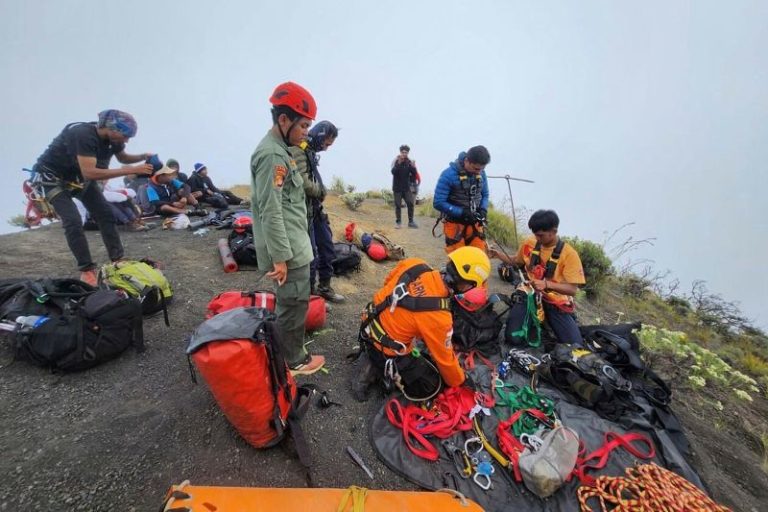
The Indonesian rescue team said it found Marins’ body beside a crater using a thermal drone after four days of intensive searches complicated by extremely harsh terrain and weather.

The difficult conditions and limited visibility delayed the evacuation process, Syafii said, as the rescue team climbed carrying Marins’ body to Sembalun basecamp but would have to wait until Wednesday for transport to a police hospital.

Brazil’s Foreign Ministry called her death a tragedy and said that the country’s embassy in Jakarta, the capital of Indonesia, had coordinated the rescue with local authorities.

Marins’ ordeal has riveted her home country, Brazil, with millions following the dramatic search-and-rescue efforts since news broke of her fall.

Authorities did not say when exactly she died.

Adding to the frenzy in Brazil over her ordeal, Brazil’s embassy in Jakarta had accused the Indonesian government of fabricating Marins’ rescue and misinforming her family that she had been located and given food and water just hours after her fall.

There was no immediate response from the Indonesian government on that claim.

Indonesia’s island of Lombok lies east of Jakarta and neighbors the island of Bali. Mount Rinjani, the country’s second-tallest peak, is a popular destination for trekkers.

In an Instagram post, Marins’ family thanked the many Brazilians who had prayed for their daughter’s safety.

Marins, a dancer who lived in Niteroi, outside Rio de Janeiro, had been traveling across Asia since February, her family said. She had visited the Philippines, Vietnam and Thailand before reaching Indonesia.

This post appeared first on cnn.com

(TheNewswire)

The CHARBONE team will serve as expert matter advisors to a private Malaysian financial group for the development and construction of their first modular and scalable production facility in the Asia-Pacific region.

Brossard, Quebec TheNewswire – June 25, 2025 Charbone Hydrogen Corporation (TSXV: CH; OTCQB: CHHYF; FSE: K47) (the ‘Company’ or ‘CHARBONE ‘), North America’s only publicly traded pure-play company focused on green hydrogen production and distribution, is pleased to announce that it has executed a Master Collaborative Agreement with Green Hydrogen ASIAPAC SDN BHD to support the deployment of its first dihydrogen Ultra High Purity (UHP) production flagship facility in Malaysia, based on the CHARBONE modular and scalable model. The decentralized distributed approach for end-users will be part of a new sustainable ecosystem in Malaysia and could eventually be extended to the Asia Pacific region, where CHARBONE could leverage its expertise.

Through the collaboration agreement, CHARBONE will provide experience in various areas of a complete project development, construction, and operation of the facility. This includes, but is not limited to, site selection, interconnection, power purchase and offtake agreements, front-end engineering and design (FEED), project financing, and the identification and selection of appropriate suppliers, such as engineering, production, and distribution equipment.

CHARBONE will share its extensive experience and knowledge gained over the last five years and monetize it. In return, it will diversify and increase its revenue stream through a collaborative approach that will be replicated with other partners and countries in the region, benefiting its shareholders who have been strong supporters of the CHARBONE model for years.

The Collaborative Agreement will provide CHARBONE with a single one-time fee that can be paid in cash or invested in the project. CHARBONE is currently negotiating similar agreements and arrangements with other partners in different regions of the globe.

This agreement recognized all the efforts that CHARBONE has deployed over the last five (5) years to create a sustainable ecosystem model that works in the real world and not only in the North American market ,’ said Dave Gagnon, President and CEO of Charbone. He continued , ‘ when you look at the current hydrogen market, you do realize that the two most promising markets are North America and Asia-Pacific, which we are starting now.

We are delighted to formalize this strategic collaboration with CHARBONE. Their proven modular and decentralized approach aligns perfectly with our vision to accelerate the adoption of green hydrogen in Malaysia and the wider Asia-Pacific region. By leveraging CHARBONE’s unique expertise and advisory capabilities, we are confident that we will deliver a high-quality, scalable, and sustainable production project that will serve as a blueprint for future developments ,’ said Kamshul Kasim, Executive Chairman of Green Hydrogen ASIAPAC SDN BHD. He continued , ‘ this partnership marks a significant milestone in our commitment to contribute to Malaysia’s clean energy transition and to position ourselves at the forefront of the emerging green hydrogen economy in the region.

About CHARBONE Corporation

CHARBONE is an integrated company specialized in Ultra High Purity (UHP) hydrogen and the strategic distribution of industrial gases in North America and the Asia-Pacific region. It is developing a modular network of green hydrogen production while partnering with industry players to supply helium and other specialty gases without the need to build costly new plants. This disciplined strategy diversifies revenue streams, reduces risks, and increases flexibility. The CHARBONE group is publicly listed in North America and Europe on the TSX Venture Exchange (TSXV: CH), the OTC Markets (OTCQB: CHHYF), and the Frankfurt Stock Exchange (FSE: K47). For more information, visit www.charbone.com .

Forward-Looking Statements

This news release contains statements that are ‘forward-looking information’ as defined under Canadian securities laws (‘forward-looking statements’). These forward-looking statements are often identified by words such as ‘intends’, ‘anticipates’, ‘expects’, ‘believes’, ‘plans’, ‘likely’, or similar words. The forward-looking statements reflect management’s expectations, estimates, or projections concerning future results or events, based on the opinions, assumptions and estimates considered reasonable by management at the date the statements are made. Although Charbone believes that the expectations reflected in the forward-looking statements are reasonable, forward-looking statements involve risks and uncertainties, and undue reliance should not be placed on forward-looking statements, as unknown or unpredictable factors could cause actual results to be materially different from those reflected in the forward-looking statements. The forward-looking statements may be affected by risks and uncertainties in the business of Charbone. These risks, uncertainties and assumptions include, but are not limited to, those described under ‘Risk Factors’ in the Corporation’s Filing Statement dated March 31, 2022, which is available on SEDAR at www.sedar.com; they could cause actual events or results to differ materially from those projected in any forward-looking statements.

Except as required under applicable securities legislation, Charbone undertakes no obligation to publicly update or revise forward-looking information.

Neither TSX Venture Exchange nor its Regulation Services Provider (as that term is defined in policies of the TSX Venture Exchange) accepts responsibility for the adequacy or accuracy of this release .

Contact Charbone Hydrogen Corporation

Telephone: +1 450 678 7171

Email: ir@charbone.com

Benoit Veilleux

CFO and Corporate Secretary

Copyright (c) 2025 TheNewswire – All rights reserved.

News Provided by TheNewsWire via QuoteMedia
This post appeared first on investingnews.com

Seventy-five years ago this week, more than 135,000 North Korean troops invaded South Korea, starting a war that cost millions of lives and left scars that linger to this day.

Yet, the Korean War has been forever overshadowed by World War II, a much larger conflict that ended less than five years earlier. Even the US Army refers to Korea as “the Forgotten War” – despite more than 36,000 American lives lost.

Sixteen nations, including the United States, sent combat troops in aid of South Korea under the United Nations Command. Chinese troops intervened on the North Korean side.

War broke out on June 25, 1950, when North Korean forces stormed across the 38th parallel dividing North and South Korea. An armistice signed on July 27, 1953, stopped the conflict, but the war never officially ended because there was no peace treaty.

While the twists and turns of today’s US-North Korea relationship have put a spotlight on the Korean War’s legacy, it is still a widely overlooked conflict.

Here are six things you might not know about the Korean War:

The US Army once controlled one of the world’s most secretive cities

It’s almost impossible for Americans to travel to North Korea or its capital city Pyongyang. US passport holders are not allowed to go there without special permission from the US State Department.

But for eight weeks in 1950, Pyongyang was under control of the US Army.

On October 19 of that year, the US Army’s 1st Cavalry Division along with a division of South Korean soldiers captured the North Korean capital, according to US Army histories.

The US forces quickly made themselves at home, according to the histories.

By October 22, the US Eighth Army had set up its advance headquarters in what was the headquarters building for North Korean leader Kim Il Sung.

A picture from the time shows an American intelligence officer sitting at Kim’s desk with a portrait of Soviet Union leader Joseph Stalin hanging on the wall behind him.

But the US military’s occupation of Pyongyang was short-lived. When Chinese troops entered the war in late November 1950, they quickly pushed south and vanquished US forces from Pyongyang by December 5.

The US dropped more bombs on North Korea than on the entire region during WWII

Most images of the Korean War are of ground battles fought in places like the Chosin Reservoir and Incheon. But much of the destruction wreaked on North Korea by the US military was done in a relentless bombing campaign.

During the three years of the Korean War, US aircraft dropped 635,000 tons of bombs – both high explosive and incendiary – on North Korea. That’s more than the 500,000 tons of bombs the US dropped in the Pacific in the entirety of the Second World War, according to figures cited by historian Charles Armstrong in the Asia-Pacific Journal.

Journalists, international observers and American prisoners of war who were in North Korea during the war reported nearly every substantial building had been destroyed. By November 1950, North Korea was advising its citizens to dig holes for housing and shelter.

North Korea didn’t keep official casualty figures from the bombings, but information obtained from Russian archives by the Wilson Center’s Cold War International History Project put the number at more than 280,000.

Gen. Curtis LeMay, the father of US strategic bombing and the architect of fire raids that destroyed swathes of Japanese cities in World War II, said this of the American bombing of North Korea:

“We went over there and fought the war and eventually burned down every town in North Korea anyway, some way or another.”

Armstrong said that bombing of North Korea has effects that linger to this day.

“The DPRK (Democratic Republic of Korea) government never forgot the lesson of North Korea’s vulnerability to American air attack, and for half a century after the Armistice continued to strengthen antiaircraft defenses, build underground installations, and eventually develop nuclear weapons to ensure that North Korea would not find itself in such a position again,” Armstrong wrote.

North Korea convinced the Soviet Union and Joseph Stalin to let the war happen

When World War II ended, control of the Korean Peninsula – occupied by defeated Japanese troops – was divided between the Soviet Union in the north and the United States in the south.

Kim Il Sung, the leader of North Korea, wanted to unite the two Koreas under communist rule and sought permission of Soviet leader Joseph Stalin to do so by force, according to records from the Wilson Center.

Upon Kim’s first request to invade in March 1949, Stalin was wary and did not want to be pulled into a conflict with the United States, which still had occupation troops in South Korea.

But when those troops were pulled in the summer of 1949, Stalin’s opposition softened, and by April 1950 the Soviet leader was ready to hear Kim out again when the North Korean leader visited Moscow.

Stalin told Kim that the USSR would back the invasion, but only if Kim got communist China to approve too.

Emboldened by communist China’s victory over Nationalist forces in 1949 – in a civil war in which Washington did not intervene – Chinese leader Mao Zedong agreed and offered to be a backup force for North Korean troops in the eventuality the US intervened.

With that, Kim had the green light to invade.

The Korean War saved Taiwan from a potential communist takeover

In 1949, communist China was amassing forces along its coast to invade Taiwan, the island to which Chiang Kai-shek and his Nationalist forces had fled after losing to Mao and the communists in the Chinese Civil War.

But the outbreak of the Korean War put a big roadblock in the way of communist China’s plans – the US Navy. Fearful of the fighting in Korea spreading across East Asia, President Harry Truman dispatched US warships to the waters between China and Taiwan.

The US State Department tells how close Taiwan, now a self-governed democaracy that Beijing still claims as part of China, came to a potential communist takeover.

“In late 1949 and early 1950, American officials were prepared to let PRC (People’s Republic of China) forces cross the Strait and defeat Chiang, but after the outbreak of the Korean War in June 1950, the United States sent its Seventh Fleet into the Taiwan Strait to prevent the Korean conflict from spreading south,” reads a passage from the department’s Office of the Historian.

“The appearance of the Seventh Fleet angered the Chinese communists, who transferred their troops poised for an invasion of Taiwan to the Korean front,” it reads.

By October 19, 1950, 12 divisions of communist Chinese troops, more than a quarter-million men, were in North Korea, according to a Brookings Institution account.

Those Chinese troops would inflict horrific losses on the US and South Korean troops they faced, eventually driving them out of North Korea completely.

But China also suffered massive losses; more than 180,000 of its troops were killed.

The first jet-vs-jet dogfight

Jet fighters entered military service in World War II with the introduction of the German Messerschmidt 262. But the jet fighters didn’t go head-to-head in a “Top Gun”-style dogfight until the Korean War.

Records seem to agree that first dogfight occurred over Sinuiju in North Korea, near the Yalu River, and its border with China on November 8, 1950. The Americans, flying F-80 Shooting Star jets, were confronted by MiG-15s, Soviet-made jets that were probably being piloted by Soviet pilots from bases in China.

According to a report from the historian of the US Air Force’s 51st Fighter Wing, eight to 12 MiGs came after an American flight of four F-80s that day. In a 60-second encounter with one of those MIGs, Air Force 1st Lt. Russell Brown hit a MiG-15 with fire from his jet’s cannon and saw it explode in flames, becoming the first jet fighter pilot to score a kill in a dogfight, the report says.

But others dispute that account, with a report from the US Naval Institute (USNI) saying that Soviet records show no MiGs were lost that day.

What is certain is that the next day, November 9, 1950, US Navy Lt. Cmdr. William Amen, flying an F9F fighter off the aircraft carrier USS Philippine Sea, shot down a MiG-15 during airstrikes against bridges on the Yalu River.

Soviet records confirm the MiG-15 loss that day, according to the USNI report.

Later in the war, the US introduced the F-86 jet to the Korean conflict. That plane won fame in battles against the MiG-15 in what was know as “MiG Alley,” the area along the Korea-China border, where the Soviet pilots flew out of bases on the Chinese side.

The National Museum of the US Air Force in Ohio explains MiG Alley this way:

“Large formations of MiGs would lie in wait on the Manchurian side of the border. When UN aircraft entered MiG Alley, these MiGs would swoop down from high altitude to attack. If the MiGs ran into trouble, they would try to escape back over the border into communist China. (To prevent a wider war, UN pilots were ordered not to attack targets in Manchuria.) Even with this advantage, communist pilots still could not compete against the better-trained Sabre pilots of the US Air Force, who scored a kill ratio of about 8:1 against the MiGs.”

The United States never declared war

Though millions of lives were lost during the fighting on the Korean Peninsula between 1950 and 1953, they were technically casualties of what was called a “police action.”

Under the US Constitution, only the US Congress can declare war on another nation. But it has not done so since World War II.

When North Korea invaded the South in 1950, US President Harry Truman sent the US military to intervene as part of a combined effort approved by the United Nations Security Council.

“Fifteen other nations also sent troops under the UN command. Truman did not seek a formal declaration of war from Congress; officially, America’s presence in Korea amounted to no more than a ‘police action,’” reads a passage from the US National Archives.

And those police actions have become the norm for US military intervention ever since. The Vietnam War, the wars in Iraq, Afghanistan and Kosovo, all have seen US troops enter combat under congressional authorizations for the use of military force (AUMF), according to the US House of Representatives website.

Though the AUMF had been around since the beginning of the republic, “after World War II … AUMFs became much broader, often granting Presidents sweeping authority to engage America’s military around the world,” the US House website says.

“The war was the first large overseas US conflict without a declaration of war, setting a precedent for the unilateral presidential power exercised today,” Emory University law professor Mary Dudziak wrote in a 2019 opinion column for the Washington Post.

“The Korean War has helped to enable this century’s forever wars,” Dudziak wrote.

This post appeared first on cnn.com

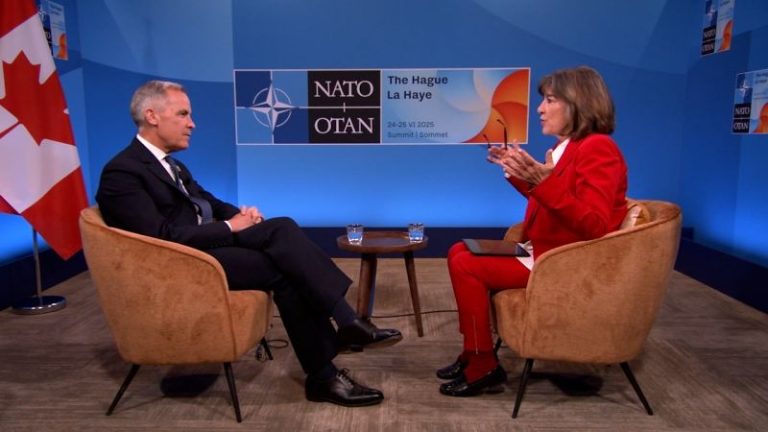
Canada believes US President Donald Trump is no longer interested in turning it into the 51st state, Prime Minister Mark Carney said Tuesday.

“He admires Canada,” Carney told Amanpour. “I think it’s fair to say, maybe for a period of time (he) coveted Canada.”

Carney has frequently pronounced the old, close partnership between Canada and the United States as “over.” He began his term by courting European partners in the United Kingdom and France, and even collaborating with Australia on new radar systems for the Canadian Arctic.

Still, Carney credited Trump for pushing Canada toward higher defense spending, especially meeting the defense spending benchmark for NATO members.

“The president is focused on changing a series of bilateral relations,” Carney told Amanpour. “We’re at NATO. He’s been focused on making sure that all members, Canada included … pay their fair share. I think we’re doing that now.”

Trump now has the “potential to be decisive” in the situation in the Middle East, Carney also told Amanpour. While a broader peace in the region is the ultimate goal, he added, the current priority should be getting “the basics”: a ceasefire, a full resumption of humanitarian aid and the release of all hostages held in the strip.

“He’s used his influence and US power in other situations. We’ve just seen it in Iran. It does create possibility of moving forward and there’s a moral imperative to move forward,” Carney added.

The Canadian leader also credited Iran for its “proportionate” response to the US having bombed three nuclear sites: a highly telegraphed strike on a regional US military base, which was largely intercepted.

“The military action was also a diplomatic move by Iran. We never welcome, obviously, hostilities and reactions, but it was proportionate, it was de-escalatory, it appears to have been previewed,” Carney said.

This post appeared first on cnn.com

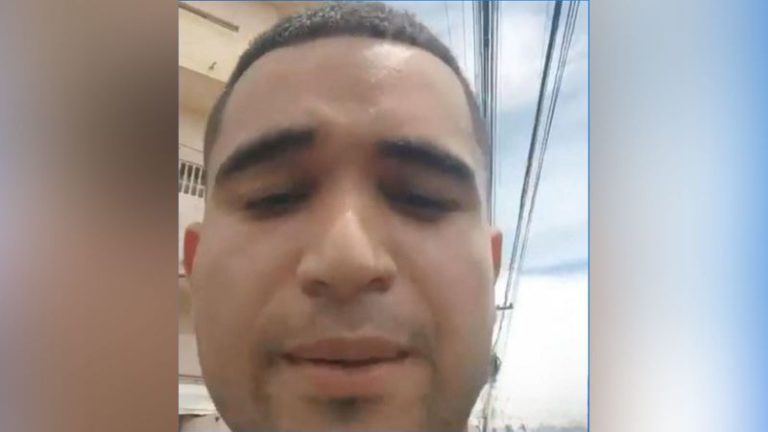
A Venezuelan influencer who criticized both gangs and allegedly corrupt cops was shot and killed on Monday while livestreaming on TikTok, authorities said.

Venezuela’s Ministry of Public Safety said in a statement on Instagram that influencer Gabriel Jesús Sarmiento died in the city of Maracay.

Sarmiento often criticized criminal groups and alleged corruption in law enforcement through his content online, and the ministry added that his death came shortly after he reported “threats made against him by members of the GEDOs (Organized Crime Structured Groups, in Spanish) and alleged police officials.”

Maracay is the capital of Aragua, the region from which the notorious Tren de Aragua gang takes its name, though there is no known connection between the TikToker’s death and the criminal group.

The ministry also said it assigned the 69th Prosecutor’s Office Against Organized Crime to “investigate, identify, and prosecute” those responsible for Sarmiento’s death.

“What happened, what happened?” shouts the man in the recording, followed by a heavy burst of gunfire.

“They shot me!” the man then screams. The video ends with the image of two unidentified armed men. Seconds later, the livestream stops and the video ends.

Sarmiento’s death comes just over a month after another Latin American influencer was killed while livestreaming. Mexican beauty influencer Valeria Marquez was shot and killed in a salon in Jalisco in May, sparking outrage over high rates of femicide in the region.

Just days before Marquez’s death, another woman – a mayoral candidate in the state of Veracruz – was shot dead, also during a livestream, alongside three other people.

This post appeared first on cnn.com

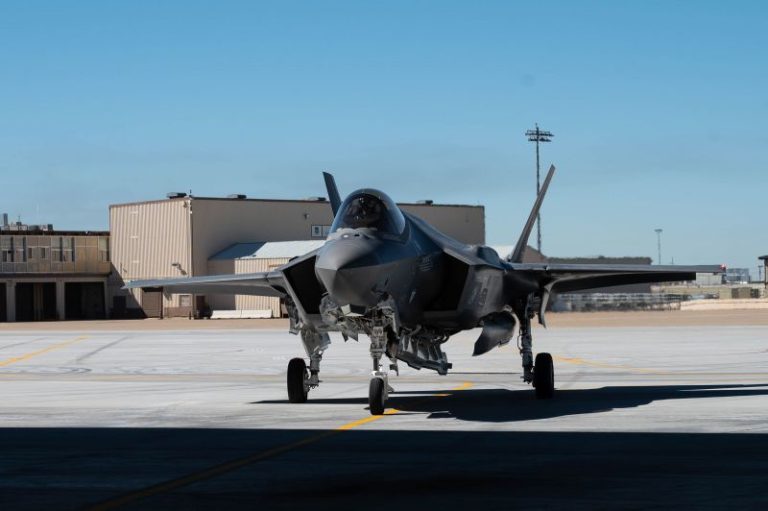
The United Kingdom is to purchase 12 F-35A jets, which are capable of carrying nuclear weapons, from the United States.

British Prime Minister Keir Starmer will make the announcement during Wednesday’s NATO summit, as he calls on NATO members to do more to support the alliance.

“The UK’s commitment to NATO is unquestionable, as is the alliance’s contribution to keeping the UK safe and secure,” Starmer will say, according to Downing Street.

“But we must all step up to protect the Euro-Atlantic area for generations to come.”

The announcement follows repeated criticisms by US President Donald Trump that NATO countries are not spending enough on defense.

The fifth-generation fighter aircraft, built primarily by US manufacturer Lockheed Martin, is one of the most advanced fighter jets on the planet – but it is also one of the most expensive.

The decision to acquire aircraft with the capacity to carry nuclear weapons also represents a major strengthening of Britain’s nuclear posture.

It means that in addition of UK’s existing sea-borne nuclear deterrent, the country will also now join NATO’s dual capable aircraft nuclear mission.

“In an era of radical uncertainty we can no longer take peace for granted,” Starmer will say.

According to the British government, the decision will support 20,000 jobs in the F35 program in the UK, with 15% of the global supply chain for the jets based in Britain.

This post appeared first on cnn.com

Sports merchandising giant Fanatics is aiming to build a training camp for athletes to prepare them for life off the field.

More than two dozen NBA, NFL and NHL players participated in the company’s Athlete Immersion Program this past weekend as part of Fanatics Fest in New York City. The program included three days of workshops on business, entrepreneurship, tech and more.

“This definitely opened my eyes,” said Cole Anthony, a guard for the NBA’s Memphis Grizzlies. “I’m already trying to do things on the business side with my partners, my family. It just motivates me more.”

The “coaches” for the business boot camp included Fanatics founder Michael Rubin, Goldman Sachs CEO David Solomon, Apollo Global cofounder and Philadelphia 76ers managing partner Josh Harris, Raising Cane’s founder Todd Graves, ESPN Chairman Jimmy Pitaro and Boardroom cofounder and CEO Rich Kleiman.

Aaron Donald, who retired from the NFL’s Los Angeles Rams in 2024 after winning the Super Bowl, has already begun a new career in business, including an ownership stake in sports nutrition company Ready. But Donald, likely a future Hall of Famer, said he was blown away by the all-star team of business leaders.

“I think it’s one of hell of an opportunity,” said Donald. “I’m in a room with guys running companies worth billions of dollars. How many opportunities are you going to get to do that? You have to take advantage of all of those opportunities and knowledge.”

Fanatics launched the Athlete Immersion Program in 2023 and this year is partnering with Boardroom, a media and advisory company cofounded by Kleiman and NBA superstar Kevin Durant.

“I think it’s great to be able to give them a bit of a blueprint,” said Kleiman. “Being able to put them in the room with people that have the answers, that have done it, that lead industries. I think you get so much power and opportunity just from the information you get from watching, from learning and from being in these rooms and understanding how to move.”

Kleiman pointed to former NBA player Junior Bridgeman, who made less than $3 million during his 12-year career in the league, but built a net worth of more than $1 billion after retirement primarily through investments in Wendy’s, Pizza Hut and Chili’s franchises and then later through Coca-Cola distribution.

“What he did, he’s exceptional,” said Kleiman of Bridgeman, who died in March. “He wasn’t just a name. He actually built an operational team, built them up, oversaw them, and he was a tycoon of a business mind.”

Fanatics Chief People Officer Toretha McGuire said the program is focused on helping athletes use their playing days, what they describe as their “1.0 career” to fuel their “2.0 career.”

It’s an experience similar to a business school with lectures, case studies and projects, in which each athlete creates their own limited-edition clothing line with vintage sports apparel company Mitchell & Ness, a subsidiary of Fanatics.

“They go through a base business case, we teach them business fundamentals, we take them through the Fanatics business case where we bring them to 2021 where Michael [Rubin] did a final capital raise and we basically say, ‘What would you have done?’” McGuire said.

Most professional athletes retire from playing when they’re still young, she added.

“The opportunities they have in their 1.0 careers in terms of access and expanding their networks are going to be very critical,” she said.

Graves, who founded the popular fried chicken chain Raising Cane’s, spoke on a panel about the realities and challenges of entrepreneurship

“If you absolutely want to start a business, imagine how hard it is, multiply that by infinity to be able to make it work,” he said. “You have to be passionate, you have to be in the details 100%. And you have to know what you don’t know, right? So that is bringing in great people to try and grow it.”

The Athlete Immersion Program is meant to be a continuous learning opportunity through which players receive support, education and networking opportunities from Fanatics and Boardroom before and after they begin their business journey.

The next session will be held in December for WNBA, NWSL and MLB athletes in the offseason.

For Anthony, who was recently traded to the Grizzlies from the Orlando Magic, it’s also shown him the real parallels between competing in sports and competing in business.

“The common thing with everyone who has spoken to us and I’ve been able to talk to one-on-one is that every person I met here has been a grinder,” he said. “They make whatever it is they are passionate about, or what they are working on their priority. I think that’s just dope to hear from other people I can relate to in that sense.”

A decade ago, reports suggested 16% of NFL players ultimately filed for bankruptcy — a sign of the type of financial strain many professional athletes face and a cautionary tale of life after the game.

But today, many of the people participating in the Fanatics curriculum believe opportunities like the Athlete Immersion Program can change the narrative — and their financial future.

For Donald, who will be remembered as one of the greatest defenders in NFL history, the focus now is finding the greatest opportunities for the next chapter of his life.

“It would be silly for me to stop the hard work, discipline, the structure that got me to a certain point,” he said. “I’m trying to build generational wealth for my kids.”

This post appeared first on NBC NEWS