
Author

admin

Browsing

Ukrainian President Volodymyr Zelensky has signed an agreement with the Council of Europe (CoE) to create a tribunal that would allow for the prosecution of senior Russian officials who have led the war on Ukraine.

Zelensky signed the accord on Wednesday alongside CoE Secretary General Alain Berset in the French city of Strasbourg, where the organization is headquartered.

The Ukrainian leader has portrayed the special tribunal as paramount to holding Russian officials responsible for the full-scale invasion of his country, which began in February 2022 and has grinded on for more than three years, with a huge human cost.

The establishment of the tribunal is aimed at widening the net for those who can be tried over the conflict. The International Criminal Court (ICC), which focuses on crimes against humanity, has already issued arrest warrants for Russian President Vladimir Putin and several other high-profile political and military Russian figures.

The new body will deal with the crime of aggression, specifically regarding the use of armed force by one state against another. It marks the first time that the CoE has set up such a tribunal.

“The Tribunal, formally launched today, creates a real opportunity to hold the leadership of the Russian regime accountable for the crimes committed against our state and our people,” the Ukrainian president wrote on X.

“We will continue working to ensure justice for all victims. Criminals must face trial in The Hague and be punished.”

Berset said: “This historic signature reminds us that international law must apply to all – with no exceptions, and with no double standards.”

Alongside Putin, the ICC, based in The Hague, issued an arrest warrant for Maria Lvova-Belova, Russia’s presidential commissioner for children’s rights, in March 2023. Both are accused of the illegal deportation and transfer of children from occupied areas of Ukraine to Russia.

In March 2024, the court also issued arrest warrants for Viktor Sokolov, a Russian navy officer and former commander of the Black Sea Fleet, and Sergei Kobylash, a lLieutenant general in the Russian Armed Forces. The two are accused of the war crime of causing excessive incidental harm to civilians and the crime against humanity of inhumane acts.

Meanwhile, ceasefire negotiations to end the war in Ukraine have mostly stalled despite mediation from the Trump administration.

The talks between Russia, Ukraine and third countries have struggled to make progress after Moscow refused to back off its maximalist demands and presented a ceasefire proposal that would essentially amount to Ukraine’s capitulation.

At the same time, Russia keeps ramping up its attacks against Ukrainian cities. Russian forces killed dozens of Ukrainian civilians in less than 48 hours on Monday and Tuesday, according to Ukrainian officials, two of the deadliest days in many months.

This post appeared first on cnn.com

Dara Ojo was once afraid of spiders, particularly the biting, venomous kind. How times have changed. Not only is the photographer willing to get up very close and personal with arachnids of all stripes, he’s passionately conserving insects through this work.

Ojo, 34, is a master of macrophotography — extreme close-up shots, in this case of wildlife — showing tiny critters in all their odd, beautiful glory.

For the photographer, who describes himself as a conservation storyteller, it is about “shining the light on these tiny little details that people just walk past because they’re small.”

Born in Lagos, Nigeria, and now living in Canada, Ojo’s first encounter with photography was using his father’s Nikon camera as a child. He photographed birds, snakes, frogs and other creatures. Much later, he was teaching English in China when the Covid-19 pandemic struck and began photographing insects as a remedy to the boredom of lockdown.

But there was another purpose too: amid the deluge of photographs of different animals he saw online, Ojo noticed relatively little high-profile work of nature’s smallest creations. He wanted to fill this gap, “and also create some positive publicity for insects.”

Eyes like speakers, posterior like pagodas

Ojo first learned how to shoot macrophotography from YouTube tutorials and took a course called “Bugs 101: Insect-Human Interactions” at the University of Alberta, Canada. In 2020 he created his first macro image, of a dragonfly. Two years later, his photos of a white-striped longhorn beetle taken in China went viral.

The beetle is typically 20-40 mm long, but Ojo’s image of the insect makes it feel human-size, with an intimidating yet intriguing poise. Its eyes look like speakers, and details invisible to the naked eye, like its microscopic facial hairs, are on full display.

His work has circulated the internet, with some Instagram posts hitting almost a million views. It has also caught the attention of the UN Deputy Secretary-General, Amina J. Mohammed who shared some of them on X, to mark the 2025 World Biodiversity Day.

But the recognition brings certain pressures. “Now that eyes are on me, globally, I have to keep the bar higher than the last, each time I shoot. Also, as a black person, I feel like a role model, giving a voice as people of color who are not usually seen in this kind of field. I therefore can’t stay comfortable,” he says.

Some other striking images are of the primrose moth, with distinct vivid pink and yellow coloring; a spiny-backed orb weaver spider with a pagoda-like posterior; a katydid — a type of cricket — with a face akin to a church dome; and a wolf spider eating a frog.

Ojo says, “I’m in awe of them when I am shooting. I see in them how God is a perfect designer, and the need for us to protect them.”

He has photographed more than 40 types of spiders, 50 moths and 30 butterflies species, over 20 dragonflies and at least 70 damselflies. Among all the fauna he’s photographed, the state of bees worries him the most. “Bees are rare and really endangered even though they are essential to our existence because of their pollination.” Ojo says.

Now, his work is being featured in “Insect Apocalypse,” the first episode of the documentary “Bugs that Rule the World,” which is being shown in the US and Canada. The four-part series focuses on the decline of insects and how this is detrimental to the ecosystem and to human existence, and includes photographs Ojo took in Costa Rica.

Ojo is working to release the first coffee table book of his works in 2026, and plans to add three more in the next five years.

Yet photography is not Ojo’s full-time occupation. He works as a data analyst at the University of Alberta, and has an MBA in information technology from Edge Hill University in Ormskirk, United Kingdom.

His tech background, he says, gives him an edge with processing the pictures, which are best taken at night and early morning when insects are asleep or resting, he explains. He captures multiple photographs at different depths of field and combines them using stacking software so the whole insect is in pin-sharp focus. Since the images are shot without alterations, he then digitally edits them, mainly to enhance colors.

Though he occasionally sells prints of his photography, his advocacy for his subjects is his main motive, Ojo says. Insect populations around the world are in peril. Among his once-feared spiders, for example, scores are categorized as critically endangered.

“The primary goal is to use my images to reveal the beauty of insects and other small creatures,” he says. First he draws people in, then shares a conservation message, then, hopefully, people will take action, Ojo explains.

“When people are blown away by the pictures, they are curious and develop empathy to conserve them.”

This post appeared first on cnn.com

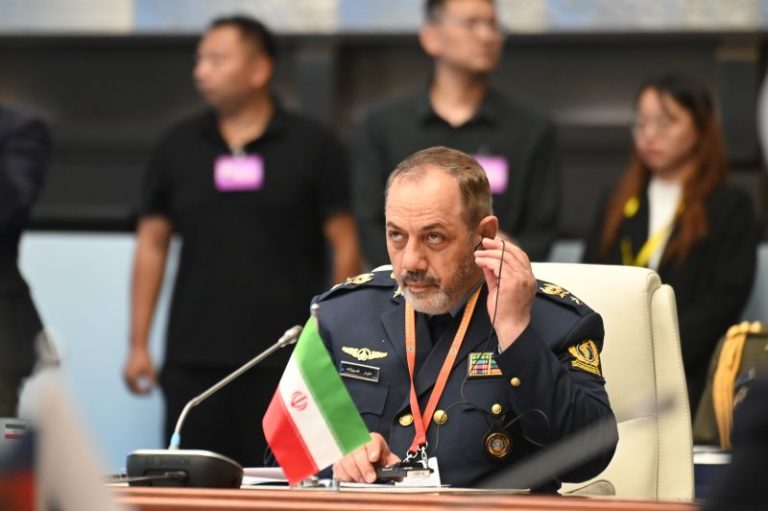
Iran’s defense minister has traveled to diplomatic and economic ally China on his first reported trip abroad since a 12-day clash with Israel that briefly dragged the US into a new regional conflict.

Aziz Nasirzadeh is one of nine defense ministers that Chinese state media say attended a gathering of the Shanghai Cooperation Organization (SCO), a China- and Russia-led regional security grouping that has grown in prominence as Beijing and Moscow look to build alternative international blocs to those backed by the United States.

The two-day gathering began Wednesday in the Chinese coastal city of Qingdao, a day after a ceasefire between Iran and Israel quelled what had been days of aerial assaults between the two, punctuated by a US strike on three Iranian nuclear facilities.

The SCO gathering coincided with a meeting of NATO leaders at The Hague, where US President Donald Trump said the US would meet with Iran “next week” about a potential nuclear agreement.

Beijing’s gathering, part of events for its rotating SCO chairmanship, spotlighted China’s role as a key international player, even as it remained largely on the sidelines of the Israel-Iran conflict – and the importance Tehran places on its relationship with Beijing.

Chinese Defense Minister Dong Jun did not directly address the conflict in remarks to gathering nations Wednesday, as reported by Chinese state media, but aimed to position China as a country with an alternative vision for global security.

“Unilateralism and protectionism are surging, while hegemonic, high-handed, and bullying acts severely undermine the international order, making these practices the biggest sources of chaos and harm,” Dong said, employing language typically used by Beijing to criticize the US.

The Chinese defense chief called for SCO countries – which, in addition to China and Russia, include India, Iran, Pakistan, Kazakhstan, Kyrgyzstan, Tajikistan, Uzbekistan and Belarus – to enhance coordination and “defend international fairness and justice” and “uphold global strategic stability.”

Attending countries “expressed a strong willingness to consolidate and develop military collaboration,” according to China’s official news agency Xinhua.

Iran’s Nasirzadeh “expressed gratitude to China for its understanding and support of Iran’s legitimate stance,” Xinhua also reported.

The minister “hopes that China will continue to uphold justice and play an even greater role in maintaining the current ceasefire and easing regional tensions,” he was quoted as saying.

Chinese officials have condemned Israel’s unprecedented June 13 attack on Iran, which took out top military leaders and sparked the recent conflict, as well as the subsequent US bombing. It’s also backed a ceasefire and criticized Washington’s foray into the conflict as a “heavy blow to the international nuclear non-proliferation regime.”

A key diplomatic and economic backer of Iran, Beijing has moved to further deepen collaboration in recent years, including holding joint naval drills. Chinese officials have long voiced opposition to US sanctions on Iran and criticized the US withdrawal from the 2015 Iran nuclear deal.

In recent days, China has appeared unwilling to become further entangled in the conflict past its diplomatic efforts, analysts say, instead using the situation as another opportunity to paint itself as a responsible global player and the US as a force for instability.

Founded in 2001 by China, Russia, Kazakhstan, Kyrgyzstan, Tajikistan and Uzbekistan to combat terrorism and promote border security, the SCO has grown in recent years in line with Beijing and Moscow’s shared ambition to push back against a US alliance system they see as suppressing them.

While not an alliance, the group says it aims to “make joint efforts to maintain and ensure peace, security and stability in the region.”

The SCO has long been seen as limited, however, by overlapping interests and frictions between members, including Pakistan and India, which earlier this year engaged in a violent conflict, as well as China and India, which have longstanding border tensions.

Indian Defense Minister Rajnath Singh also attended the Qingdao meeting, the first visit from an Indian defense chief to China since a deadly 2020 border clash between the two countries.

This post appeared first on cnn.com

India has celebrated another step on its mission to become a space power, after Shubhanshu Shukla became the first astronaut from the country to blast off to the International Space Station (ISS) Wednesday.

Shukla was aboard the private Axiom Space Mission 4, or Ax-4, which lifted off from NASA’s Kennedy Space Center in Florida in the latest mission organized by the Texas-based startup in partnership with Elon Musk’s rocket venture SpaceX.

It is expected to dock in the space-facing port of the station’s Harmony module at 7 a.m. ET on Thursday.

The private mission includes decorated former NASA astronaut Peggy Whitson, as well as Sławosz Uznański-Wiśniewski of Poland and Tibor Kapu of Hungary – two other spaceflight novices who will become the first from their countries to visit the ISS.

Shukla, who is the mission’s pilot, and the others are expected to spend about two weeks aboard the ISS, helping to carry out roughly 60 experiments before returning home.

NASA and the Indian Space Research Organisation (ISRO) are collaborating on the mission, according to a statement from the US space agency.

India’s Prime Minister Narendra Modi said Shukla “carries with him the wishes, hopes and aspirations of 1.4 billion Indians” in a post on X.

“Wish him and other astronauts all the success!” he wrote.

Shukla is only the second Indian citizen to travel into space after Rakesh Sharma, who flew aboard a Soviet rocket in 1984.

Sharma wished the Ax-4 crew well.

“Wishing you all the very best. To the crew, godspeed,” he said in a video message posted online by the Press Trust of India.

“Spend as much time as possible looking out of the window.”

Shukla’s parents were seen getting emotional as they watched a livestream of the blast-off in the northern city of Lucknow.

“He’s the first person, the first Indian in the ISS. It is really a great moment for us Indians,” student Isma Tarikh told Reuters. “It is an inspiration for me… Even I want to become something great and be a world contributor just like (Shukla).”

Another student, Mohammad Hamughan, called it a “proud moment for Indians.”

He told Reuters: “It inspires me to become a space scientist. I have always loved to read about sci-fi and all of the stuff, but this is inspiring for us as a student.”

Shukla’s flight is seen as a precursor to India’s own Gaganyaan mission, the country’s first human space mission, set to take off in 2027.

Four Indian air force pilots selected for that mission have completed initial training in Russia and are undergoing further training in India, according to a May statement from the Indian government.

India’s space ambitions have accelerated under Modi, who was elected to a third term last June and has tried to assert India’s place on the global stage.

In January, it became only the fourth country to successfully achieve an unmanned docking in space.

In 2023, India joined an elite space club becoming the fourth country to land a spacecraft on the moon. The historic Chandrayaan-3 mission, the first to make a soft landing close to the moon’s unexplored South Pole, has collected samples that are helping scientists understand how the moon was formed and evolved over time.

The country has also set its sights on building its own space station by 2035, which will be called the Bharatiya Antariksha Station, and launching its first orbital mission to Venus in 2028.

This post appeared first on cnn.com

Chris Schwegmann is getting creative with how artificial intelligence is being used in law.

At Dallas-based boutique law firm Lynn Pinker Hurst & Schwegmann, he sometimes asks AI to channel Supreme Court Chief Justice John Roberts or Sherlock Holmes.

Schwegmann said after uploading opposing counsel’s briefs, he’ll ask legal technology platform Harvey to assume the role of a legal mind like Roberts to see how the chief justice would think about a particular problem.

Other times, he will turn to a fictional character like Holmes, unlocking a different frame of mind.

“Harvey, ChatGPT … they know who those folks are, and can approach the problem from that mindset,” he said. “Once we as lawyers get outside those lanes, when we are thinking more creatively involving other branches of science, literature, history, mythology, that sometimes generates some of the most interesting ideas that can then be put, using proper legal judgement, in a framework that works to solve a legal problem.”

It’s just one example of how smaller businesses are putting AI to work to punch above their weight, and new data shows there’s an opportunity for much more implementation in the future.

Only 24% of owners in the recent Small Business and Technology Survey from the National Federation of Independent Business said they are using AI, including ChatGPT, Canva and Copilot, in some capacity.

Notably, 98% of those using it said AI has so far not impacted the number of employees at their firms.

At his trial litigation firm of 50 attorneys, Schwegmann said AI is resolving work in days that would sometimes take weeks, and said the technology isn’t replacing workers at the firm.

It has freed up associate lawyers from doing “grunt work,” he said, and also means more senior-level partners have the time to mentor younger attorneys because everyone has more time.

The NFIB survey found AI use varied based on the size of the small business. For firms with employees in the single digits, uptake was at 21%. At firms with fifty or more workers, AI implementation was at nearly half of all respondents.

“The data show clearly that uptake for the smallest businesses lags substantially behind their larger competitors. … With a little attention from all the relevant stakeholders, a more equal playing field is possible,” the NFIB report said.

For future AI use, 63% of all small employers surveyed said the utilization of the technology in their industry in the next five years will be important to some degree; 12% said it will be extremely important and 15% said it will not be important at all.

Some of the most common uses in the survey were for communications, marketing and advertising, predictive analysis and customer service.

“We still have the need for the independent legal judgment of our associate lawyers and our partners — it hasn’t replaced them, it just augments their thinking,” Schwegmann said. “It makes them more creative and frees their time to do what lawyers do best, which is strategic thought and creative problem solving.”

The NFIB data echoes a recent survey from Reimagine Main Street, a project of Public Private Strategies Institute in partnership with PayPal.

Reimagine surveyed nearly 1,000 small businesses with annual revenue between $25,000 and $50,000 and also found that a quarter had already started integrating AI into daily workflows.

Schwegmann said at his firm, AI is helping to even the playing field.

“One of the things Harvey lets us do is review, understand and incorporate and respond much faster than we would prior to the use of these kinds of AI tools,” he said. “No longer does a party have an advantage because they can paper you to death.”

This post appeared first on NBC NEWS

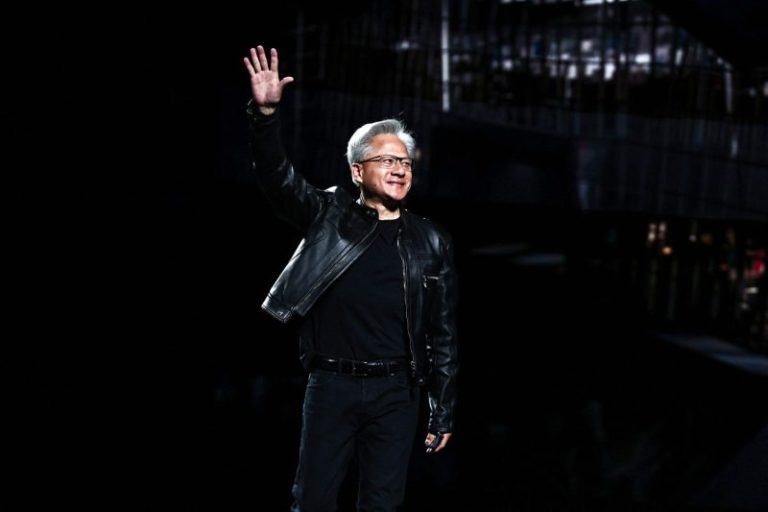
Nvidia CEO Jensen Huang sold 100,000 shares of the chipmaker’s stock on Friday and Monday, according to a filing with the U.S. Securities and Exchange Commission.

The sales are worth nearly $15 million at Tuesday’s opening price.

The transactions are the first sale in Huang’s plan to sell as many as 600,000 shares of Nvidia through the end of 2025. It’s a plan that was announced in March, and it’d be worth $873 million at Tuesday’s opening price.

The Nvidia founder still owns more than 800 million Nvidia shares, according to Monday’s SEC filing. Huang has a net worth of about $126 billion, ranking him 12th on the Bloomberg Billionaires Index.

The 62-year-old chief executive sold about $700 million in Nvidia shares last year under a prearranged plan, too.

Nvidia stock is up more than 800% since December 2022 after OpenAI’s ChatGPT was first released to the public. That launch drew attention to Nvidia’s graphics processing units, or GPUs, which were needed to develop and power the artificial intelligence service.

The company’s chips remain in high demand with the majority of the AI chip market, and Nvidia has introduced two subsequent generations of its AI GPU technology.

Nvidia continues to grow. Its stock is up 9% this year, even as the company faces export control issues that could limit foreign markets for its AI chips.

In May, the company reported first-quarter earnings that showed the chipmaker’s revenue growing 69% on an annual basis to $44 billion during the quarter.

This post appeared first on NBC NEWS

Join Dave as he shares how he uses the power of Fibonacci retracements to anticipate potential turning points. He takes viewers through the process of determining what price levels to use to set up a Fibonacci framework, and, from there, explains what Fibonacci retracements are telling him about the charts of NCLH, RTX, and the S&P 500

This video originally premiered on June 24, 2025. Watch on StockCharts’ dedicated David Keller page!

Previously recorded videos from Dave are available at this link.

As the cycle of uncertainty continues to yield confusion than clarity, investors are again caught having to decide between taking an offensive and defensive posture in the market. The tough part in today’s market environment is how fast situations can shift. With headlines driving the action, sentiment can flip on a dime. So how do you position yourself when breaking news drives the market?

No one can predict how the stock market will play out in the coming months. But keeping an eye on the ratio of “offense” to “defense” stocks can offer some clues. This may not give you a decisive trade scenario, but it can provide a clearer context that can help you form a more bullish or bearish decisive bias.

For this article, let’s refer to the StockCharts Market Summary tool and zoom in on the Technology vs. Utilities ratio (XLK:XLU), which you can find in the Key Ratios – Offense vs Defense panel.

Why XLK:XLU Ratio Matters

This ratio compares the Technology Select Sector SPDR Fund (XLK) with the Utilities Select Sector SPDR Fund (XLU), both being sector proxies (see the one-year ratio chart below).

FIGURE 1. TECH VS UTILITIES RATIO: From a one-year perspective, utilities have outperformed tech.

The key question is whether capital will continue chasing innovation and growth or seek shelter in the relative stability of power grids and water systems. The answer, when it eventually comes, could signal the economy’s next move.

On the one-year chart, the XLK:XLU ratio shows an attempted recovery from a general decline. Note how the ratio percentage is negative. That’s because, over the past year, utilities have generally performed stronger than tech. But we’re seeing tech’s performance strengthening, and a sustained move toward (and eventually into) positive territory would suggest a stronger shift in bullish sentiment.

Notably, XLK and XLU are trading at their respective highs, with XLK already breaking above it. The question remains which sector may be topping or outpacing the other in a more sustained manner.

XLK Breaks Higher: A Bullish Signal?

Here’s a daily chart of XLK.

FIGURE 2. DAILY CHART OF XLK. A proxy for the tech sector, XLK has broken above resistance. The key question now is whether it can hold above this level and follow through, or if it’s topping out amid the current geopolitical uncertainties.

XLK’s surge from its April bottom, including the gap above $243, signals bullish momentum. It’s also trading above the 200-day simple moving average (SMA) while its StockCharts Technical Rank (SCTR) score has climbed above 76, signaling technical strength. Volume-wise, the Chaikin Money Flow (CMF) shows renewed strength in buying pressure, though CMF levels are down considerably since their highest levels in May.

XLU’s Rally: Strong, But Losing Steam

Compare XLK’s chart to XLU’s daily chart.

FIGURE 3. DAILY CHART OF XLU. The Utilities sector is challenging its highs, but is XLU losing steam, and will XLK eventually outpace it?

XLU is attempting to challenge its highs near the $82.50 range, though it hasn’t penetrated the top. Its SCTR score is also bullish at 77, though it’s not as convincing as that of XLK. XLU’s CMF reading also shows weakened buying pressure, as its levels are barely hovering above the zero line.

What These Charts Are Saying

Taken together, these charts aren’t about calling the next big trade. They’re about reading near-term sentiment and getting a feel for where investors think the economy is headed amid this tense geopolitical backdrop.

When both offense and defense are rising, it suggests uncertainty, with capital flowing in both directions. But when one sector pulls ahead, it may signal where institutional money is placing its bets. Whether you’re a short-term trader or long-term investor, tracking this ratio can help anchor your outlook, especially as global events continue to fuel market volatility.

Keep XLK and XLU on your ChartLists and continue to monitor this ratio, along with other comparative tools on the Market Summary page. Also, pay close attention to news developments.

At the Close

The XLK:XLU ratio might not give you the most comprehensive or surefire signal about investor sentiment, but it’s an important piece of the puzzle. It can help you see the bigger picture, which is a crucial step before placing any trades.


Disclaimer: This blog is for educational purposes only and should not be construed as financial advice. The ideas and strategies should never be used without first assessing your own personal and financial situation, or without consulting a financial professional.

Germany and Italy are facing mounting domestic pressure to repatriate more than a third of their gold reserves — worth an estimated US$245 billion — currently held in New York by the US Federal Reserve.

Germany and Italy hold the world’s second and third largest gold reserves, trailing only the US. A substantial portion of this metal is stored overseas, primarily in Manhattan’s Federal Reserve Bank.

This longstanding arrangement, based largely on postwar financial realities and New York’s role as a major global gold-trading hub, is now being questioned by officials and commentators across Europe’s political spectrum.

Fabio De Masi, a former member of European Parliament now affiliated with Germany’s new left-wing populist BSW party, told the Financial Times there are “strong arguments” to bring more of Germany’s bullion back home.

Taxpayers Association of Europe (TAE) President Michael Jäger echoed the same sentiments last month: ‘Trump wants to control the Fed, which would also mean controlling the German gold reserves in the US,’ he told Reuters.

‘It’s our money, it should be brought back.’

Similar calls are being echoed in Italy, where economic commentator Enrico Grazzini recently warned that “leaving 43 per cent of Italy’s gold reserves in America under the unreliable Trump administration is very dangerous for the national interest.’ He was writing in Il Fatto Quotidiano ahead of Prime Minister Giorgia Meloni’s visit to Washington.

Fueling this renewed concern are statements made by US President Donald Trump, who earlier this month warned that he may have to “force something” if the US Federal Reserve does not lower interest rates.

Trump has also made direct appeals to the Department of Energy to stimulate oil production, signaling what critics interpret as increasing politicization of independent institutions like the Fed.

The TAE has urged both Germany and Italy to reconsider their reliance on the Fed. “We are very concerned about Trump tampering with the Federal Reserve Bank’s independence,” Jäger said. “Our recommendation is to bring the (German and Italian) gold home to ensure European central banks have unlimited control over it at any given point in time.”

Public skepticism over the safety of foreign gold holdings is not new.

In Germany, a grassroots movement that began in 2010 eventually prompted the Bundesbank to repatriate 674 metric tons of gold from New York and Paris between 2013 and 2017. The operation, which cost 7 million euros, resulted in half of Germany’s reserves being stored domestically by 2020. Nevertheless, 37 percent of its gold remains in the US.

Meloni’s Brothers of Italy party once echoed similar sentiments while in opposition, pledging in 2019 to bring Italy’s gold back home. But since assuming power in 2022, Meloni has largely gone silent on the issue.

Skepticism about US stewardship is not limited to political rhetoric.

According to the World Gold Council’s latest survey on central bank gold reserves, 43 percent of the central banks surveyed plan to increase their gold holdings in the coming year — a record high.

The overwhelming majority of respondents (95 percent) expect global central bank gold reserves to keep rising, citing gold’s performance during crises, its inflation-hedging capabilities and its role as a diversifier. Notably, 59 percent of central banks surveyed reported holding at least part of their gold reserves domestically, up from 41 percent in 2024.

Although the Bank of England remains the most popular vaulting location, the World Gold Council’s survey reveals growing caution over US custodianship: only 7 percent of respondents said they planned to increase domestic storage last year, but the figure jumped significantly in 2025.

New bill calls for US gold audit

Adding another layer of complexity is the push in Washington for greater transparency about America’s gold reserves. House Bill 3795, introduced by Representative Thomas Massie and backed by three co-sponsors, calls for the first comprehensive audit of US gold holdings in over six decades.

The bill would mandate a full inventory and assay of gold stored at Fort Knox, West Point and the Denver Mint, as well as a forensic accounting of all transactions involving US gold over the last 50 years.

“The question as to who actually owns the bars outright is really the most crucial question. And if it is shown that America does not actually own the gold, if the gold is there, but America does not own it, (or) if it has been pledged or leased or swapped or otherwise encumbered in any way … this would be a huge, huge detriment to the US and the global economy.”

Cortez emphasized that prior audits of US gold reserves have been insufficient.

“These aren’t audits that have been done on the metal itself, but rather the storage containers that the metal is supposedly stored in,’ he said. “Owners or operators of a depository who functioned like this would go to jail.”

He also pointed out that much of the gold held by the US government is impure by modern market standards, having been melted down from older coinage. That means even if the bars are there, refinement questions will remain.

While Trump has not explicitly endorsed HB 3795, he has expressed interest in the issue, stating, ‘We’re actually going to Fort Knox to see if the gold is there. Because maybe somebody stole the gold. Tons of gold.’

Securities Disclosure: I, Giann Liguid, hold no direct investment interest in any company mentioned in this article.

This post appeared first on investingnews.com

The stock market has been on quite the rollercoaster of late, thanks to news headlines. But investors seem to have shrugged off the past weekend’s geopolitical tensions, at least for now. 

On Tuesday, we saw a surge of enthusiasm. Investors were diving back into stocks and selling off their oil and precious metals holdings. Last week, oil prices spiked amid Middle East tensions, but have now fallen to pre-conflict levels. After what felt like a few weeks of the market moving sideways, maybe the stock market got the catalyst it needed to push the major indexes out of their trading range. A ceasefire between Israel and Iran was enough to get things going.

Stocks Get a Boost

Tuesday’s positive tone helped move the stock market higher, with the S&P 500 ($SPX) closing up 1.1%, finally breaking above the top of its trading range. The Nasdaq Composite ($COMPQ) followed suit, with both indexes within spitting distance of their all-time highs. The Nasdaq 100 ($NDX), which closed 1.53% higher, hit a new all-time high. And let’s not forget the Dow Industrials ($INDU), which is also making a strong attempt to push through key resistance levels, even though it’s a little bit further from its all-time high.

Given the Nasdaq 100’s strong performance on Tuesday, it’s worth taking a closer look at the daily chart of the Invesco QQQ Trust (QQQ).

FIGURE 1. DAILY CHART OF QQQ. The ETF hit a new high on June 24 with a potential Golden Cross. If the relative strength index and percentage price oscillator confirm upside momentum, QQQ could rise higher.Chart source: StockCharts.com. For educational purposes.

Besides hitting a new high, note that the 50-day simple moving average (SMA) crossed above the 200-day SMA. This is referred to as a Golden Cross and can be an early sign of bullishness. While it’s not a guaranteed “green light” at such an early stage, it’s worth watching to see if the 50-day SMA continues to stay above the 200-day SMA.

The relative strength index (RSI) is getting closer to overbought territory. If it crosses above 70, it would be another sign of strong bullish momentum. Similarly, the percentage price oscillator (PPO) needs to move into positive territory, meaning the shorter moving average should cross above the longer one. They’re close, but remember these are lagging indicators, meaning they’ll confirm trends that are already underway. Thus, if the 50-day SMA remains above the 20-day SMA, RSI crosses above 70, and PPO confirms upside momentum, it would confirm further upside move in QQQ.

Another interesting point to note: The Cboe Volatility Index ($VIX) closed at 17.48, which suggests investors are relatively complacent. The VIX was relatively subdued during the Middle East conflict, hitting a high of around 22. With less fear, the charts of the major indexes look like they’re going to hit fresh highs. On Tuesday, Technology, Financials, and Communication Services were the top-performing sectors.

Tech Regains Lead

The Technology sector was powered by semiconductors, which have been driving the market lately. The VanEck Vectors Semiconductor ETF (SMH) has broken above the range it’s been trading within for the last couple of weeks and is now close to its 52-week high (see daily chart of SMH below).

FIGURE 2. DAILY CHART OF SMH. Semiconductors have been driving the stock market lately and broke out above the range from the last couple of weeks.Chart source: StockCharts.com. For educational purposes.

Looking at individual stocks, NVIDIA Corp. (NVDA) was the most actively traded S&P 500 stock. A handful of big names are hitting new all-time highs, too; this includes Broadcom, Inc. (AVGO), Cisco Systems, Inc. (CSCO), International Business Machines (IBM), JP Morgan Chase (JPM), Microsoft Corp. (MSFT), and Netflix Inc. (NFLX), just to name a few. For the complete list, check out the “New Highs” panel in your StockCharts Dashboard; you’ll likely notice a significant percentage of tech stocks on the list.

The positive price action on Tuesday suggests investors are rotating into growth stocks, which signals further upside moves in the S&P 500 and Nasdaq stocks. Here’s a more encouraging sign: even the S&P 500 Equal-Weighted Index ($SPXEW) is breaking out and moving towards its highs. This indicates that the market’s strength isn’t limited to a few big, heavily-weighted growth stocks; participation is much broader.

Travel Stocks Get a Lift

Beyond tech stocks, consumer discretionary stocks also traded higher. The top three performers in the Consumer Discretionary sector were Carnival Corp. (CCL), Norwegian Cruise Lines Holdings (NCLH), and Caesars Entertainment (CZR). The MarketCarpet for the Consumer Discretionary sector below shows travel stocks were strong performers on Tuesday.

FIGURE 3. MARKETCARPET FOR THE CONSUMER DISCRETIONARY SECTOR. The table on the right shows CCL, NCLH, and CZR were the top performers.Image source: StockCharts.com. For educational purposes.

CCL’s stock price gapped up after the company reported strong earnings and guidance. An increase in cruise line bookings indicates consumer sentiment is strong. As a result, cruise lines and travel stocks traded higher. This goes against June’s Consumer Confidence report, which showed weakening confidence. It didn’t seem to impact the market, but it may come back to bite us depending on what news headlines we are likely to receive on Wednesday.

Closing Position

Tuesday’s price action suggests that equities are back on their bullish track after a period of consolidation. Will the upside move hold, or will a negative news headline bring the bears back into the market?

This is where your StockCharts tools come in handy! Keep a close eye on the performance of the major indexes and other helpful indicators such as the RSI and PPO. By using these tools, you can stay on top of the stock market and make investment decisions with greater confidence.


Disclaimer: This blog is for educational purposes only and should not be construed as financial advice. The ideas and strategies should never be used without first assessing your own personal and financial situation, or without consulting a financial professional.