Author

admin

Browsing

Five tunnels burrowing into a group of mountains, a large support structure and a wide security perimeter: That’s all you can see of Iran’s mysterious Fordow Fuel Enrichment Plant from recent satellite imagery.

The secretive, heavily guarded complex built close to the holy city of Qom has been fueling speculation about its true nature and size since it was first made public in 2009.

A chunk of what we do know about it comes from a trove of Iranian documents stolen years ago by Israeli intelligence.

Its main halls are an estimated 80 to 90 meters (around 262 to 295 feet) beneath the ground – safe from any aerial bomb known to be possessed by Israel, making destroying the facility from the air a near-impossible task.

As Iran’s leadership reels from a series of devastating Israeli strikes, some analysts say that it is at Fordow that Iran may rush to convert enriched uranium stockpiles into a nuclear bomb.

Israel has targeted the facility in recent days but, according to the International Atomic Energy Agency (IAEA), so far it has either been unwilling – or unable – to damage it.

Tehran has long maintained the objectives of its nuclear program are peaceful, but Fordow has been at the heart of concern over Iran’s ambitions.

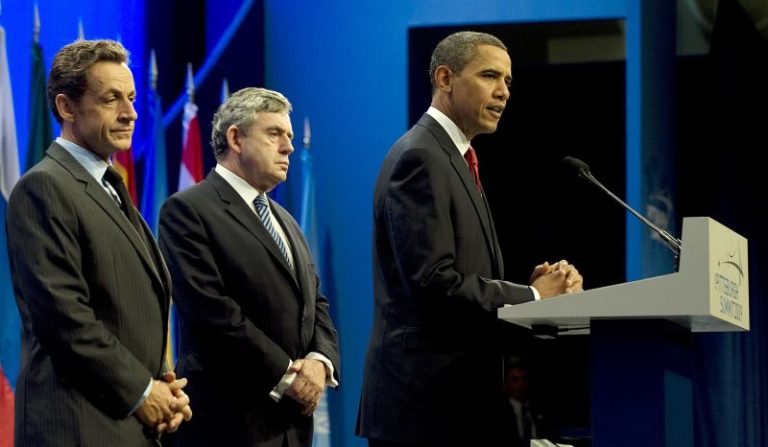
“The size and configuration of this facility is inconsistent with a peaceful program,” then US President Barack Obama said in 2009 as he, along with then French President Nicolas Sarkozy and British Prime Minister Gordon Brown revealed the existence of Fordow to the world.

Just days before the announcement, the Iranians, apparently knowing Western agencies had learned about the facility, told the IAEA of their desire to build a new fuel enrichment facility. By that point construction at Fordow had been underway for years.

Tehran pushed back against the accusations, but condemnation even from ally Russia and concerns from China left it with little room to maneuver.

Construction started in the early 2000s

The US and its allies have not provided much detail on when the construction of Fordow started, but publicly available historical satellite imagery shows work at the site as far back as 2004, with photographs revealing two white square structures where the tunnel entrances are located today. The IAEA says it has additional imagery showing construction as far back as 2002.

“Fordow is actually a project that started during what we call the crash nuclear weapons program of the early 2000s,” said David Albright, head of the Washington, DC-based Institute for Science and International Security (ISIS), a nonpartisan institution dedicated to stopping the spread of nuclear weapons. “The idea was they (the Iranians) would make weapon-grade uranium in that plant, and they would obtain low-enriched uranium from the civil nuclear program in Iran.”

In 2009, a large outside support structure was already fully built and excavation was ongoing for what experts believe to be a ventilation shaft, crucial to allow air circulation into the facility. That shaft was later concealed and camouflaged, more recent imagery also shows.

Tehran explained to the IAEA in a letter dated October 2009 that the decision to build the facility underground was a result of “threats of military attacks against Iran,” adding that Fordow would serve as a contingency for the nearby Natanz plant, which, it claimed, “was among the targets threatened with military attacks.”

Iran told the IAEA the facility could house up to 3,000 centrifuges.

Nuclear deal and Israeli accusations

The dangers posed by Fordow were largely tamed as a result of the Joint Comprehensive Plan of Action (JCPOA) the so-called “Iran nuclear deal,” that required Iran to remove two-thirds of the centrifuges inside the facility, along with all nuclear material, after the facility was banned from any such work.

That process was slowly reversed when US President Donald Trump pulled out of the deal in 2018.

Further details about the facility were made public by Israeli Prime Minister Benjamin Netanyahu in 2018, after his country’s intelligence services seized more than 55,000 documents from what Israel said was Iran’s “atomic archive.”

Among the documents were detailed blueprints of Fordow and information on its objectives: To produce weapons-grade uranium, as part of Iran’s nuclear weapons program, for at least one or two nuclear weapons per year.

“We never saw any, any inconsistency,” Albright, who has combed through the documents, said of Iran’s push to develop nuclear weapons. “It’s hundreds of thousands of pages. I mean you just can’t make that amount of stuff up. I don’t think anyone challenges it, and that’s probably why there is an (IAEA) Board of Governors resolution against Iran.”

At the time, then Iranian Deputy Foreign Minister Abbas Araghchi called the revelations and Netanyahu’s comments “childish” and “laughable.” Then US Secretary of State Mike Pompeo said the US had known about the material “for a while” and believed the documents were authentic.

Protected from even the largest bombs

Recent IAEA reports suggested Iran had ramped up production of enriched uranium to a level of 60% at the Fordow facility, which, according to experts and the IAEA, now contains 2,700 centrifuges.

“The significantly increased production and accumulation of highly enriched uranium by Iran, the only non-nuclear-weapon state to produce such nuclear material, is of serious concern,” the IAEA said in a report on May 31.

“One of the things that elevated the tension, was they have no reason to do that, other than to be able to then go the next step and turn it into weapon-grade uranium,” Albright said.

“It was interpreted as they’re preparing themselves to be able to do it if they decide to. And if you’re 60%, you can turn it into weapon-grade uranium very quickly,” he added.

According to the ISIS think tank, “Iran can convert its current stock of 60 percent enriched uranium into 233 kg of weapon-grade uranium in three weeks at the Fordow Fuel Enrichment Plant,” enough for nine nuclear weapons.

That is why Fordow is a major focus of Israel’s attempts to degrade and destroy Iran’s nuclear program. But is it even feasible?

The US is the only country that possesses the kind of bomb required to strike Iran’s Fordow nuclear site, Israel’s ambassador to the US, Yechiel Leiter, said in an interview with Merit TV on Monday.

“For Fordow to be taken out by a bomb from the sky, the only country in the world that has that bomb is the United States. And that’s a decision the United States has to take, whether or not it chooses to actually pursue that course,” Leiter said. But, he added, that wasn’t the only option: “There are other ways of dealing with Fordow.”

Destroying Fordow from the air would be almost impossible for Israel, according to a March report from the UK-based Royal United Services Institute (RUSI) think tank and would require significant firepower and assistance from the United States.

It would not even be reachable by the US’ GBU-57 massive ordnance penetrator bombs, which only reach about 60 meters deep, according to the RUSI report. And the GBU-57 can only be delivered by US Air Force B-2 stealth bombers, something Israel doesn’t have – even if the US would give it the bombs.

“Even the GBU-57/B would likely require multiple impacts at the same aiming point to have a good chance of penetrating the facility,” said the report.

Other analysts agree, saying, if the US were to try to hit Fordow, it probably couldn’t be done with one bomb.

Albright says there could be other ways to disable Fordow.

“Israel could probably destroy the tunnel entrances pretty far back, and certainly destroy the ventilation system,” he said. “If you destroyed (the tunnels) and the electric electrical supply, it would be months before they could really operate.”

Despite its crucial role in Iran’s nuclear program, Albright believes Fordow is just another piece of the puzzle.

“If you destroy it, it’s not the end of the line, because you then go to the next threat, which is, how many centrifuges has Iran made that they didn’t deploy at Fordow and Natanz? And where are they?” he said.

“I think people over-emphasize the need to destroy it by bringing down its ceilings, which admittedly, probably only the US can do.”
This post appeared first on cnn.com

As Starbucks aims to bring back customers and assuage investors with its turnaround strategy, it is also winning over its store managers with promises to add more seating inside cafes and promote internally.

Since CEO Brian Niccol’s first week at the company, he’s been pledging to bring the company “back to Starbucks” to lift sluggish sales. That goal was in full view at the company’s Leadership Experience, a three-day event in Las Vegas for more than 14,000 store leaders this week.

Starbucks unveiled a new coffee called the 1971 Roast, a callback to the year that its first location opened at Pike Place in Seattle. The finalists at Starbucks’ first-ever Global Barista Championships referred to “back to Starbucks” as they prepared drinks for judges. Even the Wi-Fi password was “backtostarbucks!”

To investors, Niccol has already presented a multi-part strategy that involves retooling the company’s marketing strategy, improving staffing in cafes, fixing the chain’s mobile app issues and making its locations cozier. The company also laid off roughly 1,100 corporate workers earlier this year, saying it aimed to operate more efficiently and reduce redundancies.

Starbucks shares have climbed nearly 20% since April and are trading just shy of where they were after a nearly 25% spike the day Niccol was announced as CEO.

While Starbucks has taken major steps to win back customers and Wall Street, it’s also trying to regain faith among its employees. Staffers have had concerns about hours and workloads for years, sparking a broad union push across the U.S.

To excite the chain’s store managers, Starbucks executives’ pitch this week focused on giving them more control. Before launching new drinks, like a protein-packed cold foam, the company is first testing them in five stores to gain feedback from baristas.

When the chain increases its staffing this summer, managers will have more input on how many baristas they need. And next year, most North American stores will add an assistant manager to their rosters.

“You are the leaders of Starbucks. Your focus on the customer is critical. Your leadership is critical. And as you return to your coffeehouses, please remember: coffee, community, opportunity, all the good that follows,” Niccol said on Tuesday.

Niccol’s “back to Starbucks” strategy centers on the idea that the company’s culture has faltered. Its Leadership Experience, typically held every couple of years, was the first since 2019 — three CEOs ago.

“We are a business of connection and humanity,” Niccol said on Tuesday afternoon, addressing a crowd of more than 14,000 managers. “Great people make great things happen.”

As more customers order their lattes via the company’s app, its cafes have lost their identity as a “third place” for people to hang out and sip their drinks.

To return to Starbucks’ prior culture, the company is unwinding previous decisions — like removing seats from its cafes. In recent years, the chain has removed 30,000 seats from its locations. Those renovations have irritated both customers and employees; the manager of Niccol’s local Starbucks in Newport Beach, California, even asked him to remove her store from its renovation list because she wanted to keep the seating, according to Niccol.

“We’re going to put those seats back in,” Niccol said, bringing a big wave of applause from the audience.

He earned more applause from the audience when discussing the chain’s plans to promote internally as it eventually adds 10,000 more locations in the U.S.

Although historically roughly 60% of Starbucks store managers have been internal promotions, the company wants to raise that to 90% for its retail leadership roles. Thousands of new cafes means 1,000 more district managers, 100 regional directors and 14 regional vice presidents for the company — and more upward career mobility for its store leaders.

Staffing more broadly has been a concern for Starbucks and its employees, fueling a wave of union elections across hundreds its stores. Past management teams have cut down on the labor allotted to stores, helping profit margins at the cost of burning out baristas and slowing service.

Under Niccol, Starbucks is changing the trend. The company is accelerating plans to roll out its new Green Apron labor model by the end of the summer, because tests have shown that it improves service times and boosts traffic. As part of the model, managers will have more input on how much labor their store needs.

And Chief Partner Officer Sara Kelly received a standing ovation from the crowd for her announcement that most North American locations will receive a full-time, dedicated assistant store manager next year.

“For much of the time, your store is operating without you there, and you share that even when you’re not in the store, you’re not able to fully disconnect, and it can feel like the weight of everything is on your shoulders. … It affects everything, the partner experience, the customer experience, the performance of your store,” Kelly said, addressing the store managers in the audience.

Underscoring the challenges Niccol faces in recapturing the company’s brand, the two speakers who scored the most applause from store managers are no longer actively involved in the company.

Former chairwoman Mellody Hobson scored standing ovations during both her entry and exit onto the arena’s stage. Hobson, wiping tears from her eyes, thanked the Starbucks employees whom she said always made her feel welcome in their stores.

She stepped down from her position earlier this year, ending a roughly two-decade tenure that culminated with her becoming the first African American woman to become the independent chair of a Fortune 500 company. Hobson also serves as co-CEO of Ariel Investments.

Hobson ceded her position as chair of the board to Niccol when he joined the company in September. Niccol credited her with poaching him from Chipotle as Starbucks sought to find a leader who could turn around its flailing business.

“A quick conversation [with Hobson] turned into something really special for me,” Niccol said.

And Hobson’s longtime friend Howard Schultz also earned standing ovations from store managers.

Schultz, the three-time CEO who grew Starbucks from a small chain into a coffee powerhouse, made a surprise appearance at the Leadership Experience on Wednesday morning. It marked the first time that he’s appeared with Niccol publicly since the board tossed out his handpicked successor, Laxman Narasimhan, and selected the then-Chipotle CEO to take the reins.

Starbucks has long been plagued by questions about its succession, given Schultz’s former willingness to return to the helm of the company. But since Niccol’s appointment, industry analysts have thought that he might finally be the CEO who manages to escape Schultz’s lingering influence over the coffee giant.

The ghost of Schultz lingered earlier in the event. Niccol shared a story about being inspired hearing Schultz speak at Yum Brands, Niccol’s then-employer, back in 2008. The 71-year-old chairman emeritus also appeared in video form on Tuesday afternoon to thank Hobson for her service to the company.

During his conversation with Niccol on Wednesday, Schultz co-signed his plan to get “back to Starbucks,” saying that he did a cartwheel in his living room the first time that he heard about it.

He also asked managers to bring that energy back to their own Starbucks locations.

“Be true to the coffee, be true to your partners,” Schultz told the audience. “And I know we’re going to come out of here … like a tidal wave and surprise and delight the world and prove all those cynics wrong again, just as we did in 1987.”

This post appeared first on NBC NEWS

This Time Technology Beats Financials

After a week of no changes, we’re back with renewed sector movements, and it’s another round of leapfrogging.

This week, technology has muscled its way back into the top five sectors at the expense of financials, highlighting the ongoing volatility in the market.

Communication Services and Consumer Staples have swapped places since last week, while Technology has entered at number five, pushing Financials down to sixth. The remaining sectors from seven to eleven remain unchanged.

This constant shuffling is a clear indicator of the market’s indecision. Imho, such volatility usually doesn’t accompany a sustainable trend, and that’s precisely what’s hurting trend-following models right now.

  1. (1) Industrials – (XLI)
  2. (2) Utilities – (XLU)
  3. (4) Communication Services – (XLC)*
  4. (3) Consumer Staples – (XLP)*
  5. (6) Technology – (XLK)*
  6. (5) Financials – (XLF)*
  7. (7) Real-Estate – (XLRE)
  8. (8) Materials – (XLB)
  9. (9) Consumer Discretionary – (XLY)
  10. (10) Healthcare – (XLV)
  11. (11) Energy – (XLE)

Weekly RRG Analysis

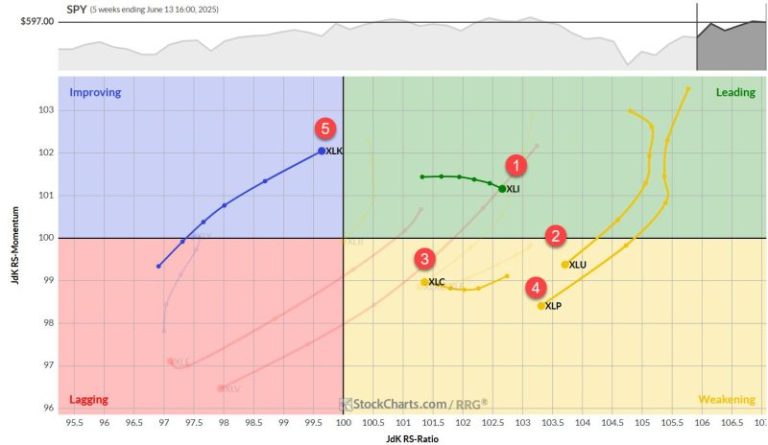
On the weekly Relative Rotation Graph, the Technology sector is showing impressive strength. Its tail is well-positioned in the improving quadrant, nearly entering the leading quadrant with a strong RRG heading. This movement explains Technology’s climb back into the top ranks.

Industrials remains the only top-five sector still inside the leading quadrant on the weekly RRG. It continues to gain relative strength, moving higher on the JdK RS-Ratio axis, while slightly losing relative momentum. All in all, this tail is still in good shape.

Utilities, Communication Services, and Consumer Staples are all currently in the weakening quadrant. Utilities and Staples show negative headings but maintain high RS-Ratio readings, giving them room to potentially curl back up. Communication Services is losing ground on the RS-Ratio scale but starting to pick up relative momentum.

Daily RRG: A Different Picture

Switching our focus to the daily RRG reveals a somewhat different story:

  • Industrials has moved into the lagging quadrant, losing ground on the RS-Ratio scale
  • Utilities and Staples are rolling back into the lagging quadrant with negative headings — not a great sign
  • Communication Services remains close to the benchmark
  • Technology shows the strongest tail, nearly completing a leading-weakening-leading rotation

This daily view underscores the strength we’re seeing in the Technology sector on the weekly timeframe.

Industrials: Facing Resistance

XLI dropped back below its previous high after a strong showing the week prior. There’s significant resistance between $142.50 and $145.

In a worst-case scenario, I think XLI could even retreat to the gap area between $137.50 and $139.

The uptrend remains intact, but more buying power is needed for a convincing break to new highs.

Utilities: Range-Bound

XLU is now trading in a range between roughly $80 on the downside and $83 on the upside.

It needs to break above the former high to continue building relative strength.

The raw RS line has returned to its trading range, dragging both RRG lines lower — not the strongest outlook for this defensive sector.

Communication Services: Testing Resistance

The sector peaked almost exactly at resistance offered by its previous high around $105, then closed at the lower end of the bar.

The raw RS line is managing to stay within its rising channel, albeit horizontally.

A sustained upward price movement is crucial for maintaining relative strength here.

Consumer Staples: Struggling to Break Higher

XLP continues to face heavy overhead resistance between $82 and $83.

Its inability to break higher is starting to hurt relative strength.

The raw RS line has moved down from a recent high, dragging the RRG lines lower.

The RS-Momentum line has already crossed below 100, positioning the weekly tail inside the weakening quadrant.

Technology: The Comeback Kid

XLK, the new kid on the block (again), tested its overhead resistance level around $244, peaking slightly above it last week before closing lower.

Recent strength has pushed the raw RS line convincingly higher, taking out its previous peak from mid-December.

Both RRG lines are pointing strongly upward, with RS-Momentum already above 100 and RS-Ratio rapidly approaching 100.

Portfolio Performance

With all this sector leapfrogging, especially involving the heavyweight Technology sector, the gap between the top five sectors’ performance and SPY has widened to around 7%.

The drawdown continues, but I’m sticking with this experiment and trusting the model to come back and start beating SPY again.

Yes, a 7% lag sounds significant (and it is), but it can change rapidly in such a concentrated portfolio. One or two strong weeks could easily turn this performance around, particularly if big sectors like Technology and potentially Consumer Discretionary become part of the top five.

#StayAlert and have a great week. –Julius


Fear has been gripping Iranians as Israel vows to continue attacking the Islamic Republic over its nuclear program, with many fleeing the bigger cities, including the capital Tehran, in search of safer areas.

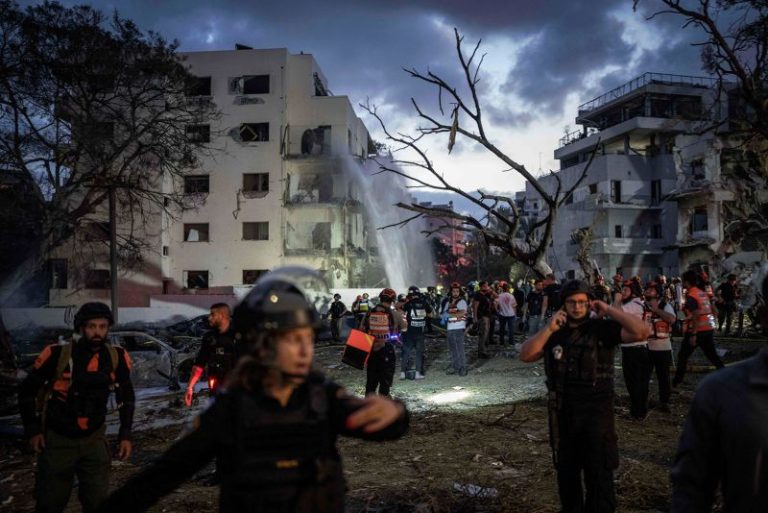
There was chaos as residents ran down to the ground level after smelling smoke from a nearby building that had also been targeted, the resident said. Families with young children struggled to keep them calm.

Unlike Israel, Iran’s capital Tehran doesn’t have modern bomb shelters, so the city must make use of tunnels, basements or older shelters used in the Iran-Iraq war of the 1980s – the last time the country faced such a grave national emergency.

“In Tehran there weren’t any shelters, people went into basements,” the chairman of Tehran’s City Council, Mehdi Chamran, told reporters Sunday, adding that the metro can be used as a shelter “in extreme crisis” but that “we would need to shut the system down.”

The metro in Tehran will be open 24 hours a day starting Sunday night for people to shelter, a government spokesperson announced. Schools and mosques will also be open, she said.

Older people in the building in Saadat Abad were comparing the fear-filled atmosphere to the eight-year-long war with Iraq, which saw Iraqi armed forces invading western Iran along the countries’ joint border, the resident said.

Iranian experts have said that by attacking residential areas in Iran, Israel has “crossed the Rubicon” – or passed the point of no return – and is inviting attacks of the same kind from Tehran.

“We don’t support the Iranian regime, but we are against Israel attacking residential areas and civilians,” said an older male Tehran resident. “If Israel is against Iran’s nuclear program and military capabilities, they should target those areas and not create another situation like what is happening in Gaza.”

Israel has destroyed swathes of the Palestinian territory and displaced almost all of Gaza’s population in its war against Hamas, an Iranian ally.

One family, who didn’t want to be named, decided to leave Tehran with their two small children and their elderly parents. They are worried that the government has housed officials and military leaders within highly populated, upper middle-class neighborhoods – putting civilians at risk.

“I don’t want to leave my home, but I am not going to put my young children in this position,” the father said. “I hope that the US steps in to stop the attacks between both countries.”

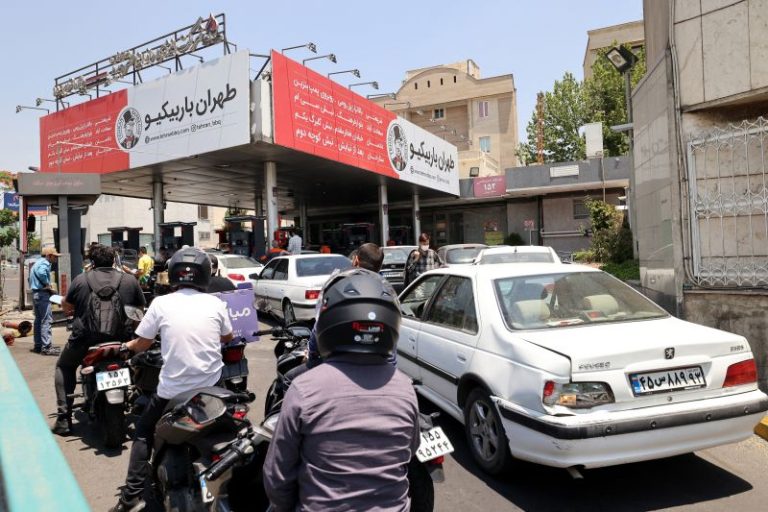
In the city of Shiraz, in south-central Iran, long lines for gas have been forming around the city. Residents are also stocking up on food, water, and diapers.

Cars full of families with suitcases and water strapped to the roof have been seen around the city, with many families leaving for the countryside.

Meanwhile, nights have become very quiet in Tehran, residents said. Many shops are closed and many people have either left the city or are too scared to go to work, they said.

Israel’s operation against Iran is expected to take “weeks, not days” and is moving forward with implicit US approval, according to White House and Israeli officials. Israeli Prime Minister Benjamin Netanyahu has vowed to “strike every site and every target of the Ayatollah’s regime,” referring to the country’s Supreme Leader.

The Israeli military on Sunday also issued an “urgent” evacuation warning to Iranians living near weapons production facilities, saying being nearby would endanger their lives.

Netanyahu’s call for Iranian revolt

In a rare direct address to the people of Iran, Netanyahu on Friday urged its citizens to “stand up and let your voices be heard,” after Israel unleashed deadly strikes on its regional foe.

“The time has come for the Iranian people to unite around its flag and its historic legacy, by standing up for your freedom from an evil and oppressive regime,” Netanyahu said in a statement.

The Iranian regime remains unpopular at home, where security forces continue their brutal crackdown on dissidents. Nonetheless, the Israeli leader’s call fell on deaf ears.

Some Iranians expressed anger and asserted they would never cede to Netanyahu’s demands.

“Don’t let the fake news fool you, the reality of what is happening in Iran as an Iranian who has actually lived in Iran, who has their family in Iran, (is that) Israel is in no way helping our people. I don’t need fake news and propaganda speeches,” she added.

Iran has threatened to intensify its own retaliatory attacks if Israel continues hostilities.

Over 200 rocket launches from Iran were reported overnight into Sunday, the Israeli government said, and at least 13 people have been killed in Israel, including three children.

Unofficial tallies published by Iran’s state affiliated media said dozens in the country have been killed and injured in Israeli strikes. Iran’s authorities have yet to declare a death toll.

This post appeared first on cnn.com

FMR Resources Limited (ASX:FMR) (FMR or Company) is pleased to announce it has entered into a conditional Binding Term Sheet giving it the right to earn up to a 60% interest in a highly prospective copper-gold-molybdenite project in central Chile (Transaction). The Company will joint venture (JV) into selected tenements (the JV Tenements or Concessions) within the Llahuin Project (Llahuin or the Project) held by Southern Hemisphere Mining Ltd (SUH) which overlie the Southern Porphyry Target.

Highlights

  • Large Cu-Au-Mo porphyry target untested at depth
  • Coincidental datasets suggest substantial copper porphyry system
  • Shallow historic drilling confirms porphyry mineralisation above target
  • Drilling of targets to commence early Q4 2025
  • Oliver Kiddie joins FMR as Managing Director
  • Firm commitments received for $2.2m capital raising at $0.16 through a placement to existing and new sophisticated investors
  • Mark Creasy to join the FMR register as major shareholder

The Southern Porphyry JV gives FMR exposure to a potential Company-making discovery. Coincidental datasets captured across the Southern Porphyry target area suggest a large, untested copper porphyry system below historic exploration. With proven fertility along a ~6km corridor at Llahuin, including historic shallow copper porphyry mineralisation directly above the Southern Porphyry target, this JV delivers FMR drill-ready targets for Q4 2025. The Company looks forward to updating shareholders as we progress towards maiden drilling of these exciting targets.

In conjunction, FMR is pleased to announce the appointment of Oliver Kiddie as Managing Director. Mr Kiddie is a geologist with over 20 years’ experience across exploration, resource definition, project development, and production throughout Australia and internationally. He has extensive experience in base metal and gold exploration through senior management, executive, and directorship positions, including Dominion Mining, European Goldfields, the Creasy Group, and Legend Mining.

Oliver Kiddie said:“I am very excited to be joining the FMR team as the Company expands its exploration portfolio with the Llahuin Project in Chile. I look forward to leading the Company through the next stage of growth and working with the experienced SUH team as the compelling Southern Porphyry drill targets are tested in Q4 this year, with the clear aim of a Company-making discovery.”

Project Description

Porphyry-style Cu-Au-Mo mineralisation identified to date at the Llahuin Project is largely hosted in three main mineralised zones – the Central Porphyry Zone, Cerro do Oro and Ferrocarril, which occur along a +2.5 km N-S strike (open north and south, with a total strike length of up 6 km). These zones are coincident with a north-south trending valley, potentially reflecting weathering of more regressive units or a structure.

Llahuin was initially acquired in July 2011 by SUH through an intermediary from Antofagasta plc. Drilling completed across the project to date comprises 296 holes for 64,503m with a total of 62 holes for 11,927m completed on the JV Tenements, of which 9,156m reports to the Ferrocarril zone and are therefore not relevant to the Southern Porphyry Target. Drilling has resulted in the delineation of Mineral Resources which do not form part of the JV and do not form part of the transaction (see Figures 1 and 7).

In addition to drilling SUH has completed extensive geochemical and geophysical surveys at Llahuin, including detailed magnetics (MAG), induced polarisation (IP), and magnetotellurics (MT). These datasets have indicated a “blind” porphyry-style target at the southern end of the Llahuin Project named the Southern Porphyry Target. This target is defined by a coincident magnetic anomaly, IP resistivity anomaly, and MT resistivity anomaly. The target is modelled as a circular feature 1.5km – 2km in diameter and centred approximately 1,000m below surface (see Figures 1, 2, 3, 4, and 5).

Click here for the full ASX Release

This post appeared first on investingnews.com

For the past month Chinese aircraft carrier strike groups have been operating further from home shores and in greater strength than ever before, testing state-of-the-art technology and sending a message they are a force to be reckoned with, analysts and officials say.

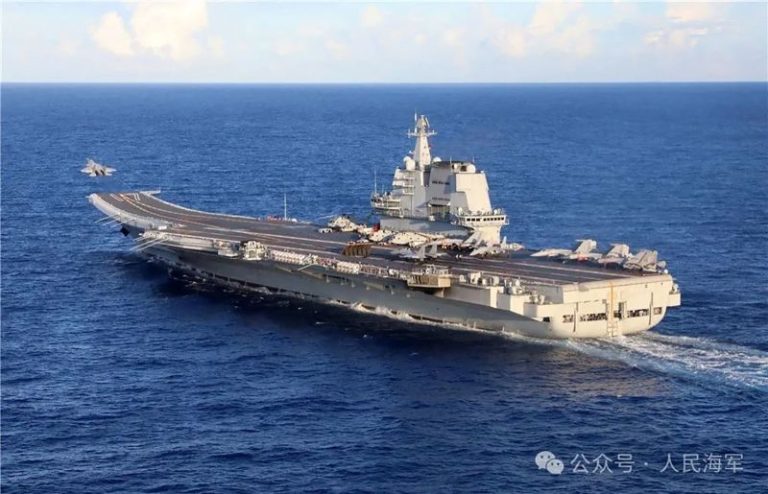
Since early May, a People’s Liberation Army Navy (PLAN) flotilla led by the carrier Shandong has conducted exercises north of the Philippines; its newest carrier, the soon-to-be commissioned Fujian, has been on sea trials in disputed waters west of the Korean Peninsula; and its oldest carrier, the Liaoning has led exercises in the Pacific waters of Japan’s exclusive economic zone.

During the drills the Fujian for the first time conducted aircraft take-off and landing operations at sea using its advanced electromagnetic catapult system (EMALS), regional defense officials said.

That’s a significant development. Only one other carrier in the world has that system – the US Navy’s newest carrier, the USS Gerald R Ford.

Last Monday, the Japanese Defense Ministry said the Shandong and its support ships had been exercising in the waters southeast of the island of Miyako Island in southern Okinawa prefecture, putting two Chinese carrier strike groups in the open Pacific for the first time.

At the center of that box of exercises is Taiwan, the democratically ruled island claimed by China’s Communist Party despite never having controlled it.

Chinese leader Xi Jinping has vowed to “achieve reunification” with the island, using force if necessary.

Analysts noted that the Pacific exercises specifically covered areas through which US naval support of Taiwan, in the event of conflict there, would have to pass.

“The projection of power is beyond China’s own defensive needs,” the Taiwanese official said, unless it wants to assert the entire first island chain is its internal waters.

The first island chain stretches from Japan to the Philippines and further down to Indonesia as is seen as a strategically vital line to both China and the US.

Some analysts say Beijing may be laying the groundwork for that with so-called “salami slicing” tactics, or pushing its claims and presence in small but unrelenting steps until it’s too late for an opponent to stop them.

Besides Taiwan, the waters inside that first island chain include the Japanese-controlled Senkaku Islands, called the Diaoyus in China and, like Taiwan, claimed by it as sovereign territory.

Chinese maritime forces have been increasing their visibility around those islands. According to statistics from the Japanese Defense Ministry, more than 100 Chinese vessels have appeared in the contiguous zone of the islands – the waters between them – for all but one of the past 24 months.

Also within the first island chain are disputed islands in the South China Sea that have seen violent flare-ups between Chinese and Philippine forces as Beijing tries to aggressively assert its claim over geographical features in the waterway through which trillions of dollars in trade passes each year.

US Defense Secretary Pete Hegseth called out Beijing tactics at a recent defense forum in Singapore.

“Any unilateral attempt to change the status quo in the South China Sea and the first island chain by force or coercion is unacceptable,” Hegseth said in a speech at the Shangri-La Dialogue, noting the persistent PLA presence around Taiwan and harassment and intimidation tactics in the South China Sea.

“It has to be clear to all that Beijing is credibly preparing to potentially use military force to alter the balance of power in the Indo-Pacific,” Hegseth said.

Reaching well into the Pacific

While Hegseth focused on China’s activities inside the first island chain, the PLA Navy’s recent movements have it operating carriers beyond the second island chain, which runs from the Japanese main island of Honshu southeast to the US territories of Saipan and Guam and then southwest to Yap, Palau and New Guinea.

Japanese officials reported last week two Chinese carrier groups operating well out into the open Pacific.

“It is believed that China is planning to improve the operational capability of its aircraft carriers and their ability to conduct operations in distant areas of the sea,” Japanese Chief Cabinet Secretary Yoshimasa Hayashi said last Monday, noting that China has demonstrated for the first time the ability to operate a carrier in the waters east of Iwo Jima and close to Japan’s easternmost island Minamitorishima.

“The PLA is demonstrating a capability for sustained carrier ops outside of the first island chain. This is certainly a significant milestone for the PLAN,” said Ray Powell, director of SeaLight, a maritime transparency project at Stanford University’s Gordian Knot Center for National Security Innovation.

“Beijing is using the PLAN to signal its growing maritime power and willingness to use it,” said Carl Schuster, a former US Navy captain and Hawaii-based analyst.

A PLA Navy press release on Tuesday acknowledged the carrier activity in waters well out into the Pacific and emphasized that they are defense-minded.

“The Chinese Navy’s Liaoning and Shandong aircraft carrier formations recently went to the Western Pacific and other waters to conduct training to test the troops’ far sea defense and joint combat capabilities. This is a routine training,” the release quoted Chinese navy spokesperson Wang Xuemeng as saying, adding that the exercises are “not targeting specific countries.”

Overall, Schuster said China is making a very clear statement with the series of exercises.

“Although Beijing has characterized these activities as routine training and trials, its neighbors did not miss the related strategic message: China has become a major naval power that can and will apply that power in their waters if it chooses,” Schuster said.

New ships, new reach

Only one other naval power, the United States, has the capability to operate two or more carrier strike groups at such distances.

US Navy carrier strike groups usually consist of the carrier plus cruisers and/or destroyers equipped with the Aegis missile system to defend the prized asset at their heart.

Analysts noted the Chinese carrier groups in the Pacific have a similar formation and include some of the PLAN’s newest and most powerful surface ships, large Type 055 guided-missile destroyers as well as new but smaller Type 052DM destroyers.

With a displacement of around 12,000 tons, the Type 055s are considered by many naval analysts to be the most powerful surface combatants afloat and a centerpiece of what is now the world’s largest naval force, a title the PLAN took from the US Navy around 2020.

A report Tuesday in the state-run Global Times said the PLAN may be looking to operate carrier strike groups in all the world’s oceans like the US Navy does.

Chinese military affairs expert Zhang Junshe told the tabloid that Beijing’s expanding overseas business and cultural interests justify its naval expansion, including the ability of carriers to operate far from Chinese shores.

New carrier training may be seen in the Indian and Atlantic oceans, Zhang said.

The newest carrier

The Fujian, China’s newest aircraft carrier, is likely to be pivotal in the any PLA Navy plans to operate well out into the Pacific or other oceans.

Estimated to displace 80,000 tons, it’s believed to the largest non-American warship ever built and able to carry a fleet of about 50 aircraft, up from 40 on Liaoning and Shandong.

During its sea trials in the Yellow Sea last month, the Fujian conducted aircraft take-off and landing operations, according to South Korean defense officials.

The trials marked the first time a Chinese carrier had conducted such an activity inside the Provisional Measures Zone (PMZ), a disputed area where China and South Korea have agreed to both oversee fisheries management, but where friction between Beijing and Seoul persists.

The take-off and landing operations are significant as it marks the first time the Fujian has done so at sea, using its electromagnetic catapult system.

The system allows carrier aircraft to take off with heavier weapon and fuel loads than those operating off the Shandong and Liaoning, which feature ski-jump type take-off ramps, enabling Fujian’s aircraft to strike enemy targets from greater distances.

The Fujian is expected to carry the naval version of the J-35, a twin-engine stealth fighter jet that can’t operate off a China’s older carriers.

And China is building another carrier, for now known as the Type 004, which is expected to not only employ EMALS technology, but also – unlike Fujian but like the USS Ford – be nuclear-powered.

Nuclear power will extend the range of Chinese naval air fleet significantly because, as the carrier doesn’t need to be refueled, it can stay at sea longer and farther away from replenishment tankers.

“Beijing’s carrier program, like its fleet, is expanding and improving rapidly, not just with new ships but with new aircraft. That trend signals Beijing’s maritime intent,” Schuster said.

But even with the new equipment and expanded range, analysts expressed caution on overestimating the PLA Navy’s abilities.

Compared to the US, which has been operating carrier strike groups in the far seas for decades, China is very much at the beginning of the learning curve.

“China’s carrier force is still very much developmental at this stage. Still, China is closing the gap,” said Powell, the SeaLight analyst.

This post appeared first on cnn.com

As an unprecedented Israeli attack on Iran last week sparks a spiraling conflict between the two enemy states, China has seen an opportunity to cast itself as potential peace broker – and an alternative voice to the United States.

Chinese Foreign Minister Wang Yi took up this mission over the weekend, speaking with both his Iranian and Israeli counterparts in separate phone calls, where Wang decried the attack that sparked latest conflict and telegraphed China’s offer to “play a constructive role” in its resolution.

“China explicitly condemns Israel’s violation of Iran’s sovereignty, security and territorial integrity … (and) supports Iran in safeguarding its national sovereignty, defending its legitimate rights and interests,” Wang said in a call Saturday with Iranian Foreign Minister Seyed Abbas Araghchi, according to Beijing’s official readout.

China’s self-described “explicit” opposition to Israel’s attack stands in sharp contrast to the country’s response to Russia’s invasion of Ukraine – which Beijing refused to condemn as it ramped up its close ties with Moscow.

It also underscores the hardening of geopolitical lines that have placed China in opposition to the US across a host of global issues.

Israel launched its aerial attack targeting Iran’s nuclear, missile and military complex early Friday in what Israeli Prime Minister Benjamin Netanyahu said was an operation to “roll back” the Iranian threat to his country’s survival.

Multiple waves of deadly assaults launched by both sides in the days since have seen mounting casualties and raised the risk of a broader regional conflagration that could involve the United States, which has so far only assisted in Israel’s defense against an onslaught on Iranian missiles and drones.

In Beijing’s eyes, all this gives ample reason to be outspoken on a conflict playing out in a part of the world where it has steadily worked to increase its own economic and diplomatic sway, but where experts say its heft as a powerbroker remains limited.

‘Play a constructive role’

For one, as the Trump administration’s “America First” policy has shaken up the US’ traditional position on the international stage, Beijing sees an opportunity to further expand its clout. That’s especially true in the context of countries across the Global South, where Israel has received stark condemnation over its ongoing assault on Gaza.

Beijing is also a key diplomatic and economic backer of Iran and has moved to further deepen collaboration in recent years, including holding joint naval drills, even as it’s sought to balance those ties with its growing relations with countries like Saudi Arabia. Chinese officials long voiced opposition to US sanctions on Iran and criticized the US withdrawal from the 2015 Iran nuclear deal, while accusing Washington of being a source of instability and tensions in the region.

Wang took veiled aim at the US in his call with his Iranian counterpart Saturday, according to the Chinese readout of the call, saying that “China also urges the countries that have influence over Israel to make concrete efforts to restore peace.”

“China is ready to maintain communication with Iran and other relevant parties to continue playing a constructive role in de-escalating the situation,” he added.

Speaking to Israeli Foreign Minsiter Gideon Sa’ar on Saturday, Wang said China “urged both Israel and Iran to resolve differences through dialogue” and added “that China is willing to play a constructive role in supporting these efforts,” a Chinese readout said.

Beijing is unlikely to see benefits from the deepening of tensions in the region, which it relies on for energy and where it has looked to show itself as an emerging powerbroker. For example, it took on a surprise role in facilitating a diplomatic rapprochement between archrivals Saudi Arabia and Iran in 2023.

It’s unclear what role Beijing could play in the resolution of the current conflict, including how much leverage Beijing has over Tehran, even as lawmakers in Washington have warned of a deepening “axis” between China, Iran, Russia and North Korea.

But when it comes to managing the direction of this escalation of an entrenched regional conflict, chances are that players both within the Middle East and the US – which plays a key role in regional security – will ultimately drive that effort.

Trump on Sunday posted on social media that Iran and Israel “will make a deal,” adding that “many calls and meetings” were “now taking place,” without providing details.

But the US president had also suggested another potential leader could have a role to play brokering peace: Vladimir Putin, with whom Trump said he discussed the escalating situation on Saturday.

In an interview with ABC News, Trump said he was open to the Russian leader, whose forces invaded Ukraine and who has resisted a US-brokered ceasefire in that conflict, serving as a mediator – another sign of the warming ties between Washington and Moscow, which maintains close relations with Tehran and has condemned Israel’s attack.

“I would be open to it,” Trump said. Putin “is ready.”

This post appeared first on cnn.com

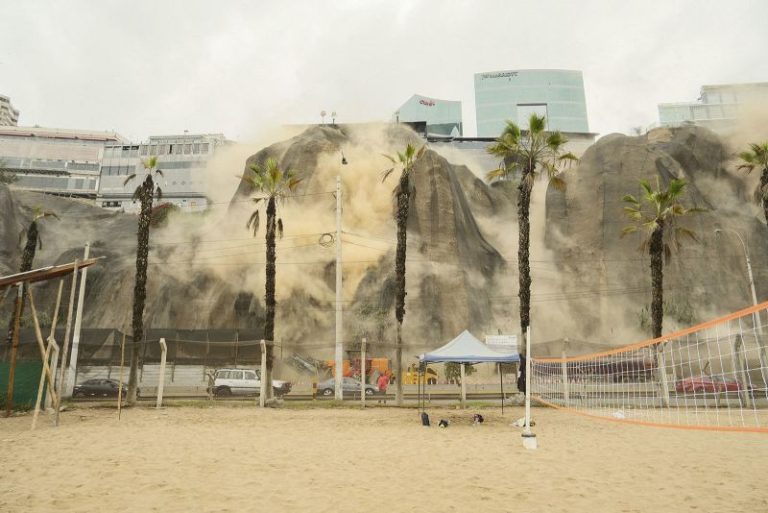
A 5.6 magnitude earthquake that struck off Peru’s central coast Sunday, rattling Lima and the port city of Callao, has left one person dead and five injured, authorities said.

The earthquake happened at 11:35 a.m. local time in the Pacific Ocean, according to the United States Geological Survey. Its epicenter was located 23 kilometers (14 miles) southwest of Callao, west of the capital Lima.

A 36-year-old man died in northern Lima while “standing outside his vehicle waiting for a passenger” when a wall from the fourth floor of a building under construction detached and fell on his head, Police Col. Ramiro Clauco told RPP radio.

The five people injured are being treated in hospitals, the Emergency Operations Center said. The agency also reported damage to roads and educational centers.

President Dina Boluarte is heading to Callao to monitor developments, the Peruvian presidency said on X.

Footage shared by local media also showed cars hit by falling debris, damaged houses and collapsed billboards.

All of Lima’s districts felt the earthquake, Hernando Tavera, executive president of the Geophysical Institute of Peru, told local TV channel N.

Local radio stations reported that a professional football match at Lima’s Alberto Gallardo Stadium was paused for several minutes.

A mass at Lima’s cathedral was also interrupted, after frightened worshippers fled the scene.

Peru is located along the Ring of Fire, a path along the Pacific Ocean characterized by frequent earthquakes and active volcanoes.

This post appeared first on cnn.com