Author

admin

Browsing

Catherine, Princess of Wales dropped out of a planned engagement at Royal Ascot at short notice on Wednesday.

Kate, 43, had been expected to join her husband Prince William as well as King Charles and Queen Camilla in the traditional carriage procession at the racecourse.

She is understood to be disappointed at missing the event in Berkshire, just outside of London, but is working to find the right balance as she returns to public duties after her cancer treatment.

The royal has been making a phased return to official duties since she announced in September that she had completed her chemotherapy. In January, she revealed her “relief to now be in remission,” adding that she remained focused on her recovery.

Kate has undertaken a number of engagements in recent weeks including attending two major events in the royal calendar, the Trooping the Colour parade in London and the Order of the Garter service in Windsor.

This is a developing story and will be updated.

This post appeared first on cnn.com

A volcanic eruption in Indonesia sent an enormous ash cloud more than six miles into the sky, disrupting or canceling dozens of flights to and from the tourist island of Bali.

Mount Lewotobi Laki Laki erupted at 5:35pm local time on Tuesday, unleashing a 6.8-mile (11-kilometer) hot ash column over the tourist island of Flores in south-central Indonesia, the country’s Geology Agency said.

Images showed an orange mushroom-shaped cloud engulfing the nearby village of Talibura with sightings reported up to 93 miles (150km) away.

Officials issued the country’s highest alert and urged tourists to stay away.

Dozens of flights were halted in Bali, according to Denpasar International Airport website, which marked the disruptions “due to volcano.”

They included domestic routes to Jakarta and Lombok as well as others to Australia, China, India, Malaysia, New Zealand and Singapore.

Fransiskus Xaverius Seda Airport was closed until Thursday, “to ensure the safety of the passengers,” airport operator AirNav said in an Instagram post.

Singapore’s Changi Airport website shows Jetstar and Scoot canceled flights to Bali Wednesday morning while AirAsia called off its midday flight to the Indonesian capital.

Holidaymakers Athirah Rosli, 31, and her husband Fadzly Yohannes, 33, woke up this morning to discover that their Jetstar flight home from Bail to Singapore was canceled.

“My husband and I looked at new flights, booked more accommodation and insurance and then had breakfast at our hotel,” she said.

“I see it was a blessing in disguise that we’re safe and well.”

Recent rumblings

The volcano’s eruption follows significant volcanic activities, including 50 in two hours, up from the average eight to 10 activities per day.

The 5,197-foot (1,584-meter) twin volcano erupted again Wednesday morning, spewing a 0.62-mile (1km) ash cloud, officials confirmed.

Dozens of residents in two nearby villages were evacuated, according to Avi Hallan, an official at the local disaster mitigation agency.

A danger zone is in place around five miles (8km) from the crater and residents have been warned about the potential for heavy rainfall triggering lava flows in rivers flowing from the volcano.

Tourists affected

More than a thousand tourists have been affected, particularly those traveling to Bali and Komodo National Park, famed for its Komodo dragons, according to a local tour operator.

Mount Lewotobi Laki Laki’s last erupted in May when authorities also raised the alert level to the most severe.

A previous eruption in March forced airlines to cancel and delay flights into Bali, around 500 miles (800km) away, including Australia’s Jetstar and Qantas Airways.

In November, the volcano erupted multiple times killing nine people, injuring dozens and forcing thousands to flee and flights to be canceled.

Indonesian, home to 270 million people, has 120 active volcanoes and experiences frequent seismic activity.

The archipelago sits along the “Ring of Fire,” a horseshoe-shaped series of seismic fault lines encircling the Pacific Basin.

This post appeared first on cnn.com

India and Canada signaled a reset of relations on Tuesday, agreeing to reestablish high commissions in each other’s capitals, after nearly two years of strained ties following Ottawa’s accusations that New Delhi was allegedly involved in the killing of a Sikh separatist on its soil.

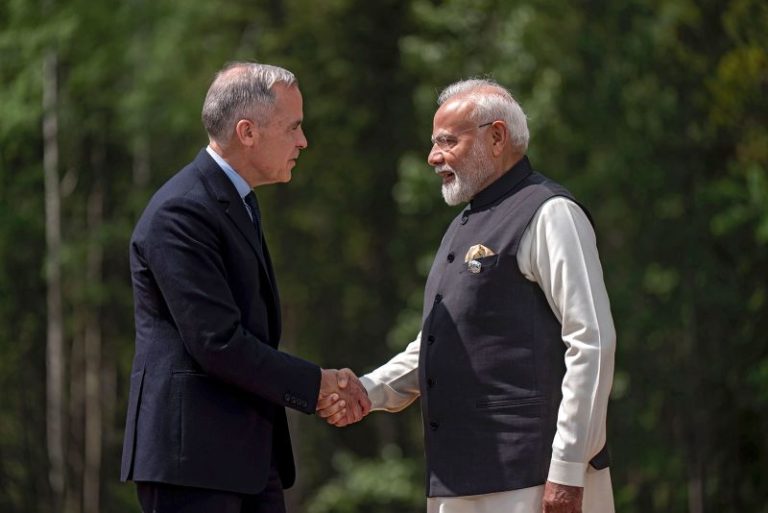
Indian Prime Minister Narendra Modi and his Canadian counterpart Mark Carney, who took office in March, announced the move after meeting on the sidelines of the Group of 7 summit in the Canadian Rockies.

Ottawa and New Delhi agreed to “designate new high commissioners, with a view to returning to regular services to citizens and business in both countries,” according to a statement from Carney’s office following their meeting

The move comes nearly two years after former Canadian Prime Minister Justin Trudeau and other Canadian officials publicly accused New Delhi of being involved in the murder of prominent Sikh separatist and Canadian citizen, Hardeep Singh Nijjar, in a Vancouver suburb in 2023.

Canadian authorities said they shared evidence of that with Indian authorities. However, Indian government officials repeatedly denied Canada had provided evidence and called the allegations “absurd and motivated.”

Relations between both countries plummeted in the wake of the accusation, prompting tit-for-tat diplomatic expulsions, the temporary suspension of visa services and allegations from India of Canada harboring “terrorists” and encouraging “anti-India activities” – a claim the Canadian government rejects.

Carney invited the leaders of several other nonmember countries — Brazil, South Africa, Mexico, Ukraine, Australia and South Korea — to also attend this year’s gathering.

There were no signs of tension on Tuesday as Modi and Carney shook hands in the western Canadian province of Alberta with the Canadian prime minister calling it a “great honor” to host the Indian leader at the G7.

“India has been coming to the G7 I believe since 2018… and it’s a testament to the importance of your country, to your leadership and to the importance of the issues that we look to tackle together,” Carney told reporters.

Modi’s comments toward Carney were similarly welcoming.

“Had an excellent meeting with Prime Minister Mark Carney,” he wrote on X. “India and Canada are connected by a strong belief in democracy, freedom and rule of law. PM Carney and I look forward to working closely to add momentum to the India-Canada friendship.”

The Canadian prime minister’s office said the two discussed opportunities to “deepen engagement” in areas such as technology, the digital transition, food security, and critical minerals.

Neither leader publicly mentioned discussing recent strained relations or the killing of Nijjar.

Nijjar, who was gunned down by masked men in June 2023 outside a Sikh temple in Surrey, British Columbia, was a prominent campaigner for an independent Sikh homeland in northern India, which would be known as Khalistan.

Campaigning for the creation of Khalistan has long been considered by New Delhi as a national security threat and outlawed in India – and a number of groups associated with the movement are listed as “terrorist organizations” under Indian law.

But the movement garners a level of sympathy from some in the Sikh community, especially in the diaspora, where activists protected by free speech laws can more openly demand secession from India.

Some demonstrators expressed outrage over Modi’s visit, while others demanded justice over Nijjar’s killing.

When asked about the murder of Nijjar during a news conference after speaking with Modi, Carney said: “There is a judicial process that’s underway, and I need to be careful about further commentary.”

Carney also told CBC’s Radio-Canada last week that he had spoken with Modi about Nijjar, when asked about the Sikh separatist and ongoing police investigation.

This post appeared first on cnn.com

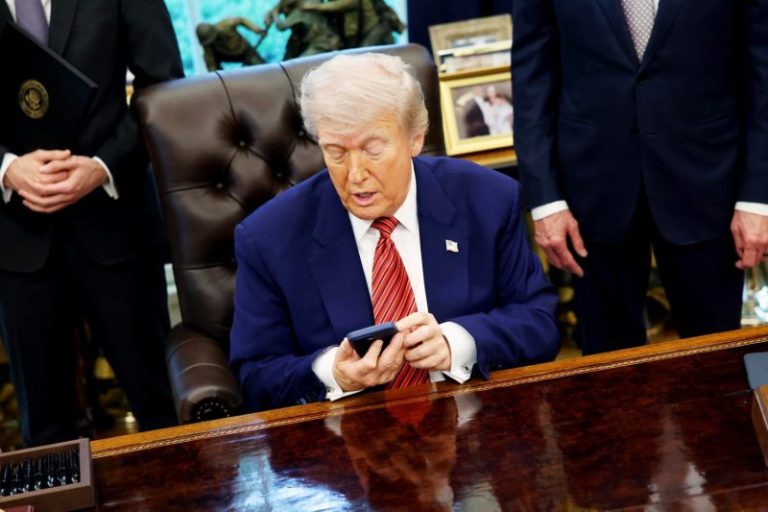
President Donald Trump’s business organization has announced the creation of a new wireless phone service that will carry the president’s name.

Trump Mobile, as the service will be known, will soon be available for what Donald Trump Jr. described as “real Americans” seeking “true value from their mobile carriers.” The eldest of Trump’s children, who serves as executive vice president of the Trump Organization, which runs the president’s businesses, made the remarks at a press event in New York City on Monday morning alongside his brother Eric Trump, who also oversees the Trump Organization.

According to the TrumpMobile.com website, the plan starts at $47.45 a month, reference to the elder Trump having served as the 45th and 47th president.

By comparison, Boost Mobile and Verizon’s Visible offer similar unlimited service for $25 per month. T-Mobile and Spectrum offer unlimited plans for $30.

Users can change to Trump Wireless while still keeping their existing phones. At the same time, the Trump Organization is also rolling out a $499 gold-colored phone, dubbed the T1, later this year as part of the service’s launch.

The announcement represents another example of the unprecedented line-blurring the president has undertaken by running the country while his branded business ventures continue to operate and make millions.

Late Friday, the president filed financial disclosure forms for 2024 showing hundreds of Trump-branded business ventures in operation as of last year. The Trump Organization, the main corporate entity run by the president’s family, earned more than $57 million from sales of digital tokens launched by its World Liberty Financial cryptocurrency platform. Trump has aggressively wielded the powers of the executive office to threaten businesses whose policies he does not support.

The launch of a wireless phone is a particularly striking case, since it comes as the president seeks to bring more production of electronics, including smartphones, to the United States. Trump has explicitly threatened Apple with tariffs for not making its iPhones stateside. Trump has sought to exert a strong influence over the heavily regulated telecom industry through Brendan Carr, the attorney Trump appointed to lead the Federal Communications Commission. Carr has cited traditional carriers for allegedly abusing workforce diversity requirements and censoring conservative voices.

The White House referred a request for comment to the Trump Organization. It did not respond to a follow-up query asking whether the president planned to use his own branded wireless service or the T1 phone.

According to its website, Trump Mobile is “powered” by Liberty Mobile Wireless. Florida state business records indicate Liberty Mobile was first registered in 2018 by its president and CEO, a Miami-area entrepreneur named Matthew Lopatin. He did not respond to an emailed request for comment.

Representatives for the three major U.S. phone carriers did not respond to requests for comment.

Trump Mobile’s T1 PhoneTrump Mobile

According to its website, Trump Mobile users would be able to receive telemedicine on their phone, roadside assistance and unlimited texting to at least 100 countries.

The service and phone are not actually made by the Trump Organization. The company is licensing the president’s name to a wireless service that is supported by the three major U.S. phone carriers. In a separate appearance with Fox Business host Maria Bartiromo’s “Mornings with Maria” show Monday, Eric Trump said the phones would also be made in the U.S. but did not state the manufacturer. He also said the service’s call center would be based in St. Louis.

The announcement appears to echo one made earlier this month by the trio of actor-hosts of the popular “SmartLess” podcast, who said they were launching their own wireless service by purchasing network capacity from T-Mobile.

Another actor, Ryan Reynolds, has invested in Mint Mobile, which also uses T-Mobile’s network. Both Mint and SmartLess have been pitched as value services for users who don’t have need for unlimited data.

This post appeared first on NBC NEWS

It took 11 years since Facebook acquired it for $19 billion, but Meta is finally bringing ads to WhatsApp, marking a major change for an app whose founders shunned advertising.

Meta announced Monday that businesses will now be able to run so-called status ads on WhatsApp that prompt users to interact with the advertisers via the app’s messaging features. The ads will only be shown to users within WhatsApp’s “Updates” tab to separate the promotions from people’s personal conversations. Additionally, Meta will begin monetizing WhatsApp’s Channels feature through search ads and subscriptions.

The debut of ads on the messaging app represents a significant step in Meta CEO Mark Zuckerberg’s plans to make WhatsApp “the next chapter” in his company’s history, as he told CNBC’s Jim Cramer in 2022. The move to monetize WhatsApp also comes amid Meta’s high-profile antitrust case with the Federal Trade Commission over the company’s blockbuster acquisitions of the messaging app and Instagram.

Already, Meta allows advertisers to run so-called click-to-message ads on Facebook and Instagram that steer users to WhatsApp where they can directly engage with businesses. Messaging between brands and consumers “should be the next pillar of our business,” Zuckerberg told analysts in April, adding that WhatsApp now has over 3 billion monthly users, including “more than 100 million people in the U.S. and growing quickly there.”

Now, companies can run those kinds of ads within WhatsApp itself. The new status ads appear in a user’s Updates tab within that tab’s “Status” feature that can be used to share pictures, videos and text that vanish after 24 hours, akin to Instagram Stories.

Since Meta bought WhatsApp in 2014, the popular messaging app has continued to grow worldwide. But unlike Facebook, Instagram and most recently Threads, WhatsApp has never allowed advertising.

WhatsApp’s co-founders, Jan Koum and Brian Acton, were public in their scorn for the advertising industry, and the duo left Facebook after reportedly clashing with executives who were eager to inject the app with advertising and other practices they shunned.

The social media company does not reveal WhatsApp’s specific sales, but analysts have previously estimated the app’s revenue to be between $500 million and $1 billion from charging businesses for tools and services so they can message customers on the app.

Meta will “use very basic information” to recommend which ads to show WhatsApp users, Nikila Srinivasan, Meta’s head of product for business messaging, said Friday. This includes a person’s country, city, device, language and data like who they follow or how they interact with ads.

The company debuted WhatsApp’s Updates tab in June 2023 along with an accompanying Channels feature that allows people and organizations to send broadcast messages and updates to their followers as opposed to personal conversations. Meta will also monetize the Channels feature, the company said Monday.

Organizations and people who are Channel administrators will now be able to spend money to boost the visibility of their respective Channels when a person searches for them via a directory, similar to ads on Apple’s and Google’s app stores.

Additionally, channel administrators will be able to charge users monthly subscription fees to access exclusive updates and content, Meta said Monday. The company will not immediately make money from those monthly subscription fees, but it plans to eventually take a 10% cut of those subscriptions, a spokesperson said.

Meta hopes that by limiting its new ads to WhatsApp’s Updates tab it will disrupt users as little as possible, Srinivasan said. Users’ status updates as well as personal messages and calls on WhatsApp will remain encrypted, she said.

“We really believe that the Updates tab is the right place for these new features,” Srinivasan said.

This post appeared first on NBC NEWS

Since Israel began its concerted attack on Iran, calls for regime change have grown louder, with US President Donald Trump and Israeli Prime Minister Benjamin Netanyahu raising the possibility of targeting Tehran’s all-powerful leader, Ayatollah Ali Khamenei.

Many Iranians have firsthand experience with the United States enforcing a regime change in their country.

Here’s what happened:

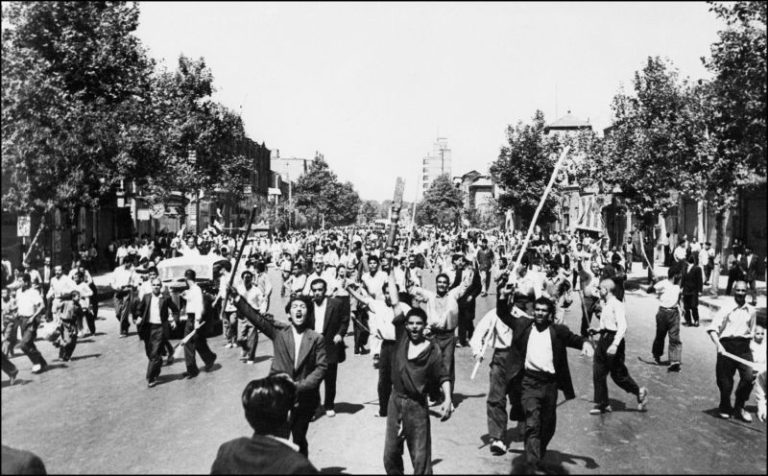
Oil fields: In 1953, the US helped stage a coup to overthrow Iran’s democratically elected prime minister Mohammad Mossadegh.

He had pledged to nationalize the country’s oil fields – a move the US and Great Britain saw as a serious blow, given their dependence on oil from the Middle East.

Height of the Cold War: The move to nationalize was seen as popular in Iran and a victory for the then-USSR.

Strengthen Shah rule: The coup’s goal was to support Iran’s monarch, Mohammad Reza Pahlavi, to rule as Shah of Iran, and appoint a new prime minister, Gen. Fazlollah Zahedi.

The coup: Before the coup, the CIA, along with the British Secret Intelligence Service (SIS), helped foment anti-Mossadegh fervor using propaganda. In 1953, the CIA and SIS helped pull pro-Shah forces together and organized large protests against Mossadegh, which were soon joined by the army.

US cash: To provide Zahedi, the country’s new prime minister, with some stability, the CIA covertly made $5,000,000 available within two days of him taking power, documents showed.

US acknowledgement: In 2013, declassified CIA documents were released, confirming the agency’s involvement for the first time. But the US role was known: Former President Barack Obama acknowledged involvement in the coup in 2009.

It backfired: After toppling Mossadegh, the US strengthened its support for Pahlavi to rule as Shah. Iranians resented the foreign interference, fueling anti-American sentiment in the country for decades.

Islamic Revolution: The Shah became a close ally of the US. But in the late 1970s, millions of Iranians took to the streets against his regime, which they viewed as corrupt and illegitimate. Secular protesters opposed his authoritarianism, while Islamist protesters opposed his modernization agenda.

The Shah was toppled in the 1979 Islamic revolution, which ended the country’s Western-backed monarchy and ushered in the start of the Islamic Republic and clerical rule.

This post appeared first on cnn.com

Kraft Heinz said Tuesday that it will remove FD&C artificial dyes from its products by the end of 2027, and will not launch any new products in the U.S. containing those ingredients.

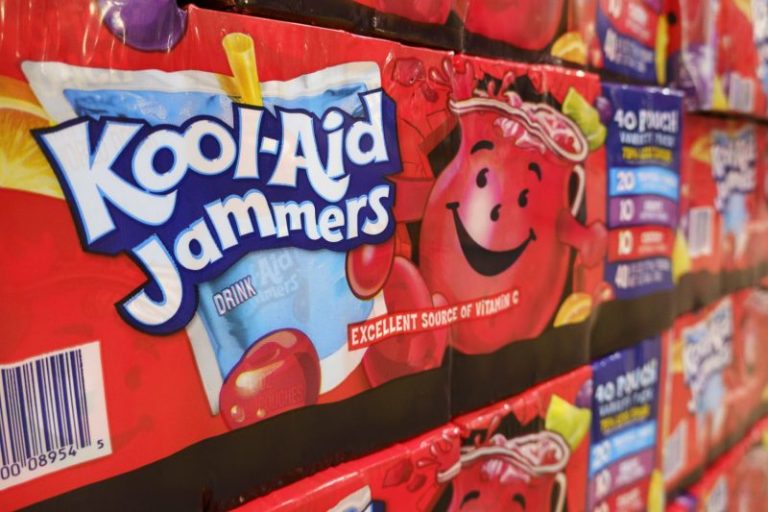
The company said in a release that about 10% of its U.S. items use FD&C colors, the synthetic additives that make many foods more visually appealing. Kraft Heinz brands that sell products with these dyes include Crystal Light, Kool-Aid, MiO, Jell-O and Jet-Puffed, according to a Kraft Heinz spokesperson.

The company removed artificial colors, preservatives and flavors from its Kraft macaroni and cheese in 2016 and its Heinz ketchup has never used artificial dyes, according to Pedro Navio, North America president at Kraft Heinz. It is unclear how removing the dyes will affect the company’s business, as consumers could perceive the products as healthier but also may be less drawn to duller colors.

Cases of Kool-Aid Jammers are stacked at a Costco Wholesale store in San Diego on April 27, 2025.Kevin Carter / Getty Images

The decision follows pressure from the U.S. Food and Drug Administration and Department of Health and Human Services, led by Secretary Robert F. Kennedy Jr., for the food industry to pull back on artificial dyes as part of a larger so-called Make America Healthy Again platform.

The FDA in April announced a plan to phase out the use of petroleum-based synthetic dyes by the end of next year and replace them with natural alternatives. Besides the previously banned Red No. 3, other dyes that will be eliminated include red dye 40, yellow dye 5, yellow dye 6, blue dye 1, blue dye 2 and green dye 2, FDA Commissioner Marty Makary said at the time.

Kennedy said at the time that the FDA and the food industry have “an understanding,” not a formal agreement, to remove artificial dyes. The Health and Human Services secretary discussed removing artificial food dyes during a meeting in March with top food executives from companies including Kraft Heinz, PepsiCo North America, General Mills, WK Kellogg, Tyson Foods, J.M. Smucker and the Consumer Brands Association, the industry’s top trade group.

A spokesperson for Kraft Heinz said on Tuesday that the company looks forward to partnering with the administration “to provide quality, affordable, and wholesome food for all.”

Momentum against food dyes had been building for years. In January, before President Donald Trump and Kennedy took office, the FDA announced a ban on the use of Red No. 3 dye in food and ingested drugs. The dye gives many candies and cereals their bright red color, but is also known to cause cancer in laboratory animals. The FDA allowed Red No. 3 to be used by food manufacturers for years, though the state of California had already banned the dye in 2023.

Kraft Heinz said in the release Tuesday that it has made more than 1,000 recipe changes over the past five years to improve product nutrition.

“The vast majority of our products use natural or no colors, and we’ve been on a journey to reduce our use of FD&C colors across the remainder of our portfolio,” Navio said. “Above all, we are focused on providing nutritious, affordable and great-tasting food for Americans and this is a privilege we don’t take lightly.”

This post appeared first on NBC NEWS

When you see headlines about geopolitical tensions and how the stock market sold off on the news, it can feel unsettling, especially when it comes to your hard-earned savings. But what you might not hear about in the news is what the charts are indicating.

Look at what happened in the stock market recently. On Friday, investors were bracing for a rocky start this week, expecting geopolitical tensions to shake up the stock market. That’s not what unfolded. After Friday’s +1% dip, the U.S. indexes bounced back, starting the week off on a positive note. It just goes to show how quickly things can shift, and often, not in the way we might anticipate.

A Closer Look at the S&P 500

The S&P 500 ($SPX) looks like it’s back on track and attempting to move toward its all-time high. Volatility has also retreated, and oil prices, which went as high as $77.62 a barrel, have pulled back to slightly above $71.

Think of it this way: if you took Friday’s price action out of the equation, the S&P 500 has been moving steadily by grinding out its narrow range sideways move. The uptrend in equities is still in play, despite the Middle East conflict.

The StockCharts Market Summary page shows that the S&P 500 and Nasdaq Composite ($COMPQ) are trading well above their 200-day simple moving averages (SMA), while the Dow Industrials ($INDU) is struggling to remain above the benchmark. Small-cap stocks continue to struggle, which suggests that growth leadership continues to be on investors’ radars. You can see this in the sector performance panel, which shows Technology in the lead.

Since tech stocks make up a significant portion of the S&P 500, let’s take a closer look at the daily chart.

FIGURE 1. DAILY CHART OF S&P 500. The week started off on a positive note despite Middle East tensions. Monitor trends, key levels, and momentum indicators.Chart source: StockCharts.com. For educational purposes.

As mentioned earlier, not much has happened in the S&P 500 despite Friday’s selloff. The overall uptrend is still in place. The index is trading above its 21-day exponential moving average. The S&P 500 is about 1.84% away from its all-time high.

However, even though the bias is slightly bullish, there are indications that the market’s momentum isn’t strong at the moment. Here’s why:

  • The Relative Strength Index (RSI) is faltering, indicating momentum isn’t quite there yet. Note the RSI is not moving higher with the index, meaning it’s diverging.
  • The Percentage Price Oscillator (PPO) has been relatively flat and sloping slightly downward since the end of May. This confirms the stalling momentum indicated by the RSI.
  • The 200-day SMA is above the 50-day SMA. The 50-day SMA needs to cross above the 200-day SMA to confirm the bullish bias.

What to Watch

Keeping the trend direction and momentum in mind, here are some levels to monitor on the chart.

  • Just below 6150: This area represents the S&P 500’s all-time high. If the index reaches this level, it will likely be met with resistance. A break above this level would elevate bullish sentiment and show upside momentum in the market.
  • Between 5950 and 6050: The S&P 500 has been moving within this range for most of the month. It almost seems as if it’s waiting for something to act as a catalyst to move it in either direction. When it happens, the RSI and PPO will indicate whether momentum is to the upside or downside.
  • The 5775 area: This level represents the March 24 to March 26 high and the May 12 and May 23 lows. A break below this level would not be bullish for the S&P 500. Note that the 200-day SMA is close to this level.

The Bottom Line

The stock market always has its ups and downs, and some days may feel more uncertain than others. However, by focusing on long-term trends and support or resistance levels based on past highs and lows, you can approach your investment decisions with a more objective mindset.

Instead of reacting to news headlines, consider adding the “lines in the sand” — key support and resistance levels, trendlines, price channels — to your charts. These can be added to daily, weekly, or monthly time frames. Monitoring the market’s action at these levels can offer valuable insights and better prepare you for whatever comes your way.


Disclaimer: This blog is for educational purposes only and should not be construed as financial advice. The ideas and strategies should never be used without first assessing your own personal and financial situation, or without consulting a financial professional.

With oil prices surging and geopolitical unrest stirring in the Middle East, it’s no surprise that energy stocks are drawing renewed attention. And, quite frankly, this week didn’t have many market-moving earnings. So this week, we skate to where the puck is, or, in this case, where traders’ eyes will be focused—the Energy sector.

In the past, we have witnessed this sector spike due to conflicts, and changes can come quickly. The following setups appear to favor continued and quick momentum to the upside.

Energy: A Sector on the Move

Let’s begin with the big picture: the Energy Select Sector SPDR ETF (XLE). This ETF offers a broad view of the energy landscape. Yes, 40% of this ETF consists of just two stocks — Exxon Mobil Corp. (XOM) and Chevron Corp. (CVX). So these two will drive the bus when it comes to price action. However, when looking at the entire sector, we see some good risk/reward setups worth monitoring.

From early 2024, XLE has been trading in a rather wide neutral range. In April, though, the ETF broke down and fell out of that range. That was due in part to cheaper oil prices and a reaction to Liberation Day tariffs. This ended up being a classic bear trap, as price held its 200-week moving average (red circle above) and moved back into its range.

The adage, “from false moves come fast moves in the opposite direction,” is well in play here, and given the fundamental backdrop of oil spiking due to conflict, the push higher should continue.

From a risk/reward set-up, the ETF could climb towards the top end of its range and likely break out higher. The risk is at the bottom of the neutral range — support at $82.50 with a first stop upside target of $95. Given Friday’s close, it’s not too much of a risk/reward difference, but momentum indicators suggest the upside is achievable, possibly quickly.

The weekly Moving Average Convergence/Divergence (MACD) is flashing a strong buy signal, while the Relative Strength Index (RSI) is breaking a downtrend going back to its August 2024 peak. It has all the makings of a run to resistance and potential breakout, with conservative upside targets of $108 given the range from which the ETF is breaking out.

Occidental Petroleum (OXY): A Buffett Favorite Reawakens

If you’ve followed Warren Buffett’s investments, you’ll recognize Occidental Petroleum (OXY). The stock has been beaten down for quite some time, but, last week, it awoke from its slumber.

OXY shares spiked on Friday, which puts it at a key inflection point. This price action caught our eye, since we are focusing on some good setups from a risk/reward perspective. There could be more room for the stock to run.

OXY enters the week at its weekly downtrend, going back to its 2024 peak at $69.56. Technically, there is major resistance ahead, but it seems poised to attack those levels and has a lot to reverse, which can give investors a nice percentage gain in the meantime.

If shares can eclipse this recent downtrend, then expect a quick run to its 200-week moving average at the $52/$53 level. This level acted as a major consolidation point for years; the once mighty support area could act as resistance and must be watched closely. However, a date with this level looks quite promising and represents a 15% gain from Friday’s close.

If momentum continues and OXY breaks through that level, it’s smooth sailing for another 15+% upside toward the $60 area. OXY could continue to its 2022–2023 consolidation area and do so quickly.

Baker Hughes (BKR): Is It Ready to Wake Up?

Lastly, we turn to Baker Hughes (BKR), an oilfield services and technology company that has been a major laggard since its February peak of $48.85. Technically, it enters the week at a major inflection point.

BKR has formed an ascending triangle, which is nearing its breaking point. That point happens to be at its longer-term downtrend and its 200-day moving average, which makes for an interesting setup.

Downside risk could see shares fall back to their 50-day moving average and the rising short-term average that’s within this tradable formation. If BKR breaks below that level, all bets for this near-term rally are off. 

The upside risk favors the bulls. If BKR were to break out, this would confirm a new uptrend, with upside targets 15–20% higher than Friday’s close.

Final Thoughts

The setups we’re seeing in the Energy sector offer a favorable balance between risk and reward. Be mindful of the downside risks and place your stops in the event the position goes against you. Remember, energy markets can shift quickly, especially when geopolitical tensions are involved.


In this video, Mary Ellen spotlights breakouts in Energy and Defense, Technology sector leadership, S&P 500 resilience, and more. She then unpacks the stablecoin fallout hitting Visa and Mastercard, highlights Oracle’s earnings breakout, and shares some pullback opportunities.

This video originally premiered June 13, 2025. You can watch it on our dedicated page for Mary Ellen’s videos.

New videos from Mary Ellen premiere weekly on Fridays. You can view all previously recorded episodes at this link.

If you’re looking for stocks to invest in, be sure to check out the MEM Edge Report! This report gives you detailed information on the top sectors, industries and stocks so you can make informed investment decisions.