Blackstone Minerals (BSX:AU) has announced Blackstone Minerals Corporate Update
Download the PDF here.
This post appeared first on investingnews.com


Blackstone Minerals (BSX:AU) has announced Blackstone Minerals Corporate Update
Download the PDF here.

Further to the ASX announcement on 20 June 2025, Cygnus Metals Limited (‘Cygnus’ or the ‘Company’) advises that it has issued a total of 211,627,907 fully paid ordinary shares (‘Shares’) at A$0.086 each under Tranche 1 of the Placement, raising a total of A$18,200,000 (before costs). The Shares were issued under the Company’s existing capacity under ASX Listing Rules 7.1 (126,702,591) and 7.1A (84,925,316).
A further 1,162,790 Shares are intended to be issued under Tranche 2 of the Placement to Non-Executive Director Raymond Shorrocks, or his nominees, subject to receipt of shareholder approval at a general meeting to be held in August 2025.
In addition, the Company has issued a total of 306,129 Shares to employees on conversion of 350,000 vested Performance Rights issued under the Company’s previous Employee Securities Incentive Plan.
Cygnus issued the Shares without disclosure under section 708A(5) of the Corporations Act 2001 (Cth) (‘Act’). With reference to those Shares issued, in accordance with section 708A(6) of the Act, the Company gives notice under paragraph 708A(5)(e) that:
| 1. | the Company issued the Shares without disclosure under Part 6D.2 of the Act; and | |
| 2. | as at the date of this notice: | |
| a) | the Company has complied with the provisions of Chapter 2M of the Act as they apply to the Company; | |
| b) | the Company has complied with sections 674 and 674A of the Act; and | |
| c) | other than as set out below, there is no excluded information within the meaning of sections 708A(7) and 708A(8) of the Act which is required to be disclosed under section 708A(6)(e) of the Act. | |
As previously announced, the Company has ongoing exploration and drill programs at its Chibougamau Copper-Gold Project in Quebec and is awaiting assay results from its current drill program (which remains ongoing). The Company will announce its assay results when it is in a position to complete the collation and interpretation of all data and in accordance with its continuous disclosure obligations, the JORC Code and the ASX Listing Rules.
This announcement has been authorised for release by the Board of Directors of Cygnus.
| David Southam Executive Chair T: +61 8 6118 1627 E: info@cygnusmetals.com |
Ernest Mast President & Managing Director T: +1 647 921 0501 E: info@cygnusmetals.com |
Media: Paul Armstrong Read Corporate +61 8 9388 1474 |
About Cygnus Metals
Cygnus Metals Limited (ASX: CY5, TSXV: CYG) is a diversified critical minerals exploration and development company with projects in Quebec, Canada and Western Australia. The Company is dedicated to advancing its Chibougamau Copper-Gold Project in Quebec with an aggressive exploration program to drive resource growth and develop a hub-and-spoke operation model with its centralised processing facility. In addition, Cygnus has quality lithium assets with significant exploration upside in the world-class James Bay district in Quebec, and REE and base metal projects in Western Australia. The Cygnus team has a proven track record of turning exploration success into production enterprises and creating shareholder value.
News Provided by GlobeNewswire via QuoteMedia

FPX Nickel Corp. (TSXV: FPX) (OTCQB: FPOCF) (‘ FPX ‘ or the ‘ Company ‘) is pleased to announce the results of its 2025 Annual General and Special Meeting held on June 26 2025.
Shareholders voted in favour of all items put forward by the Board of Directors and Management. Shareholders elected eight directors to the Company’s Board, namely, Kim Baird , Peter M.D. Bradshaw , Anne Currie , James S. Gilbert , Peter J. Marshall , Andrew Osterloh , Robert B. Pease and Martin E. Turenne . The shareholders approved all other matters as proposed, including the appointment of DeVisser Gray LLP as the auditor of the Company and approval of the Company’s 10% rolling share compensation plan.
About FPX Nickel Corp.
FPX Nickel Corp. is focused on the exploration and development of the Decar Nickel District, located in central British Columbia , and other occurrences of the same unique style of naturally occurring nickel-iron alloy mineralization known as awaruite. For more information, please view the Company’s website at https://fpxnickel.com/ or contact Martin Turenne , President and CEO, at (604) 681-8600 or ceo@fpxnickel.com .
On behalf of FPX Nickel Corp.
‘Martin Turenne’
Martin Turenne , President, CEO and Director
Forward-Looking Statements
Certain of the statements made and information contained herein is considered ‘forward-looking information’ within the meaning of applicable Canadian securities laws. These statements address future events and conditions and so involve inherent risks and uncertainties, as disclosed in the Company’s periodic filings with Canadian securities regulators. Actual results could differ from those currently projected. The Company does not assume the obligation to update any forward-looking statement.
Neither the TSX Venture Exchange nor its Regulation Services Provider accepts responsibility for the adequacy or accuracy of this release.
SOURCE FPX Nickel Corp.
View original content to download multimedia: http://www.newswire.ca/en/releases/archive/June2025/27/c9286.html
News Provided by Canada Newswire via QuoteMedia
John Ciampaglia, CEO of Sprott Asset Management, discusses uranium supply, demand and pricing, also sharing details on the Sprott Physical Uranium Trust’s (TSX:U.U,OTCQX:SRUUF) recently closed US$200 million bought-deal financing.
‘It’s clearly acted as a very positive catalyst — the spot price has popped, a lot of the equities have popped on this,’ he said about the agreement.
Securities Disclosure: I, Charlotte McLeod, hold no direct investment interest in any company mentioned in this article.

Tudor Gold (TSXV:TUD,OTC Pink:TDRRF) has signed a definitive agreement to acquire American Creek Resources (TSXV:AMK,OTCQB:ACKRF) in an all-share transaction, marking a consolidation in BC’s Golden Triangle.
Under the deal, dated Wednesday (June 25), each American Creek shareholder will receive 0.238 shares of Tudor for each share held, effectively giving Tudor an 80 percent ownership stake in the Treaty Creek project — one of Canada’s largest undeveloped gold-copper porphyry systems. American Creek previously held a fully carried 20 percent interest.
‘Our acquisition of American Creek increases our interest to 80 percent in the Treaty Creek Project, which hosts one of the largest gold discoveries in Canada with excellent potential for expansion and additional gold-copper discoveries, at a reasonable per ounce of gold equivalent cost,’ said Joe Ovsenek, Tudor Gold president and CEO, in a press release.
According to Tudor, Treaty Creek is located adjacent to world-class deposits held by Seabridge Gold (TSX:SEA,NYSE:SA) and Newmont (TSX:NGT,NYSE:NEM). Treaty Creek’s flagship Goldstorm deposit is a large-scale system that holds both gold and copper mineralization, and the project has consistently returned high-grade intercepts.
The transaction also includes the settlement of up to US$2.22 million in severance obligations to American Creek insiders — US$1 million in cash and the remainder in Tudor shares at a price of US$0.537 per share.
These shares will be subject to a four month statutory hold period, pending approval from the TSX Venture Exchange.
The Tudor-American Creek deal is the latest in a wave of mining sector consolidations driven by a record gold price, rising corporate cash reserves and dwindling new deposit discoveries.
Notable deals in the first half of 2025 include the C$2.6 billion merger of Equinox Gold (TSX:EQX,NYSEAMERICAN:EQX) and Calibre Mining, which was announced in February and closed this month.
In Australia, Northern Star Resources (ASX:NST,OTC Pink:NESRF) closed its AU$5 billion acquisition of De Grey Mining in May. De Grey was the owner of the massive Hemi gold deposit. The same month, Gold Fields (NYSE:GFI,JSE:GFI) made a US$2.4 billion bid for Gold Road Resources (ASX:GOR,OTC Pink:ELKMF).
Ramelius Resources’ (ASX:RMS,OTC Pink:RMLRF) AU$2.4 billion acquisition of Spartan Resources (ASX:SPR,OTC Pink:GYYSF), announced in March, further underscores the appetite for consolidation.
Data from S&P Global Commodity Insights shows last year’s M&A activity laid the groundwork for this trend.
With US$26.54 billion in deal value across 62 qualifying transactions, gold remained the dominant metal of focus, accounting for 43 deals and US$19.31 billion of total deal value. ‘Ever-depleting mining reserves and limited exploration success mean that acquisition is now the key strategy for growth,’ the report notes.
Gold’s record price rise, which took it to the US$3,500 per ounce level in April, has made previously uneconomic deposits viable and pushed miners’ margins to historic highs.
Securities Disclosure: I, Giann Liguid, hold no direct investment interest in any company mentioned in this article.
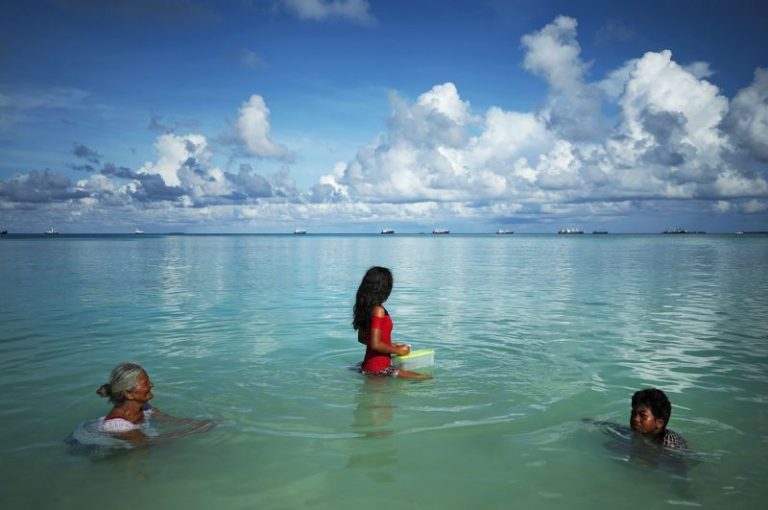
More than a third of the population of Tuvalu has applied to move to Australia, under a landmark visa scheme designed to help people escape rising sea levels.
The island nation – roughly halfway between Hawaii and Australia – is home to about 10,000 people, according to the latest government statistics, living across a clutch of tiny islets and atolls in the South Pacific.
With no part of its territory above six meters, it is one of the most at-risk places in the world to rising seas caused by climate change.
On June 16, Australia opened a roughly one-month application window for what it says is a one-of-a-kind visa offering necessitated by climate change. Under the new scheme, Australia will accept 280 visa winners from a random ballot between July and January 2026. The Tuvaluans will get permanent residency on arrival in Australia, with the right to work and access public healthcare and education.
“The opening of the Falepili Mobility Pathway delivers on our shared vision for mobility with dignity, by providing Tuvaluans the opportunity to live, study and work in Australia as climate impacts worsen,” Australian Foreign Minister Penny Wong said in a statement.
According to Tuvalu’s Prime Minister Feleti Teo, more than half of Tuvalu will be regularly inundated by tidal surges by 2050. By 2100, 90% of his nation will be regularly under water, he says.
Fongafale, the nation’s capital, is the largest and most populated islet in Tuvalu’s main atoll, Funafuti. It has a runway-like strip of land just 65 feet (20 meters) wide in some places.
“You can put yourself in my situation, as the prime minister of Tuvalu, contemplating development, contemplating services for the basic needs of our people, and at the same time being presented with a very confronting and disturbing forecast,” Teo told the United Nations Oceans Conference this month in Nice, France.
“Internal relocation in Tuvalu is not an option, we are totally flat,” the prime minister said on June 12. “There is no option to move inland or move to higher ground, because there is no higher ground.”
The visa scheme is part of a broader pact signed between Australia and Tuvalu in 2023, which binds Australia to defending Tuvalu both militarily and against rising seas.
Tuvalu, which claims 900,000 square kilometers of the South Pacific, is considered by Canberra as a crucial player in its ongoing struggle with China for regional influence.
Recognition is something Australia has said it will guarantee for Tuvalu, even if nobody can live there in the future. “The statehood and sovereignty of Tuvalu will continue, and the rights and duties inherent thereto will be maintained, notwithstanding the impact of climate change-related sea-level rise,” their treaty reads.
In 2022, at COP27 in Sharm El-Sheikh, Egypt, Tuvalu announced that it sought to become the first nation in the world to move entirely online. The government has since developed a plan to “digitally recreate its land, archive its rich history and culture and move all government functions into a digital space.” Australia now recognizes Tuvalu’s “digital sovereignty,” which the country hopes will allow it to “retain its identity and continue to function as a state, even after its physical land is gone.”
Australia’s Prime Minister Anthony Albanese said last year his country shared a vision for a “peaceful, stable, prosperous and unified region.”
“It shows our Pacific partners that they can rely on Australia as a trusted and genuine partner.”
Australia’s support for the Pacific island nation has stood in stark contrast in recent months to US President Donald Trump’s administration, which has imposed sweeping crackdowns on climate policies and immigration.
Tuvalu is among a group of 36 countries that the Trump administration is looking to add to the current travel ban list, according to the Associated Press.
The ban fully restricts entry of nationals from 12 countries: Afghanistan; Myanmar, also known as Burma; Chad; Republic of the Congo; Equatorial Guinea; Eritrea; Haiti; Iran; Libya; Somalia; Sudan; and Yemen. People from seven countries also face partial restrictions: Burundi, Cuba, Laos, Sierra Leone, Togo, Turkmenistan and Venezuela.
The 36 countries, including Tuvalu’s Pacific neighbors Tonga and Vanuatu, had been told to commit to improving vetting of travelers and take steps to address the status of their nationals who are in the United States illegally or face similar restrictions, the AP reported, citing a diplomatic cable sent by the State Department.
Editor’s Note: Help is available if you or someone you know is struggling with suicidal thoughts or mental health matters.
In the US: Call or text 988, the Suicide & Crisis Lifeline.
Globally: The International Association for Suicide Prevention and Befrienders Worldwide have contact information for crisis centers around the world.
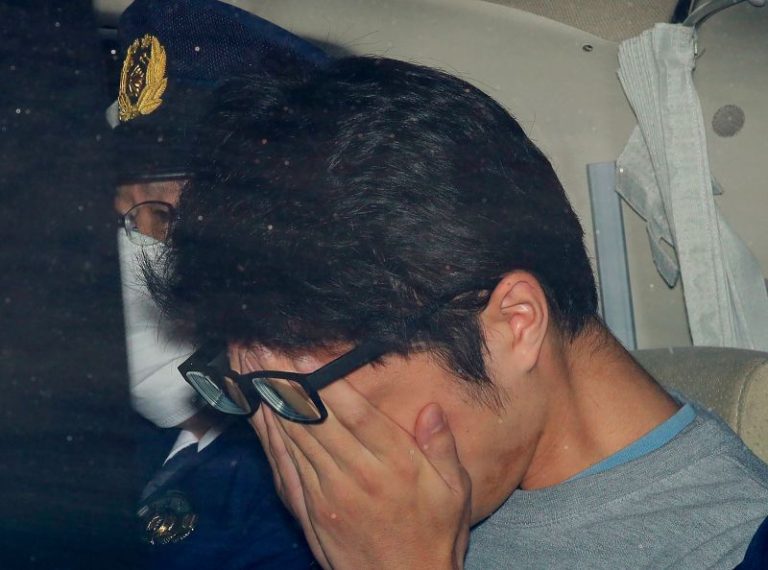
Japan has executed a man dubbed the “Twitter killer,” who was convicted of murdering and dismembering nine people, mostly women, in the country’s first use of capital punishment in nearly three years.
Takahiro Shiraishi, 34, was hanged Friday at the Tokyo Detention House. He was sentenced to death in 2020 after pleading guilty to killing the nine people – eight women and one man.
Shiraishi was arrested in October 2017 after police searched his home in the city of Zama in Kanagawa prefecture, on the outskirts of Tokyo, to investigate the disappearance of a 23-year-old woman who had expressed suicidal thoughts on social media, including Twitter, now known as X.
The high-profile mass murder case had gripped the nation for years and raised concerns over the use of social media.
The nine victims were aged between 15 and 26, according to Japanese public broadcaster NHK and TV Asahi, which both cited court proceedings. The victims had posted online that they wanted to kill themselves, and were subsequently contacted by Shiraishi through social media platforms, NHK and TV Asahi reported.
Using a handle which loosely translates as “hangman,” Shiraishi invited them to his apartment in Zama, promising to help them die, the Jiji news agency reported, citing the indictment.
Shiraishi pleaded guilty to murdering the victims, saying in court that he had killed them to satisfy his own sexual desires, NHK and TV Asahi reported.
He was found guilty in December 2020 of murdering, raping and dismembering the nine victims, and storing their bodies in his apartment.
Shiraishi’s lawyer appealed the ruling to the Tokyo High Court, but he later withdrew the appeal and the sentence was finalized, NHK reported.
“This case, driven by selfish motives such as sexual and financial gratification, resulted in the deaths of nine individuals over two months – a deeply serious incident that has caused shock and anxiety across society. I understand it is an especially heartbreaking case for both the victims and their families,” Justice Minister Keisuke Suzuki told reporters Friday at a press conference.
Shiraishi’s execution is the first the country has seen since July 2022, NHK reported.
In Japan, the death penalty is delivered by hanging, with execution dates not made public until after the penalty is carried out. Executions are shrouded in secrecy with little to no warning, and families and lawyers are usually notified only after the execution has taken place.
“The death sentence was finalized following a thorough trial process. After careful and deliberate consideration of all factors, I issued the execution order,” Suzuki said.
This is a developing story and will be updated.
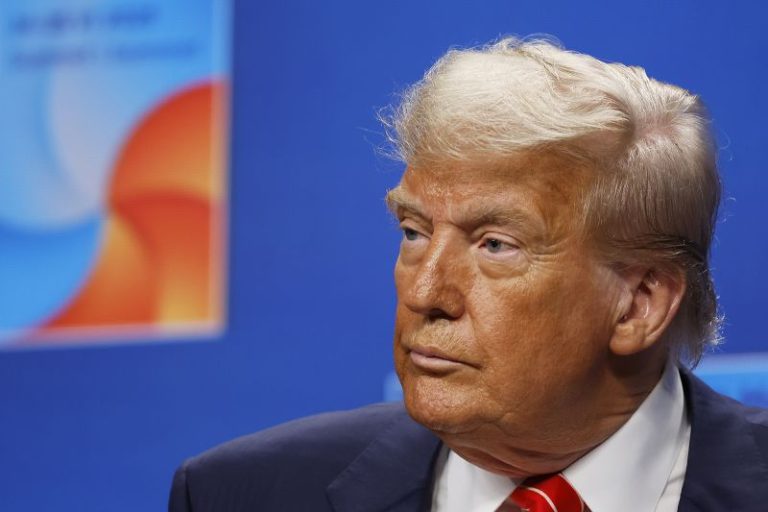
It must have been the last thing NATO’s chief needed.
Late Tuesday, on the eve of a crucial summit that would lock in a generational investment in NATO’s defense, Donald Trump’s Truth Social account pinged with a single photo: a gushing message signed “Mark Rutte,” written in a carbon-copy Trump style and overflowing with sycophantic praise for the US president.
“You are flying into another big success in the Hague this evening,” Rutte’s message read.
“Europe is going to pay in a BIG way, as they should, and it will be your win,” he continued.
“You will achieve something NO American president in decades could get done.”
While the diplomatic world has bent toward many norms of the Trump White House, this was extreme.
Doubling down on the comments the following day, saying Trump deserved credit for his actions on Iran and NATO, Rutte waded through many observers’ incredulity at his kowtowing tone. But as the summit crescendoed, there was a growing sense he may have pulled off a diplomatic masterstroke.
Rutte, the former Dutch prime minister, is no stranger to dealings with Trump, having deployed his easy charm in several visits to Washington, DC, during Trump’s first term.
Exuding an easygoing, relaxed image – his signature boyish grin never far from his face – Rutte’s charm offensive echoes that of other NATO leaders.
French President Emmanuel Macron has charted up a boisterous bromance with Trump; Finnish President Alex Stubb bonded with him over rounds of golf, and Italian far-right Prime Minister Giorgia Meloni has won a reputation as something of Trump whisperer: She’s a “fantastic woman,” in Trump’s words.
Rutte’s message – signed with his surname – perhaps spoke of a less pally relationship. So did one of Trump’s reactions Wednesday: “I think he likes me. If he doesn’t, I’ll let you know. I’ll come back and I’ll hit him hard,” Trump announced in his Wednesday news conference.
But in The Hague, Rutte seemed ready to do anything to burnish the US president’s ego and save him face.
Trump’s decision to attack Iran’s nuclear program was “extremely impressive,” the NATO chief told Trump. “The signal it sends to the rest of the world that this president, when it comes to it, yes, he is a man of peace, but if necessary, he is willing to use strength.”
Time and again around the summit, Rutte’s interjections soothed Trump’s passage – softening his landing after a fiery “f**k” at Iran and Israel’s latest exchange of missiles lit up international headlines.
Rutte’s response: a jokey aside in front of the world’s cameras.
“Daddy has to sometimes use strong language,” he said beside Trump, after the US president used the analogy of two children fighting to describe the conflict between Iran and Israel.
Rutte later said he wasn’t referring to Trump as “daddy” but was merely using a metaphor.
The Dutchman didn’t spare praise for Trump’s strikes on Iran – a conflict technically outside the NATO wheelhouse – as the president railed against suggestions in a leaked government assessment that undercut his claim the strikes “obliterated” parts of Iran’s nuclear program.
“I do think this is a kind of hold-your-nose moment. Ensure there are no fireworks in The Hague. Get a good photo op and go home,” she added.
Beyond Rutte, the whole summit was sculpted around Trump.
Slimmed down, the schedule featured a single session for leaders; experts have suggested this was for Trump, who earlier this month skipped the ending of the G7 summit, missing a meeting with Ukrainian President Volodymyr Zelensky.
Of course, the summit result is largely pre-ordained, after rounds of pre-negotiations to ensure the leaders had to only rubber-stamp declarations.
Ukraine’s war with Russia – by far the most pressing issue on NATO’s agenda – was also excised from the summit’s final declaration, the first time it has been missing since Russian President Vladimir Putin’s full invasion of Ukraine in 2022.
Even the crown jewel of the gathering, the promise to spend 5% of gross domestic product on defense (split into core defense requirements and 1.5% on defense-related spending by 2035), was a Trump-branded product.
Back in January, Trump lofted the idea of a 5% spending target for NATO members, a figure that hadn’t been given serious consideration before, as members limped towards 2%.
“They can all afford it. They’re at 2% but they should be at 5%,” he told journalists.
But Rutte may have had the last laugh.
The summit was, by all accounts, a win for NATO: Members unanimously agreed to boost spendings to post-Cold War highs – and thanked Trump for it.
Spain was a notable exception, pushing for softened language that may have left a loophole for the Iberian nation to meet its responsibilities for NATO military capabilities without having to spend 5% of GDP. (The final summit declaration signed by NATO members referred only to “allies” in its clauses on spending, while others spoke of commitments “we” will make.)
Leaders – led, of course, by Rutte – singled out Trump as the sole pressure responsible for finally corralling NATO allies to previously unthinkable spending targets.
Boosted defense spending “is the success of President Donald Trump,” Polish President Andrzej Duda told journalists at the summit.
“Without the leadership of Donald Trump, it would be impossible,” he added.
His Lithuanian counterpart suggested a new motto for the alliance, “Make NATO great again,” as he welcomed the pressure Trump had levied on stingy allies.
But in public, comment on Rutte’s messaging to Trump was largely off limits, with leaders waving off or swerving around questions.
Finland’s president wouldn’t be drawn on the NATO secretary general’s messages, but he said, however, “Diplomacy has so many different forms.”
Casualties – particularly from diplomatic skirmishes with Trump – were fewer than expected. Only Spain caught flak from the US president over its foot-dragging over the 5% GDP spend.
“It’s terrible what they’ve done,” Trump said, threatening to use trade talks to force Madrid into line. “We’re going to make them pay twice as much,” he said.
Even Zelensky – who has had a turbulent relationship with Trump – came away with wins.
While he stopped short of committing further US aid to Ukraine, Trump suggested Kyiv may see future Patriot missile system deliveries from the United States – and he slammed Putin as “misguided,” conceding the Russian leader may have territorial designs that extend further than Ukraine.
Finally, Trump’s own views on NATO – often a prickly subject for the famously transactional president – saw a reversal.
“These people really love their countries,” Trump said of the NATO leaders at his news conference concluding the NATO summit. “It’s not a rip-off, and we’re here to help them protect their country.”
“I came here because it was something I’m supposed to be doing,” he added, “but I left here a little bit different.”
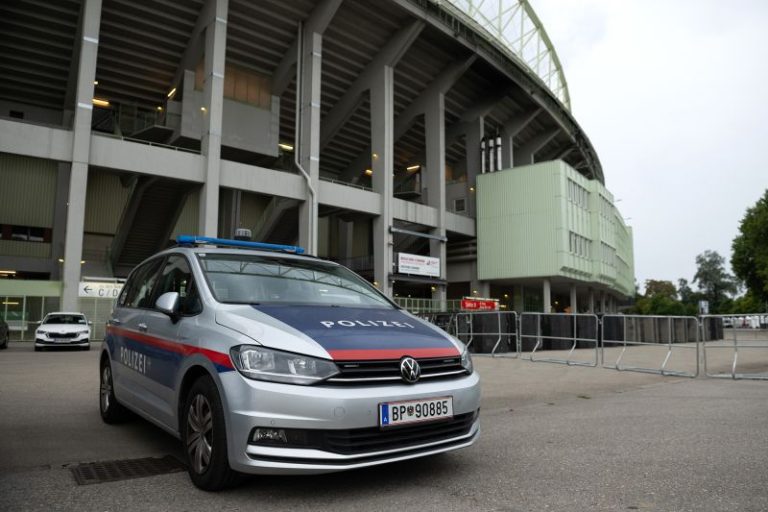
Germany has charged a Syrian juvenile with supporting a foreign terrorist organization for helping to plan a foiled attack on a Taylor Swift concert in Vienna last year, the prosecutor general said in a statement on Friday.
Identified as Mohammad A, the suspect helped the would-be attacker by translating Arabic bomb-building instructions and putting him in contact with a member of the Islamic State militia online, according to the charges against him.
Police made multiple arrests over a suspected plot to attack a Taylor Swift concert in the Austrian capital’s Ernst Happel Stadium, prompting the cancellation of all three of her shows there in August last year.
“Mohammad A has adhered to the ideology of the terrorist organization Islamic State (IS) since April 2024 at the latest,” the statement said.
“Between mid-July and August 2024, he was in contact with a young Austrian who was planning a bomb attack on a concert by singer Taylor Swift in Vienna.”
Austria’s coalition government earlier this month agreed on a plan to enable police to monitor suspects’ secure messaging in order to thwart militant attacks, ending what security officials have said is a rare and dangerous blind spot for a European Union country.
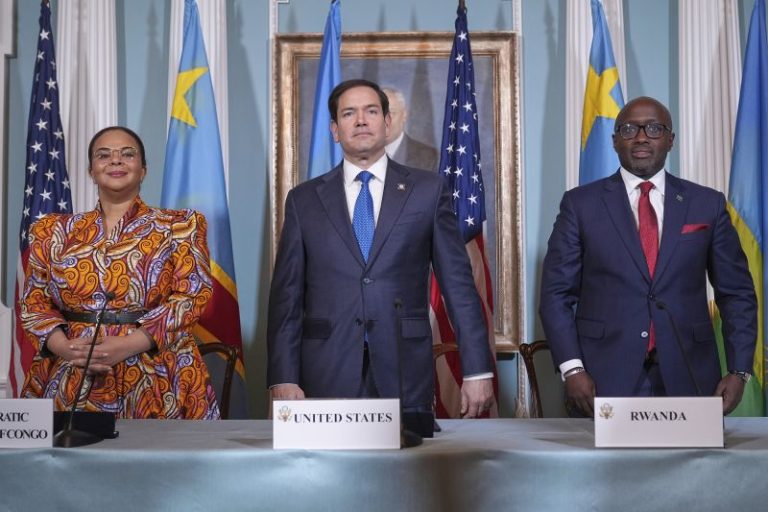
A peace agreement brokered by the White House to stem the bloodshed in the eastern Democratic Republic of Congo (DRC), where a militia allegedly backed by Rwanda occupies vast swaths of land, will be signed in Washington D.C. on Friday by officials of the two African nations.
But many remain unconvinced that the accord – portrayed as a “wonderful treaty” by United States President Donald Trump – can end the complex and long-running conflict, while the militia itself has yet to commit to laying down its weapons.
Trump was upbeat about the prospects for peace when teams from Rwanda and the DRC initialed a draft agreement on June 18, while at the same time suggesting that he would not get credit for his role in ending this or other conflicts.
On June 20, he wrote on Truth Social: “This is a Great Day for Africa and, quite frankly, a Great Day for the World! I won’t get a Nobel Peace Prize for this.”
He added: “I won’t get a Nobel Peace Prize no matter what I do, including Russia/Ukraine, and Israel/Iran, whatever those outcomes may be, but the people know, and that’s all that matters to me!”
Trump touts himself as a “peacemaker” and has expanded his interest in global conflicts to the brutal war in the mineral-rich eastern DRC. His peace deal could also pave the way for America’s economic interests in the region, as it eyes access to the DRC’s critical minerals.
US Secretary of State Marco Rubio will preside over the signing of the peace agreement by DRC Foreign Minister Thérèse Kayikwamba Wagner and her Rwandan counterpart Olivier Nduhungirehe on Friday.
More than 7,000 people have been killed, and some one million others displaced since January, when the M23 militia waged a fresh offensive against the Congolese army, seizing control of the two largest cities in the country’s east.
There has been increasing reports of summary executions – even of children – in occupied areas, where aid groups say they are also witnessing an epidemic of rape and sexual violence.
The crisis in the eastern DRC, which shares a border with Rwanda and harbors large deposits of minerals critical to the production of electronics, is a fusion of complex issues.
In that genocide, hundreds of thousands of Tutsis and moderate Hutus were killed by Hutu militias.
Rwanda criticizes the DRC, which faces problems with militia violence, for integrating a proscribed Hutu militia group into its army to fight against the mainly Tutsi M23.
M23, which first emerged in 2012, is one of the most prominent militias battling for control of the DRC’s mineral wealth. The rebel group also claims to defend the interests of the Tutsis and other Congolese minorities of Rwandan origin.
UN experts and much of the international community believe that Rwanda backs M23 and supports the rebels with troops, leaving the nation on the cusp of war with the DRC over this alleged territorial violation.
The Rwandan government has not acknowledged this claim but insists it protects itself against the Hutu militia operating in the DRC, which it describes as an “existential security threat to Rwanda.”
M23 occupies strategic mining towns in the DRC’s eastern provinces of North and South Kivu.
In a report in December, the UN Group of Experts on the DRC said they found evidence that minerals “were fraudulently exported to Rwanda” from the DRC “and mixed with Rwandan production.”
Rwandan President Paul Kagame drew outrage last year when he admitted in a public address that Rwanda was a transit point for minerals smuggled from the DRC but insisted his country was not stealing from its neighbor.
Washington’s peace accord contains provisions on “respect for territorial integrity and a prohibition of hostilities,” including “disengagement, disarmament, and conditional integration of non-state armed groups,” according to a joint statement issued by the US, Rwanda and the DRC on June 18.
Other points include “facilitation of the return of refugees and internally displaced persons, as well as humanitarian access” and the establishment of a “regional economic integration framework” that could attract significant US investments into Rwanda and the DRC.
Asked whether AFC would surrender its arms, Victor Tesongo, a spokesperson for the coalition, said it was “not there yet” and that it was waiting on developments in Doha. He did not confirm whether airports in the eastern DRC that had been shut by the rebels would reopen for aid supply.
Previous truce agreements have failed to bring lasting peace between M23 and the Congolese armed forces.
In April, the rebels jointly declared a truce after meeting with representatives of the DRC during negotiations led by Qatar. Fighting flared up days after.
Qatar has been facilitating talks after Angolan President João Lourenço quit his mediation role following months of inability to broker peace.
One of those root causes, he said, was the “unfair distribution” of the DRC’s mineral wealth, which he claimed, “benefits a small elite and foreign powers, while ordinary Congolese, especially in the east, suffer displacement and misery.”
The DRC is roughly the size of western Europe and is home to more than 100 million people. The Central African nation is also endowed with the world’s largest reserves of cobalt – used to produce batteries that power cell phones and electric vehicles – and coltan, which is refined into tantalum and has a variety of applications in phones and other devices.
However, according to the World Bank, “most people in DRC have not benefited from this wealth,” and the country ranks among the five poorest nations in the world.
Kubelwa said another trigger for the conflict in the DRC was the country’s “weak institutions” and “suppression of dissent.”
The DRC foreign minister’s office said it would comment on the deal after the document is signed.
Congolese human rights activist and Nobel laureate Denis Mukwege has described the deal as “vague” and tilted in Rwanda’s favor.
After details of the draft agreement were announced last week, he posted a statement on X criticizing it for failing to recognize “Rwanda’s aggression against the DRC,” which he wrote, “suggests it (the peace accord) benefits the unsanctioned aggressor, who will thus see its past and present crimes whitewashed as ‘economic cooperation.’”
He added: “In its current state, the emerging agreement would amount to granting a reward for aggression, legitimizing the plundering of Congolese natural resources, and forcing the victim to alienate their national heritage by sacrificing justice in order to ensure a precarious and fragile peace.”
For Kubelwa, “a true and lasting solution must go beyond ceasefires and formal agreements. It must include genuine accountability, regional truth-telling, redistribution of national wealth, reform of governance, and a broad national dialogue that includes all Congolese voices not just elites or foreign allies.”
“Without this, peace remains a fragile illusion,” he said.