Author

admin

Browsing

A 27-year-old bride was shot to death as she left her wedding celebrations in a small French village in the early hours of Sunday.

Authorities have not released the woman’s name. Her husband, 25, and a 13-year-old child were also seriously wounded in the attack, which took place at 4.30 a.m. local time (10.30 p.m. ET Saturday), according to a statement from local prosecutor Florence Galtier, published Sunday.

The couple were married on Saturday and celebrated with around 100 guests, before getting into a car to leave the venue in Goult, a village to the east of the city of Avignon in southeastern France.

“A vehicle pulled in behind them, blocking their way, with a number of hooded individuals on board,” the statement from the prosecutor said.

“These people then got out of the vehicle and started shooting in the direction of the victims, with what appear to be have been various different kinds of weapons,” it continues.

One of the assailants died in the attack, while the rest fled the scene on foot, according to the statement, which adds that another wedding guest was also slightly injured.

Prosecutors said autopsies are scheduled to be performed at the beginning of the week, and that they have launched an investigation on charges of murder committed by an organized criminal group and attempted murder as part of an organized criminal group.

“Goult is a quiet village, which has never experienced events of this type. Twenty-four hours later, we are still in shock (…), it is above all anger that drives us today,” he said.

BFMTV also reported that a third person died overnight into Sunday in a separate shooting in Avignon, but it is not clear whether the two incidents are connected.

This post appeared first on cnn.com

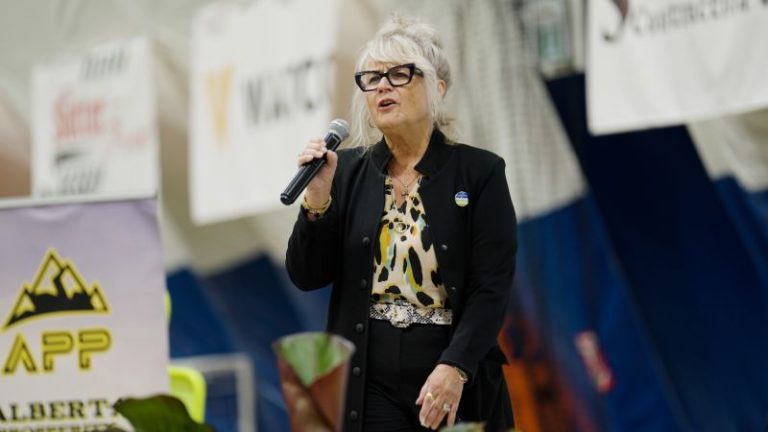
It’s a Monday night in June and hundreds have braved the haze of Canadian wildfires to gather in a cavernous sports facility in the city of Red Deer, Alberta.

An Alberta team, the Edmonton Oilers, are taking on the Florida Panthers in a National Hockey League finals game tonight. The atmosphere is heavy with anticipation.

But these people aren’t here for hockey. This is a rally for Alberta independence.

It might be hard to believe, given Canadian sports fans’ recent booing of “The Star Spangled Banner,” but not all Canadians took offense to US President Donald Trump’s questioning of their country’s sovereignty.

In oil-rich Alberta, where a movement for independence from Canada appears to be gathering steam, many see in Trump a powerful and important ally whose haranguing of their former Prime Minister Justin Trudeau was as welcome as his calls to “drill baby, drill.”

Though some see US statehood as a step too far, many in the Red Deer crowd believe the US president – as a fellow pro-oil conservative – would recognize a breakaway Alberta should a vote on independence go their way.

Donald Trump is not the savior of the world,” says Albert Talsma, a welding contractor from Bentley. “But right now he’s North America’s best asset.”

With their “Make Alberta Great Again” hats, “Alberta Republic” T-shirts and posters declaring “Albertans for Alberta!” it’s not hard to see parallels to the US president’s MAGA movement and the forces that inspired it.

Separatists here have long argued that Canada’s federal system fails to represent their interests; that the federal government’s efforts to stymie climate change are holding back Alberta’s lucrative oil industry (the largest in Canada); that they pay more than they get back through federal taxation; that their conservative values are drowned out by the more liberal eastern provinces.

“Alberta hasn’t been treated fairly since 1905, when we joined Confederation. They basically used the west as a colony, to take wealth from the west to support the east,” says Kate Graham, a singing grandmother from Calgary.

She opens the rally with a rendition of Janis Joplin’s “Mercedez Benz,” the lyrics modified to promote independence. Like Janis, she sings it a cappella, before spending much of the rest of the event at a booth by the door, selling merch emblazoned with the slogan “I AM ALBERTAN.”

Similar disenchantment is voiced by a steady stream of Albertans, each venting against their mother country on a stage flanked by a large provincial flag strung across a soccer goal.

“They want to stifle our (oil) industry,” says Mitch Sylvestre, a businessman from Bonnyville and one of the rally’s chief organizers, his hoarse voice echoing over the PA system.

“We have cancer. We have a problem,” says Sylvestre. “We have it large.”

Hopes for a vote in ‘one of God’s treasures’

In a strange twist, the push to get Alberta out of Canada has gained momentum just as much of the country has united in patriotism in the face of Trump’s tariffs and threats of annexation.

Soon after Prime Minister Mark Carney’s Liberals rode a wave of anti-Trump sentiment to win the 2025 federal election in April, the Alberta Legislature passed a law making it easier to organize a referendum on independence.

Under the new law, petitions for a province-wide vote now require just 177,000 signatures – down from 600,000 previously – and those signatures can be gathered over a period of four months rather than three. The province is home to nearly 5 million people, according to Statistics Canada, representing more than a tenth of the population of the entire country.

One of the most vocal advocates for a referendum is Jeffrey Rath, a lawyer and co-founder of the Alberta Prosperity Project (APP), which organized the Red Deer rally.

Rath, well over six feet tall in a cowboy hat and boots, has a ranch just outside of Calgary. He raises race horses there and follows the sport closely, especially the Kentucky Derby – where this year, he notes with a grin, “’Sovereignty’ beat ‘Journalism.’”

“If you wanna know what’s special about Alberta, just look around, right?” Rath says with a sweep of his hand.

The view from the rise above Rath’s horse pasture is superb: quaking aspen, white pine and green rolling hills.

“It’s one of God’s treasures on earth. And the people here are very distinct people that have a very distinct culture and that are interested in maintaining that culture.”

In Rath’s eyes, Trump’s attitude toward Canada is an opportunity. His group is counting on US government support in the event of success at the ballot box.

“Trump’s election has given us a lot of hope,” Rath says. “If anybody is going to have the guts to recognize an independent Alberta, (it) would be the Trump administration.”

Western alienation

Separatism is not new in Canada, but it’s only had real political power in the predominantly Francophone province of Quebec, which has numerous pro-independence parties and voted in two referendums on independence in the past 50 years, rejecting it by a 60/40 margin in 1980 and by around one percentage point in 1995.

In Alberta, enthusiasm for separation has waxed and waned for decades, fueled initially by “Western alienation” – resentment felt in western Canada against a federal system dominated by the more populous eastern provinces. More recently, the movement has attracted Albertans who were angered by federally mandated lockdowns during the Covid pandemic. Among them was Rath, who has in the past faced controversy for suggesting government officials should face murder and negligent homicide charges over what he claims are the ill-effects of the Covid vaccine.

A recent poll by the Angus Reid Institute found about a third of Albertans currently support independence, though that support does not break down equally throughout the population.

Some of the loudest critics of the idea come from Alberta’s indigenous communities, whose treaties with the Canadian crown are older than the province itself. Under pressure from that community, the government added a provision to the referendum bill that guarantees their treaty rights whatever the result.

While Smith’s party proposed the referendum bill, she says she is against separation herself, preferring to “get Alberta to exert its sovereignty within a united Canada.”

“We have had, from time to time, these kinds of initiatives flare up,” says Smith. “And they’re almost always in response to a federal government that’s out of control. But they have all subsided when the federal government got back in its own lane.”

“I think that it’s a notice to Ottawa that they’ve got to take this seriously,” Smith adds. “The question is, what can we do to address it?”

The 51st state?

One of the more explosive questions surrounding secession is whether an independent Alberta might join the United States.

In February, a billboard appeared along the highway between Calgary and Edmonton, with text urging onlookers to tell Premier Smith that Alberta ought to “Join the USA!” superimposed over a picture of her shaking hands with Trump.

“I don’t think Albertans are very keen to trade a bad relationship with Ottawa with a bad relationship with Washington,” Smith says when asked about the possibility.

But others, like construction worker Stephen Large of Czar, Alberta, feel it would be good to have the might of the US on their side – particularly if negotiations fail in the event of a “yes” vote for independence.

“The minute something happens here toward independence, our federal government is going to be furious,” says Large, who wears a red “Make Alberta Great Again” cap.

“They will pull out all the stops, military and police and whatever they can find to lock us down, lock us in.”

Large points to how former Prime Minister Trudeau briefly invoked the Emergencies Act when Canadian truckers blockaded downtown Ottawa to protest cross-border vaccine mandates in 2022.

The statute, which had never been used before, allowed Canadian law enforcement to take extraordinary measures to restore public order – including freezing the bank accounts of certain protesters and banning public assembly in parts of Ottawa. The law also allows the government to deploy troops within Canada to enforce the law, though Trudeau did not invoke that part of the provision in 2022.

“We’re gonna need some support from somewhere, and the only place on Earth that is worthy of their support is the United States military,” Large says.

A woman sitting in front of Large overhears him and turns around, nodding in agreement.

“I’m with him,” she says, introducing herself as Evelyn Ranger of Red Deer. “I’m not sure that Alberta or the western provinces, even together, can make it on their own. So, the States is still the better way to go, because you’ve got the military, you’ve got the trade and everything already set there.”

For his part, Rath refuses to consider whether the federal government might invoke the Emergencies Act or use other measures to put down his movement if it were to unilaterally declare Alberta independent in the event of a “yes” vote.

“We’ll cross that bridge when we come to it, but we don’t see that happening,” Rath says.

Asked if he would be up for an interview at that point, he grins.

“Yeah,” Rath replies, before letting out a laugh. “It might be from a jail cell.”

This post appeared first on cnn.com

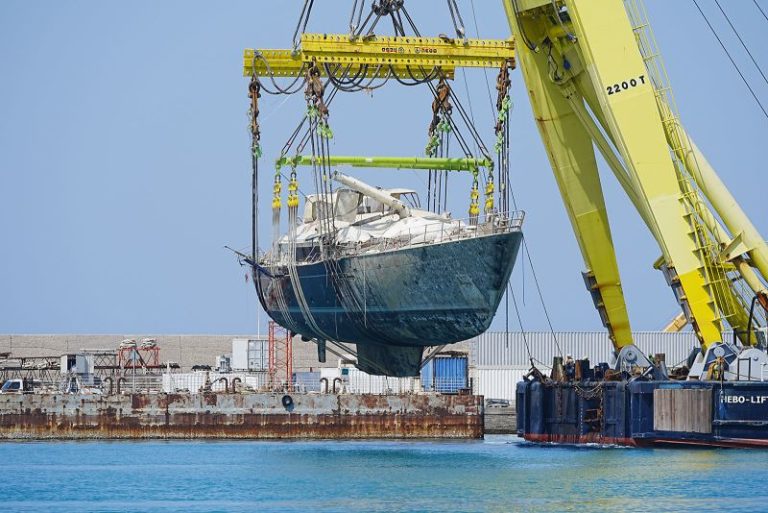
A British-flagged luxury superyacht that sank off Sicily last year, killing UK tech magnate Mike Lynch and six others, completed its final trip to the Sicilian port of Termini Imerese Sunday, a day after recovery crews finalized the complex operation to lift it out of the water.

The white top and blue hull of the 56-meter (184-foot) Bayesian, covered with algae and mud, was kept elevated by the yellow floating crane barge off the port of Porticello, before being transferred to Termini Imerese, where it docked in the early afternoon.

On Monday, the delicate recovery operation will be concluded, as the vessel will be transported to shore and settled in a specially built steel cradle.

Then it will be made available for investigators for further examinations to help determine the cause of the sinking.

The Bayesian sank Aug. 19 off Porticello, near Palermo, during a violent storm as Lynch was treating friends to a cruise to celebrate his acquittal two months earlier in the US on fraud charges. Lynch, his daughter and five others died. Fifteen people survived, including the captain and all crew members except the chef.

Italian authorities are conducting a full criminal investigation.

The vessel was slowly raised from the seabed 50 meters (165 feet) deep over three days to allow the steel lifting straps, slings and harnesses to be secured under the keel.

The Bayesian is missing its 72-meter (236-foot) mast, which was cut off and left on the seabed for future removal. The mast had to be detached to allow the hull to be brought to a nearly upright position that would allow the craft to be raised.

British investigators said in an interim report issued last month that the yacht was knocked over by “extreme wind” and couldn’t recover.

The report said the crew of the Bayesian had chosen the site where it sank as shelter from forecast thunderstorms. Wind speeds exceeded 70 knots (81 mph) at the time of the sinking and “violently” knocked the vessel over to a 90-degree angle in under 15 seconds.

This post appeared first on cnn.com

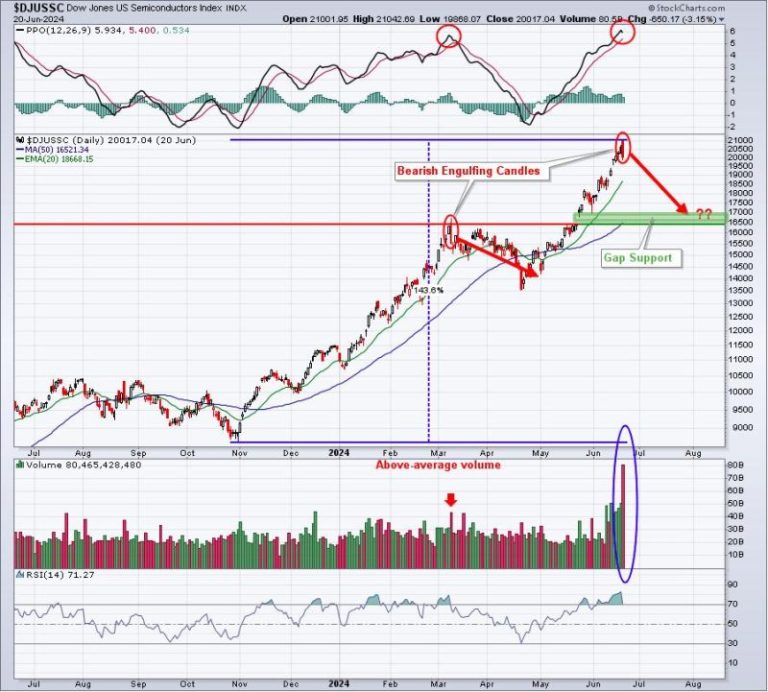
U.S. stocks are on the cusp of a very impressive breakout to all-time highs, but are still missing one key ingredient. They need help in the form of a semiconductors ($DJUSSC) breakout of its own. When the DJUSSC reached its all-time high on June 20, 2024, one year ago, a nasty bearish engulfing candle printed on extremely heavy volume, I wrote an article, “The Semiconductors Have Topped; Look Elsewhere for Opportunities”. Simply put, it was buyers’ exhaustion”. I looked for a 20% drop in the index, providing this chart at the time:

There’s now been a lengthy period of sideways consolidation on the semiconductors as you can see from this updated chart as that 20% drop immediately occurred:

Semiconductor leadership has been held firmly in check by the overhead price resistance just below 22000. Until that resistance is cleared, the QQQ has a lid on it.

Let’s keep in mind that the QQQ, an ETF that tracks the NASDAQ 100 index, can be broken down into its top 2 industry groups, as follows:

  • Semiconductors ($DJUSSC): 21.65%
  • Software ($DJUSSW): 19.11%

More than 40% of the QQQ is comprised of semiconductors and software. Here’s what the longer-term, 5-year software chart looks like:

Software’s relative strength is powerful and we’ve recently seen an absolute price breakout – an awesome combo. On a 5-year weekly chart of semis, it’s quite apparent that when the semiconductors break out, they carry the NASDAQ 100 on their shoulders higher and we’re close to a breakout now:

We just saw a relative strength breakout on the DJUSSC, there’s only one thing missing – that absolute breakout and it’s coming fairly soon, in my opinion.

Market Outlook

A big part of what happens over the next 6-12 months will be highly dependent on the two industry groups above. There are over 100 industry groups and this may be oversimplifying stocks a bit, but make no mistake about it. Higher growth prospects and lower interest rates can result in flying PE ratios and these two groups are home to companies that can expand their businesses very rapidly.

Market Manipulation

I’ve discussed the role of market makers and their manipulation of the stock market many times over the past several years and there’s no doubt in my mind we were just exposed to another massive dose of it in the first half of 2025. At EarningsBeats.com, however, we’ve become experts at spotting it and pointing it out. I discussed the importance of being in cash back in late January and in February before the massive Wall Street ripoff started and I also wrote about the importance of getting back in early. Remember my article in the second week of April, “The Bottom is Here or Rapidly Approaching”? These are real-time articles, folks. You need to see the tops and bottoms before they occur. It does little good to talk about it now. We don’t get a “do over.”

Or do we?

What do I mean by that? Well, we’ll have plenty more chances to spot tops and bottoms in the future, but you need to learn from this year’s mistakes RIGHT NOW. Don’t let these big-money, Wall Street crooks do it to you again. We have one MASSIVE advantage on our side vs. these big Wall Street firms. We can enter and exit stocks in seconds. It takes them days and weeks.

If you want to be better-positioned to see this nonsense AHEAD OF TIME the next time it comes around, I’d suggest that you join me on Saturday, June 28th at 10:00am ET for a 100% free event, “Trading The Truth: How Market Manipulation Creates Opportunity”. CLICK HERE to register and learn more about the event! This is a MUST-ATTEND event and seating is limited. Be sure to save your seat and learn how to protect your hard-earned money for the rest of your financial future!

Happy trading!

Tom

Gold was on the decline this week, closing just below US$3,370 per ounce, after tensions in the Middle East pushed it past the US$3,430 level toward the end of last week.

All eyes were on the US Federal Reserve, which in a widely expected move left interest rates unchanged on Wednesday (June 18) following its two day meeting. The central bank cut rates in December 2024, but has kept them steady for its last four gatherings.

US President Donald Trump wasn’t pleased, calling Powell ‘too late’ in a Thursday (June 19) post on Truth Social. While speculation that Trump will fire Powell has died down, the president did recently say he intends to announce his next pick for the Fed leader position ‘very soon.’

Of course, Fed meetings are never just about rate decisions — experts often look to Powell’s post-meeting commentary to read between the lines of what’s said (and not said).

Tariffs were definitely in focus this time around, with Powell emphasizing that it’s still soon to tell how much of an impact they will have and how the Fed should react.

‘We have to learn more about tariffs. I don’t know what the right way for us to react will be. I think it’s hard to know with any confidence how we should react until we see the size of the effects’ — Jerome Powell, US Federal Reserve

Chris Temple of the National Investor, who offered another perspective on Powell’s comments.

He noted that while Powell didn’t say the Fed is going to abandon its 2 percent inflation target, it may be leaning in that direction. This is what he said:

The consensus still — although it was extremely close — is barely still for two 25 basis point rate cuts in the balance of 2025. Whether we get them or not, who knows, (but) that’s the current snapshot, which may well change. But that’s against a backdrop of admitting for the second SEP, summary of economic projections … in a row that inflation is going to continue to move back higher — that we’ve seen the best numbers for inflation — at the same time that GDP slows a bit.

So okay, you just told us that your favored inflation number, which is a lot of smoke and mirrors to begin with, is going to go back up to north of 3 percent, which is what they said yesterday. And yet you still — the consensus is you’re going to lower interest rates twice in 2025? So he did everything but come right out and admit that the 2 percent inflation target isn’t going to be reached.

Stay tuned to our YouTube channel for the full interview with Temple.

Bullet briefing — Silver hits 13 year high, SPUT raising US$200 million

Is silver’s price rise real?

Gold has stolen the precious metals spotlight in 2025, but this month silver is shining.

The white metal has been on the rise since the beginning of June, and this week it broke the US$37 per ounce mark for the first time in 13 years.

While silver is known to lag behind gold before playing catch up, it’s also known for its volatility. Its move has created excitement, but market participants are also wary of a correction.

When asked what factors are driving silver, Peter Krauth of Silver Stock Investor he said he sees a ‘perfect storm’ emerging. Here’s how he explained it:

You’ve got the macroeconomic picture that is I think certainly bullish for silver, like it is for gold and a lot of the other commodities. But I think at the same time you’ve got the market kind of coming to terms with the fact that silver is in a deficit, (and) it’s unlikely to be able to rectify that deficit for several years — in fact, the Silver Institute thinks we’re going to see record deficits at some point over the next five years.

And silver supply is unable to grow. We saw a peak 10 years ago in mined silver, and overall silver supply is essentially flat.

So flat supply, growing demand — demand that’s nearly 20 percent above supply — and our ability to meet those deficits is shrinking because we’re tapping into these aboveground stockpiles that have shrunk by about 800 million ounces in the last four years, which is the equivalent of an entire year’s mine supply. So it’s the perfect storm, it’s really all coming together. And I think that the market’s realizing that.

But does that necessarily mean silver is ready for a big breakout? Krauth has a target of US$40 by the end of 2025, but said silver could potentially go 10 percent above that.

For his part, Jeffrey Christian of CPM Group attributes the silver price boost to increased demand from investors, especially when it comes to exchange-traded funds and wholesale products.

He’s projecting a bumpier path forward for the metal:

You also have — the last time I looked it was like 490 million ounces of open interest in the July Comex futures contract. And that’s two weeks from first delivery. So most of the people (who) have those shorts – those are hedges of their physical inventories. They keep those hedges in place, but they roll them forward. So they’ll be buying back their Julys and selling September futures to keep that hedge in place with the next active futures contract. That buying back of the Julys could push silver prices higher.

So if you really want to talk granular prices, we wouldn’t be surprised to see the price of silver fall to US$33, US$34 an ounce, and go up to US$40 an ounce and then back to US$33 an ounce over the next four weeks.

Click the links above to watch the interviews with Krauth and Christian.

SPUT raising US$200 million

The uranium spot price made moves this week after the Sprott Physical Uranium Trust (TSX:U.U,OTCQX:SRUUF) announced a US$100 million bought-deal financing on Monday (June 16).

It was bumped up to US$200 million the same day due to strong demand.

Spot uranium has been in a consolidation phase since hitting triple-digit levels in early 2024, creating frustration among those who are waiting for the industry’s strong long-term fundamentals to be better expressed. This week’s move past US$75 per pound has helped reinvigorate investors.

Securities Disclosure: I, Charlotte McLeod, hold no direct investment interest in any company mentioned in this article.

This post appeared first on investingnews.com

This week, Microsoft (NASDAQ:MSFT) and OpenAI’s once tight alliance showed signs of strain, while Meta Platforms (NASDAQ:META) continued to source artificial intelligence (AI) talent from rival companies.

Meanwhile, SoftBank’s (TSE:9434) CEO is considering a new chip and robotics venture in Arizona, and Google (NASDAQ:GOOGL) is looking to bring AI solutions to American cities.

Read on to dive deeper into this week’s top tech stories.

1. OpenAI and Microsoft partnership faces tension

Microsoft and OpenAI’s once-close partnership is reportedly entering a tense period of renegotiation as OpenAI restructures into a public-benefit company and seeks more autonomy.

According to sources for The Information, recent negotiations have centered on reducing Microsoft’s long-term revenue share in exchange for a 33 percent stake in the newly formed entity. Additionally, OpenAI would like to limit Microsoft’s access to future models such as Windsurf, which OpenAI acquired in May.

The company has competitive concerns with Microsoft’s GitHub Copilot, according to the people.

Tensions have risen enough that some OpenAI executives are even weighing antitrust action against Microsoft, according to sources for the Wall Street Journal. In a joint statement, both companies maintained they want to continue working together; however, the Financial Times reported on Wednesday (June 18) that if they can’t reach an agreement, Microsoft is prepared to walk away and rely on its existing contract with the startup, which extends until 2030.

2. SoftBank floats trillion-dollar robotics hub in Arizona

SoftBank is reportedly interested in a trillion-dollar infrastructure project and has reached out to Taiwan Semiconductor Manufacturing Company (NYSE:TSM) as a potential collaborative partner.

Sources for Bloomberg revealed on Friday (June 20) that SoftBank founder Masayoshi Son has approached the Taiwanese chipmaker to play a “prominent role” in a manufacturing park in Arizona codenamed “Project Crystal Land,” which may serve as a major production facility for AI-powered industrial robots.

The sources said SoftBank has also approached Samsung Electronics (KRX:005930) and other companies with the idea. SoftBank officials have reportedly engaged in discussions with federal and state government officials, including US Secretary of Commerce Howard Lutnick, to explore potential tax incentives for companies onshoring high-tech manufacturing.

In other semiconductor news, Texas Instruments (NASDAQ:TXN) said on Wednesday that it will spend more than US$60 billion building seven new semiconductor facilities across the US. Meanwhile, Amazon (NASDAQ:AMZN) announced over the weekend that it will invest AU$20 billion to expand data center infrastructure in Australia by 2029.

3. Intel reportedly planning sizeable layoffs

Intel (NASDAQ:INTC) is reportedly set to implement substantial layoffs, impacting 15 to 20 percent of its factory workforce, according to an internal memo distributed on Saturday (June 14) and obtained by the Oregonian.

This move comes amidst continuing efforts to overhaul a company lagging behind its peers.

For some time, Intel’s offerings have struggled to compete effectively against those of key rivals in the highly competitive market of AI products and chip divisions. In a concerted effort to address this gap and reinvigorate its innovation pipeline, Intel has also been actively recruiting top-tier engineering talent.

On Wednesday, Intel expanded its sales and engineering leadership team to include experienced professionals from Cadence Design Systems (NASDAQ:CDNS), Apple (NASDAQ:AAPL) and Google.

These strategic hires are intended to inject fresh perspectives and expertise into crucial engineering departments, directly contributing to the company’s ambitious plans to develop more competitive and advanced AI solutions.

4. Google partners with Conference of Mayors for city AI strategies

On Friday, Google announced that it has partnered with the US Conference of Mayors to help speed the adoption of city-wide AI strategies. With the announcement, the company released a playbook titled A Roadmap for America’s Mayor that provides a framework for city leaders to develop and host an “AI Adoption Workshop,’ which would be structured to help cities identify and explore how AI can support specific needs, drawing on experiences from other communities.

The roadmap suggests cities conduct a general survey to tailor workshop content by gathering information on current AI usage, as well as concerns and ideas for AI applications. Various approaches are suggested for drafting the strategy document, including a dedicated working group, an appointed lead drafter, a hybrid model or engaging external expertise, with a recommended deadline of four to six weeks post-workshop for the first draft.

5. Meta hires top AI talent

Sources for the Information indicated on Wednesday that Meta CEO Mark Zuckerberg is bringing Daniel Gross, CEO of Ilya Sutskever’s startup Safe Superintelligence, and former GitHub CEO Nat Friedman onboard.

According to the report, Gross and Friedman will both join Meta, with Gross leaving his startup to focus on AI products at Meta and Friedman taking on a broader role. Both are expected to work directly with Zuckerberg and Scale AI CEO Alexandr Wang, who signed a US$14.3 billion deal to join Meta last week.

In exchange, Meta will get a stake in NFDG, the venture capital firm co-owned by Gross and Friedman that has backed companies such as Coinbase Global (NASDAQ:COIN), Figma, CoreWeave (NASDAQ:CRWV), Perplexity and Character.ai.

On the most recent episode of his brother’s “Uncapped” podcast, OpenAI CEO Sam Altman said that Meta has also offered signing bonuses as high as US$100 million and large compensation packages to OpenAI employees.

Securities Disclosure: I, Meagen Seatter, hold no direct investment interest in any company mentioned in this article.

This post appeared first on investingnews.com

The bodies of an Israel Defense Forces (IDF) soldier and two civilians killed in the Hamas-led October 7 attacks have been recovered from Gaza in a military hostage recovery operation.

In a special operation carried out by the Israel Security Agency (ISA) and the IDF, the bodies of civilians, Ofra Keidar and Yonatan Samerano, and soldier Shay Levinson were recovered from the Gaza Strip on Saturday, the ISA and IDF said in a joint statement Sunday.

Ofra Keidar, from the kibbutz Be’eri community, was killed by Hamas militants on October 7, 2023. The 71-year-old’s body was taken to Gaza, where it had been held since. Keidar was a wife and mother of three. Her husband was also killed in Hamas’ attack.

“On that dark Saturday Ofra went, as usual, for a walk in the fields she loved – and never returned,” her kibbutz said in a statement.

“Ofra was one of the women leading Be’eri to be the flourished kibbutz it has become, and set an example for other women while showing strength and leadership skills. She left three children and seven grandchildren.”

Samerano, 21, from Tel Aviv, was killed by Hamas militants who took his body after fleeing the Nova music festival.

Levinson, a dual German-Israeli national and tank commander, was killed in combat on October 7, the joint ISA-IDF statement said. The 19-year-old’s body was then taken to Gaza.

The Hostages and Missing Families Forum said: “Alongside the grief and pain, the return of their bodies provides some comfort to the families who have waited in agony, uncertainty, and doubt for 625 days.”

The forum also called for the return of the remaining 50 hostages in Gaza to be a priority as Israel continues its conflict with Iran. “Particularly against the backdrop of current military developments and the significant achievements in Iran, we want to emphasize that bringing back the remaining 50 hostages is the key to achieving complete Israeli victory,” it said.

In a statement, Israeli Prime Minister Benjamin Netanyahu offered his “heartfelt condolences” to the families of Keidar, Samerano and Levinson and thanked Israeli soldiers for a “successful operation.”

This post appeared first on cnn.com

The US has struck three key nuclear sites in Iran, President Donald Trump said on Truth Social Saturday evening as the Iran-Israel conflict enters a second week.

The Fordow, Isfahan, and Natanz sites lie at the heart of Iran’s nuclear ambitions, and had previously been targeted by Israeli strikes. Here’s what we know about them.

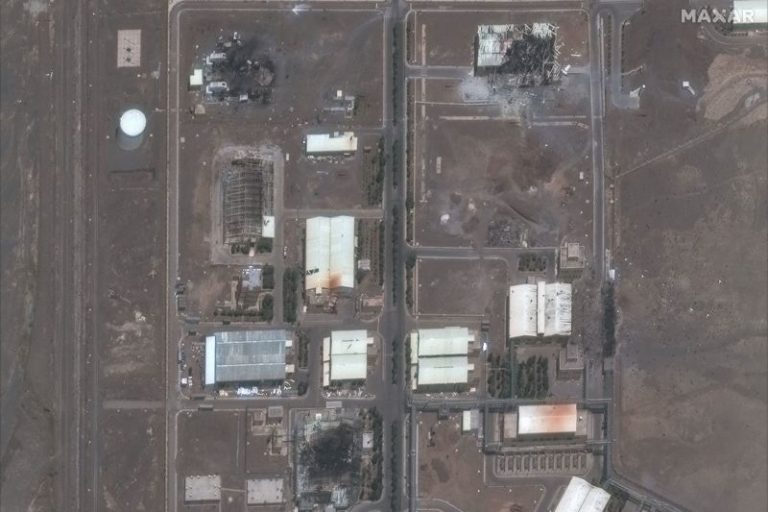
Natanz

The nuclear complex, about 250 kilometers (150 miles) south of the capital Tehran, is considered Iran’s largest uranium enrichment facility.

Analysts say it is used to develop and assemble centrifuges for uranium enrichment, a key technology that turns uranium into nuclear fuel.

Natanz has six above-ground buildings and three underground structures, two of which can hold 50,000 centrifuges, according to the non-profit Nuclear Threat Initiative (NTI).

The site was targeted in Israel’s initial attack on Iran, with satellite photos and analysis showing the strikes destroyed the above-ground part of Natanz’s Pilot Fuel Enrichment Plant.

That’s a sprawling site that has been operating since 2003, and where Iran had been enriching uranium up to 60% purity, according to the International Atomic Energy Agency (IAEA). Weapons-grade uranium is enriched to 90%.

Fordow

Much is still unknown about the full size and nature of this secretive, heavily-guarded facility, located close to the holy city of Qom and buried deep in a group of mountains. A good chunk of what we do know comes from a trove of Iranian documents stolen years ago by Israeli intelligence.

The main halls are an estimated 80 to 90 meters (around 262 to 295 feet) beneath the ground, making it very difficult to destroy the facility from air. The US is the only country with the kind of bomb required to strike that deep, Israeli officials and independent reports have previously said. However analysts have warned even those bombs might not be enough.

“Iran can convert its current stock of 60 percent enriched uranium into 233 kg of weapon-grade uranium in three weeks at the Fordow Fuel Enrichment Plant,” enough for nine nuclear weapons, according to the nonpartisan Institute for Science and International Security (ISIS).

Recent IAEA reports suggested Iran had ramped up production of enriched uranium to a level of 60% at Fordow. The facility now contains 2,700 centrifuges, according to experts and the IAEA.

Isfahan

Isfahan is in central Iran, and is home to the country’s largest nuclear research complex.

The facility was built with support from China and opened in 1984, according to the NTI. According to NTI, 3,000 scientists are employed at Isfahan, and the site is “suspected of being the center” of Iran’s nuclear program.

It “operates three small Chinese-supplied research reactors,” as well as a “conversion facility, a fuel production plant, a zirconium cladding plant, and other facilities and laboratories,” the NTI says.

This post appeared first on cnn.com

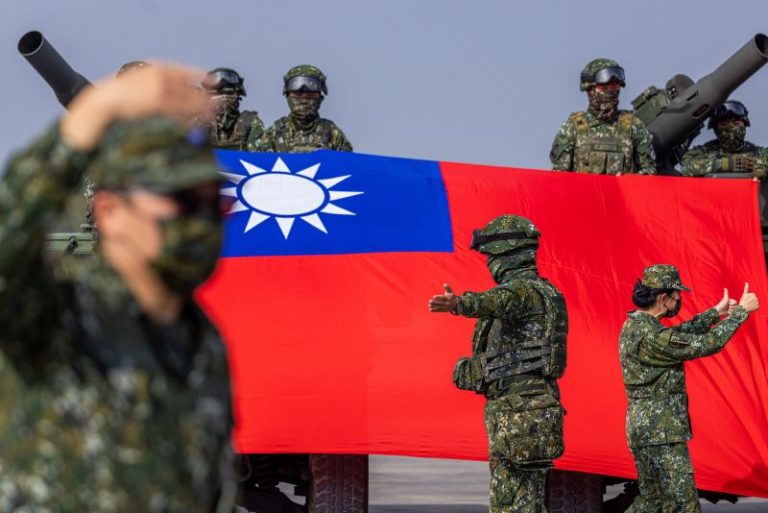
A draft-dodging scandal in Taiwan allegedly involving a number of actors, influencers, and musicians has cast an unflattering spotlight on the conscript and reservist forces which could one day stand between the island and a possible invasion by China.

Taiwan’s military service regime, which runs alongside its conventional military, faces accusations of failing to prepare conscripts for an actual war – an alarming situation against a drumbeat of threats from its giant neighbor.

On Monday, authorities indicted 28 defendants. Prosecutors allege that, between 2016 and early this year, a four-person ring helped 24 healthy men dodge the draft by faking high blood pressure to gain a medical exemption, netting a total of 7.63 million Taiwanese dollars ($255,000).

At least 11 celebrities are now under investigation.

Among those indicted was the actor Darren Wang. The 34-year-old, launched to fame across the Chinese-speaking world a decade ago as a boyish heartthrob in teen romcom Our Times, was accused of paying 3.6 million Taiwanese dollars ($120,000) for a fake hypertension diagnosis.

Such organized efforts to evade conscription are largely seen as a sign of people’s apathy towards service, rather than their fear of military rough-and-tumble.

“Most of the time during the service is dedicated to miscellaneous tasks, and not actually combat-related.”

A mundane duty

Back in 1949, as the Nationalist government lost a bloody civil war against the insurgent Chinese Communist Party and fled to Taiwan, it introduced mandatory military service to the island, where eligible men would serve two years in the army or three years in the navy, air force or marines. The system, in one form or another, has been in place ever since – as have Beijing’s designs on the island, which the Communist Party claims as its own territory, to be taken by force if necessary.

But military service has long been seen as anything but heroic. Conscripts have described it as monotonous, disorganized and often irrelevant to modern warfare: a combination of indoor lectures, hours of waiting around, and outdated ceremonial drills.

US officials, not authorized to speak openly, quietly warn that Taiwan’s reserve forces remain the soft underbelly of its defense posture.

One official said millions of former conscripts exist “on paper,” but years of truncated service and minimal refresher training have left them “underprepared for modern warfare.”

While there are no official estimates for the number of illegal draft-dodgers, a tally by the Ministry of the Interior shows that, from 2021 to 2023, cases of suspected obstruction of military service have risen from 309 to 553.

“It is imperative to reform military service as quickly as possible,” said Wu Tzu-li, an associate research fellow at the INDSR. “After all, the fight ultimately comes down to the people operating the weapons and not the weaponry itself, so having solid education and training is crucial.”

Attempts at reform

Even Taiwan’s leaders have acknowledged the problem. Shortly after taking office in 2016, former President Tsai Ing-wen called for sweeping reform, as opposed to “papering over problems, wasting human resources, and operating inefficiently in so many different ways.”

In response to growing security threats from Beijing, which conducted at least three large-scale military exercises around Taiwan last year, and sent warplanes, naval vessels and coast guards close to the island on a near-daily basis – Taiwan’s government has extended training time for conscripts and introduced reforms such as more live-fire drills and an emphasis on modern tactics. As of January 2024, the minimum active-duty period was increased to one full year, up from just four months under the previous policy.

The changes’ effectiveness remains to be seen. Critics say that unless Taiwan revamps how – and what – soldiers are taught, young men will continue to view the draft as symbolic rather than strategic.

“The key is what kinds of training will be provided to the new conscripts,” said Chieh. “It’s important to not let them feel they’ve wasted one year.”

Another US official added that “Taiwan is making good progress in enhancing the realism of training for reservists, but still has work to do in updating their equipment and reforming the organization of reserve units.”

“Retraining and equipping existing reservists to operate asymmetric platforms like drones and anti-air missiles will have an outsized impact on Taiwan’s ability to deter conflict.”

It added that the new, extended one-year training period “enables conscripts to undergo systematic and comprehensive military training, including enlistment, stationing, specialization, base training, and joint exercises – equipping them with essential combat skills and a firm resolve to defend the nation.”

Korean contrast

In nearby South Korea – another place marked by long-running hostility with its nearest neighbor – military service is taken a lot more seriously, and counting down the days until major celebrities will park their careers to don military fatigues has become something of a national pastime.

Rather than damaging reputations, military service is often seen as a sign of integrity and patriotism in major stars – an impression that can enhance their careers after taking off the uniform.

Earlier this month, K-pop superstars RM and V, from the band BTS, became the latest high-profile conscripts discharged from national service. They each saluted upon their release from duty in Chuncheon city, after about 18 months of active service, to the cheers of about 200 gathered fans – some of whom traveled from Mexico, Turkey and Brazil.

The other five members of the massively popular group either have completed or will complete the mandatory service, and the band expects to reunite within the next 12 months.

Even soccer superstar Son Heung-min, who avoided conscription through an exemption after winning gold at the 2018 Asian Games with South Korea’s national team, has taken four weeks of basic military training.

For Taiwan to restore faith in conscription, military analysts say, it will need to reduce loopholes, improve instruction, and modernize training to reflect real threats – particularly as tensions with Beijing intensify. It will also, they say, need a cultural shift: one that values service not as empty symbolism, but as preparation for a possible fight.

But it depends whether the recent reforms take root.

“The fear,” said one former conscript, “is that the new system will look just like the old one – only longer.”

This post appeared first on cnn.com
After the United States’ overnight strikes on Iran’s secretive nuclear program, the most important question is at least a “known unknown” – that is, what remains of it. The answer could define the region for decades to come, and be the ultimate arbiter of US President Donald Trump’s decision to embark on another conflict in the Middle East.

It is also an answer bedevilled by the elliptical and fickle nature of intelligence. On the one hand, public discussion of nuclear sites at Fordow, Natanz and Isfahan should have left Tehran unwilling to let all of its nuclear secrets reside there. (Iran has said its program is entirely peaceful, although the UN’s nuclear watchdog reported finding uranium particles enriched up to 83% – just short of weapons grade).

If, as Israel maintains, Iran’s nuclear program has a hidden element, then surely that would not be housed in the same places where UN inspectors roam, and in the case of Fordow, over which there has been a public discussion for days of what American bombs might penetrate its deep caverns.

The raw materials needed for a nuclear bomb can be small: 20 kilograms of highly enriched uranium would suffice. The ingredients for several devices would fit into a minivan. This could be hidden anywhere in Iran. The technology needed to create a weapon is fiddlier, and requires human expertise, which Israel has been decimating over both the past 10 days, with strikes targeting key personnel, and also picking off more persistently over the past 10 years.

It is hard to imagine Iran suddenly being able to make this leap while under the intense bombardment of Israel’s air force, now with the open involvement of the US and its vast surveillance machinery too.

But this is an unknown, and Israel cannot have it both ways. If you insist Iran’s program is advanced and secretive, then there is also the risk something is happening that you are unaware of. Could Iran have assembled all the elements it needs, or even an atomic bomb, at another site, and just be waiting? Only time will tell.

The counterargument is also persuasive. Israel has been able to kill Iran’s nuclear scientists and military command as they slept in their homes – specific rooms in apartment blocks hit in the first wave of strikes on June 13. This suggests the wide and impressive penetration of vast parts of Tehran’s command structure and its most guarded secrets. No operation is perfect; it is possible Washington and Tel Aviv combined knew a lot.

It was not just the mountain fortress of Fordow that was struck, either. It is likely, as the dust clears and satellite images provide greater clarity in the battle damage assessment, that we will learn of targets being hit that we did not know about a week ago. For the opponents of Iran’s nuclear ambitions – just about everybody bar a handful of Iranian hardliners – that should provide some comfort.

But it is likely the Saturday night strikes did not take out everything – not every expert, or every piece of fissile material. The struggle will now be to chase what is left – to pursue the survivors and look for opportunities if panicked elements of the nuclear project make mistakes as they scatter or pick through the rubble.

What will remain will likely be the parts of Iran’s program which were unknown, if there are any. Tehran may decide that it would be better to reveal or progress this greatest secret only once the threat of Israeli strikes recedes. Does it make sense to rush it out now, at the height of surveillance and bombardment?

Diplomacy may – as Trump has suggested with his overnight post on Truth Social that “NOW IS THE TIME FOR PEACE!” – now re-emerge. But the face of it has changed entirely compared to a week ago. Iranian officials had hinted to the media it might be willing to give up enrichment during talks in the past week. The demands placed upon it may now center on its ballistic missile program, which US hawks have long demanded be dismantled. That is happening, it seems, at a fast rate already, through its intense use of missiles to target Israel, and as a result of Israeli strikes that claim to have taken out the majority of its launchers.

The fact that Iran’s wish list for negotiations is now significantly altered – as much of what it’s hoped to keep has been destroyed or used – reveals the challenge of this moment to Supreme Leader Ayatollah Ali Khamenei. His skies are owned by a hostile air force, his nuclear program heavily damaged, and his military infrastructure and command shattered, constantly having to adapt and replace to survive. This limits his immediate, favorable options for a response. Flat-out strikes against US bases will simply augur a violent US retaliation, and may, after this much telegraphing, prove ineffective.

Iran has generally turned to asymmetrical responses, to compensate for its smaller budgets and capabilities. We may see this in the capital cities of Europe and in the Strait of Hormuz in the coming days. It needs to both display some sort of deterrent but also de-escalate, in order to survive.

But Iran’s capacity to see the longer-view, and its strategic patience, will work in its favor. There are no real electoral cycles to beset the Ayatollah’s decision-making. The Iranians have time to regroup, and respond when the heat is lower.

The United States, however, has a poor track record of success and application in the region. Last night, it gained the dubious distinction of having bombed a full cartographical sweep of nations from Syria through to Afghanistan in just 20 years. But it failed to dislodge the Assad regime of Syria, and despite years of trying were observers when last year’s sweeping changes removed one of Iran’s main regional proxies. And its longest war, in Afghanistan, ended in stark humiliation. Iraq, too, began with disputed information about weapons of mass destruction, and ended in failure after years of destruction and loss.

Iran is not Iraq and last night was not March 20, 2003, when America’s ill-fated invasion of that country began. There is no ground element to Trump’s ambition in Iran, and its goal was something widely supported by allies, and possibly within reach. But the US’ questionable track record and the hubristic atmosphere around Trump’s overwhelming use of force, should amplify alarm in the region over the unknowns to come.

This post appeared first on cnn.com