Apple has plans to make a folding iPhone starting next year, reliable analyst Ming-Chi Kuo said on Wednesday.
Kuo said Apple’s folding phone could have a display made by Samsung Display, which is planning to produce as many as eight million foldable panels for the device next year. However, other components haven’t been finalized, including the device’s hinge, Kuo wrote. He expects it to have “premium pricing.”
Kuo is an analyst for TF International Securities, and focuses on the Asian electronics supply chain and often discusses Apple products before they’re launched.
He wrote in a post on social media site X that Apple’s plans for the foldable iPhone aren’t locked in yet and are subject to change. Apple did not respond to CNBC’s request for comment.
Apple’s iPhone makes up over half of Apple’s business and remains an incredibly profitable product, accounting for $201 billion in sales in the company’s fiscal 2024. But iPhone revenue peaked in 2022, and Apple is constantly looking for ways to attract new customers and convince its current customers to upgrade to more expensive devices.
Several of Apple’s rivals, including Huawei and Samsung, have been releasing folding smartphones since 2019.
The devices promise the screen size of a tablet in a format that can be stored in pants pockets. But folding phones still have hardware issues, including creases in the display where it is folded.
Folding phones also have yet to prove they drive significant demand after the novelty wears off.
Research firm TrendForce said last year that only 1.5% of all smartphones sold can fold. Counterpoint, another research firm tracking smartphone sales, said earlier this year that the folding market only grew about 3% in 2024 and is expected to shrink in 2025.
A meticulously planned meal prepared in the home of an alleged killer is at the heart of a triple murder trial that’s nearing its dramatic conclusion in rural Australia.
For eight weeks, audiences have been glued to daily news reports and podcasts on an unusual case that alleges the world’s most toxic mushroom was used to kill.
A jury will soon decide if Erin Patterson, a 50-year-old mother of two, deliberately added death cap, or amanita phalloides, mushrooms to a Beef Wellington lunch she made for her estranged husband’s parents and his aunt and uncle in July 2023.
Three guests died within days of the meal, while a fourth recovered after spending several weeks in an induced coma. Patterson denies three counts of murder and one of attempted murder.
The prosecution and defense agree death cap mushrooms were in the meal.
The question is, how did they get there?
During eight days of testimony at Latrobe Valley Magistrates’ Court, Patterson acknowledged she repeatedly lied to police, dumped a dehydrator used to dry mushrooms, and reset her phone to delete images of mushrooms and the dehydrator from devices seized by investigators.
But she said she did not intend to kill.
Explaining her lies, Patterson told the jury she had a “stupid knee-jerk reaction to just dig deeper and keep lying.”
“I was just scared,” she said.
Defense lawyer Colin Mandy SC said Patterson accidentally added foraged mushrooms to the meal, along with ones she bought from an Asian grocer in Melbourne.
“What happened was a tragedy and a terrible accident,” he said.
In his closing arguments, Mandy said the prosecution’s case was based on “ridiculous” propositions, including that Patterson “would intend to kill these four people, blowing her entire life up in the process without a motive.”
The prosecution doesn’t need to prove a motive. But it does need to convince the 12-member jury beyond reasonable doubt that Patterson intended to kill the two elderly couples – including her children’s grandparents – and that she deliberately picked death cap mushrooms to do it.
A sumptuous lunch of Beef Wellington
On the morning of July 29, 2023, the smell of frying garlic and shallots likely filled Patterson’s kitchen in the small town of Leongatha in rural Victoria.
She was preparing a meal for two older married couples – Don and Gail Patterson and Heather and Ian Wilkinson.
Don and Gail were the parents of Erin’s estranged husband Simon. Heather and Ian were his aunt and uncle. Gail and Heather were sisters, and Ian the pastor of their local church.
The two couples lived close by in Korumburra, a country town home to fewer than 5,000 people in the scenic hills of southern Victoria.
Erin had asked Simon to come to the lunch, too, but he pulled out the night before, writing in a text that he felt “too uncomfortable” to attend.
Their relationship had become increasingly strained over finances and the children’s schooling, and he was living elsewhere, the court heard.
Erin told the jury she was “a bit hurt and a bit stressed” by Simon’s message, but the lunch went ahead the next day as planned. Patterson said she had started feeling left out of family gatherings and wanted to make more of an effort.
She said she chose to cook Beef Wellington because she remembered her mother preparing the meal for special occasions. It was Patterson’s first attempt at the dish, and she wanted to get it right.
To the garlic and shallots, she added store-bought button mushrooms that she had chopped up in a processor, before simmering the mixture on low for 45 minutes, she said.
The paste was used to coat the steaks, which she wrapped in pastry and baked in the oven.
The prosecution alleges she prepared poisoned parcels for her guests and reserved an untainted one for herself. Patterson insists she made just one batch.
An unexpected invitation
In the witness box, Ian Wilkinson, the only surviving lunch guest, told the court he’d been surprised but “very happy” to accept Patterson’s lunch invitation.
The 71-year-old said his relationship with Erin was “friendly” and “amicable.” He’d been a guest at her wedding in 2007 but considered her more of an acquaintance than a close friend.
During the Covid-19 pandemic, Patterson helped to broadcast his church services on YouTube, and she attended his sermons, on and off, he said.
“She just seemed like an ordinary person,” he told the jury.
Wilkinson said he didn’t really understand why they’d been invited to lunch, but it became apparent when they’d finished eating the meal of Beef Wellington, beans and mash.
“Erin announced that she had cancer,” Wilkinson told the jury. “She said that she was very concerned because she believed it was very serious, life-threatening.”
Wilkinson said Patterson asked for advice about how to tell her children about, in her words, “the threat to my life.”
Wilkinson said Don Patterson offered some advice about being honest, but the conversation ended after about 10 minutes when one of the lunch guests noticed the children returning. Wilkinson suggested a quick prayer.
“I prayed a prayer asking God’s blessing on Erin, that she would get the treatment that she needed, that the kids would be okay, that she’d have wisdom in how she told the kids,” he testified.
Patterson had never been diagnosed with cancer, the court heard.
Prosecutor Nanette Rogers SC put to Patterson on the stand: “I suggest that you never thought you would have to account for this lie about having cancer because you thought that the lunch guests would die.”
“That’s not true,” Patterson replied.
Patterson said she didn’t explicitly tell her guests that she had cancer, but acknowledged she allowed them to believe she may have a serious medical issue because she was exploring possible surgery for another problem – one that she was too embarrassed to reveal.
The secret Patterson hid for years
Patterson said she’d always been self-conscious about her weight.
As a child, her mother weighed her every week to make sure she wasn’t getting too heavy. “I never had a good relationship with food,” she said.
Since her 20s, Patterson said she would binge and purge. Around the time of the fatal lunch in July 2023, she said she was doing it two to three times a week, maybe more.
“Who knew about it?” her defense lawyer Mandy asked Patterson. “Nobody,” she said.
Patterson told the jury she had resolved to do something about her weight “once and for all,” and booked a consultation for potential gastric bypass surgery with a clinic in Melbourne in September. Evidence showed an appointment had been made.
“I didn’t want to tell anybody what I was going to have done,” Patterson told the court. “I was really embarrassed about it, so I thought perhaps letting (her in-laws) believe I had some serious issue that needed treatment might mean they’d be able to help me with the logistics around the kids,” she said.
Instead, it was her lunch guests who needed serious medical attention.
Hours after the meal Saturday, they started to become ill and went to hospital the next morning with vomiting and diarrhea, the court heard.
By Monday morning, their condition had deteriorated, and doctors arranged for their transfer to Austin Hospital, a larger facility that provides specialist liver care.
Death cap mushrooms contain toxins that stop the production of protein in liver cells and the cells begin to die, leading to possible liver failure and death.
Treatments are available, but none are 100% effective, said Dr Stephen Warrillow, director of Austin Health’s intensive care unit.
“Once the amanita poison is within the body, unfortunately the body tends to recycle it internally,” said Warrillow, who treated all four lunch guests.
Gail Patterson, 70, and Heather Wilkinson, 66, were considered too weak for a liver transplant and died on August 4 from multiple organ failure, he said. Don Patterson, 70, received a transplant but died on August 5.
Ian Wilkinson was in an induced coma on life support but responded to treatment and was eventually discharged in September.
“We thought he was going to die,” said Warrillow. “He was very close.”
Foraged mushrooms
Patterson told the court she took up foraging for mushrooms in early 2020, during the Covid-19 pandemic, when she would take long walks with her children in the countryside.
Native to Europe, death cap mushrooms arrived in Australia by accident, expert mycologist Tom May told the court. They grow near oak trees and only appear above ground for a couple of weeks before decaying, he said.
Most sightings in Victoria are in April and May, and some people upload photos of them to the citizen science website iNaturalist, May added.
Christine McKenzie, a retired former poisons information specialist at the Victorian Poisons Information Centre, told the court she spotted death cap mushrooms in Loch – about 28 kilometers (17 miles) from Patterson’s home – and uploaded them to iNaturalist on April 18, 2023.
She’d been out walking with her husband, grandson and dog, and said she disposed of the mushrooms to avoid accidental poisoning but conceded that more could grow.
Citing analysis of cellphone tower connections, the prosecution alleges it’s possible Patterson saw McKenzie’s post and went to the same location on April 28 to pick the mushrooms.
Store records show that within two hours of the alleged visit, Patterson bought a dehydrator, which the prosecution said she used to dry the toxic mushrooms.
Patterson concedes she bought the dehydrator, saying there is a “very small season” of availability for wild mushrooms and she wanted to preserve them, and “a whole range of things.” She denied foraging for mushrooms in Loch.
May, the fungus expert, said that on May 21, 2023, he saw death cap mushrooms growing in Outtrim, about 19 kilometers (11 miles) from Leongatha, and posted the sighting to iNaturalist.
“I don’t think I typed the street name in, but I put a very precise latitude-longitude geocode with the observation,” he said.
Prosecutors said analysis of Patterson’s cellphone movements placed her in the Outtrim region on May 22, when they say it’s possible Patterson picked the mushrooms.
The defense said broader analysis of her phone records suggests it’s possible her cellphone picked up different base-station signals within her own home. “These records are consistent with the accused never leaving the house,” said Mandy.
Patterson denied ever foraging for mushrooms in Outtrim, and said she couldn’t remember ever visiting the iNaturalist website and did not see the reported sightings.
Patterson’s explanation
On August 1, three days after the lunch, Patterson was in hospital, having been convinced by doctors to stay after earlier discharging herself against their advice.
They had impressed on her the importance of being treated for death cap mushroom poisoning because symptoms are known to worsen with time.
Her children should be there too, they said, because she said they had eaten some of the leftovers on Sunday night, albeit with the mushrooms and pastry scraped off.
It was in hospital on August 1 that Patterson said she had a conversation with Simon, her estranged husband, that made her start thinking about how toxic mushrooms had come to be in the meal.
Patterson said she told Simon that she had dried mushrooms in a dehydrator, and he replied: “Is that how you poisoned my parents, using that dehydrator?”
Erin Patterson told the jury that Simon’s comment had caused her to do “a lot of thinking about a lot of things.”
“It got me thinking about all the times that I’d used (the dehydrator), and how I had dried foraged mushrooms in it weeks earlier, and I was starting to think, what if they’d gone in the container with the Chinese mushrooms? Maybe, maybe that had happened.”
In his evidence, Simon Patterson denied ever suggesting to Erin that she poisoned his parents with the dehydrator. “I did not say that to Erin,” he said.
The next day, on August 2, Patterson dropped her children at school, then returned home, retrieved the dehydrator, and dumped it at a waste and recycling center. She was seen on closed-circuit television.
Asked about her actions, Patterson said child protection officers were due to visit her house that afternoon, and she was “scared” about having a conversation about the meal and the dehydrator.
“I was scared that they would blame me for it … for making everyone sick,” she said. “I was scared they’d remove the children,” she added.
Analysis showed remnants of death cap mushrooms in the dehydrator, the prosecution said.
Patterson acknowledged that when she dumped the dehydrator, she knew that doctors suspected death cap mushroom poisoning. She also accepted that she did not tell medical staff that foraged mushrooms may have been in the meal.
Patterson said she had diarrhea after the lunch but brushed it off as a bout of gastro. She was not as ill as her lunch guests – and during her testimony, she offered a reason why.
The orange cake
Gail Patterson had brought an orange cake to lunch to share, and Erin Patterson testified that after the guests left, she found herself eating slice, after slice, after slice.
After consuming about two-thirds of the cake, she made herself throw up, she told the court.
In her closing address, prosecutor Rogers said no evidence was offered suggesting expelling tainted food can lessen the impact of amanita toxin.
To the jury, she said, “we suggest (you) reject her evidence about vomiting after the meal as a lie.”
In his closing argument, defense lawyer Mandy asked why, if it was a lie, Patterson hadn’t been more precise about when she vomited? “She surely would have said to you that it happened as soon as the guests left, because the earlier the better,” he said to the jury.
During her testimony, Patterson also offered an explanation about how the death cap mushrooms came to be in the meal.
Patterson said she dried store-bought and foraged mushrooms in her dehydrator and would store them in plastic containers in the pantry. If one box was full, she’d start another, she said.
Patterson said that, back in April, she had bought dried mushrooms from an Asian grocer in Melbourne, but didn’t use them at the time because they were “too pungent.” Instead, she stored them in a plastic container in the pantry.
Mandy asked her: “Do you have a memory of putting wild mushrooms that you dehydrated in May or June of 2023 into a container which already contained other dried mushrooms?”
“Yes, I did do that,” Patterson said.
Patterson said that, on July 29, as she cooked the lunch, she tasted the mixture of garlic, shallots and mushrooms and decided it was “a little bland,” so she added dried mushrooms that had been stored in a plastic container in her pantry.
Mandy asked her what she had believed to be in the plastic container in the pantry.
“I believed it was just the mushrooms that I bought in Melbourne,” Patterson said.
“And now, what do you think might have been in that tub?” Mandy asked.
“Now I think that there was a possibility that there were foraged ones in there as well,” she said.
Closing arguments
The Crown contends there was no Asian grocer and that Patterson faked illness after the meal to suggest that she, too, had suffered symptoms of death cap mushroom poisoning.
Rogers alleged Patterson initially left hospital because she knew that neither she, nor her children, had consumed the poisoned lunch.
When Patterson was examined on Monday, July 31, a doctor found “no clinical or biochemical evidence of amanita poisoning or any other toxicological substance” in her system, Rogers said.
“By that stage, all four of the lunch guests were in induced comas,” she added.
Of allegations Patterson faked her illness following the lunch, Mandy said it made no sense that she’d refuse medical help and discharge herself from hospital early, if she was pretending to have eaten poisoned mushrooms.
“If you’re pretending to be sick, you’re going to be saying to the medical staff, ‘Hook me up, pump me full of drugs, I am very, very sick. Please,’” Mandy said.
Furthermore, he said it was possible to have milder symptoms of amanita poisoning, depending on how much was consumed, according to expert evidence that said weight and age were also factors.
Under cross-examination, Rogers put it to Patterson that she had two faces: A public one where she appeared to have a good relationship with her in-laws, and a private one expressed in her Facebook chat groups, where she vented to friends that she’d had enough of the family.
In messages to Facebook friends read out in court, Patterson expressed her frustration that her in-laws would not get involved in her dispute with Simon over child support.
“I’m sick of this shit I want nothing to do with them,” she wrote in December 2022. “I thought his parents would want him to do the right thing but it seems their concern about not wanting to feel uncomfortable and not wanting to get involved in their sons personal matters are overriding that so f*** em.”
And another message read: “This family I swear to f***ing god.”
Asked by her defense counsel Mandy how she felt about that statement now, an emotional Patterson said: “I wish I’d never said it … I feel ashamed for saying it, and I wish the family didn’t have to hear that I said that.
“They didn’t deserve it.”
In his closing arguments, Mandy characterized the terse exchanges as signs of a “brief spat” that was “resolved amicably.”
Mandy said there was no motive for triple murder, and that there were in fact several reasons why Patterson would not want to kill her guests. She had no money issues, lived in a big house, and had almost full-time custody of her two young children, who were very close to their grandparents, he said.
The defense argues that Patterson unknowingly picked death cap mushrooms, dried them in her dehydrator and stored them in the pantry, until the day she inadvertently threw them into the pan.
Mandy said some of the “ridiculous” propositions included that Patterson planned to kill four lunch guests and “thought it would all be passed off as some kind of strange case of gastro, where everyone died, except her.”
To the prosecution’s allegation that Patterson had “blitzed” the death cap mushrooms into a powder to hide them in the meal, he said: “Why would you need to hide mushrooms in a mushroom paste? It doesn’t make any sense.”
The moment in hospital when Erin said Simon asked her if she had used the dehydrator to poison his parents was “when the wheels start turning,” Mandy said.
“She starts panicking and she starts lying from that point,” he said.
“What followed from this moment were actions taken to conceal … the fact that foraged mushrooms went into the meal because she feared if that was found out, she would be held responsible.”
However, Rogers said Patterson had complete control over events and used it to “devastating effect.”
The cook had “told too many lies,” said Rogers, as she urged the jury to reject Patterson’s claims that she didn’t know the meal was laced with toxins.
“We say there is no reasonable alternative explanation for what happened to the lunch guests, other than the accused deliberately sourced death cap mushrooms and deliberately included them in the meal she served them, with an intention to kill them,” Rogers said.
The jury is expected to retire to consider their verdict this week – their decision must be unanimous.
Pope Leo XIV has saidthe Catholic Church must establish a culture that refuses to tolerate abuse in “any form,” as he thanked a Peruvian journalist for reporting on allegations of abuse inside a powerful Catholic group.
Leo’s remarks, the first he has made publicly on the church’s abuse scandals since his election to the papacy on May 8, were contained in a message sent for the performance of a play which dramatizes the work of an investigative journalist, Paola Ugaz, who has faced a long campaign of legal actions and death threats due to her reporting.
“It is urgent to ingrain throughout the Church a culture of prevention that does not tolerate any form of abuse — neither of power or authority, nor of conscience or spirituality, nor sexual,” Leo wrote in a message read on 20 June. “This culture will only be authentic if it is born of active vigilance, transparent processes, and sincere listening to those who have been hurt.”
The pope said the work of journalism was essential to implementing that culture of prevention, as he praised Ugaz and other Peruvian journalists for their reporting on abuse scandals inside the Sodalitium Christianae Vitae (Sodality of Christian Life, or SCV), a hugely influential Catholic society which had deep ties to Peru’s powerful and wealthy.
Pope Leo, who spent years working as a missionary and bishop in Peru, came face-to-face with the SCV case when working in the country with Ugaz, and several survivors have said he was crucial in ensuring action was taken against the now dissolved group.
In his message, the first American pope said it was vital the church followed “a concrete path of humility, truth, and reparation” when it came to tackling abuses and cited a landmark 2018 letter from Pope Francis, in which he pledged the church’s “commitment to guarantee the protection of minors and vulnerable adults”. Leo insisted that the response to abuse cannot simply be a “strategy” but requires a “conversion” by the church, which for decades has been grappling with devastating revelations of sexual abuse by priests and other church leaders.
The pope’s praise of journalists’ work in exposing abuse scandals is significant, given that some bishops have in the past criticized the media for its reporting on them. Leo XIV, however, said the journalists who had reported on the Sodalitium had done so with “courage, patience, and fidelity to the truth” and had faced “unjust attacks.”
The pope said the church recognized the “wound” in “so many children, young people, and adults who were betrayed where they sought solace” and “those who risked their freedom and their (good) names so that the truth would not be buried.”
The June 20 message from Leo was read at a performance in Lima, Peru, of the play “Proyecto Ugaz” (Project Ugaz), which highlights Ugaz’s years-long investigation into the Sodalitium. Monsignor Jordi Bertomeu, one of the Vatican investigators into the Sodalitium group, read out the message with Ugaz on stage alongside him.
The work of journalists is vital, Leo insisted, in ensuring the church is a place where “no one suffers in silence” and where “the truth is not seen as a threat, but as a path to liberation. He praised Ugaz and fellow journalists for their courage in exposing the abuses.
Pope Leo also referenced “tensions” in Peru, which have been heightened following the removal of President Pedro Castillo in 2022, and he underlined the importance of a free media in a country where journalists have faced intimidation and attacks.
“In this time of profound institutional and social tensions, defending free and ethical journalism is not only an act of justice, but a duty of all those who yearn for a solid and participatory democracy,” he said. “Wherever a journalist is silenced, the democratic soul of a country is weakened. Freedom of the press is an inalienable common good. Those who conscientiously exercise this vocation cannot see their voices silenced by petty interests or fear of the truth.”
A few days after his election, the pope met media representatives in the Vatican and during that gathering he stressed his support for a free press and called for the release of imprisoned journalists. Ugaz was among those present at the meeting, and after his speech she greeted Leo with a broad smile, as she handed him a box of chocolates and a Peruvian scarf.
That meeting with the media, Leo explained in his message on June 20, affirmed the “sacred mission” of journalists to “become bridges between the facts and the conscience of the people.”
Tesla has inked its first deal to build a grid-scale battery power plant in China amid a strained trading relationship between Beijing and Washington.
The U.S. company posted on the Chinese social media service Weibo that the project would be the largest of its kind in China when completed.
Utility-scale battery energy storage systems help electricity grids keep supply and demand in balance. They are increasingly needed to bridge the supply-demand mismatch caused by intermittent energy sources such as solar and wind.
Chinese media outlet Yicai first reported that the deal, worth 4 billion yuan ($556 million), had been signed by Tesla, the local government of Shanghai and financing firm China Kangfu International Leasing, according to the Reuters news agency.
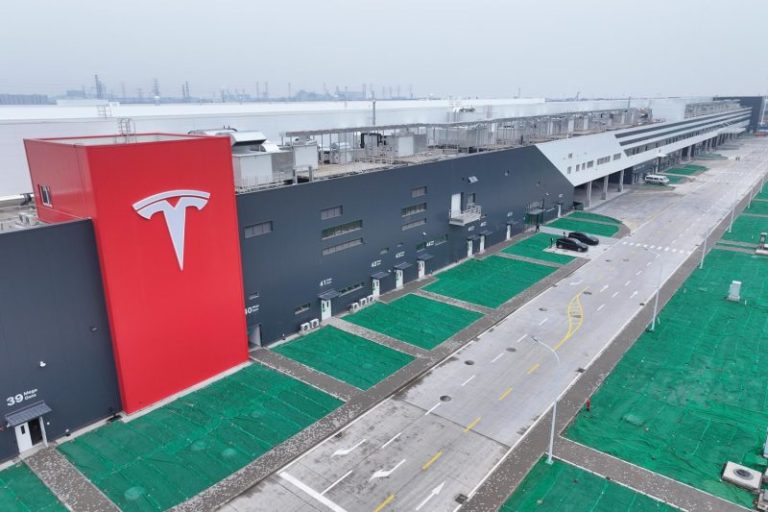
Tesla said its battery factory in Shanghai had produced more than 100 Megapacks — the battery designed for utility-scale deployment — in the first quarter of this year. One Megapack can provide up to 1 megawatt of power for four hours.
“The grid-side energy storage power station is a ‘smart regulator’ for urban electricity, which can flexibly adjust grid resources,” Tesla said on Weibo, according to a Google translation.
This would “effectively solve the pressure of urban power supply and ensure the safe, stable and efficient electricity demand of the city,” it added. “After completion, this project is expected to become the largest grid-side energy storage project in China.”
According to the company’s website, each Megapack retails for just under $1 million in the U.S. Pricing for China was unavailable.
The deal is significant for Tesla, as China’s CATL and carmaker BYD compete with similar products. The two Chinese companies have made significant inroads in battery development and manufacturing, with the former holding about 40% of the global market share.
CATL was also expected to supply battery cells and packs that are used in Tesla’s Megapacks, according to a Reuters news source.
Tesla’s deal with a Chinese local authority is also significant as it comes after U.S. President Donald Trump slapped tariffs on imports from China, straining the geopolitical relationship between the world’s two largest economies.
Tesla Chief Executive Elon Musk was also a close ally of President Trump during the initial stages of the trade war, further complicating the business outlook for U.S. automakers in China.
The demand for grid-scale battery installation, however, is significant in China. In May last year, Beijing set a new target to add nearly 5 gigawatts of battery-powered electricity supply by the end of 2025, bringing the total capacity to 40 gigawatts.
Tesla has also been exporting its Megapacks to Europe and Asia from its Shanghai plant to meet global demand.
Capacity for global battery energy storage systems rose 42 gigawatts in 2023, nearly doubling the total increase in capacity observed in the previous year, according to the International Energy Agency.
Crude oil futures rose more than 1% on Thursday, after Prime Minister Benjamin Netanyahu ordered Israel’s military to intensify attacks against Iran.
U.S. crude oil was last up $1.36, or 1.81%, to $76.50 per barrel by 9:38 a.m. ET, while global benchmark Brent added $1.10, or 1.43%, to $77.80 per barrel. Prices have gained more than 11% over the seven days since Israel began pounding Iran’s nuclear and missile programs.
Follow along for live coverage
Netanyahu ordered Israel’s military to intensify attacks on “strategic targets” in Iran and “government targets” in the country’s capital, Tehran, Israel Defense Minister Israel Katz said in a social media post. The goal of the strikes is to “undermine the ayatollah’s regime,” Katz said.
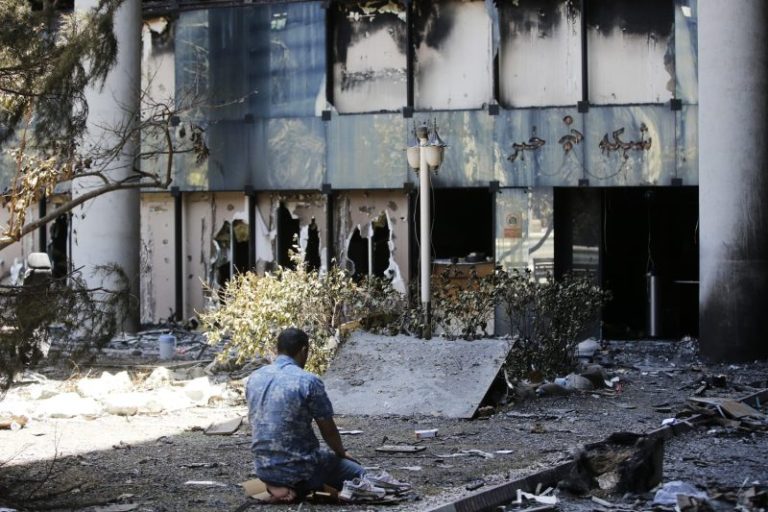
Israel’s decision to escalate its military operation against the Islamic Republic comes after an Iranian missile reportedly struck a major hospital in the southern city of Beersheba. Katz threatened Iran’s leader Ayatollah Ali Khamenei in the wake of the hospital strike.
Katz said Israel’s military “has been instructed and knows that in order to achieve all of its goals, this man absolutely should not continue to exist,” referring to Khamenei.
President Donald Trump is still considering whether to order a U.S. strike on Iran’s nuclear program. “I may do it, I may not do it, I mean nobody knows what I’m going to do,” Trump told reporters Wednesday.
JPMorgan warned on Wednesday that regime change in a major oil producing country like Iran could have a profound impact on global oil prices. Iran is one of the top producers in OPEC.
“If history serves as a guide, further destabilization of Iran could lead to significantly higher oil prices sustained over extended periods,” Natasha Kaneva, head of global commodities research at JPMorgan, told clients in a note.
Supply losses in the wake of a regime change “are challenging to recover quickly, further supporting elevated prices,” Kaneva said.
Galan Lithium Limited (ASX:GLN) ( Galan or the Company ) is pleased to announce it has secured a binding commitment for a A$20 million placement ( Placement ) at A$0.11 per share, a 21% premium to the last closing price of A$0.091 as at 19 June 2025 from an existing shareholder, The Clean Elements Fund ( Clean Elements ). Additionally, Clean Elements will receive one unlisted option for every two shares issued under the Placement, with an exercise price of A$0.15 per option and an expiry date that is three years from the date of issue.
The Placement is subject to Clean Elements’ satisfactory completion of due diligence over a period not longer than 77 days. Full completion of the Placement will require shareholder approval which will be sought at a Galan general meeting, expected to be held in early September 2025 .
The Placement provides the final construction funding solution for Phase 1 (at 4ktpa LCE), of the Company’s world class Hombre Muerto West project ( HMW ) in Argentina , which will see production of lithium chloride concentrate in H1 2026.
Managing Director, Juan Pablo (JP) Vargas de la Vega, commented:
‘ We are extremely pleased to receive further support from Clean Elements. HMW is a world-class lithium project, offering exceptional scale and grade. This commitment from Clean Elements, priced at a significant premium to our last closing share price, reflects the value proposition provided by Galan.
To have executed this funding agreement whilst facing strong macro headwinds for the lithium industry is a huge achievement for Galan and further validates the unique attributes of HMW. With a clear pathway to first concentrate production, this support positions Galan to focus on execution. The next 12 months promise to be a transformational period for Galan and the team remains fully focussed on the creation of significant value for all shareholders.’
Clean Element’s Chairman, Ofer Amir, stated:
‘We are incredibly excited to partner with Galan Lithium on what we believe is one of the most compelling lithium opportunities in Argentina today. After extensive evaluation of the Argentinian lithium landscape, HMW stands out as an exceptional world-class asset with the rare combination of scale, grade, and execution capability that positions it to be a major force in the global lithium market. This investment represents Clean Elements’ confidence in Galan’s transformative potential and our shared vision of powering the clean energy revolution.
Our investment in Galan reflects our disciplined approach to identifying high-quality lithium assets with strong fundamentals and experienced management teams. Galan’s impressive resource base of 9.5 Mt LCE, combined with its low-cost position in the first quartile globally and proven operational track record in the Hombre Muerto Salar, aligns perfectly with our investment criteria. We were particularly impressed by Galan’s strategic partnership with Authium, which enhances project economics through innovative processing technology while securing offtake agreements that de-risk the path to production. We look forward to supporting Galan beyond Phase 1 as they execute their long term production growth plan towards 60 ktpa LCE.’
Details of the Placement
The Company has received binding commitments for a total of 181,818,182 shares at an issue price of A$0.11 per share. 90,909,091 options (exercisable at A$0.15 with a 3 year expiry from issue date) will also be issued.
The Placement is expected to settle in two tranches:
Tranche Two – A$10 million , 90,909,091 shares and 45,454,545 options (exercisable at A$0.15 with a 3 year expiry from issue date), subject to shareholder approval and completion of due diligence. Expected settlement on or around 28 November 2025 .
The proceeds of the Placement will be utilised to complete Phase 1 construction activities in H2 2025 required to realise first lithium chloride production in H1 2026. The Company notes that a US$ 6 million prepayment facility will be available to the Company under the terms of the offtake and prepayment agreement with Authium Limited ( Authium ) (see announcement https://shorturl.at/GaU0r) .
In light of the current market conditions, the Company decided to pursue the Placement, which was structured at a 21% premium to Galan’s last closing price. Despite efforts to secure debt funding, the prevailing economic environment has resulted in unfavourable terms and higher costs associated with debt. By opting for equity raising Galan will strengthen its balance sheet and minimise financing risk, whilst carrying no debt, as the Company brings HMW into production.
About Hombre Muerto West
HMW is a multi-decade, lithium brine project in Argentina with compelling economics. Phase 1 provides for a 4ktpa LCE operation, producing a 6% LiCl concentrate product over a projected 40-year life. Finalisation of Phase 1 and commencement of production is the key focus Galan. Beyond Phase 1, the Company will undertake a phased scaling approach, eventually ramping up to 60ktpa at the conclusion of Phase 4. This approach mitigates funding and execution risk and will allow for continuous process improvement.
With a world class resource and a cost profile within the first quartile globally, HMW is a clear demonstration of the benefits of a high-quality lithium brine asset. These benefits are allowing Galan to progress through development and into production with a lower capital intensity and lower risk profile when compared to hard rock lithium (spodumene) projects.
As importantly, lithium chloride is a key component for lithium iron phosphate (LFP) batteries, which have become the dominant battery product globally. With the ability to be cost effectively converted into a lithium dihydrogen phosphate or lithium carbonate, lithium chloride, as will be produced at HMW, is an ideal source for LFP batteries.
Please refer to Mineral Resource Statement for Galan’s Total Resources of 9.5Mt LCE.
The Galan Board has authorised this release.
For further information contact:
COMPANY
MEDIA
Juan Pablo (‘JP’) Vargas
de la Vega
Matt Worner
Managing Director
VECTOR Advisors
jp@galanlithium.com.au
mworner@vectoradvisors.au
+ 61 8 9214 2150
+61 429 522 924
About Galan
Galan Lithium Limited (ASX:GLN) is an ASX-listed lithium exploration and development business. Galan’s flagship assets comprise two world-class lithium brine projects, HMW and Candelas, located on the Hombre Muerto Salar in Argentina , within South America’s ‘lithium triangle’. Hombre Muerto is proven to host lithium brine deposition of the highest grade and lowest impurity levels within Argentina . It is home to the established El Fenix lithium operation, Sal de Vida (both projects are operated by Arcadium Lithium) and Sal de Oro (POSCO) lithium projects. Rio Tinto is now in the process of acquiring Arcadium Lithium plc. Galan also has exploration licences at Greenbushes South in Western Australia , just south of the Tier 1 Greenbushes Lithium Mine.
About Clean Elements
Clean Elements is a private holding company specifically founded to pursue the development of high performing lithium assets in Argentina and globally. Clean Elements has a successful track record in investing in lithium brine assets, notably completing a financing transaction with NOA Lithium in 2024. Clean Elements is partnered with Swiss financial expert firm ISP Securities Ltd., part of the ISP Group, who is a leading Swiss financial service provider specializing in wealth management, asset management, securitisation and trading services. ISP Group has companies in Switzerland ( Zurich and Geneva ), Dubai , Hong Kong , and Israel .
Contact:
Ofer Amir ofer@thecleanelements.com +97254492777
View original content: https://www.prnewswire.com/news-releases/galan-lithium-limited-a20-million-placement-to-strategic-partner-302486923.html
A court in Bamako has ordered the temporary transfer of operational control of Barrick Mining’s (TSX:ABX,NYSE:B) Loulo-Gounkoto gold-mining complex to a state-appointed administrator for six months.
The ruling, handed down on Tuesday (June 17) by the Tribunal de Commerce, empowers former health minister and certified accountant Soumana Makadji to run one of Barrick’s most lucrative global assets.
The company has described the move as “unjustified” and “unprecedented.”
According to Judge Issa Aguibou Diallo, the ruling was made under Article 160-1 of the OHADA corporate law framework, which allows a court to appoint a provisional administrator when the regular functioning of a company becomes impossible. The administrator, Makadji, is tasked with reopening the mine site, participating in negotiations with Barrick and reporting to the court on a quarterly basis — though not to the government.
Makadji is seen in Bamako as a technocrat with strong ethical credentials. His appointment is intended to stabilize operations at Loulo-Gounkoto, which Barrick suspended in January 2024 after the Malian government physically removed unsold gold from the mine and froze the company’s ability to export.
Despite the administrative change, Barrick maintains that its subsidiaries remain the legal owners of the mine.
In a statement released on Monday (June 16), the company emphasized that its “ongoing efforts to reach a constructive and sustainable resolution” have been met with escalatory actions by the state.
“While the company has made a number of good-faith concessions in the spirit of partnership, it cannot accept terms that would compromise the legal integrity or long-term viability of the operations,” Barrick said.
Arbitration and legal fallout
Barrick has already launched international arbitration proceedings at the World Bank’s International Center for Settlement of Investment Disputes, as per a May 29 Reuters article.
The company has asked the tribunal to declare that its Malian subsidiaries are protected under longstanding mining conventions, which it argues are not subject to retroactive legislative changes. Mali, however, contends that the convention covering Loulo expired in April 2023, subjecting it to the updated mining code.
The arbitration tribunal has now been formally constituted, and Barrick has filed a request for provisional measures to prevent Mali from further intervening until the dispute is resolved.
A disputed settlement
In February 2024, a tentative settlement appeared close. According to Jeune Afrique, Barrick had agreed in principle to pay 225 billion West African CFA francs (roughly US$396 million) in instalments, recognize the new 2023 mining code and convert Mali’s 20 percent equity stake in Loulo-Gounkoto into “priority shares.”
The government would in turn release the seized gold and free the detained executives.
But the deal collapsed. A Malian negotiator later claimed Barrick had signed the “wrong” agreement and warned the government had “the right to take control of the mines” if the company failed to resume operations.
The ruling junta, led by Colonel Assimi Goïta, has made resource nationalism a hallmark of its post-coup economic strategy. Since coming to power in 2020, the military-led regime has shown a willingness to pressure foreign firms to comply with state priorities, especially in strategic sectors like mining.
The Loulo-Gounkoto dispute is now emblematic of the wider uncertainty surrounding foreign investment in Mali, a country where gold accounts for over 70 percent of export earnings.
Future implications
Loulo-Gounkoto is a cornerstone of Barrick’s global portfolio.
In 2023, the complex produced 723,000 ounces of gold, second only to Barrick’s Carlin mine in Nevada. It boasts remaining reserves of 7.3 million ounces, making it one of the largest high-grade gold systems in the world.
The financial implications of the shutdown are significant. Analysts warned in December that continued disruptions at the site could cut 11 percent from Barrick’s projected 2025 EBITDA.
Morningstar had earlier projected that Loulo-Gounkoto would contribute 250,000 ounces to Barrick’s output this year — an estimate now scrapped from the company’s 2025 guidance.
Further complicating matters, the permit for the Loulo section of the complex is set to expire in February 2025, just weeks after the six month provisional administration period ends. Barrick said it applied for a renewal four months ago, but has received no response from the government. The Gounkoto permit remains valid for another 17 years.
Barrick has said it remains committed to reaching a “mutually acceptable solution” and has appealed the court’s decision. But with no public comment from the Malian government and the provisional administrator now in place, a quick resolution appears unlikely.
Securities Disclosure: I, Giann Liguid, hold no direct investment interest in any company mentioned in this article.
Critical Metals (NASDAQ:CRML) got a boost on Monday (June 16), landing a letter of interest (LOI) for a non-dilutive US$120 million funding package from the Export-Import Bank of the US (EXIM).
The funds would be used to advance its Tanbreez rare earths project in Southern Greenland.
Touted as one of the world’s largest rare earths deposits, Tanbreez is expected to produce up to 85,000 metric tons of rare earth material annually, with more than 27 percent classified as heavy rare earth elements.
“This is a tremendous milestone for Critical Metals Corp which highlights to the rare earths supply chain, Western Governments and investors that Tanbreez is a world-class asset that will provide mission-critical rare earth metals to counter China’s continued dominance,” said Critical Metals CEO and Chairman Tony Sage.
The funding would support pre-production, technical studies and early mining activities. EXIM’s financing falls under its new Supply Chain Resiliency Initiative and comes with a 15 year repayment term.
Critical Metals acquired a controlling stake in Tanbreez in June 2024 in a transaction valued at up to US$211 million. It expects the asset to require US$290 million in capital expenditure to advance to initial commercial production.
The US$120 million from EXIM would support key early stage work at Tanbreez, including technical and economic studies, pre-production activities and the start of mining operations.
The company is aiming to complete a definitive feasibility study by late 2025.
Critical Metals also plans to invest an additional US$10 million in exploration this year, giving it the option to increase its ownership in the project to 92.5 percent through the acquisition of a further 50.5 percent stake.
“We are now razor focused to put Tanbreez into production as soon as possible,’ said Sage.
Securities Disclosure: I, Gabrielle de la Cruz, hold no direct investment interest in any company mentioned in this article.