Author

admin

Browsing

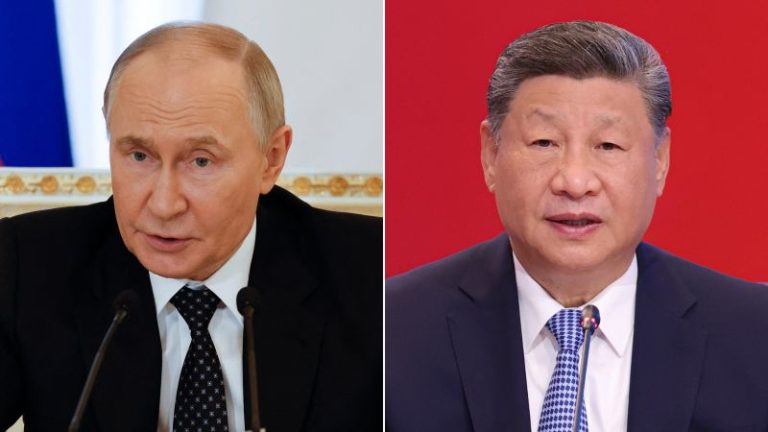
China and Russia positioning themselves as voices of reason, calling for de-escalation of a conflict the United States is contemplating on entering — these are the optics Xi Jinping and Vladimir Putin sought to project during a phone call on Thursday.

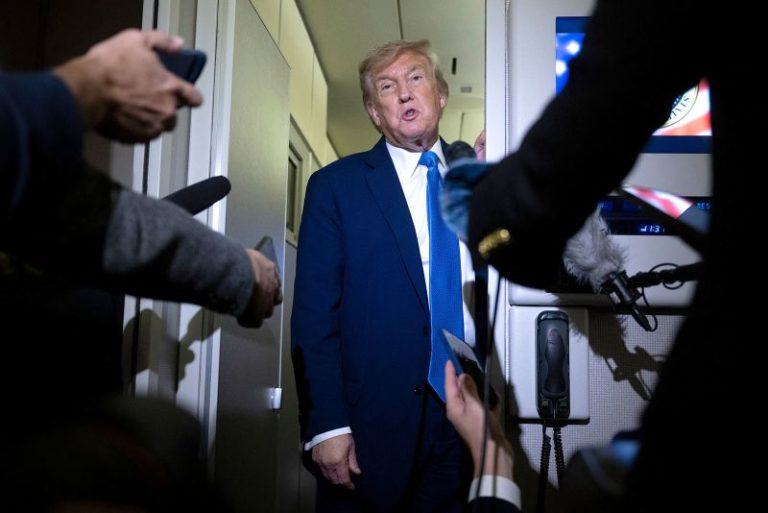
As US President Donald Trump weighs joining Israel in attacking Iran, the fast-spiralling conflict between two sworn enemies in the Middle East has presented Beijing and Moscow another opportunity to cast themselves as an alternative to US power.

In their call, Putin and Xi strongly condemned Israel’s actions, calling them a breach of the UN Charter and other norms of international law, according to the Kremlin. (The elephant in the room, of course, is Russia’s own violations of international law in its ongoing war against Ukraine — which Beijing has consistently refused to condemn.)

In Beijing’s readout, Xi struck a more measured tone and stopped short of explicitly condemning Israel — unlike his foreign minister, who did just that in a call with his Iranian counterpart last week.

Instead, the Chinese leader urged the warring parties, “especially Israel,” to cease fire as soon as possible to avoid further escalation and regional spillover.

And notably, in a veiled message to Trump, Xi emphasized that “major powers” that have a special influence on the parties to the conflict should work to “cool the situation, not the opposite.”

Beijing has long accused Washington of being a source of instability and tensions in the Middle East — and some Chinese scholars are now seizing on the Iran crisis to underscore that point.

Liu Zhongmin, a Middle East expert at the Shanghai International Studies University, attributed the latest flareup to the uncertainty created by Trump’s second presidency and the chaotic, opportunistic and transactional nature of his Middle East policy.

“(Trump) has seriously undermined the authority and credibility of US policy in the Middle East, eroded America’s leadership and image among its allies while also weakening its ability to threaten and deter regional adversaries,” Liu wrote in state media this week.

Another Middle East ‘forever war’?

Some Chinese online commentators have noted that Trump appears on the brink of pulling the US deeper into another so-called forever war in the Middle East.

At the outset of his second term, officials close to Trump repeatedly stressed the need for Washington to redirect its focus and resources toward countering China’s ambitions in the Indo-Pacific. Yet five months in, the wars in Ukraine and Gaza continue to rage on — and Trump is now weighing US involvement in the Israel-Iran conflict.

Beijing has no interest in seeing an all-out war against Iran that could topple the regime. Under Supreme Leader Ayatollah Ali Khamenei, Iran has emerged as a formidable power in the Middle East and a vital counterweight to US dominance — just as China is working to expand its own diplomatic and economic footprint in the region.

In 2023, Beijing helped broker a surprise rapprochement between arch-rivals Saudi Arabia and Iran – a deal that signaled its ambition to emerge as a new powerbroker in the region.

China has long backed Iran through sustained oil imports and its seat on the UN Security Council. In recent years, the two countries have deepened their strategic ties, including holding joint naval exercises alongside Russia. Beijing welcomed Tehran into the Shanghai Cooperation Organization and BRICS – groupings led by China and Russia to challenge the US-led world order.

Iran is also a critical node in China’s Belt and Road Initiative (BRI), its global infrastructure and investment drive. The country lies near the strategic Gwadar port — a key BRI outpost in Pakistan that gives China access to the Indian Ocean — and borders the Strait of Hormuz, a vital chokepoint for Chinese oil imports from the Persian Gulf.

Like Russia, China has offered to be a potential mediator in the Israel-Iran conflict, casting its role as a peace broker and an alternative to US leadership.

During his call with Putin, Xi laid out four broad proposals to de-escalate tensions, including resolving the Iran nuclear issue through dialogue and safeguarding civilians, according to the Chinese readout.

Meanwhile, Xi’s Foreign Minister Wang Yi has had a busy week on the phone, speaking with his counterparts in Iran, Israel, Egypt and Oman in a flurry of diplomatic outreach.

Yet it remains unclear what Beijing is willing and able to do when it comes to actually mediating the conflict. In the early stages of Israel’s war on Gaza, China made a similar offer and dispatched a special envoy to the region to promote peace talks — efforts that ultimately yielded little in terms of concrete results.

Brokering peace in the Middle East is a tall order, especially for a country with little experience or expertise in mediating protracted, intractable conflicts – in a deeply divided region where it lacks a meaningful political or security presence.

And in the one conflict where China does hold significant leverage — the war in Ukraine — Xi has offered diplomatic cover and much-needed economic support to help sustain Putin’s war effort, even as China continues to cast itself as a neutral peace broker.

Still, at a time when America’s global leadership is under growing scrutiny, particularly in the eyes of the Global South, presenting itself as a voice of restraint in the Iran conflict may already count as a symbolic win for Beijing.

This post appeared first on cnn.com

The diplomat refused to be drawn on specifics but reiterated that the crux of the matter remained Iran’s controversial uranium enrichment program and that the talks would focus on “what kind of compromise would be feasible” on that issue.

But enrichment — which Iran says it needs for peaceful purposes, while also manufacturing large quantities of near-weapons-grade material — is a major sticking point, with the Trump administration vowing that any agreement with Iran would have to entirely prohibit the country from enriching any nuclear material.

For decades, Iran, which denies it intends to build a nuclear weapon, has categorically refused to give up its capabilities — instead plowing billions of dollars into refining the technology and constructing vast enrichment facilities, like the secretive Fordow installation, which is built deep underground inside a mountain.

After launching its first wave of strikes on Iran, Israel pointed to a recent report by the International Atomic Energy Agency, which acknowledged Iran is enriching uranium to a higher level than other countries without nuclear weapons programs, in violation of its nuclear non-proliferation obligations.

“Because Iran is now under immense military pressure, it might run out of options, and their nuclear capability is being degraded,” the diplomat said.

Until Trump’s decision to allow diplomacy another shot, the Geneva talks had looked like a European sideshow, with the US seemingly poised to join with Israel in the destruction of Iranian nuclear facilities.

The meeting, between the EU’s foreign policy chief, alongside the British, French and German foreign ministers and their Iranian counterpart, is now taking on greater significance, setting the stage for next steps and possibly acting as a bridge between Iran and the United States.

But there is an underlying fear in Geneva that the reinvigorated talks here, the first formal meetings with Iranian representatives since the escalation of the Israel-Iran conflict, will still go nowhere.

“It’s impossible to read anything Trump says because there is a daily barrage of statements,” the diplomat added.

This post appeared first on cnn.com

Transporting the world’s second largest land mammal halfway across the second largest continent isn’t exactly easy.

But in a 3,400-kilometer (2,100-mile) journey that involved crates, cranes, trucks, and a Boeing 747, 70 captive bred southern white rhinos were moved from South Africa to Rwanda’s Akagera National Park in early June as part of an initiative to “rewild” them.

The creatures, which can weigh over 2,000 kilograms (more than 4,000 pounds), originated from a controversial breeding program started in the 1990s by property developer John Hume.

Hume, who spent years lobbying for the legalization of the rhino horn trade, amassed stockpiles of horn, obtained by trimming them without harming the animals, with the aim of flooding the market to driver poachers out of business and to fund conservation efforts.

But he ran out of money, and with the horn trade still banned under international law, he put the rhinos up for sale in 2023. He told Agence France-Presse (AFP) at the time that he’d spent around $150 million on the project – with surveillance being the largest cost. “I’m left with nothing except 2,000 rhinos and 8,000 hectares (20,000 acres) of land.”

He didn’t receive a single bid. African Parks — a conservation nonprofit that manages 23 protected areas across the continent — stepped in to acquire for an undisclosed sum what was the largest rhino captive breeding operation in the world, with plans to “rewild” the animals over 10 years.

The translocation marked the first cross-continental move for African Parks’ Rhino Rewild initiative.

“It’s a very important milestone,” says Taylor Tench, a senior wildlife policy analyst at the nonprofit Environmental Investigation Agency US, who wasn’t involved in the relocation. “This is definitely a big development with respect to African Parks’ efforts.”

‘A story of hope’

Today, there remain only about 17,000 southern white rhinos in Africa and they’re classified as “near threatened” on the International Union for Conservation of Nature’s Red List. That means the 2,000 southern white rhinos that African Parks bought, and plans to spread around the continent, comprise more than 10% of the remaining population.

Although the international trade of rhino horn has been banned under the Convention on International Trade in Endangered Species (CITES) since 1977, demand from consumers in Asia who see it as a status symbol, or falsely believe it can cure ailments ranging from hangovers to cancer, is still driving poaching.

Poachers sometimes kill a rhino outright, or tranquilize it before cutting off its horn, sometimes hacking off a large portion of the animal’s face, leaving it bleeding to death.

In South Africa, where the majority of the population lives, 420 rhinos were poached in 2024. More than 100 were killed in the first three months of this year.

Tench says that rhino poaching was rampant in the continent from 2012 to 2015, and a “lot has been accomplished since then.” He added that Kenya lost no rhinos last year and that poaching has dropped significantly in Zimbabwe. Today, poaching is mostly concentrated in South Africa and Namibia, he says.

To better address the issue, Tench says more government resources should be dedicated to addressing the organized criminal networks behind the poaching and international trading of rhino horn, and to increased international cooperation.

Rickelton says there are a number of future relocation projects in various stages of discussion and planning. He adds that a strong framework is in place to ensure the locations that receive the rhinos provide a suitable habitat, security to keep the animals safe, and enough funding to care for them.

The move to Akagera National Park took more than a year and a half of planning and approvals. And the cost of moving each rhino, including three years of monitoring and management afterwards, is about $50,000 (the move was backed by the Howard G. Buffet Foundation).

The animals were first moved from the breeding program facility to the South African private game reserve Munywana Conservancy, to expose them to conditions more like Akagera. Then, the rhinos were loaded into individual steel crates, driven to an airport in Durban, South Africa, and carefully loaded by crane onto a Boeing 747.

After arrival in Kigali, Rwanda, the rhinos made the final leg of their journey by road. Now, the rhinos need to adapt to their new environment. They’ll be monitored by a veterinary team for several weeks.

Measures like a canine unit to reduce poaching are in place in Akagera, which has reduced poaching to “near zero” levels, according to the park.

There’s reason for optimism. In 2021, African Parks moved 30 rhinos to Akagera from a private game reserve in South Africa. Since, they’ve had 11 offspring. With the addition of 70 more rhinos, “we’ve now established a genetically viable herd of rhino,” says Rickelton.

He says that seeing the rhinos emerge from their crates at the end of the journey “makes months and months of really hard work and frustration and challenges really worth it.” Rickelton adds: “It’s a story of hope in a world of not too much positive.”

This post appeared first on cnn.com

A serial rapist who was convicted of raping 10 women in the United Kingdom and China has been jailed for life with a minimum term of 24 years.

Zhenhao Zou, 28, was sentenced Thursday at Inner London Crown Court. Judge Rosina Cottage told him he would serve 22 years and 227 days before he was eligible for parole, taking into account time spent on remand, according to the UK’s PA Media.

Zou was found guilty in March of 11 counts of rape, one count of false imprisonment, three counts of voyeurism and a number of other offenses, including the possession of extreme pornographic images and the possession of a controlled drug with intent to commit a sexual offense.

Many of his victims were “unconscious and rendered defenseless” after being drugged, according to prosecutors.

Police and prosecutors said Zou, who also used the name “Pakho” online, contacted students of Chinese heritage on WeChat and dating apps, inviting them to his apartments in London and China to drug and assault them. The police said he also took items from his victims, including jewelry and clothing.

The UK’s Crown Prosecution Service said Zou filmed some of the attacks using a mobile device and hidden cameras. The police said he “manipulated and drugged women in order to prey on them in the most cowardly way.”

Zou was a PhD student at University College London. He was arrested in January 2024 after one of his victims came forward to police.

Prosecutors in March said that the “courageous women who came forward to report Zhenhao Zou’s heinous crimes” had been “incredibly strong and brave” and that there was “no doubt” that their evidence had led to his convictions.

Ivana Kottasová contributed to this report.

This post appeared first on cnn.com

Kim Kardashian fans are going to have to wait a little longer for the highly anticipated NikeSKIMS line.

The activewear line will launch later this year instead of in the spring, like the companies had originally announced, because of production delays, according to a person familiar with the matter who requested anonymity to speak candidly. The person added that the delays are internal and not because of a supplier or shipping issue.

No date has been determined for the new launch date, the person added.

The person also said the relationship with Kardashian and the brand is still strong and that everyone is on the same page, but they want to make sure they take their time and get the products right.

Nike first announced the Skims partnership in February and said it would include apparel, footwear and accessories. Since then, Heidi O’Neill, one of the key leaders behind the partnership, has left the company.

New Nike CEO Elliott Hill has been betting big on the Skims brand as he looks to re-invigorate the company after recent declines in sales and its business. For Skims, which was last valued at $4 billion, the partnership with Nike brings a growth opportunity as it expands into athleisure.

Nike’s stock is down more than 20% year-to-date.

“The origin of NikeSKIMS is rooted in a desire to bring something new and unexpected to an industry that is craving something different, and to invite a new generation of women into fitness with disruptive product designed to meet their needs in both performance and style,” the company said about the line when they introduced it.

The news was first reported by Bloomberg.

Nike and SKIMS collaboration featuring Kim Kardashian, Co-Founder and Chief Creative Officer, SKIMS.Courtesy: Nike Inc.

This post appeared first on NBC NEWS

Pro-Palestinian activists broke into Britain’s largest air base and damaged two military aircraft in central England early Friday.

Palestine Action, a UK-based group that aims to disrupt the operations of weapons manufacturers supplying the Israeli government, posted footage of the action to its X account.

The video shows two people riding on electric scooters on the tarmac of RAF Brize Norton, in Oxfordshire.

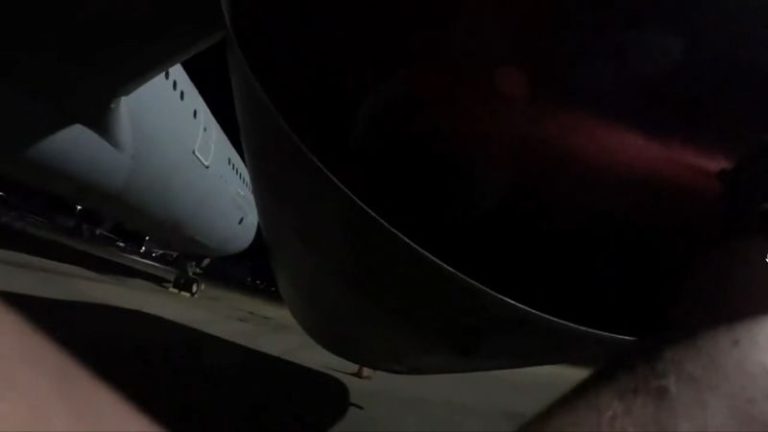
The activists can be seen spraying red paint into the turbine engines of two Airbus Voyagers, which they said were targeted for their alleged role in carrying military cargo and for their use in refueling Israeli, American and British military aircraft and fighter jets.

“Britain isn’t just complicit, it’s an active participant in the Gaza genocide and war crimes across the Middle East,” a Palestine Action spokesperson said in a statement.

“By decommissioning two military planes, Palestine Action have directly intervened in the genocide and prevented crimes against the Palestinian people,” it added.

The incident raises wider questions as to how the activists – who have not been apprehended – managed to get into the airbase undetected. RAF Brize Norton has approximately 5,800 service personnel, 300 civilian staff and 1,200 contractors.

In a statement, the Ministry of Defence strongly condemned the “vandalism of Royal Air Force assets” and said that it was working with police who were investigating the breach.

In a statement posted to X, British Prime Minister Keir Starmer called the incident “an act of vandalism” and said it was “disgraceful.”

This post appeared first on cnn.com

The Fed should absolutely stop talking about being “data dependent”. That’s so far from the truth. If they were data dependent, we’d have either seen a rate cut today or Fed Chief Powell would have been discussing one for the next meeting. Inflation reports since the last Fed meeting have been benign. Economic reports, on the other hand, have shown weakness and are pointing to the need for lower interest rates.

Powell was having none of it. During Wednesday’s press conference, one reporter asked the Fed Chief why the Fed was able to lower rates in December, despite knowing that tariffs and their potential impacts were on the way. I thought it was a great question, because Powell was using future tariff impacts on inflation as the primary reason for holding rates steady today. It was a perfect illustration of The Waffler at his best. When another reporter asked Powell about his frequent comments that the Fed is data dependent and that all current data points to the need for an interest rate cut, The Waffler noted the Fed needs to “look ahead”. So which is it? Is interest rate policy being guided by current data or by looking ahead?

This is a repeat of 2021 and 2022. Remember all the inflation news and how The Waffler said inflation was transitory. I guess he was looking ahead when he made those comments. He and his band of wafflers looked ahead and got it wrong. Then, inflation data poured in higher than expected for months and he finally started his data dependency talk.

The Fed has been late to every single party for 7 years now and running. They’re running late again. Eventually, Mr. Waffler will get it right and our major indices will all move to all-time highs. For now, though, the reason for any period of consolidation or, worse yet, selling can be laid at the doorstep of none other than The Waffler.

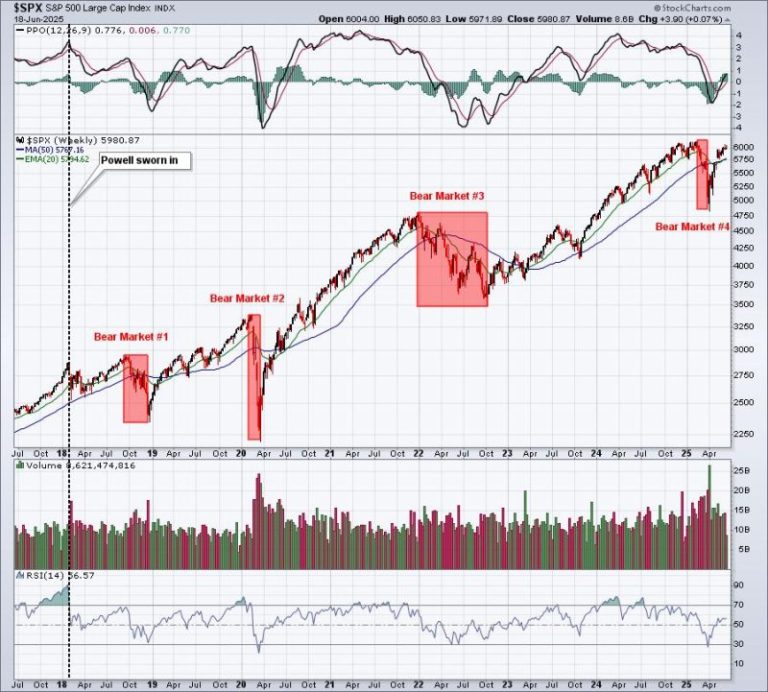
Personally, I’m exhausted by the constant “listen to what I say until I change it” approach to interest rate policy. Yes, we’ve had a 100-year pandemic and a resulting inflation problem that’s been worse than any since the 1970s. We’ve had two trade wars. I get it. But I firmly believe that the extreme volatility and the four (FOUR!!!!!!!) cyclical bear markets that we’ve endured since The Waffler became the Fed Chief is, in large part, his fault. He was sworn in on February 5th, 2018 and the stock market has been a roller coaster ever since:

Name the last time that the U.S. has seen 4 different cyclical bear markets, all starting from all-time highs, within a 7-year period. Start the Jeopardy music.

His mismanagement of interest rates didn’t start with the pandemic. I wrote an article in December 2018, during his first year, saying that his call for two rate hikes in 2019 would never happen. The next interest rate move? A cut several months later in 2019. Here’s the article I wrote back then as we bottomed in December 2018:

“How The Grinch Stole Christmas” Featuring Jerome Powell

No one has been wrong more than The Waffler.

Now maybe you’re sitting back and saying, “Tom, what’s the big deal? The tariffs are a threat. Why not just wait it out and be sure there are no lingering inflationary pressures?” Well, if you don’t mind the potential of a 5th cyclical bear market before we finally boot this guy to the curb, then I say GO FOR IT. Why try to hasten an economic meltdown when it’s unnecessary? Who believes anything The Waffler says? He said we were going to get two rate hikes in 2019. We got an interest rate cut instead. He said inflation was transitory in 2021. Then the Fed had to start raising rates at an absurd rate, because inflation skyrocketed and he waited way too long to turn hawkish. The stock market bottomed in June 2022 and was returning back towards all-time highs just prior to his infamous “more pain ahead” speech from Jackson Hole, WY on August 26th, 2022. Subsequent to that speech, the stock market fell precipitously for two months before once again finding a new bottom. That entire selling episode was caused solely by his irresponsible remarks.

And now where are we? Holding rates steady while the European Central Bank (ECB) has cut rates for 8 straight meetings. The Waffler will eventually get it right. Unfortunately, a lot of innocent investors and traders will continue to pay the price – until someone finally shows him the exit.

His term expiration cannot get here soon enough for me. GOOD RIDDANCE MR. WAFFLER!

Market Manipulation

I’ve written often about what I call the “legalized thievery” of market makers. The extreme volatility over the past several years has triggered market manipulation like we’ve never seen before. The good news is that once you understand how it works, trading the stock market gets a whole lot easier. At EarningsBeats.com we’ve timed exits out of the stock market almost perfectly, prior to the onset of cyclical bear markets. Missing out on 20%+ declines and then jumping back in at or near major bottoms increases stock market returns dramatically.

It’s time that everyone understands how the stock market works. On Saturday, June 28th, at 10:00am ET, we will be hosting a FREE webinar, “Trading the Truth: How Market Manipulation Creates Opportunity”. This event promises to be a real eye-opener, unless you’re already an EarningsBeats.com member (in which case you’ve already become a seasoned veteran regarding manipulation). Do you want to see big stock market declines before they happen? I will teach you how.

Seating is limited and this event will be packed, I can guarantee you that. PLEASE be sure to register NOW and save your spot. Again, there is NO COST. Registration is easy. Simply CLICK HERE to register and for more information.

(By the way, if you’re not available to attend LIVE on Saturday, June 28th, you should still register. All those who register will receive a copy of the recording after the event and it will be time stamped.)

Happy trading!

Tom

When the stock market seems to be drifting sideways without displaying a clear bullish or bearish bias, it’s normal for investors to get anxious. It’s like being at a crossroads, wondering whether to go left, right, or stay put.

The truth is nobody has a crystal ball, and predicting what the market will do next is a fool’s errand. Should you jump in and buy now, or wait for the price to dip lower? Instead of fretting over these questions, what you can do is empower yourself with the right tools to make informed decisions.

For one example, creating ChartLists is a terrific way to keep an eye on the charts that are important to you. 

A logical starting point is to monitor a broad market index such as the S&P 500 ($SPX), which acts as a barometer for the overall health of the market. The chart from this week’s article “Navigate the Stock Market with Confidence” highlighted some important levels to monitor. The area between 5950 and 6050 is key; a break above or below these levels can signal what’s coming next.

Below is the chart of the S&P 500, with the key levels and updated to reflect the data after Wednesday’s close. Note that the index is still within the 5950 to 6050 range. Fed Chairman Jerome Powell’s press conference didn’t do much to move the market, although there was a bit of a selloff towards the close. But that’s nothing to be alarmed about. Active participants would have unloaded their positions ahead of Wednesday’s close due to the Middle East conflict and the market being closed on Thursday to observe Juneteenth.

FIGURE 1. DAILY CHART OF THE S&P 500. Monitor the price action at key support and resistance levels.Chart source: StockCharts.com. For educational purposes.

If the S&P 500 breaks below 5950, it could mean a further decline or a market reversal. On the other hand, if the index breaks above 6050, it could indicate a move towards new highs, or it could reverse after hitting its all-time high. With so many possible outcomes, navigating the stock market can feel like a puzzle.

This is where confirmation tools become your best friends. When the overall market is wavering, these tools provide that extra bit of confidence you need.

Take the McClellan Summation Index as an example. If you’re a regular reader of our weekly ChartWatchers newsletter (and if not, you should definitely check it out — it’s packed with insights), you might recognize the chart below from last week’s issue.

FIGURE 2. NYSE MCCLELLAN SUMMATION INDEX VS. THE NYSE COMPOSITE INDEX. Note the divergence between the two and the various levels (red horizontal lines). Chart source: StockCharts.com. For educational purposes.

This chart displays the NYSE McClellan Summation Index ($NYSI) overlaid on an area chart of the NYSE Composite Index ($NYA). The McClellan Summation Index tends to generate fewer signals, making it helpful for looking at medium and long-term trends. It helps to cut through the noise of an indecisive market and gives you a clearer picture.

Notice how, after its April low, the $NYSI climbed from -590 to 688 relatively quickly in sync with the NYSE. But here’s where it gets interesting: after hitting 688, there is a divergence. While the NYSE continued to move higher, the $NYSI started trending lower, making lower highs. This could be an early warning sign that the market’s upward momentum may be waning.

The McClellan Summation Index gives us some clear levels to monitor.

  • Bearish scenario. If the S&P 500 falls below the 5950 level, followed by the $NYSI dropping below its last low of 525, then it’s likely equities could see further declines.
  • Bullish scenario. If the S&P 500 breaks above the 6050 level, followed by the $NYSI moving higher than 642 and then the 688.50 level, it would be a positive sign for equities.

The Bottom Line

So if you’re wondering when might be a good time to “buy the dip” but are unsure about when that dip might occur, these types of charting tools can help guide your investment decisions. If your indicators line up and confirm an upward move, consider investing a portion of your capital and then adding more if the market continues to move in your favor. A big part of how well you manage your finances has to do with money management.


Disclaimer: This blog is for educational purposes only and should not be construed as financial advice. The ideas and strategies should never be used without first assessing your own personal and financial situation, or without consulting a financial professional.

Grayson explores a hidden gem on the SharpCharts platform: StyleButtons! These handy little customizable tabs give you quick, one-click access to your favorite chart templates, allowing you to jump from ChartStyle to ChartStyle with a seriously streamlined charting workflow. Grayson demonstrates how to create and save ChartStyles and assign them to StyleButtons in your account – a major efficiency boost for all StockCharts users! Plus, he describes how he uses StyleButtons to make multi-timeframe analysis a breeze and explain his unique “indicator layering” approach to ChartStyles.

This video originally premiered on June 18, 2025. Click on the above image to watch on our dedicated Grayson Roze page on StockCharts TV.

You can view previously recorded videos from Grayson at this link.

Joe presents his game-changing “undercut and rally” trading pattern, which can be found in high volatility conditions and observed via RSI, MACD and ADX signals. Joe uses the S&P 500 ETF as a live case study, with its fast shake-out below support followed by an equally quick rebound; a good illustration of why lagging indicators can’t be trusted right after a vertical drop.

In addition, Joe maps out three possible scenarios for the S&P: (1) an orderly pullback, (2) a disorderly slide that erases moving-average support, or (3) a breakout. He closes by analyzing viewer requests, spotlighting DOCS and KMI for constructive consolidations, and flagging PGEN as still too weak for a swing entry.

The video premiered on June 18, 2025. Click this link to watch on Joe’s dedicated page.

Archived videos from Joe are available at this link. Send symbol requests to stocktalk@stockcharts.com; you can also submit a request in the comments section below the video on YouTube. Symbol Requests can be sent in throughout the week prior to the next show.